Best Budget Hotels in Melbourne Under $200/Night (2026)
- Words
- Melbourne Tourism Guide
- Updated
- August 20, 2026
- Read
- 10 min
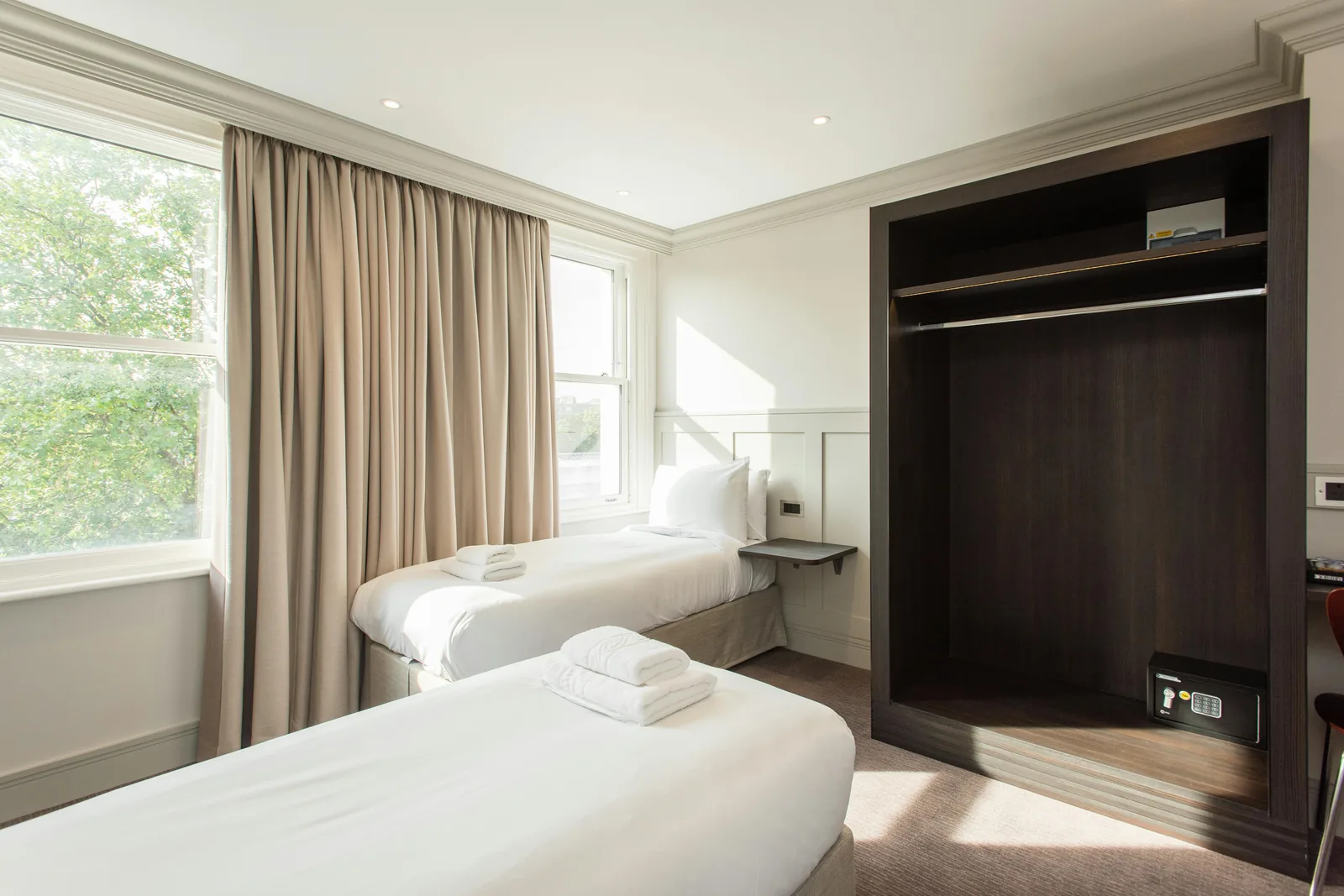
The best budget hotels in Melbourne under $200 a night — reliable central chains, value apartment-hotels, the cheapest areas to stay, and booking tips to save.
This article contains advertising. Our booking links are routed through a partner that adds commission tracking automatically, so if you book through one we earn a commission from the provider, at no extra cost to you. It never affects what we recommend. Affiliate disclosure
You don’t need a big budget to stay somewhere central, clean and well-connected in Melbourne. The city has a deep bench of budget hotels — reliable international chains, smart apartment-hotels and a few genuine local bargains — where you can get a comfortable room, often for well under $200 a night if you time it right. This guide covers the best budget hotels in Melbourne, the areas that give you the most for your money, and the booking tricks that make the difference between a good deal and an overpriced one. It’s part of our wider guide to where to stay in Melbourne.
What “budget” means in Melbourne
Melbourne is one of Australia’s pricier cities for accommodation, so it helps to set expectations. A budget hotel here generally means a clean, comfortable 3 to 4-star room — think compact but well-kept, with the essentials done well — typically in the range of roughly $130 to $200 a night, though prices swing hard with the calendar. Below that you’re usually into hostels, dorms or further-out suburbs. The good news is that Melbourne’s budget options are genuinely decent: the international chains maintain consistent standards, the apartment-hotels give you a kitchenette and more space, and the public transport is so good that staying a few stops out still puts you minutes from the action. Set a realistic budget, book smart, and you’ll do well.
Best areas for budget stays
Location and price are a balancing act. The CBD (Hoddle Grid) has the most budget chains and the best transport, and crucially it sits inside the Free Tram Zone — so even a cheap room here saves you on getting around. The northern and western edges of the CBD (around Spencer Street, Queen Victoria Market and Flagstaff) tend to be a touch cheaper than the prime Collins/Bourke core. Just outside the centre, Carlton, North Melbourne, Southbank and South Melbourne offer value within a short tram ride. A little further out, St Kilda gives you the beach and a backpacker-friendly scene at lower rates, while suburbs along train lines like Richmond or Footscray can be cheaper again. Our guide to the best areas to stay breaks down each one.
Reliable budget chains in the CBD
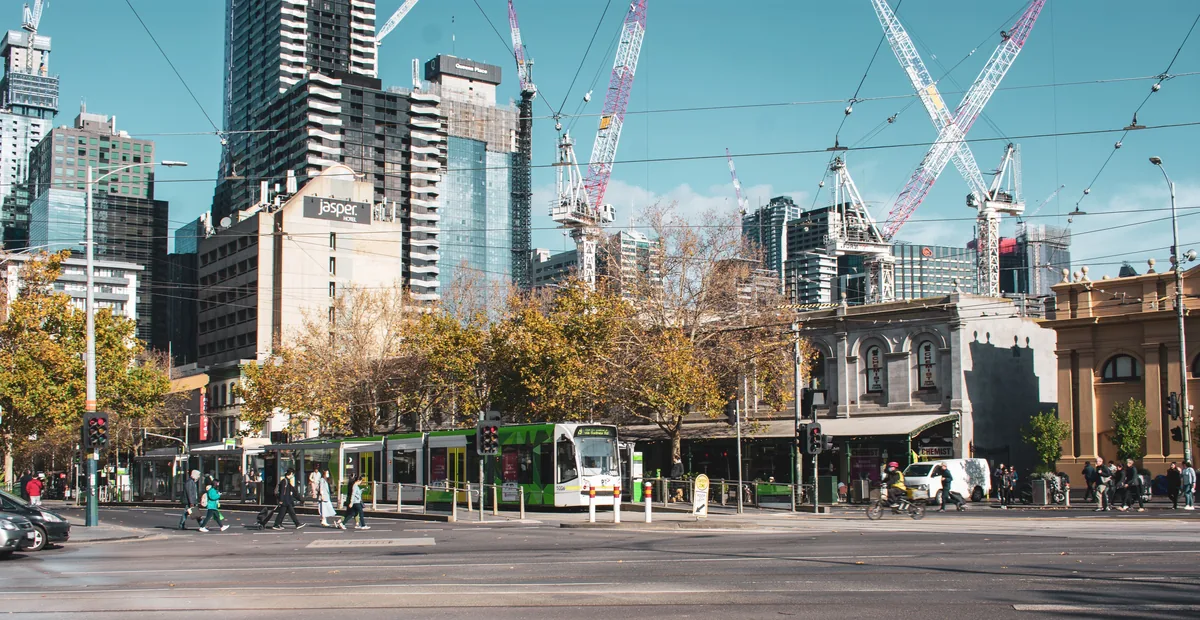
For predictable quality at a fair price, the international and Australian chains are hard to beat. The ibis and ibis budget hotels (including ibis Melbourne Central and ibis Melbourne Little Bourke Street) are the classic central budget pick — small, clean rooms in excellent locations. Holiday Inn (including the Bourke Street Mall property) and Travelodge (Docklands and Southbank) sit a notch up but often discount well. Pegasus Apart’Hotel, Causeway 353 and the Jasper Hotel near Queen Victoria Market offer character and space for the money. For a no-frills, ultra-central bed, these chains are dependable — you always know roughly what you’re getting, and the locations are first-rate.
Apartment-hotels: best value for longer or group stays
One of the smartest budget moves in Melbourne is the apartment-hotel (aparthotel). Brands like Quest, Citadines, Adina, Mantra and Punthill dot the CBD and inner suburbs, offering studios and one or two-bedroom apartments with a kitchenette or full kitchen, laundry and more living space than a hotel room. For couples staying a few nights, families, or groups splitting a two-bedroom, the per-person cost drops fast — and being able to cook a few meals or do laundry saves real money in an expensive food city. They’re my go-to recommendation for anyone staying longer than a couple of nights or travelling as a group; the extra space and self-catering nearly always beat a cramped hotel room at a similar price.
Value just outside the centre
Because Melbourne’s trams and trains are so good, you don’t have to pay CBD prices to be well-placed. Carlton and North Melbourne put you minutes from the city by tram, near Queen Victoria Market and Lygon Street’s restaurants. Southbank and South Melbourne are walkable to the arts precinct and riverside. St Kilda trades a longer (but scenic) tram ride for beachside budget hotels and a lively, affordable food-and-bar scene. Along the train lines, Richmond (great food, close in) and Footscray (cheap, multicultural, on multiple lines) stretch a budget furthest. The trick is to weigh the nightly saving against transport time — often a suburb a few stops out is the sweet spot. Our public transport guide shows how easy getting around is.
How to score the best rates
Timing and tactics matter more than anything in Melbourne. Book early for the best rooms at the best prices, but watch for last-minute app deals on unsold rooms midweek. Avoid the peak events — the Australian Open (January), the Formula 1 Grand Prix (March), the AFL Grand Final (late September) and Melbourne Cup (early November) send prices soaring and rooms vanish. Travel midweek where you can; Sunday to Thursday is usually cheaper than weekends. Consider the shoulder seasons (autumn and spring) for the best value. Compare the booking sites against the hotel’s own site, where you’ll sometimes find a member rate or a free perk. And look at apartment-hotels for multi-night stays. Our cheapest time to visit Melbourne guide has the full calendar.
What to check before you book
A cheap rate isn’t a bargain if it costs you in other ways. Always check the exact location on a map — “Melbourne” in a listing can mean a faraway suburb, so confirm it’s actually central or on a good transport line. Read recent reviews for cleanliness, noise and how the rooms really look (budget hotel photos can flatter). Check whether Wi-Fi and breakfast are included or extra, and watch for parking fees, which are steep in the CBD (skip the car if you can — you won’t need it centrally). Confirm the cancellation policy, and note any resort or service fees. Finally, compare the total price including all extras, not just the headline rate. A few minutes of checking saves nasty surprises at check-in.
Budget alternatives to hotels
If hotels are stretching your budget, Melbourne has good alternatives. Hostels aren’t just dorms anymore — many offer clean, affordable private rooms with shared kitchens, which can undercut budget hotels (see our guide to the best hostels in Melbourne). Airbnbs and short-stay apartments can be good value for groups or longer stays, though factor in cleaning fees and Victoria’s short-stay levy (see best Airbnbs in Melbourne). Apartment-hotels, as noted, blend hotel service with self-catering savings. And if you’re flexible, staying slightly out of the centre near a train station almost always saves money. Matching the type of stay to your trip — solo, couple, family or group — is the real key to value.
Best budget picks by traveller type
The right budget stay depends on who you are. Solo travellers and couples on a tight budget do well in a central ibis or a hostel private room, keeping transport costs to zero inside the Free Tram Zone. Families should look hard at apartment-hotels — a two-bedroom Quest or Adina with a kitchen and laundry usually beats two hotel rooms and lets you self-cater, which tames Melbourne’s food costs (more in our guide to family hotels). Groups of friends can split a large apartment or book hostel dorms for rock-bottom rates. Longer-stay visitors get the best value from weekly apartment-hotel rates or monthly short-stay deals. Matching the property type to your group size and trip length is the single biggest lever on what you pay — and it’s worth a few minutes’ thought before you book.
Stretch your stay: eat and explore for less
Where you stay is only half the budget. Melbourne rewards thrifty travellers: choose accommodation with a kitchenette and shop at Queen Victoria Market or a supermarket for breakfasts and the odd dinner. The city is packed with cheap, brilliant eats — Chinatown, Footscray, Richmond’s Victoria Street and the food courts of the CBD malls serve fantastic meals for little. Much of the best of Melbourne is free: the laneways and street art, the NGV’s permanent collection, the Royal Botanic Gardens, the riverside and the Free Tram Zone itself. Staying central means you can walk or tram everywhere without spending on transport. Combine a budget room with these habits and a Melbourne trip becomes genuinely affordable. Our free things to do guide is full of ideas.
Skip the car, save a fortune
One of the easiest budget wins in Melbourne is simply not having a car. CBD hotel parking is expensive — often $40 to $70 a night — and you genuinely don’t need a vehicle in the centre. The Free Tram Zone covers the CBD and Docklands at no cost, trains and trams reach everywhere else on a tap-and-go Myki, and the airport is served by SkyBus and other shuttles. If you’re not doing regional day trips that require driving, leave the car out of the equation entirely and put the parking savings towards your room or meals. For visitors who do want a day trip, hiring a car for just the day you need it is far cheaper than parking one all week. See our public transport guide for the details.
Staying safe on a budget
A cheaper room shouldn’t mean compromising on safety, and in Melbourne it rarely does. The central areas and inner suburbs covered here are generally safe and well-lit, with good late-night transport, but a few sensible habits apply anywhere: read recent reviews for any security or noise red flags, prefer properties near a station or tram stop if you’ll be out late, and keep valuables secure (use the safe or a locker in shared accommodation). Some of the cheapest listings sit above busy nightlife strips, which can mean noise — fine for some, not for light sleepers — so check reviews and ask for a quieter room. Overall, budget travellers can stay safely and comfortably across Melbourne’s central and inner-city areas with just a little ordinary care.
How prices move through the year
Understanding Melbourne’s accommodation calendar is the budget traveller’s superpower. Summer (December to February) is peak — warm weather, school holidays and the Australian Open in January push rates up, especially over Christmas and New Year. Autumn (March to May) brings the Grand Prix and Comedy Festival spikes but is otherwise excellent value with mild weather. Winter (June to August) is the cheapest stretch overall: fewer tourists, lower rates and good hotel deals, with only school holidays nudging prices. Spring (September to November) is lovely but watch for the AFL Grand Final and Melbourne Cup, which are among the most expensive nights of the year. If your dates are flexible, target winter or the non-event weeks of autumn and spring for the lowest prices — you can save substantially simply by shifting your trip a week or two. Our cheapest time to visit guide maps it out month by month.
Frequently asked questions
Can you find hotels in Melbourne under $200 a night?
Yes. Plenty of clean, central 3 to 4-star hotels — including ibis, Holiday Inn, Travelodge and various apartment-hotels — fall under $200 a night, especially midweek and outside major events. Booking early and avoiding peak periods like the Australian Open, Grand Prix and AFL Grand Final makes a big difference.
Where is the cheapest area to stay in Melbourne?
The northern and western edges of the CBD (around Spencer Street and Queen Victoria Market) are often cheaper than the prime core, while inner suburbs like Carlton, North Melbourne, St Kilda, Richmond and Footscray offer lower rates within a short tram or train ride. Staying in the CBD’s Free Tram Zone also saves on transport.
Are apartment-hotels cheaper than hotels in Melbourne?
For longer stays, families or groups, yes — apartment-hotels (Quest, Citadines, Adina, Mantra and similar) give you more space plus a kitchenette and laundry, so you save on food and the per-person cost drops when you split a two-bedroom apartment.
When are Melbourne hotels cheapest?
Midweek (Sunday to Thursday) and during the autumn and spring shoulder seasons. Avoid the Australian Open (January), Formula 1 Grand Prix (March), AFL Grand Final (late September) and Melbourne Cup (early November), when prices spike and rooms sell out.
The bottom line
Budget travel in Melbourne is very doable. Stick to the reliable CBD chains for central convenience, lean on apartment-hotels for space and self-catering value, and consider the inner suburbs along tram and train lines to stretch your money further. Book early, dodge the big events, travel midweek and always check the total price and exact location. Do that, and you’ll get a clean, comfortable, well-placed room in one of the world’s great cities without blowing the trip budget.