Blog

  • Things to Do in Melbourne at Night (2026): After-Dark Adventures

    Things to Do in Melbourne at Night (2026): After-Dark Adventures

    Things to do in Melbourne at night are some of the city’s most underrated experiences. Melbourne has Australia’s largest live music scene, the country’s deepest theatre and comedy circuit, a rooftop bar density that rivals New York, and an exceptional small-bar laneway culture that comes alive after dark. Unlike Sydney, where the harbour dictates the after-dark experience, Melbourne’s nightlife is laneway-led, neighbourhood-distributed, and small-scale by design — the city is full of 30-seat bars hidden behind unmarked doors. This 2026 guide rounds up the best things to do in Melbourne at night, organised by mood: dinner and drinks, live music, theatre and comedy, late-night attractions, free options, and date-night ideas.

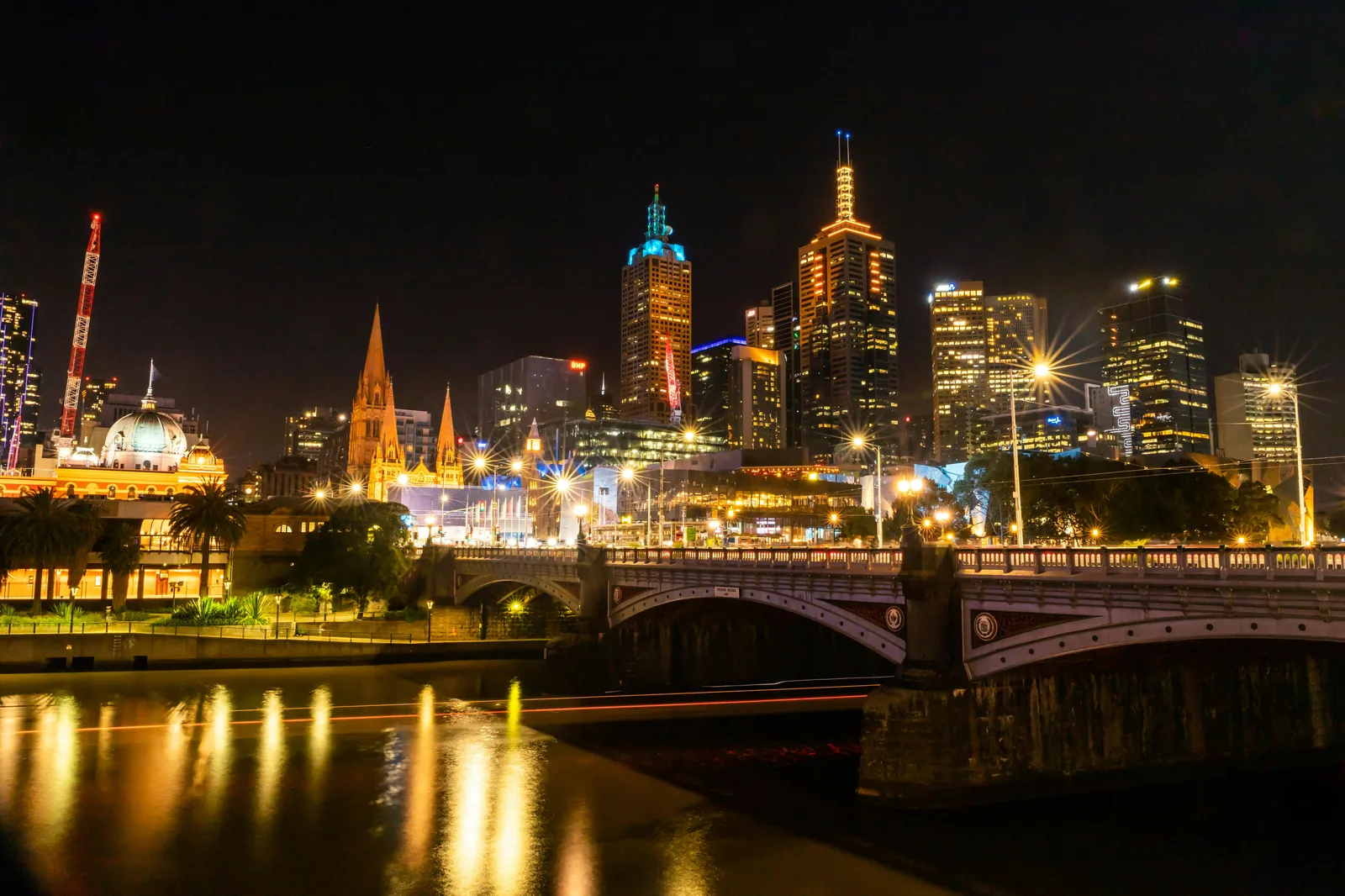
    Things to do in Melbourne at night hero — skyline
    Melbourne at night is one of Australia’s best urban experiences.

    Top 10 things to do in Melbourne at night

    • Walk Princes Bridge for the Yarra River and skyline at dusk.
    • Drink at a rooftop bar (Bomba, Naked for Satan, or Madame Brussels).
    • Catch a comedy gig at the Comedy Republic or Melbourne Town Hall.
    • See a live band at The Corner, The Tote, or Northcote Social Club.
    • Eat dinner at a hidden laneway restaurant (MoVida, Cumulus, or Tipo 00).
    • Watch the fire-and-water fountain show at Crown Riverwalk.
    • Take in a theatre show at Her Majesty’s, the Princess, or Malthouse.
    • Visit Eureka Skydeck Edge for the city skyline at night.
    • Walk Hosier Lane after dark when the laneway is quieter and atmospheric.
    • Watch fairy penguins at St Kilda Pier breakwater (free, after sunset).

    Rooftop bars and laneway drinks

    Rooftop bars — Melbourne after dark
    Melbourne’s rooftop bar scene rivals New York.
    • Naked for Satan (Fitzroy) — pinchos and panoramic views from a rooftop in inner Melbourne.
    • Madame Brussels (CBD) — astroturf and pink furniture on a Bourke Street rooftop. Eccentric and beloved.
    • Bomba (Lonsdale Street) — Spanish-flavoured rooftop that throws Sunday parties in summer.
    • Goldilocks (Swanston Street) — secret rooftop bar accessed via a barbershop.
    • Loop Roof (Meyers Place) — laid-back vibe, decent drinks, friendly staff.
    • Bar Liberty (Fitzroy) — natural wine bar.
    • Black Pearl (Fitzroy) — long-running cocktail icon.
    • The Everleigh (Fitzroy) — speakeasy-style cocktails, 1920s atmosphere.
    • Romeo Lane (CBD) — small Italian wine bar.
    • Bar Margaux (CBD) — 1980s Parisian bistro vibe with French wines.
    • Section 8 (Tattersalls Lane) — outdoor shipping-container bar.
    • Ponyfish Island — bar on a platform under Princes Bridge over the Yarra.

    Live music in Melbourne at night

    Melbourne’s live music scene is one of the densest in the world — the city has more live gigs per capita than Austin, Nashville, or London. Most weekends offer 200+ gigs across the city. Independent bands, not stadium acts, are the backbone.

    • The Corner Hotel (Richmond) — medium-rock bands, the rooftop is a Melbourne icon.
    • The Tote (Collingwood) — punk and indie, three rooms, daily gigs.
    • Northcote Social Club (Northcote) — indie singer-songwriters and small-name internationals.
    • The Espy / Hotel Esplanade (St Kilda) — multi-stage pub on the bayside.
    • Cherry Bar (AC/DC Lane, CBD) — classic-rock institution.
    • Bird’s Basement (CBD) — premier jazz club.
    • 170 Russell (CBD) — mid-size touring acts.
    • Forum (Flinders Street) — heritage venue with international acts.
    • Palais Theatre (St Kilda) — historic theatre on the bayside, mid-size touring acts.
    • Festival Hall (West Melbourne) — heritage rock venue.

    Cover charges range from free to A$40. Gigs are listed daily on Beat Magazine, Forte, and Time Out Melbourne. Most venues sell tickets via Oztix or Moshtix — book ahead, especially weekends.

    Theatre, comedy, and shows

    Theatre and shows at night
    Melbourne is Australia’s theatre capital.
    • Her Majesty’s Theatre (Exhibition Street) — major touring musicals (Hamilton, & Juliet, etc.).
    • Princess Theatre (Spring Street) — heritage venue for big musicals.
    • Regent Theatre (Collins Street) — 1929 art deco palace.
    • Comedy Theatre (Exhibition Street) — long-running comedy and small musicals.
    • Malthouse Theatre (Southbank) — Melbourne’s flagship experimental house.
    • Melbourne Theatre Company (Southbank Theatre) — Australia’s largest theatre company.
    • La Mama (Carlton) — small experimental house where most Australian playwrights cut their teeth.
    • Comedy Republic (CBD) — dedicated comedy room with weekly stand-up.
    • The Last Laugh / Comic’s Lounge (North Melbourne) — long-running comedy club.
    • Melbourne International Comedy Festival — every April, the world’s third-largest comedy festival.

    Tickets via Ticketmaster, Ticketek, or directly via venues. TodayTix and Lasttix apps regularly carry day-of tickets at 30–50% off — the best way to discount big musicals.

    Dinner and late-night dining

    Dinner in Melbourne — laneway and rooftop dining
    Melbourne dinner culture is dense and walkable.
    • MoVida (Hosier Lane) — Frank Camorra’s Spanish institution.
    • Cumulus Inc. (Flinders Lane) — Andrew McConnell’s all-day flagship.
    • Tipo 00 (Little Bourke Street) — pasta-led Italian, regularly on Australia’s top-50 lists.
    • Lune Croissanterie’s evening pop-up (when running) — Melbourne’s most-celebrated croissant maker.
    • Chin Chin (Flinders Lane) — pan-Asian sharing plates, party energy.
    • Mamasita (Collins Street) — Mexican upstairs, no bookings.
    • Supernormal (Flinders Lane) — modern Asian by Andrew McConnell.
    • Attica (Ripponlea) — three-hat fine-dining destination, Australia’s most acclaimed restaurant. Book months ahead.
    • Lune CBD — opens evenings on weekends sometimes.
    • Late-night pho on Victoria Street, Richmond — open until 1 am at several spots.
    • Late-night dumpling on Russell Street — HuTong, Shanghai Street, Chinatown.

    Free things to do in Melbourne at night

    Yarra River night walks — Princes Bridge to Southbank
    The Yarra at night offers the city’s best free view.
    • Walk the Yarra from Princes Bridge along Southbank Promenade — free, atmospheric, beautiful.
    • Crown Riverwalk fire fountains — free synchronized fire-and-water show every hour after dark.
    • Hosier Lane after dark — quieter than during the day, more atmospheric.
    • Federation Square big screen — often shows free outdoor cinema, AFL Grand Finals, NYE fireworks, etc.
    • St Kilda Pier fairy penguin viewing — free, after sunset, at the breakwater.
    • State Library lawn after dark — free, popular with picnic groups in summer.
    • NGV International Wednesday late nights (when running) — free permanent galleries open until 9 pm.
    • Free outdoor cinema — Federation Square, Birrarung Marr, Botanic Gardens summer programs.
    • Free Tram Zone evening rides — the City Circle tram (route 35) runs until 9 pm Thursday to Saturday.

    Date-night Melbourne ideas

    • Dinner at MoVida or Tipo 00, then walking Hosier Lane after.
    • Cocktails at Black Pearl or The Everleigh.
    • Eureka Skydeck “Edge” experience for the views.
    • A show at Malthouse Theatre or Melbourne Recital Centre.
    • Live jazz at Bird’s Basement.
    • A summer rooftop dinner at Naked for Satan or Bomba.
    • Yarra River dinner cruise (Spirit of Melbourne, A$130 per person).
    • A picnic blanket sunset at Royal Botanic Gardens or Birrarung Marr.
    • Astor Theatre double feature in St Kilda — classic film at one of Australia’s most beautiful 1936 cinemas.
    • Free outdoor cinema in summer at Birrarung Marr.

    Late-night attractions and observation

    • Eureka Skydeck and the Edge — the 88th-floor observation deck stays open until 10 pm; the glass-floor cube called the Edge is bookable until 9:30 pm.
    • Melbourne Star Observation Wheel (Docklands) — a slow Ferris wheel ride; check operating status as it has been intermittent in recent years.
    • Crown Casino — open 24/7, with free spectacle (atrium fire shows, riverwalk fountains) at no cost to walk through.
    • State Library of Victoria evening hours — open until 9 pm Thursday to Saturday in some seasons.
    • Queen Victoria Night Market — Wednesday evenings in summer (mid-November to late February). Free entry, hawker-style food trucks, live music.

    Things to do in Melbourne at night by neighbourhood

    • CBD — laneway dining, theatre district, rooftop bars, Hosier Lane.
    • Fitzroy / Collingwood — small bars (Naked for Satan, Black Pearl), live music (The Tote, Northcote Social Club), Vietnamese/Korean late-night food.
    • Carlton — Lygon Street Italian dinners, La Mama Theatre, Italian Cultural Institute screenings.
    • Southbank — Crown Riverwalk, Arts Centre Spire, dinner at PM24 or Vue de monde, Yarra views.
    • St Kilda — Espy live music, Astor Theatre films, fairy penguin viewing, Acland Street late dessert.
    • Richmond — Vietnamese food on Victoria Street, The Corner Hotel gigs.
    • South Yarra / Prahran — cocktail bars, late-night eats on Chapel Street.

    Late-night transport in Melbourne

    • Night Network — trams and trains run 24/7 on Friday and Saturday nights; reduced-frequency overnight services.
    • Free Tram Zone — operates the same hours as regular trams (i.e., includes late-night services on Friday/Saturday).
    • Uber, Didi, Ola — operate 24/7 with surge pricing on Friday and Saturday nights after midnight.
    • Taxi — taxi ranks throughout the CBD; night surcharge applies after 10 pm.
    • Walking — the CBD is well-lit and busy through the early hours of weekend mornings.

    Comedy and live entertainment by month

    • April — Melbourne International Comedy Festival (3 weeks of stand-up, hundreds of shows daily).
    • August — Melbourne International Film Festival (MIFF), with evening screenings at multiple cinemas.
    • September — Melbourne Fringe (independent comedy, theatre, performance).
    • October — RISING Festival (Melbourne International Arts Festival successor).
    • December — NGV Triennial (every 3 years; next December 2026), free open until late.

    Hidden Melbourne bars (small bar laneway scene)

    Melbourne’s small-bar culture is legally distinct from regular pubs — small bars (under 200 patrons) operate under a licensing regime introduced in 2009 that supported the proliferation of cocktail-focused, design-led, often-hidden venues. The result is hundreds of bars in unmarked basements, behind unlabelled doors, up dim staircases.

    • Bar Americano (Presgrave Place) — standing-room cocktail bar. Italian aperitivo focus.
    • Goldilocks (Swanston Street) — accessed through a barbershop; secret rooftop on top.
    • Romeo Lane (CBD) — small Italian wine bar.
    • Bar Margaux (Meyers Place) — 1980s Parisian bistro vibe with French wines.
    • Heartbreaker (Russell Street) — late-night dive bar atmosphere.
    • The Toff in Town (Curtin House) — train-carriage themed booths.
    • Eau de Vie (Malthouse) — speakeasy cocktail bar (also has Sydney sister).
    • Manchuria (Niagara Lane) — Asian-fusion small bar, pan-Asian cocktails.
    • Heart Attack and Vine (Carlton) — warm, friendly small bar.
    • Ferdydurke (Curtin House) — Polish-themed small bar.
    • Embla (CBD) — natural wine bar.
    • Above Board (Smith Street, Collingwood) — long-bar cocktail focus.

    Best Melbourne rooftop bars in detail

    • Naked for Satan (Fitzroy) — Brunswick Street rooftop with pinchos. Panoramic views over Fitzroy and the city skyline. Casual evening drinks.
    • Madame Brussels (CBD) — astroturf and pink furniture on a Bourke Street rooftop. Specialist in jugs of Pimms.
    • Bomba (Lonsdale Street) — Spanish-flavoured rooftop. Throws Sunday parties in summer.
    • Loop Roof (Meyers Place) — laid-back vibe, local crowd, best happy hour.
    • Goldilocks (Swanston Street) — secret rooftop, accessed via a barbershop.
    • Jardín Tan (Royal Botanic Gardens) — beautiful garden rooftop, summer-only.
    • Rooftop at QT Melbourne — high-end hotel rooftop, dramatic city views.
    • Curtin House Rooftop Cinema — outdoor cinema and bar combination, summer.
    • Siglo (Spring Street) — old-school cigar lounge with a rooftop terrace.
    • Lui Bar (Rialto) — top-floor cocktail bar with floor-to-ceiling skyline views.

    Live music venues by genre

    • Rock and indie: The Corner Hotel (Richmond), 170 Russell, The Tote, Cherry Bar, The Espy.
    • Jazz: Bird’s Basement, Paris Cat, 303, The Duke of Windsor.
    • Classical: Hamer Hall (Melbourne Symphony Orchestra), Melbourne Recital Centre, Salon at Melbourne Recital.
    • Folk and singer-songwriter: Northcote Social Club, The Workers Club, Brunswick Hotel.
    • Punk and underground: The Tote, John Curtin Hotel, Old Bar.
    • Electronic and dance: Revolver Upstairs (Prahran), Sub Club (under the Forum), New Guernica.
    • Hip hop and R&B: Howler (Brunswick), Section 8.
    • Gigantic mid-size touring acts: Forum, Palais Theatre (St Kilda), Margaret Court Arena, Rod Laver Arena.
    • Major touring acts: Marvel Stadium (Docklands), AAMI Park (sport precinct).

    Late-night food in Melbourne

    • Vietnamese pho on Victoria Street, Richmond — Pho Hung Vuong, Pho Dzung. Open until 1 am most nights.
    • HuTong Dumpling Bar (Russell Street) — open late, Shanghai dumplings.
    • Shanghai Street (Russell Street) — late-night Chinese.
    • Chinatown food courts — open until 11 pm to midnight.
    • Maltese Cafe (Sydney Road, Brunswick) — late-night Maltese.
    • Chicken Chicken (Richmond) — late Korean fried chicken.
    • Tipo 00 late seatings — book the 9 pm sitting for a relaxed late dinner.
    • Late-night kebab shops on Smith Street and Sydney Road — open until 3 am Friday/Saturday.
    • Federici Cafe (Drewery Lane) — open late, Italian.
    • Lygon Street late-night — Pellegrini’s stays open until midnight, late Italian options nearby.

    Melbourne nightlife by month

    • January — Australian Open evening events, summer rooftop season, Midsumma Festival.
    • February — White Night Melbourne (when scheduled), summer late-night markets.
    • March — Moomba Festival, Melbourne F1 Grand Prix evenings.
    • April — Melbourne International Comedy Festival (3 weeks of nightly stand-up).
    • May — Melbourne International Jazz Festival pop-up nights.
    • June — RISING Festival outdoor light installations.
    • July — Open House Melbourne nights.
    • August — MIFF (Melbourne International Film Festival), evening screenings.
    • September — Melbourne Fringe (independent comedy and theatre across the city).
    • October — Spring Racing Carnival evenings, Melbourne International Arts Festival.
    • November — Melbourne Cup Carnival, late spring rooftops reopening.
    • December — NGV Triennial open late (every 3 years; next 2026), Christmas Square at Town Hall, NYE fireworks.

    Melbourne theatres and what’s typically on

    • Her Majesty’s Theatre (Exhibition Street) — major touring musicals (Hamilton, Hadestown, & Juliet, etc.).
    • Princess Theatre (Spring Street) — heritage venue. Long-running musicals like Phantom and Mary Poppins.
    • Regent Theatre (Collins Street) — 1929 art deco palace; cabaret, musicals, concerts.
    • Comedy Theatre (Exhibition Street) — small musicals and comedy.
    • Athenaeum Theatre (Collins Street) — heritage venue, plays and music.
    • Forum Melbourne — concerts and comedy in heritage Moorish-revival theatre.
    • Malthouse Theatre (Southbank) — Melbourne’s flagship experimental house.
    • Melbourne Theatre Company (Southbank Theatre) — Australia’s largest theatre company.
    • La Mama (Carlton) — small experimental house.
    • Northcote Town Hall Arts Centre — independent productions.
    • Arts Centre Melbourne (Southbank) — opera, ballet, musicals at State Theatre and Hamer Hall.

    Date-night Melbourne deep dive

    • Romantic dinner spots — Tipo 00, Embla, Heartattack and Vine, Cumulus Inc., Vue de Monde (premium), Attica (special occasion).
    • Cocktail bars for first dates — Black Pearl, The Everleigh, Bar Liberty, Romeo Lane, Manchuria.
    • Date-night with views — Eureka Skydeck Edge, Lui Bar, Crown’s Atrium fire fountain show.
    • Romantic walks — Yarra River from Princes Bridge, Royal Botanic Gardens at sunset, Brighton Beach Boxes at dawn.
    • Live music dates — jazz at Bird’s Basement, intimate gigs at Northcote Social Club, classical at Melbourne Recital Centre.
    • Movie dates — Astor Theatre St Kilda for classic films in a 1936 cinema; Cinema Nova in Carlton for arthouse.
    • Cooking classes — many cafes and restaurants offer evening cooking classes, A$120–A$200 per person.
    • Sailing on the Yarra — Spirit of Melbourne dinner cruises, A$130 per person.

    Night photography in Melbourne

    • Princes Bridge at sunset — the canonical Melbourne skyline shot.
    • Crown Riverwalk during fire fountain show — long exposures capture the flames.
    • Hosier Lane after dark — atmospheric, less crowded.
    • Federation Square at night — illuminated deconstructivist architecture.
    • Eureka Skydeck Edge — paid access for the highest skyline shots.
    • Yarra River reflections — long exposures from the Southbank side.
    • St Kilda Pier at sunset — west-facing skyline.
    • Melbourne Star observation wheel — neon-lit centerpiece (when operating).
    • Rooftop cinema vantage at Curtin House — looking down on Swanston Street.
    • Williamstown waterfront at dusk — across-the-bay skyline.

    Free outdoor cinema in summer

    • Federation Square outdoor cinema — free outdoor screenings several nights a week in summer.
    • Birrarung Marr — occasional free outdoor cinema.
    • Royal Botanic Gardens — Moonlight Cinema (paid) and occasional free events.
    • Rooftop Cinema (Curtin House) — paid (A$25), but the venue is special.
    • Lunar Drive-In Cinema (Coburg) — heritage drive-in, paid.

    Wedding-photo spots at night

    • Hosier Lane after dark — atmospheric and quieter.
    • Princes Bridge with the city skyline.
    • Federation Square big screen as backdrop.
    • Royal Botanic Gardens lit pathways.
    • Brighton Beach Boxes at sunset.
    • Crown Riverwalk fire fountain backdrop.
    • Williamstown waterfront with city skyline across the bay.

    Frequently asked questions about things to do in Melbourne at night

    Is Melbourne safe at night?

    Yes — the CBD, Southbank, Fitzroy, Carlton, and major tram corridors are well-lit and safe through the evening. After 1 am the CBD is busy but quieter; common-sense precautions (don’t walk alone in dark laneways, avoid intoxicated arguments, use Uber after midnight if you’re unsure) apply.

    What’s the best Melbourne nightlife area?

    For first-time visitors, the CBD laneway scene + Southbank waterfront. For locals, Fitzroy and Collingwood for small bars and live music. For bayside vibes, St Kilda. For late-night Vietnamese food and gigs, Richmond.

    Are Melbourne pubs and bars open late?

    Most CBD bars are open until 1 or 3 am. Some have 24-hour licences, especially in the CBD core. Fitzroy and Collingwood bars typically close at 1 am; St Kilda is more 1–3 am.

    What’s the best free thing to do in Melbourne at night?

    Walk the Yarra River from Princes Bridge to Southbank Promenade at sunset, then catch the Crown Riverwalk fire fountains. Or watch the fairy penguins at St Kilda Pier breakwater after dark — completely free and a unique Melbourne experience.

    Where can I see comedy in Melbourne?

    Live comedy at night in Melbourne
    Melbourne hosts the world’s third-largest comedy festival.

    Comedy Republic (CBD) for nightly stand-up. The Last Laugh and Comic’s Lounge in North Melbourne for established acts. The Melbourne International Comedy Festival in April runs hundreds of shows across the city.

    Where can I see live music in Melbourne tonight?

    Check Beat Magazine, Forte, or Time Out Melbourne for daily gig listings. Reliable venues with gigs nearly every night: The Corner Hotel, The Tote, Northcote Social Club, The Espy, Cherry Bar, and Bird’s Basement.

    Is the Free Tram Zone available at night?

    Yes — the Free Tram Zone operates whenever trams operate, including the Night Network on Friday and Saturday late nights. The City Circle Tram (route 35) runs until 9 pm Thursday to Saturday.

    What time do Melbourne shops close?

    Most close at 5–6 pm Monday to Wednesday and Saturday, 7 pm Sunday, and 9 pm Thursday and Friday (late-night shopping). Supermarkets stay open until midnight in most suburbs.

    Final word: planning your Melbourne after-dark

    Melbourne after dark is best taken slowly. Start with dinner in a laneway, walk the Yarra at sunset, find a small bar through an unmarked door, catch a gig or show, finish with late-night dumplings on Russell Street. The city rewards visitors who stay out — the daytime Melbourne is fine, but the post-7 pm Melbourne is what locals love. For broader context, see our Melbourne nightlife guide pillar and our things to do in Melbourne pillar.

  • Melbourne Free Tram Zone (2026): Map, Rules and How to Use It

    Melbourne Free Tram Zone (2026): Map, Rules and How to Use It

    The Melbourne Free Tram Zone is one of the city’s best-kept practical secrets and the largest free public-transport zone of its kind in the world. Within a clearly defined boundary that covers the entire CBD core plus Docklands and the Queen Victoria Market, every tram is completely free. No ticket, no Myki tap, no fare. Just hop on, ride a few stops, hop off. For tourists, the Free Tram Zone effectively turns the central city into a free public transit network on top of an already walkable area. This 2026 guide explains exactly where the zone goes, which trams to use, what attractions are inside it, the rules around tapping on, and the common mistakes that cost visitors A$250 fines.

    Melbourne Free Tram Zone hero — city tram
    The Free Tram Zone is the largest of its kind in the world.

    What is the Melbourne Free Tram Zone?

    The Melbourne Free Tram Zone is a designated area in central Melbourne where every tram inside the boundary is free to ride. Introduced in January 2015 by the Victorian Government, the zone was designed to make the CBD easier for tourists, reduce short-trip car traffic, and encourage public transport use. It now carries approximately 7 million free passengers a year. There is no equivalent free zone in any other Australian or major world city of this size.

    Where does the Free Tram Zone go?

    Free Tram Zone boundary stops
    The zone is bordered by Spring, La Trobe, Spencer and Flinders.

    The zone is roughly rectangular and covers the central CBD, plus an extension into Docklands and a northern arm to Queen Victoria Market. The boundaries are:

    • North: La Trobe Street.
    • South: Flinders Street and the Yarra River (Federation Square / Princes Bridge area).
    • East: Spring Street (Parliament House).
    • West: Spencer Street (Southern Cross Station) and into all of Docklands.
    • Northern arm: Up Elizabeth Street to William Street, including Queen Victoria Market on Victoria Street.

    If you stay inside this area, every tram is free. The moment you cross the boundary in any direction, the trip becomes paid (A$5.30 for a 2-hour metropolitan fare, or capped at A$11/A$8 daily). Stops at the boundary are clearly signed “Free Tram Zone — last free stop” so you know where to get off if you don’t want to pay.

    Which trams run inside the Free Tram Zone?

    Every tram route that passes through the boundary serves the zone. The most useful for tourists are:

    • Route 35 — City Circle Tram — heritage W-class trams running entirely within the zone in both directions. Recorded commentary on tourist landmarks.
    • Route 11 — runs along Collins Street from Victoria Harbour to East Brunswick.
    • Route 12 — Collins Street from Docklands to Toorak East via Federation Square.
    • Route 30 — runs along La Trobe Street between St Vincent’s Plaza and Docklands; entirely inside the zone.
    • Route 35 (City Circle) — repeated for clarity, the most tourist-friendly heritage tram.
    • Routes 48, 109, 86, 96 — pass through the zone from inner suburbs (free inside, paid outside).
    • Routes 5, 6, 16, 64, 67, 72 — run down Swanston Street and St Kilda Road; free until Federation Square stop, then paid heading south.
    • Route 19 — passes through the zone along Elizabeth Street; useful for Queen Victoria Market and the northern arm.

    The City Circle Tram (route 35)

    City Circle Tram (route 35) — heritage W-class
    The City Circle Tram runs entirely inside the Free Tram Zone.

    For first-time visitors who want a single hop-on, hop-off ride through the entire CBD, route 35 (the City Circle Tram) is the answer. Heritage W-class trams (built between the 1920s and 1950s) circle the CBD in both directions, with a recorded commentary in English pointing out landmarks. The full loop takes 50 minutes. Stops include Federation Square, Flinders Street Station, Southern Cross Station, the Docklands waterfront, the State Library, Parliament House, and the Old Treasury Building. It runs every 12 minutes from 10 am to 6 pm Sunday to Wednesday and until 9 pm Thursday to Saturday.

    Major attractions inside the Free Tram Zone

    Queen Victoria Market — Free Tram Zone destination
    Queen Victoria Market sits inside the zone.
    • Federation Square (NGV Australia, ACMI, Koorie Heritage Trust).
    • Flinders Street Station.
    • Hosier Lane and AC/DC Lane.
    • The State Library of Victoria.
    • Melbourne Central shopping centre.
    • Bourke Street Mall.
    • The Block Arcade and Royal Arcade.
    • Chinatown.
    • Parliament House and the Old Treasury Building.
    • Queen Victoria Market.
    • Southern Cross Station.
    • Docklands waterfront and Marvel Stadium.
    • The Yarra Riverbank from Princes Bridge to Southern Cross.

    That’s essentially every CBD attraction a first-time visitor would put on their list, all reachable for free.

    Docklands inside the Free Tram Zone

    Docklands trams — included in the Free Tram Zone
    All Docklands trams are inside the zone.

    The Docklands precinct (waterfront, Marvel Stadium, Melbourne Star area, NewQuay) is fully inside the Free Tram Zone — including all the routes that connect Docklands to the CBD. Take tram 70 or 11 for free between the Docklands waterfront, Southern Cross Station, and Federation Square. This makes Docklands one of the easiest free additions to a Melbourne CBD day.

    Free Tram Zone rules and how to use it

    Inside a Melbourne tram — no Myki tap needed in the zone
    Hop on, no tap-on required inside the zone.
    • Inside the zone: board any tram, ride free, get off. No tap-on required, no ticket needed.
    • If you’re staying inside the zone for the entire trip: do not tap your Myki. Tapping deducts a fare unnecessarily.
    • If your trip starts inside the zone but ends outside: you must tap on with Myki when you get on, even at the inside stop. The fare is calculated when you tap off.
    • If your trip starts outside the zone and ends inside: tap on at the start (outside the zone). You will not be charged for the portion inside the zone, but the trip overall is paid.
    • Boundary stops are signed “Free Tram Zone — last free stop” — get off there to avoid paying.
    • Inspectors check — plainclothes Authorised Officers do board trams inside and outside the zone, but they only check tap-ons for paid trips.

    Common Free Tram Zone mistakes

    • Tapping unnecessarily — tapping a Myki inside the zone for an inside-only trip wastes a fare.
    • Forgetting to tap when crossing the boundary — riding past the boundary without a tap is fare evasion (A$250 on-the-spot fine, A$330+ if it goes to court).
    • Confusing the zone boundary — the eastern edge is Spring Street, NOT Russell Street; westerly is Spencer, not King.
    • Assuming buses and trains are also free — only trams are free. Buses and trains inside the same area are paid as normal.
    • Trying to extend the free zone — staying on past the last free stop without a Myki is illegal.
    • Boundary confusion at Flagstaff and Melbourne Central trains — the underground stations are not part of the zone.
    • Standing in the way of doors at peak hours — Melbourne CBD trams get crowded; let people exit first.

    Tips for using the Free Tram Zone effectively

    • Stay in CBD accommodation to maximise the value of the free zone.
    • Combine with the City Circle Tram for orientation — first day, take the full loop on route 35 to scout attractions.
    • Use route 86 from Bourke Street eastbound to get to Melbourne Museum (Stop 11) — last free stop just before the museum.
    • Use route 19 northbound on Elizabeth Street for Queen Victoria Market.
    • Use route 30 along La Trobe Street if you’re heading between Docklands and the State Library/Carlton edge.
    • Routes 5, 6, 16, 64, 67, 72 down Swanston Street are the easiest way to head south to NGV International or St Kilda — free until the Federation Square stop, then paid.
    • Use the PTV Journey Planner app — it tells you exactly when a tram is inside the Free Tram Zone.
    • Don’t bother with a Myki if you’re a 1- or 2-day visitor staying entirely in the CBD.
    • Carry a child Myki if you have a child going outside the zone — half-price fares.

    Free Tram Zone vs paid Myki: when to switch

    If your trip is staying entirely inside the CBD core (NGV at Federation Square is inside; NGV International on St Kilda Road is just outside), the Free Tram Zone is enough. Buy a Myki only when you plan to:

    • Visit St Kilda or Brighton (south).
    • Visit Melbourne Zoo, Melbourne Museum (technically just outside, route 86 stops just before), or Carlton/Fitzroy.
    • Take a metropolitan train (e.g. to Williamstown, Sandringham, or to Belgrave for Puffing Billy).
    • Take a bus (Route 901 SmartBus to Melbourne Airport, for example).

    The Myki card itself costs A$6 plus your fare. Daily fare cap is A$11 weekdays, A$8 weekends — so you’ll never pay more than that in one day no matter how many trips.

    The history of Melbourne’s Free Tram Zone

    The Free Tram Zone was introduced on 1 January 2015 by then-Premier Daniel Andrews and the Victorian Government, replacing the previous “Hoddle Grid free tram” scheme that had been in place since 2007 but only covered the City Circle Tram heritage route. The 2015 expansion to the entire CBD core, Docklands, and Queen Victoria Market made Melbourne’s free zone the largest free public transport area of its kind in the world.

    Goals at launch were three-fold: encourage tourists to explore the CBD, reduce short-trip car traffic in the central city, and support inner-city retail. The first-year ridership exceeded forecasts by 30%. The zone has been popular and largely uncontroversial since, with occasional discussions about further expansion (to St Kilda Road, to Carlton, or to Richmond) that have not yet materialised as of 2026.

    Free Tram Zone boundaries by stop

    North boundary (La Trobe Street)

    The northern edge runs along La Trobe Street. Last free stops on routes 30, 35, and 86 are at La Trobe/Queen and La Trobe/Russell. Beyond La Trobe Street heading north (to Carlton, the museum precinct, etc.) becomes a paid trip.

    South boundary (Flinders Street and the Yarra)

    The southern edge runs along Flinders Street, plus the Federation Square and Princes Bridge area. Routes 1, 3, 5, 6, 16, 64, 67, and 72 down Swanston Street and St Kilda Road have their last free stop at Federation Square (Stop 13). Beyond that, heading south to NGV International or St Kilda, you must tap on with Myki.

    East boundary (Spring Street)

    The eastern edge runs along Spring Street (Parliament House). Routes 86, 96, and 30 have their last free stops at Spring Street/Bourke and Parliament. Beyond Spring Street heading east into East Melbourne is paid.

    West boundary (Spencer Street and Docklands)

    The western edge runs along Spencer Street (Southern Cross Station) and extends through all of Docklands. All Docklands trams (routes 11, 70, 86 segments) are inside the zone.

    Northern arm to Queen Victoria Market

    The zone extends north up Elizabeth Street and William Street to include Queen Victoria Market on Victoria Street. Routes 19, 57, and 59 along Elizabeth Street are free as far as Queen Vic Market.

    Every Free Tram Zone tram route in detail

    • Route 35 (City Circle Tram) — heritage W-class trams running entirely within the zone in both directions. Recorded commentary on tourist landmarks. Free, every 12 minutes, 10 am–6 pm Sun–Wed, until 9 pm Thu–Sat.
    • Route 11 — runs along Collins Street; West Preston via Victoria Harbour. Free between Victoria Harbour and Collins Street/Spring Street, paid beyond.
    • Route 12 — Collins Street from Docklands to Toorak East via Federation Square. Free until the zone boundary, paid beyond.
    • Route 30 — runs along La Trobe Street between St Vincent’s Plaza (Carlton) and Docklands. Mostly free; very short paid section at the eastern end.
    • Route 35 (City Circle) — repeated for clarity, runs the full CBD perimeter loop.
    • Routes 48 and 109 — pass through the zone east-west; free inside, paid outside.
    • Route 86 — runs from Bundoora via the CBD to Docklands. Free inside, paid heading north or east outside.
    • Route 96 — runs from Brunswick East via the CBD to St Kilda. Free inside the zone, paid heading south to St Kilda or north to Brunswick.
    • Routes 5, 6, 16, 64, 67, 72 — run down Swanston Street and St Kilda Road. Free inside the CBD as far as Federation Square; paid heading south.
    • Route 19 — passes through the zone along Elizabeth Street. Free until the zone boundary, useful for Queen Vic Market.

    Free Tram Zone fines and inspector experience

    Public Transport Victoria employs Authorised Officers (AOs, formerly known as ticket inspectors) who board trams to check fare compliance. The Free Tram Zone is fully patrolled — though inside the zone, no tap-on is needed, AOs check that travellers crossing the boundary have a valid Myki tap.

    • On-the-spot fine for fare evasion — A$280 in 2026 (increased from A$250 in 2024).
    • Court-issued penalty — up to A$330 plus court costs.
    • AOs can issue infringement notices — they have legal authority similar to police for fare matters.
    • Common scenarios — tourists riding past the boundary not realising they need to tap, or tapping on but not tapping off and forgetting.
    • Companion card holders are exempt from fines if travelling with a paid passenger.

    Free Tram Zone vs other free transit zones worldwide

    • Tallinn, Estonia — free public transport for residents (registered locals only, not tourists).
    • Luxembourg — free national public transport since 2020 for everyone, but on a much smaller scale than Melbourne.
    • Portland, Oregon (former) — had Fareless Square free downtown bus zone until 2012; now discontinued.
    • Calgary, Canada — the C-Train downtown free zone.
    • Detroit People Mover — discounted but not free.
    • Adelaide, Australia — free city trams (specific routes only) but smaller geographic area than Melbourne.

    Melbourne’s Free Tram Zone is unusual in its size, density, and tourist-targeted design. Few cities offer free trams across an entire CBD plus a major waterfront precinct.

    Future expansion of the Free Tram Zone

    Discussions have surfaced periodically about extending the Free Tram Zone south to NGV International, west to West Melbourne, or north to the Melbourne Museum/Carlton Gardens area. Mayor Sally Capp and successor mayors have advocated for various expansions, but each requires Victorian Government funding. As of 2026, the zone boundaries remain unchanged from 2015. Future expansion is plausible but not announced.

    Free Tram Zone accessibility

    • Wheelchair accessible on most modern E-class and D-class trams. Heritage W-class trams (route 35 City Circle) are not wheelchair accessible.
    • Low-floor trams for prams, wheelchairs, and mobility-aid users — most CBD routes have these by default.
    • Visual displays and audio announcements on most trams identify upcoming stops.
    • Companion card recognition — companion travels free with a paid passenger.
    • Service animals welcome.
    • Stops with tactile pavement for vision-impaired passengers.

    Free Tram Zone with prams, bikes, and pets

    • Prams — welcome on all trams, fold or unfold as space allows.
    • Bikes — small, foldable bikes only; full-size bikes are not allowed on Melbourne trams (they are on trains and some buses).
    • Pets — guide dogs and assistance animals welcome on all trams. Personal pets generally not allowed except in carriers (small dogs, cats).
    • Luggage — full-size suitcases are fine; aim for the centre of the tram.

    Free Tram Zone tourist itineraries by tram

    The CBD orientation circuit

    Hop on route 35 (City Circle Tram) at Federation Square. Take the full 50-minute loop in either direction. Recorded commentary covers the major landmarks. Get off when you spot something interesting; jump back on the next one (every 12 minutes). Free.

    Collins Street arts and shopping

    Tram 11 along Collins Street takes you past Parliament House, the Block Arcade, the heritage banking precinct, and through to Docklands. Hop off at Hardware Lane for laneway dining or at Marvel Stadium for a sports tour.

    Bourke Street shopping

    Tram 96 along Bourke Street covers Bourke Street Mall, Myer, David Jones, the Royal Arcade, and Chinatown. Free for the full inside-the-zone trip.

    Queen Victoria Market run

    Tram 19 northbound along Elizabeth Street goes directly to Queen Victoria Market — free, fast, and easier than walking the full distance.

    Common Free Tram Zone confusions

    • “Are buses also free?” — No. Only trams. Buses inside the same area are paid.
    • “Is the train inside the Free Tram Zone free?” — No. Trains and underground stations (Flagstaff, Melbourne Central, Parliament) all charge full Myki fares.
    • “What if I tap on by accident inside the zone?” — Your Myki balance deducts a fare. You can’t easily refund it; treat it as a learning experience.
    • “Can I exit the zone, then re-enter, and ride free again?” — Yes, as long as you tap on/off when you leave the zone and the in-zone segment is treated as free travel.
    • “What if my hotel is just outside the zone?” — You’ll pay 2-hour fare (A$5.30) for the trip from your hotel into the zone, then free within the CBD.

    Frequently asked questions about the Melbourne Free Tram Zone

    Is the Melbourne Free Tram Zone really free?

    Yes — completely free. No ticket, no Myki tap, no fare for any tram inside the boundary. The state government runs it as a free service.

    Where exactly is the Free Tram Zone boundary?

    The boundary is bordered by Spring Street (east), La Trobe Street (north), Spencer Street (west), and Flinders Street (south), with extensions covering all of Docklands and a northern arm up to Queen Victoria Market. Boundary stops are signed “Free Tram Zone — last free stop.”

    Do I need a Myki for the Free Tram Zone?

    No — you do not need a Myki for trips that stay entirely within the zone. You only need a Myki if you cross the boundary to a paid stop, or if you’re using trains or buses (which are not free).

    Are buses and trains free in the Free Tram Zone?

    No — only trams are free. Metropolitan trains and buses are paid as normal even inside the same geographic area.

    How does the Free Tram Zone work for tourists?

    Just hop on any tram inside the boundary, ride to your stop, and get off. No need to do anything else. If you stay entirely inside the zone for the day, you can take ten free tram rides at no cost.

    Can I get fined inside the Free Tram Zone?

    Not for being inside the zone without a ticket — that’s expressly allowed. You can be fined A$250+ if you ride past the boundary into a paid zone without tapping a valid Myki on board.

    Is the City Circle Tram still running?

    Yes — Route 35, the City Circle Tram, runs entirely within the Free Tram Zone on heritage W-class trams. It loops the CBD in both directions and includes recorded tourist commentary. Free, every 12 minutes, 10 am to 6 pm (and later on Thursday–Saturday).

    Are Docklands trams free?

    Yes — all of Docklands is inside the Free Tram Zone, including the routes that connect Docklands to the CBD core (routes 11, 70, 86, etc.).

    Final word: lean into Melbourne’s free transit

    The Melbourne Free Tram Zone is one of the genuinely useful gifts the city offers tourists. It works because the zone covers nearly every CBD attraction, the trams run every 6–10 minutes, and there are no gates or tickets to worry about. Plan a CBD-only day, hop on any tram you see, hop off when you spot something interesting. For broader transit context including paid trips out of the zone, see our Melbourne public transport guide.

  • Best Coffee in Melbourne (2026): Why This City Rules Coffee Culture

    Best Coffee in Melbourne (2026): Why This City Rules Coffee Culture

    The best coffee in Melbourne is some of the best coffee in the world — full stop. Specialty coffee professionals from Tokyo, Berlin, Brooklyn, and Portland make pilgrimages here. The flat white was popularised here. Three of the last decade’s World Barista Championship finalists trained on Melbourne machines. This 2026 guide is for visitors who want to taste the city’s coffee at the level it deserves: not “best brunch with coffee” but the cafes, roasters, and espresso bars where coffee is the whole point. We cover where to drink, how to order, what makes Melbourne coffee different, and how to take the experience home.

    Best coffee in Melbourne hero — espresso pour
    Melbourne is the global capital of specialty coffee.

    Why is Melbourne known for coffee?

    The short story: Italian and Greek post-war immigrants brought espresso machines to Melbourne in the 1950s. Pellegrini’s on Bourke Street opened in 1954 with the city’s first commercial espresso machine. Through the next 50 years, Melbourne quietly built a culture of independent neighbourhood cafes. Then in the early 2000s a wave of specialty roasters — Mark Dundon’s Seven Seeds, Aaron Wood’s Industry Beans, the Proud Mary team — combined Italian-style espresso with imported third-wave standards (single-origin sourcing, lighter roasts, precision brewing). The result is a coffee culture that is uniquely Melbourne: technical, independent, daily, and excellent.

    Melbourne also has the highest density of independent cafes per capita in any major English-speaking city. Tight planning rules and high commercial rents in the CBD historically prevented major chain dominance, leaving room for small operators. Walk for ten minutes in any direction in Fitzroy, Carlton, or the CBD and you’ll pass ten independent specialty cafes.

    Top espresso bars: where to find the best coffee in Melbourne

    Melbourne baristas — among the world's best
    Melbourne baristas regularly win World Barista Championships.
    • Patricia Coffee Brewers (Little Bourke Street, CBD) — standing-room espresso bar, no chairs at all. Pour rotating beans from Australia’s best roasters. Cult-status flat whites for office workers and visiting baristas alike. The single best espresso in the CBD.
    • Market Lane (Therry Street, near Queen Vic Market) — flagship of Australia’s most respected specialty roaster. Beautiful brewing methods, single-origins, and an Aeropress demo that visitors love.
    • Brother Baba Budan (Little Bourke Street, CBD) — chairs hanging from the ceiling. Run by Seven Seeds. A two-decade Melbourne institution.
    • Seven Seeds (Berkeley Street, Carlton) — the espresso bar that helped launch Melbourne’s specialty coffee scene. Still excellent.
    • Proud Mary (Oxford Street, Collingwood) — internationally known, exports beans worldwide. Long brunch menu but the coffee remains the headline.
    • Aunty Peg’s (Wellington Street, Collingwood) — coffee tasting room from the Proud Mary team. Drink rare and experimental brews here.
    • Industry Beans (Rose Street, Fitzroy) — flagship roastery and brewlab. Coffee-flight tastings are exceptional.
    • Cup of Truth (Campbell Arcade, CBD) — underground subway-arcade espresso bar. Small, distinctive, excellent.
    • Higher Ground (Little Bourke Street, CBD) — soaring power-station space; the coffee is consistent and the room is the most photogenic in the CBD.
    • Padre Coffee (Brunswick East and South Melbourne Market) — relaxed roaster cafe with strong espresso and good pastries.

    What is the best coffee in Melbourne to order?

    Melbourne flat white — silky microfoam
    Melbourne baristas pour the canonical flat white.
    • Flat white — Melbourne’s signature drink. Double ristretto shot, smooth microfoam, no dry foam on top. Roughly 1:1 ratio of espresso to milk. The default Melbourne order.
    • Long black — espresso poured over hot water. Deeper, less acidic than American coffee. The best way to taste a single-origin bean.
    • Macchiato (short or long) — espresso with a small dollop of foam. Strong, traditional, fast.
    • Magic — a Melbourne speciality. Double ristretto in a 5-oz cup, finished with steamed milk. Stronger than a flat white.
    • Filter / batch brew — single-origin, brewed slowly. Specialty cafes often have a daily rotating filter.
    • Pour-over — V60, Chemex, or Kalita. A barista hand-brews a single cup. A$8–A$12, takes 5 minutes.
    • Cold brew — steeped overnight. Lower acidity, smoother flavour profile.
    • Aeropress — a punchy, espresso-adjacent style brewed individually. Strong cult following.

    If you want the canonical Melbourne experience, order a flat white at Patricia or Market Lane and a single-origin filter at Industry Beans or Proud Mary on the same day. You’ll taste the spectrum.

    Specialty roasters worth visiting

    Specialty coffee roasting in Melbourne
    Melbourne has dozens of specialty roasters.
    • Seven Seeds (Carlton) — the godfather roaster of Melbourne’s specialty scene.
    • Industry Beans (Fitzroy) — flagship roastery with a 1,000-square-foot brewlab.
    • Market Lane (multiple) — beautiful brewing methods, ethical sourcing, and education.
    • Proud Mary / Aunty Peg’s (Collingwood) — internationally known, exports beans worldwide.
    • St ALi (South Melbourne) — large operation, multiple cafes, sustainable sourcing.
    • Padre Coffee (Brunswick East) — relaxed and excellent.
    • Code Black (Brunswick) — design-forward roaster and cafe.
    • Allpress (Collingwood) — global roaster with a strong Melbourne flagship.
    • Small Batch Roasting Co (Fitzroy) — micro-roaster and barista training centre.
    • Five Senses (Cremorne) — Perth-born, with a strong Melbourne presence.

    Most of these roasters offer free or low-cost cuppings (small group tastings) on weekends. Industry Beans, Market Lane, and Proud Mary all run them; check their websites and book ahead.

    Pour-over and filter coffee in Melbourne

    Pour-over filter coffee — Melbourne specialty cafes
    Pour-overs and Aeropress feature at most specialty cafes.

    For visitors interested in the technical end of coffee, Melbourne’s pour-over and filter culture is exceptional. Aunty Peg’s in Collingwood is the most dedicated pure-tasting room; Market Lane Therry Street offers daily-rotating filter brews; Industry Beans does coffee flights pairing the same bean across espresso, batch, and pour-over preparations. A pour-over costs A$8–A$12 and takes 4–5 minutes to brew. The barista will explain the bean’s origin, processing, and tasting notes.

    Buying Melbourne coffee beans

    Buying Melbourne coffee beans to take home
    Most roasters ship beans worldwide.

    If you want to take Melbourne coffee home, every roaster sells whole beans by the bag (250 g typically A$22–A$30). Most also ship internationally. The roasters most visitors take home: Seven Seeds, Market Lane, Industry Beans, Proud Mary, and St ALi. Bags are typically vacuum-sealed and travel-friendly. A few practical tips: buy whole beans (ground coffee oxidises in days), look for a roast date within the past 14 days, and pack in checked baggage if you’re travelling internationally to avoid pressure issues at altitude.

    Best coffee in Melbourne by neighbourhood

    • CBD — Patricia, Market Lane (Therry St), Brother Baba Budan, Higher Ground, Cup of Truth.
    • Fitzroy / Collingwood — Industry Beans, Proud Mary, Aunty Peg’s, Vacation Coffee.
    • Carlton — Seven Seeds, Pellegrini’s (the OG), Brunetti.
    • Brunswick — Padre Coffee, Code Black, Small Batch.
    • South Melbourne — St ALi, South Melbourne Market roasters.
    • South Yarra / Prahran — Twenty & Six Espresso, Top Shop, Patch.
    • St Kilda / Bayside — Monk Bodhi Dharma, The Galleon, Mart 130.
    • Richmond / Cremorne — Top Paddock, Three Bags Full, Maker Fine Coffee.

    How to order coffee in Melbourne

    • Order at the counter — most cafes are counter-order, table service is rare.
    • Specify takeaway or stay — staying gets a ceramic cup; takeaway is paper.
    • Default flat white — if uncertain, this is the safe order.
    • Bean of the day — most specialty cafes have one; ask the barista.
    • Plant milks — oat, almond, soy, macadamia all standard. Usually a A$0.50–A$1 surcharge.
    • Tipping not expected — round up at most.
    • Decaf — well respected at specialty cafes; you won’t get the side-eye.
    • Sugar — Melburnians often drink coffee unsugared. The barista won’t add it without you asking.

    Cafe etiquette and culture

    • Most cafes open at 7 am and close by 3 or 4 pm — Melbourne is a daytime cafe city.
    • Lunch service usually starts around 11 am.
    • Wi-Fi is standard in most cafes; ask first if you plan to stay an hour.
    • Tap water is brought free; ask once if it doesn’t appear.
    • Outdoor seating is dog- and child-friendly at most independent cafes.
    • Card surcharge of around 1.5% is common.
    • Many cafes only accept card; cash is rare in 2026.
    • Reusable keep-cups are widely accepted; some cafes give a A$0.50 discount.

    How much does the best coffee in Melbourne cost?

    • Flat white / latte / cappuccino — A$5.00–A$5.50 in the CBD, A$4.50–A$5 in the inner suburbs.
    • Long black / Americano — same as flat white.
    • Magic / piccolo / cortado — A$5–A$5.50.
    • Single-origin pour-over — A$8–A$12.
    • Cold brew — A$6–A$7.
    • Coffee flight (3 brewing methods) — A$15–A$20.
    • Bag of beans (250 g) — A$22–A$30.

    A perfect Melbourne coffee day

    • 7:30 am — start at Patricia in the CBD. Standing-room flat white.
    • 9:00 am — walk to Market Lane Therry Street. Single-origin pour-over.
    • 10:30 am — tram to Carlton. Brunch at Seven Seeds with a magic.
    • 12:30 pm — tram to Fitzroy. Coffee flight at Industry Beans.
    • 2:00 pm — walk to Aunty Peg’s in Collingwood for an experimental pour-over.
    • 3:00 pm — wrap up with a final espresso at Proud Mary and pick up a bag of beans to take home.

    Total cost: A$45–A$60 across six cafes and a bag of beans. Total caffeine: significant. Total Melbourne coffee education: complete.

    The history of Melbourne coffee culture

    Melbourne’s coffee story begins with post-war Italian and Greek migration. In 1954, Pellegrini’s Espresso Bar opened on Bourke Street with the city’s first commercial Faema espresso machine — a striking departure from the milk-bar coffee Australians had been drinking. Through the 1950s and ’60s, dozens of Italian-run bars opened across Lygon Street, Smith Street, and the inner suburbs. The flat white emerged in this era; both Sydney and Melbourne claim to have invented it, and the truth is that the drink evolved across both cities through the 1970s and ’80s.

    The third-wave revolution arrived in the early 2000s. Mark Dundon opened Seven Seeds in 2009, treating coffee like wine — single-origin, high-quality green-bean sourcing, lighter roasts that highlighted bean character. Aaron Wood opened Industry Beans, Nolan Hirte opened Proud Mary in Collingwood, and the Market Lane group (Jonathan Holden and Fleur Studd) brought specialty filter coffee into the mainstream. By the mid-2010s Melbourne had hundreds of independent specialty cafes and a global reputation. The 2014 World Barista Championships were held in Melbourne, cementing the city as a global coffee capital.

    Australian baristas at the World Barista Championships

    • Hugh Kelly — Australian Barista Champion 2017, 2018, 2024.
    • Sasa Sestic — World Barista Champion 2015 (training with Melbourne roasters).
    • Pete Licata — competed via Australian rounds.
    • Matt Perger — World Brewers Cup 2012, training in Melbourne specialty cafes.
    • Tim Williams — Australian Barista Champion 2024 (Industry Beans).
    • Many top-finishing competitors at the World Barista Championship train at Melbourne specialty roasters during the off-season.

    Brewing science: what makes Melbourne coffee different

    • Bean sourcing — Melbourne’s top roasters source single-origin green beans directly from farms in Ethiopia, Kenya, Colombia, Brazil, Guatemala, Costa Rica, and Indonesia. Direct trade and microlot sourcing are common.
    • Light to medium roasting — Melbourne specialty roasters favour lighter roasts that highlight bean character, while Italian-style cafes use darker roasts. The contrast is part of the city’s coffee landscape.
    • Espresso machine quality — La Marzocco, Slayer, and Synesso machines dominate. These offer barista control over temperature, pre-infusion, and pressure profile.
    • Grinder quality — Mythos, EK43, and Mahlkönig grinders are standard at top cafes.
    • Water — most specialty cafes use filtered, mineralised water tuned for espresso extraction.
    • Milk quality — Riverina-region farm-direct milk, often single-origin (single-farm) at top cafes.
    • Skilled baristas — Melbourne baristas frequently train internationally and bring back techniques.