Uber vs Taxis in Melbourne: Costs, Apps & When to Use Each
- Words
- Melbourne Tourism Guide
- Updated
- October 25, 2026
- Read
- 10 min
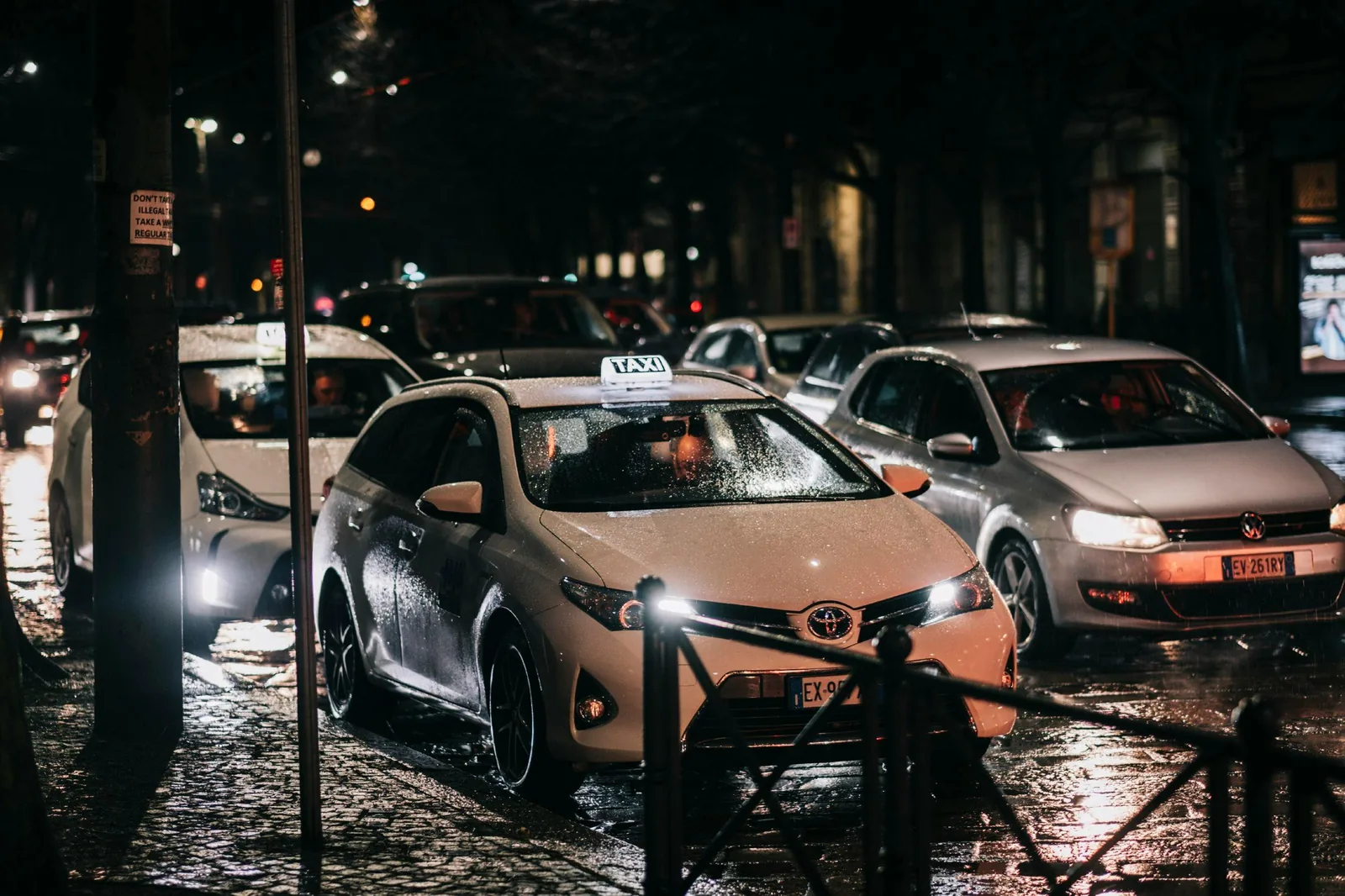
Uber vs taxis in Melbourne — the rideshare apps, taxi options, how costs compare, surge pricing, airport pickups, safety and when to use each.
This article contains advertising. Our booking links are routed through a partner that adds commission tracking automatically, so if you book through one we earn a commission from the provider, at no extra cost to you. It never affects what we recommend. Affiliate disclosure
Melbourne’s trams and trains will get you most places, but there are moments — a late night out, an early flight, a rainy evening with tired kids, a trip somewhere the network doesn’t reach — when you’ll want a car at your fingertips. The good news is that rideshare and taxis are plentiful, affordable and easy here. This guide compares your options — Uber and the other rideshare apps versus traditional taxis — covering costs, when to use each, airport pickups and safety, so you always know the smartest way to grab a ride. It’s a practical part of our Melbourne public transport guide.
Rideshare and taxis in Melbourne
Both rideshare and taxis are widely available across Melbourne, and for visitors they’re an easy, reliable backup to public transport. Rideshare (booked via an app) has become the default for most people thanks to upfront pricing and convenience, but taxis still have their place — at ranks, for street hails, and for travellers who’d rather not use an app. Prices are broadly comparable, both are regulated, and you’re rarely far from a ride in the inner city. The choice usually comes down to convenience, price on the night, and personal preference.
The rideshare apps
Several rideshare services operate in Melbourne. Uber offers rides across the city, though availability and waiting times vary with the time and place. DiDi is a popular alternative that frequently runs promotions and can undercut Uber on price, so it’s worth having both installed to compare fares before you book. All work the same way: set your pickup and destination, see the upfront price, and a nearby driver accepts. The big advantages are knowing the fare before you ride, cashless payment, and being able to track your driver — especially reassuring late at night.
Taxis
Melbourne’s taxis remain a solid option. You can hail one on the street (a lit rooftop sign means available), pick one up at a taxi rank (found outside stations, hotels and major venues), or book through an app like 13cabs. Fares are metered and regulated, with a flagfall plus a per-kilometre rate and possible surcharges (late night, airport). Taxis are particularly handy when you can’t get a rideshare quickly, at official ranks where there’s a queue of cars, and for travellers who prefer not to deal with apps. All licensed taxis accept card payment.

Costs compared
For typical trips, rideshare and taxis cost broadly similar amounts, though rideshare is often a little cheaper — and the apps’ upfront pricing means no surprises. The big variable is surge pricing: when demand spikes (Friday and Saturday nights, after major events, in bad weather, at peak airport times), rideshare prices rise, sometimes significantly, while taxi meter rates stay fixed — so during a surge, a taxi from a rank can actually be cheaper. Taxis have a flagfall (a base charge to start) plus per-kilometre rates and possible late-night or booking surcharges. The smart move: have both a rideshare app and a taxi option ready, and compare on the night.
When to use each
Use rideshare for most trips — it’s convenient, cashless and you know the price upfront; ideal when public transport is thin (late at night, early mornings), when you’re tired or laden with shopping, or heading somewhere off the tram and train network. Use a taxi when rideshare surge pricing is high, when there’s a rank with cars waiting (often faster than waiting for an app match), at the airport, or if you simply prefer not to use an app. Use public transport when it’s running well — it’s far cheaper, and within the city the trams (free in the centre) and trains usually win for value, as our tram and train guides explain.
Getting to and from the airport
Both rideshare and taxis serve Melbourne Airport. Rideshare has designated pickup zones (follow the signs — they’re sometimes a short walk from the terminal), and you’ll pay the metered/app fare plus any airport surcharge. Taxis queue at the official ranks outside arrivals, with a fixed airport fee added. Both are convenient if you have luggage, an early flight or arrive late, though they cost more than the SkyBus coach. For a full comparison of every transfer option, including the budget-friendly SkyBus, see our guide to Melbourne Airport to the city.
Safety
Rideshare and taxis are safe in Melbourne, with a few sensible habits. With rideshare, check the car’s make, model and number plate match the app before getting in, sit in the back when travelling alone, and use the app’s share-trip feature so someone knows your route. With taxis, use licensed cabs (official ranks or apps) rather than any unmarked car offering a lift. Both are good options for getting home safely after a night out — far better than walking long distances alone late at night, as our Melbourne safety guide notes.
Tips
Install a couple of rideshare apps (Uber plus DiDi) to compare fares and cut wait times. Watch for surge pricing on weekend nights and after events — a taxi rank may be cheaper. Set up your payment in the apps before you arrive. Know the rank locations near stations, hotels and venues. Use the share-trip feature at night. And remember that for value, public transport beats both — save rideshare and taxis for when they genuinely make sense. Our useful apps guide lists the ones to download.
Rideshare options in detail
It’s worth knowing the choices within each app. Uber offers several tiers — a standard ride (UberX), larger vehicles for groups and luggage (Uber XL), premium options, and sometimes a cheaper shared or “saver” option — so you can match the car to your needs and budget. DiDi offers similar tiers and frequently pushes promo codes and discounts, especially to new users, which can make it noticeably cheaper for a given trip. The practical upshot: a few minutes comparing the open apps before you book can save real money, particularly on longer trips or at busy times. For groups, the larger-vehicle options are often better value than two standard cars.
Payment and tipping
Both rideshare and taxis are cashless-friendly. Rideshare apps charge your saved card automatically — no cash, no fumbling — while licensed taxis all accept card (a small card surcharge may apply). As with the rest of Australia, tipping is not expected for either; the fare is the fare, though the apps let you add a tip if you’ve had great service and you’re welcome to round up a taxi fare. Set up your payment method in the apps before you arrive so your first ride is seamless, and keep a small amount of cash as a backup for the rare taxi with a card-machine issue.
Travelling with kids and car seats
A practical note for families: Australian law requires appropriate child restraints, and standard rideshare and taxis don’t carry car seats. Check the rideshare app for a car-seat option before you book, and if there isn’t one, bring a portable booster or travel car seat, or rely on public transport and walking within the city. For airport transfers with kids, pre-booking a service that provides car seats is worth investigating. Our things to do with kids guide has more family-travel tips.
Accessibility
Both options cater to accessibility needs. Melbourne’s taxi fleet includes wheelchair-accessible vehicles (WATs), which can be booked through 13cabs and other operators, and there’s a multi-purpose taxi program for eligible travellers. Rideshare apps offer accessibility-focused options in some cases (such as assist services where drivers help with mobility), though availability varies. If you have specific access requirements, booking a wheelchair-accessible taxi in advance is usually the most reliable approach. It’s worth allowing extra time, as accessible vehicles can have longer wait times than standard cars.
Rideshare for longer trips and day trips
For longer journeys — say, out to a winery or a suburb beyond the train network — rideshare and taxis are available but the cost adds up quickly over distance, so weigh them against alternatives. For a day trip to the Yarra Valley or Mornington Peninsula, a guided tour or a hire car is usually better value than a long rideshare each way, while V/Line trains cover destinations like Bendigo and Ballarat cheaply. Rideshare shines for the shorter “last mile” — getting from a station to a specific venue, or home at the end of the night — rather than as a long-distance solution. Our day trips guide covers the best ways to reach each destination.
Common mistakes and staying savvy
A few pointers keep things smooth. Always check the plate, make and model match the app before getting into a rideshare — never get into a car that doesn’t match, and ignore any driver who approaches you offering an unbooked “rideshare” lift at the airport (use the official pickup zone). Don’t get caught by surge pricing without checking — a taxi rank may be cheaper at peak times. Confirm the destination is set correctly in the app. And only use licensed taxis from ranks or apps. These simple habits keep both options safe and fair.
A rough idea of costs
While exact fares vary with distance, traffic and demand, it helps to set expectations. A short inner-city rideshare or taxi trip typically costs in the low double digits, a cross-town journey more, and an airport-to-city trip is the priciest common fare (well above the SkyBus coach). Surge pricing can push rideshare fares up by half again or more at peak times. By contrast, a capped daily Myki fare costs only a few dollars and covers unlimited trams, trains and buses for the day. So while a single rideshare is convenient, relying on them all day adds up fast — most visitors use public transport as the backbone and rides for the gaps, which keeps the overall transport budget very reasonable.
Wait times and coverage
In the inner city and popular areas, you’ll rarely wait more than a few minutes for a rideshare, and taxi ranks usually have cars on hand. Coverage thins a little in the outer suburbs and late at night, when waits can lengthen and surge pricing kicks in — though Melbourne’s Night Network of trains and trams also runs on weekends, giving you a cheaper alternative for getting home. Having more than one rideshare app open helps you find the quickest match. At the airport and after major events, expect queues and higher prices for both rideshare and taxis, and factor that into your timing.
When public transport simply wins
It’s worth repeating, because it saves visitors a lot of money: for most daytime trips within Melbourne, public transport beats both rideshare and taxis hands down. The trams are free in the city centre and cheap beyond it, the trains are fast for longer distances, and the daily fare cap means you can travel all day for the price of a single short rideshare trip. Reserve the cars for when public transport genuinely falls short — late nights, early-morning airport runs, heavy luggage, or destinations off the network. Treat them as a complement to the system, not a replacement, and you’ll get around comfortably without overspending.
Frequently asked questions
Does Uber work in Melbourne?
Yes — Uber operates in Melbourne, though availability and waiting times vary. DiDi is a popular alternative that often runs cheaper promotions, so it’s worth comparing.
Is Uber or a taxi cheaper in Melbourne?
They’re broadly similar, and rideshare is often slightly cheaper with upfront pricing. But during surge pricing (weekend nights, after events, bad weather), rideshare can become more expensive than a metered taxi from a rank, so it pays to compare on the night.
How do I get a taxi in Melbourne?
Hail one on the street (a lit rooftop sign means available), pick one up at a taxi rank outside stations, hotels and venues, or book via an app like 13cabs. Fares are metered and all licensed taxis take card payment.
The bottom line
Between rideshare and taxis, you’re never stranded in Melbourne. Lean on the trams and trains for value, then reach for a ride when it makes sense — a late night, an early flight, or a trip beyond the network. Install a couple of apps to compare fares, keep an eye on surge pricing, and use ranks when there’s a queue of cars waiting. Simple, safe and convenient — exactly what you want when public transport won’t do. Get the balance right between the network and the occasional ride, and you’ll move around Melbourne with the ease of a local who knows when to walk, when to tram, and when to just call a car.