Melbourne Street Art Tour: Self-Guided Route + Best Murals
- Words
- Melbourne Tourism Guide
- Updated
- July 25, 2026
- Read
- 12 min
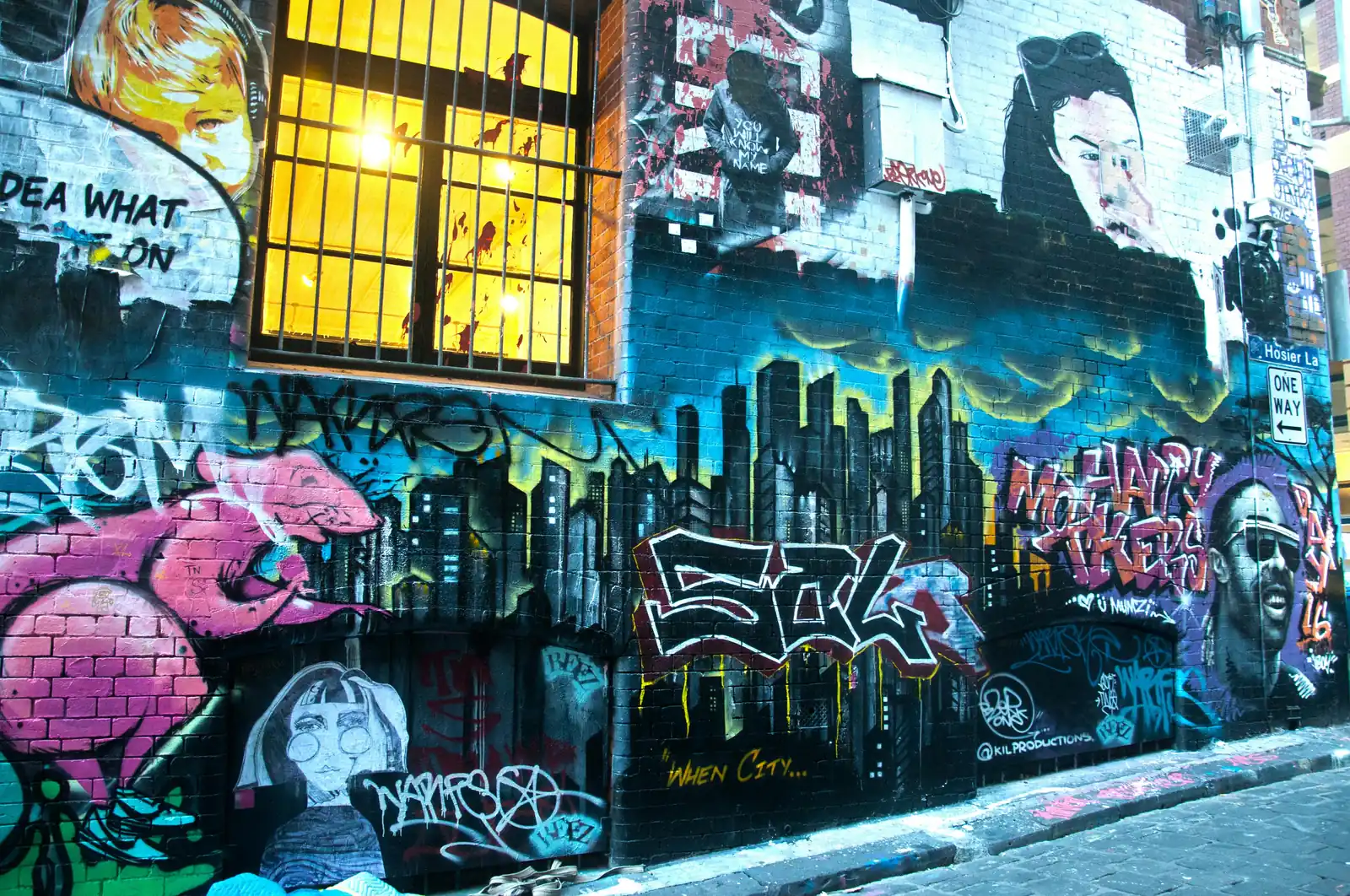
Walk Melbourne's best street art on this free self-guided tour — Hosier Lane, AC/DC Lane and beyond, plus the artists to know and insider photo tips.
This article contains advertising. Our booking links are routed through a partner that adds commission tracking automatically, so if you book through one we earn a commission from the provider, at no extra cost to you. It never affects what we recommend. Affiliate disclosure
The first time I walked into Hosier Lane I stopped dead in the entrance, because there was simply too much to look at. Floor-to-roofline colour, layers of stencils and paste-ups, a tour group craning their necks, an artist halfway up a ladder rolling over yesterday’s work. That’s the thing nobody quite prepares you for: Melbourne’s street art isn’t a museum piece behind glass, it’s alive and changing by the day. This self-guided street art tour is the route I walk visiting friends through — a loop of the city’s best laneways you can do in about two hours, plus the artists to know and the practical tips that make the difference. It’s one of the most rewarding (and free) things to do in Melbourne.
Why Melbourne is a street art capital
Melbourne is regularly named one of the best cities on earth for street art, and it didn’t happen by accident. The stencil scene exploded here in the early 2000s — this was Banksy’s stomping ground when he visited — and the city’s tangle of bluestone laneways gave artists endless canvases. Over time, the City of Melbourne carved out areas where this work is permitted and even celebrated, so what you’re looking at is a constantly self-renewing open-air gallery. More than a million people a year visit Hosier Lane alone.
A quick note on language, because locals are sharp about it: “street art” (commissioned or permitted murals, stencils and paste-ups) is distinct from illegal tagging, and the laneways below are legal, ever-evolving art walls. Half the fun is that the wall you photograph today may be gone next month. If you want the wider context of how these alleys shaped the city’s character, our guide to Melbourne’s best laneways is the perfect companion read.
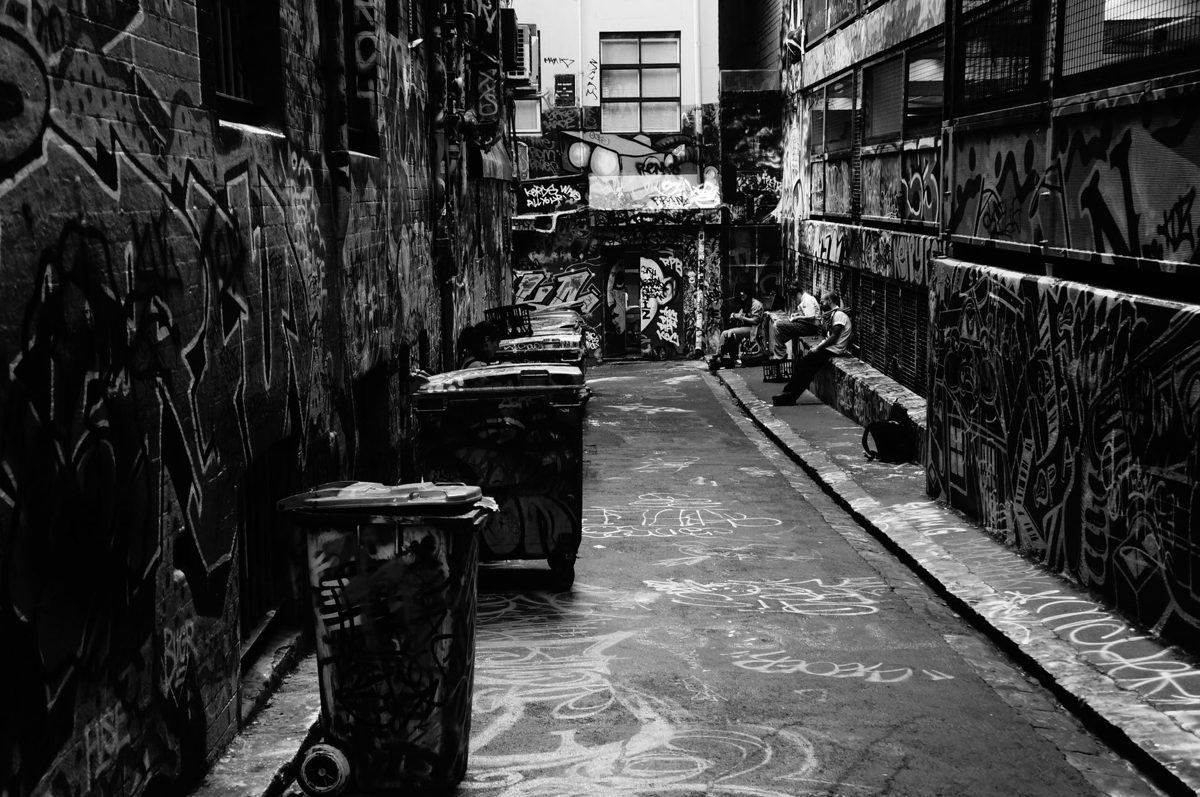
The self-guided street art walking route
This loop is roughly 3km, takes about two hours at a browsing pace, and stays almost entirely within the Free Tram Zone, so getting to the start costs nothing. Begin at Federation Square, directly opposite the entrance to Hosier Lane.
1. Hosier Lane
The icon. Start here. Hosier is an ever-shifting wall of murals, stencils and paste-ups, with new pieces layered over old ones daily. Look up — high above the lane you’ll often spot large-scale portrait work, including pieces by Adnate, whose towering Indigenous portraits have become a Melbourne signature. Take your time; this is the most photographed laneway in Australia for good reason.
2. Rutledge Lane
Hosier bends into Rutledge Lane, a horseshoe that loops back around. It’s less famous but just as densely painted, and usually a little quieter for photos. The two together form one continuous gallery.
3. AC/DC Lane
A five-minute walk away, off Flinders Lane, AC/DC Lane is a love letter to rock’n’roll, named for the legendary Australian band. Look for tributes to music royalty splashed across the walls and a sculpture bursting out of the brickwork. The live-music venue Cherry Bar made this lane a pilgrimage site for decades.
4. Duckboard Place
Connected to AC/DC Lane, Duckboard Place curls around with some of the city’s most ambitious large-format murals — keep an eye out for striking figurative works that tower over the lane. It’s one of my favourites precisely because most tour groups breeze past it.
5. Centre Place & Degraves Street
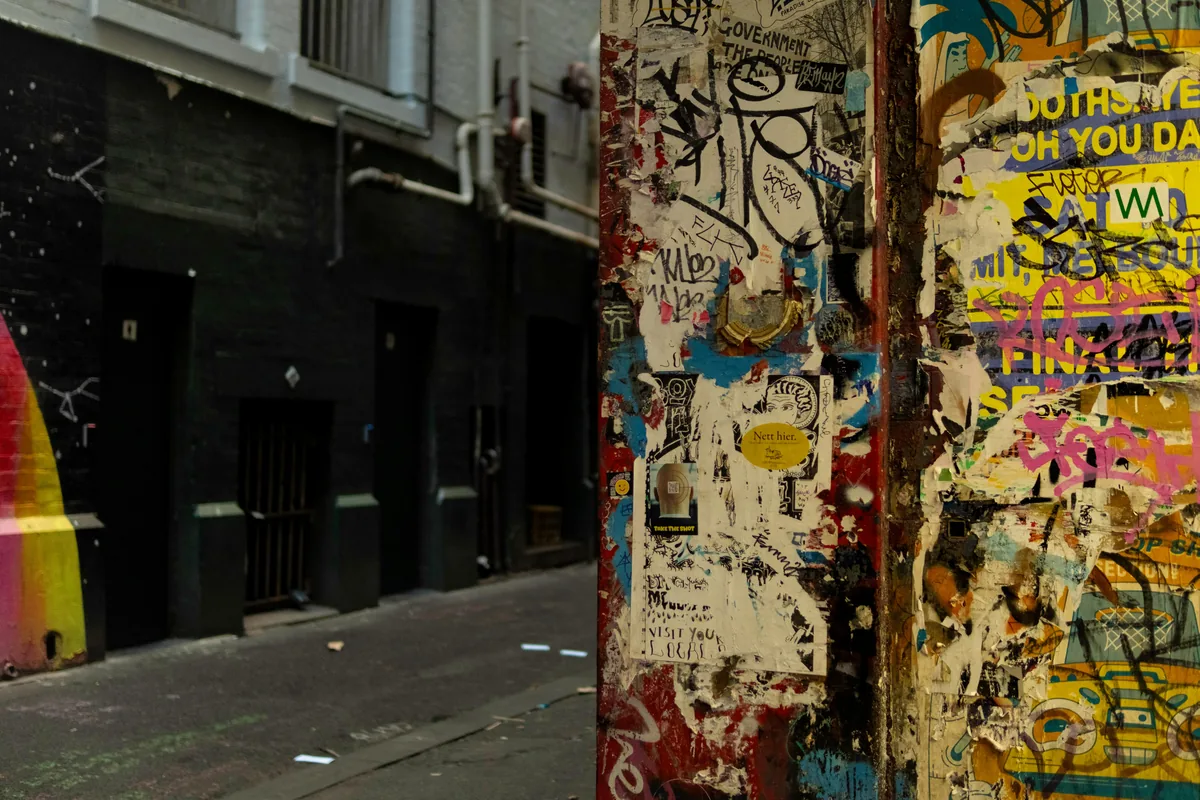
Cut back towards the river and into Centre Place, arguably Melbourne’s most recognisable laneway — a narrow corridor of cafés, hanging signage and graffiti that has appeared on a thousand postcards. It spills into Degraves Street, the perfect spot to refuel with a coffee mid-walk.
6. Union Lane
Off the Bourke Street Mall, Union Lane is a long, fully-painted run that was created as a legal youth art project. It’s loud, chaotic and brilliant — a complete contrast to the curated feel of Hosier.
7. Croft Alley & Caledonian Lane
Tucked into Chinatown, Croft Alley rewards anyone willing to wander off the main drag with graffiti-style murals in an atmospheric setting. Nearby Caledonian Lane and the surrounding alleys hide more if you keep your eyes open.
8. Presgrave Place
End the CBD loop at Presgrave Place, a quirky little lane known for its framed miniature artworks mounted on the walls like a tongue-in-cheek outdoor gallery. It’s the kind of detail that makes Melbourne’s scene feel so playful.
Beyond the CBD: Fitzroy, Collingwood & Brunswick
If the city loop leaves you wanting more — and it will — the inner-north suburbs are where the scene gets bigger and bolder. A short tram ride up Smith or Brunswick Street drops you into a different world.
Fitzroy: The walls along Johnston Street, Rose Street and the surrounding lanes are thick with murals, and the Rose Street Artists’ Market on weekends pairs perfectly with a wander. Collingwood: Easey Street and the area around the old industrial blocks host some of the largest, most photographed murals in the city. Brunswick: Sydney Road and its side streets carry a grittier, more political edge. These neighbourhoods are covered in depth in our Melbourne neighbourhoods guide if you want to build a half-day around them.
The artists to know
Putting names to the work makes the walk richer. Adnate is famous for photo-realistic portraits, often of Indigenous Australians, painted at enormous scale. Rone is known worldwide for haunting, beautiful portraits of women, frequently weathered and fading into the wall. Makatron blends nature and machinery; Sofles brings explosive colour and lettering; and a deep bench of stencil artists keeps the Banksy-era tradition alive. You won’t catch every name, but spotting a piece and recognising the hand behind it is a genuine thrill. To go deeper into the city’s creative side, our Melbourne arts and culture guide covers the galleries and institutions that complement the street scene.
Practical tips for the best experience
Go early for photos. Hosier Lane fills up fast. Arrive before 9am and you can get that iconic shot of an empty, colour-drenched alley; by midday it’s shoulder-to-shoulder. Overcast is your friend. Flat, cloudy light — which Melbourne supplies generously — actually makes the colours pop and kills harsh shadows. Look up and down. The best pieces are often above eye line or squeezed into doorways and downpipes. Respect working artists. If someone’s painting, give them room; many are happy to chat, but don’t crowd the ladder. Wear comfortable shoes and bring a charged phone or camera. For getting between the CBD and the northern suburbs, our public transport guide explains the trams and the Free Tram Zone.
Self-guided vs guided tours
You can absolutely do this solo with the route above, and most people do — it’s free and flexible. But if you want the back-stories, a few operators run excellent walking tours led by practising artists, and some even include a stencil workshop where you make your own piece to take home. The City of Melbourne also publishes an official street art walk, and Visit Victoria keeps a guide to the best spots. If you’re chasing more offbeat corners of the city beyond the art, our list of unique things to do in Melbourne has plenty more.
When to go and what it costs
The walk is free and possible any day, in any weather (the lanes offer some shelter, and the art looks great in the rain). Early morning is best for photography and a calmer atmosphere; late afternoon has good light too. Pair it with a laneway lunch and you’ve got a complete, low-cost half-day. It also makes a brilliant rainy-day backup and slots neatly into a list of free things to do in Melbourne.
A brief history of Melbourne’s street art
To really appreciate what you’re looking at, it helps to know how it started. In the late 1990s and early 2000s, Melbourne became the epicentre of Australia’s stencil art movement — a wave of artists who used hand-cut stencils to spray quick, layered, often political images. The scene drew international attention, and when Banksy passed through in the early 2000s he left work here too (sadly, most of it has since been painted over or lost — a fate that says everything about how ephemeral this art form is).
What set Melbourne apart was the response from the city. Rather than waging an all-out war on the walls, the City of Melbourne eventually designated certain laneways as legal, permitted art spaces. That pragmatic decision turned a subculture into a globally recognised attraction. Today the lanes are managed as living galleries, and the constant repainting — once seen as vandalism — is now understood as the whole point. The wall is never finished.
Standout works to seek out
Because the lanes change constantly, I won’t promise any single piece will still be there when you visit — that’s part of the deal. But certain artists and styles recur, and knowing what to look for sharpens your eye. Watch for Adnate’s monumental portraits gazing down from above Hosier Lane; Rone’s ghostly, fading faces of women that seem to dissolve into the brick; nature-meets-machine pieces by Makatron; and the explosive lettering of writers like Sofles. In the inner north, large-format commissioned murals on the sides of warehouses in Collingwood and Fitzroy are often the work of internationally touring artists. Treat the whole walk as a treasure hunt rather than a checklist and you’ll enjoy it far more.
Etiquette and the ongoing debate
Melbourne’s street art lives with a healthy internal tension, and it’s worth understanding before you go. Purists argue the lanes should be left to artists and evolve organically; others worry that “Instagram tourism” has turned Hosier Lane into a backdrop rather than a canvas. A widely reported 2020 incident, in which several people coated much of Hosier Lane with fire extinguishers full of paint, reignited the debate about who the lanes belong to. The takeaway for visitors is simple: come with respect. Photograph freely, but don’t touch wet work, don’t add your own tags, give working artists space, and remember you’re a guest in a living, contested, constantly changing gallery.
Make a day of it
The beauty of this walk is how easily it folds into a bigger day out. Because it starts at Federation Square and weaves through the heart of the CBD, you’re never more than a few minutes from a great coffee, a laneway lunch or another headline sight. Combine the morning street art loop with Queen Victoria Market, an afternoon at the NGV, or a wander through the arcades, and you’ve built a full day around the most characterful corners of the city — at almost no cost. If you’d rather keep exploring after dark, the same laneways take on a completely different mood at night; our guide to things to do in Melbourne at night picks up where this walk leaves off.
A quick photography guide
You don’t need a fancy camera — a phone does a brilliant job in the lanes — but a few habits will lift your shots. Shoot in the soft, even light of an overcast morning or late afternoon to avoid blown-out highlights and deep shadows. For that classic “empty colourful alley” frame, stand at one end and shoot straight down the lane; arrive before 9am to actually get it empty. Get in close for texture — the layered, peeling paste-ups reward macro shots — and then step back for the full-wall scale. Portrait orientation suits the tall, narrow geometry of the laneways. And don’t forget to turn around: some of the best compositions are behind you, framing the lane’s entrance against the street beyond. Above all, put the phone down now and then and just look; the art deserves more than a quick scroll-stopper.
More lanes and northern suburbs to explore
If the headline route leaves you hungry for more, keep wandering. Back in the CBD, Tattersalls Lane and the alleys threading through Chinatown hide rough, energetic work, while Guildford and Hardware lanes mix art with some of the city’s best coffee. In the inner north, set aside a half-day: Fitzroy’s backstreets around Rose and Kerr streets, the giant warehouse murals of Collingwood near Easey Street, and the politically charged walls off Sydney Road in Brunswick each have a distinct personality. A short tram ride links them all, and the cafés, record shops and vintage stores in between make the suburbs an easy, atmospheric extension of the city walk. It’s the kind of self-directed wander that turns a sightseeing trip into something that feels genuinely local.
Doing the walk with kids
Street art makes a surprisingly good family outing. The lanes are short, the colours hold children’s attention, and turning it into a “spot the hidden character” game keeps younger ones engaged. Keep an eye on little ones near working artists and the occasional service vehicle, and plan a doughnut or hot-chocolate stop into the route. For more ideas on exploring the city with little ones in tow, see our guide to things to do in Melbourne with kids.
Frequently asked questions
Where is the best street art in Melbourne?
Hosier Lane is the most famous and the best starting point, with AC/DC Lane, Duckboard Place, Union Lane and Centre Place close behind in the CBD. For larger murals, head to Fitzroy and Collingwood in the inner north.
Is the Melbourne street art tour free?
The self-guided walking route is completely free and stays mostly within the Free Tram Zone. Paid guided tours led by artists are available if you want the stories and a stencil workshop.
How long does the street art walk take?
The CBD loop is about 3km and takes roughly two hours at a relaxed, photo-taking pace. Add a couple more hours if you tram up to Fitzroy and Collingwood.
Is it OK to take photos of the street art?
Yes — photography is welcomed and these are legal, ever-changing art walls. Just be considerate of any artists actively working and of cafés operating in the lanes.
The bottom line
Melbourne’s street art is the city distilled: creative, a little rebellious, and never the same twice. Walk the loop, learn a couple of artist names, go early for your photos, and let yourself get lost down a side alley or two — that’s where the best surprises hide. Whatever’s on the walls the week you visit, it’ll be worth the walk.