Melbourne International Comedy Festival: Visitor Guide
- Words
- Melbourne Tourism Guide
- Updated
- July 25, 2026
- Read
- 11 min
Your guide to the Melbourne International Comedy Festival — 2026 dates, venues, how to pick from 700 shows, free acts, ticket tips and where to stay.
This article contains advertising. Our booking links are routed through a partner that adds commission tracking automatically, so if you book through one we earn a commission from the provider, at no extra cost to you. It never affects what we recommend. Affiliate disclosure
For four weeks every autumn, Melbourne becomes the funniest city on earth. The Melbourne International Comedy Festival takes over town halls, theatres, pubs and pop-up rooms across the city, and you genuinely can’t walk down Swanston Street without bumping into a flyer-waving comedian or a roving act. I look forward to it every year — there’s nothing quite like the thrill of taking a punt on an unknown act in a tiny upstairs room and walking out having discovered your new favourite comedian. This guide will help you navigate Australia’s biggest comedy festival like a local: when it’s on, how to choose from hundreds of shows, where to find the free stuff, and how to bag the best tickets. It’s one of the brightest entries on our Melbourne events and festivals calendar.
What is the Melbourne International Comedy Festival?
The Melbourne International Comedy Festival (MICF) is Australia’s largest ticketed cultural event and one of the three biggest comedy festivals in the world, alongside the Edinburgh Festival Fringe and Montreal’s Just for Laughs. In recent years it has grown to host a program of almost 700 shows and thousands of performances across more than 130 venues — stand-up, sketch, cabaret, improv, satire, kids’ comedy and weird, wonderful experimental stuff that defies category. In 2026 it celebrates a milestone 40th anniversary. Whether you want a big-name headliner or the joy of discovering a future star in a 40-seat room, the sheer scale and variety is the whole point.
When is the Comedy Festival?
The festival runs for about four weeks from late March into April. In 2026 it takes place from 25 March to 19 April. That timing lands it squarely in Melbourne’s gorgeous autumn — mild days, golden leaves and a whole city in a relaxed, celebratory mood that spills out of the venues and onto the streets — and it overlaps with a string of other autumn events that make late March and April one of the best windows of the year to visit. Our guide to the best time to visit Melbourne explains why this stretch is such a sweet spot.
Where it happens
The festival’s beating heart is the Melbourne Town Hall, which becomes the central hub with multiple rooms running shows back to back. But the action spreads right across the city: the historic Trades Hall, the grand Forum, the Arts Centre, the Comedy Theatre, and dozens of pubs, clubs, basements and pop-up spaces. You’ll also catch free roving performers and buskers around Swanston Street and Federation Square. Part of the fun is the geography of it — darting from a polished theatre show to a rowdy pub gig to a tiny experimental room, all within a few blocks. It turns the whole CBD into one big comedy precinct, which dovetails nicely with our Melbourne arts and culture guide.
How to choose what to see
With hundreds of shows, the choice can feel overwhelming — so here’s how I approach it. Mix it up: book one or two big names you know in advance (these sell out), then take a couple of cheap punts on acts you’ve never heard of. The discoveries are where the magic is. Read the festival guide and reviews as they roll in during the first week. Ask the box office or venue staff — they see everything and give great tips. Catch a showcase: compilation shows featuring multiple acts are a brilliant, low-risk way to sample lots of comedians in one sitting and find performers whose full shows you’ll want to see.
Free shows and festival highlights
You don’t need deep pockets to enjoy MICF. There are free and low-cost events throughout the program, plus roving street performers around the city centre that cost nothing to enjoy. The festival is also famous for its big set-piece events: gala-style showcases, the long-running political-comedy debate, late-night variety rooms and the popular schools and family programs. Keep an eye out for the major showcase nights that bring a parade of acts to one stage — they’re a festival institution and a fantastic night out. For more after-dark ideas around your shows, see our roundup of things to do in Melbourne at night.
Tickets and prices
Ticket prices span a wide range — from free events up to around AU$100 for the biggest headliners, with most shows sitting comfortably in the mid-range. Tickets are sold through the festival’s official website and box offices, and the Town Hall hub has an in-person box office during the festival where you can grab last-minute seats. Big-name acts and weekend shows sell out, so book those ahead; for everything else, you can often be spontaneous. A handy money-saver: many shows offer cheaper “preview” tickets in the opening days and discounted early-week (Tuesday) prices, so going midweek or early can stretch your budget further.
Getting there and around
Because so much of the festival is concentrated in the CBD, it’s wonderfully easy to navigate on foot, and the Free Tram Zone covers the city centre at no cost. If you’re venuing-hopping between shows, you’ll mostly be walking a few blocks between venues. From further out, trams and trains converge on the city, and the late-night services help you get home after evening shows. Our Melbourne public transport guide has the details on trams, trains and the Myki card.
Where to stay
For a comedy-festival trip, you can’t beat staying right in the CBD — it puts you within walking distance of the Town Hall hub and the majority of venues, so you can pack in multiple shows a night and stroll home afterwards. Fitzroy and the inner north are also good bases, close to the city and full of bars to debrief the night’s laughs. Late March and April are popular, so book ahead; our guide to where to stay in Melbourne breaks down the best areas.
Tips for a great festival night
Build in dinner — the city’s restaurants are part of the night, so book a table between shows; our restaurants guide can help. Stack your evening: with venues so close together you can easily see two or three shows in a night. Take a risk on an unknown act — it’s cheap and often the highlight. Check content warnings if you’re sensitive to adult material, as the festival spans everything from family-friendly to very blue. Arrive a little early for general-admission rooms to get a good seat, and tip your buskers.
Make an autumn trip of it
The Comedy Festival is the perfect centrepiece for an autumn visit, but it’s far from the only thing on. Late March and April bring a flurry of major events to Melbourne, the weather is at its most pleasant, and the city’s restaurants, laneways and galleries are all going strong. Build a few days around your shows with our guide to things to do in Melbourne, and browse the wider line-up on our events and festivals calendar. For the full program and tickets, head to the official festival website.
A bit of history
The Melbourne International Comedy Festival was founded in 1987 by Barry Humphries (of Dame Edna fame) and Peter Cook, and from those beginnings it has grown into a genuine global heavyweight. Over four decades it has launched countless Australian comedy careers and hosted the biggest international names, building a reputation as one of the essential stops on the world comedy circuit. The festival’s 40th anniversary in 2026 is a milestone worth celebrating, and it speaks to how deeply comedy is woven into Melbourne’s cultural identity. When you buy a ticket today, you’re part of a tradition that has shaped Australian comedy for a generation.
The festival’s signature events
Beyond the hundreds of individual shows, MICF is known for a handful of marquee events worth building a night around. The opening-night gala brings a parade of the festival’s biggest names to one stage for a star-studded showcase, often broadcast nationally. There’s a long-running, much-loved comedy debate that pits teams of comedians against each other on an absurd topic, and late-night variety and showcase rooms that run into the small hours. The festival also champions the next generation through its emerging-talent and schools programs, and a national touring “Roadshow” takes a selection of the festival’s best acts around the country afterwards. Catching one of these set-piece events is a brilliant way to sample the festival’s range in a single sitting.
Comedy for families and kids
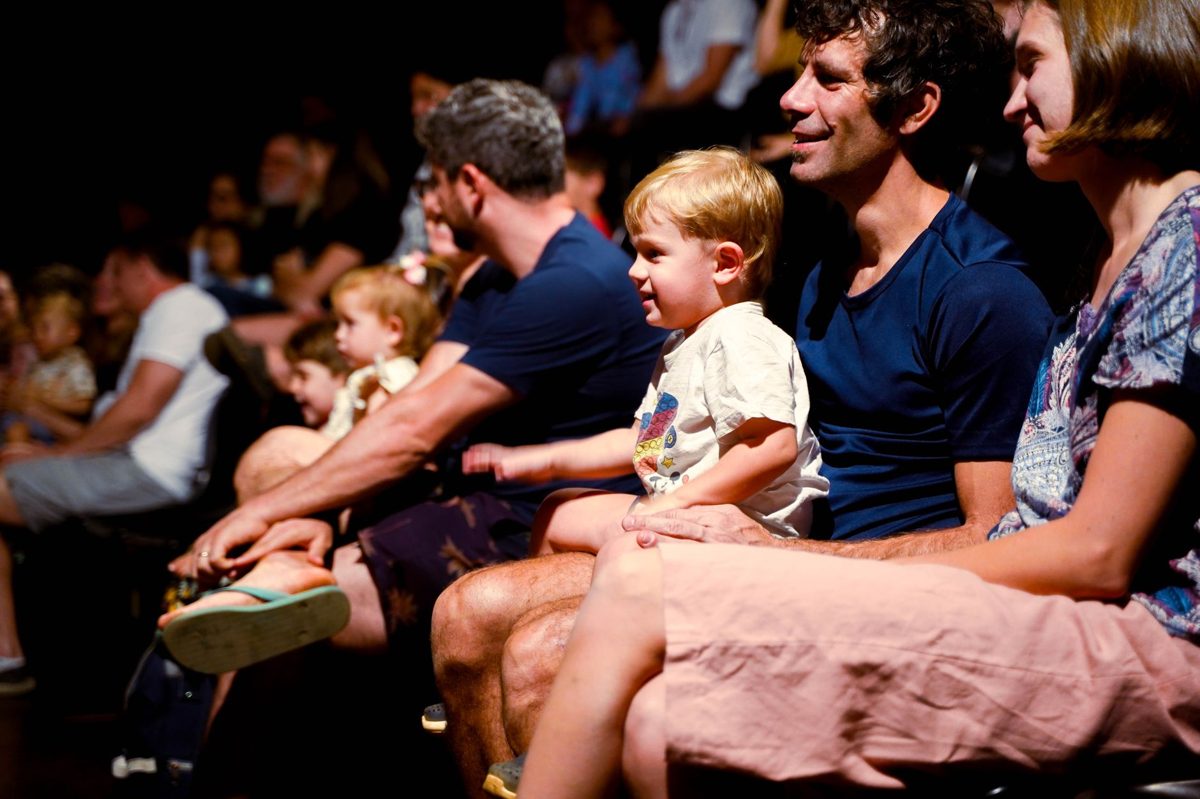
The festival isn’t just for night-owl adults — there’s a dedicated family and children’s program with shows pitched at younger audiences, often during the day and on weekends. These are a fantastic, giggle-filled option if you’re visiting with kids, and a gentle introduction to live performance for first-timers. Look for the clearly labelled family-friendly shows in the program, and check age recommendations. For more ideas on entertaining little ones around the city, see our guide to things to do in Melbourne with kids.
Accessibility
The festival works hard to be welcoming to everyone, with a growing program of accessible performances — including Auslan-interpreted shows, relaxed performances for neurodivergent audiences and those who prefer a lower-sensory environment, and wheelchair-accessible venues. If you have specific access requirements, the festival’s website lists accessible shows and the box office can advise on the best venues and seating. It’s worth checking ahead, as the most popular accessible performances can book out.
Melbourne’s comedy scene year-round
If your trip doesn’t coincide with the festival, don’t despair — Melbourne has a thriving comedy scene all year. The Comic’s Lounge in North Melbourne runs shows most nights, and pubs and clubs across the inner city host regular stand-up, open-mic and showcase nights. The same venues that buzz during the festival keep the laughs coming the rest of the year, so you can almost always find a gig. It’s all part of the city’s deep love affair with live performance, which you can explore further in our arts and culture guide.
Doing the festival on a budget
A comedy-festival trip can be surprisingly affordable if you play it smart. Start with the free roving performers around Swanston Street and Federation Square, which cost nothing. Hunt out the cheaper preview shows in the opening days, when acts are still polishing their material and tickets are discounted, and look for early-week deals — Tuesday and Monday performances are often the cheapest of the run. Showcase and compilation nights pack several comedians into one ticket, giving you great value and a sampler of the festival. And because the venues cluster in the walkable, tram-free city centre, you can fill an evening with multiple shows without spending a cent on transport. It slots neatly alongside the no-cost ideas in our guide to free things to do in Melbourne.
The autumn atmosphere
One of the underrated joys of the festival is its timing. Late March and April is when Melbourne’s weather is at its most agreeable — warm, settled days giving way to crisp, clear evenings perfect for strolling between venues. The plane trees in the city’s gardens turn gold, the outdoor dining is still going strong, and there’s a relaxed, celebratory mood about town. Wrapping a night of comedy around an early-evening drink in a laneway bar and a late dinner is the quintessential autumn-in-Melbourne experience, and it’s a big part of why so many visitors time their trip to coincide with the festival.
What makes MICF special
Plenty of cities have comedy festivals, but a few things set Melbourne’s apart. The first is scale and accessibility: with hundreds of shows packed into a compact, walkable city centre, you can see more comedy in a weekend here than almost anywhere else on earth. The second is the mix — polished international headliners performing a few doors down from raw, experimental local debuts, all part of the same festival. And the third is the city itself: Melbourne’s café and bar culture, its theatres and its laneways make the spaces between shows as enjoyable as the shows themselves. It’s a festival that feels woven into the fabric of the city rather than bolted on, and that integration is exactly what makes it such a joy to experience as a visitor.
Frequently asked questions
When is the Melbourne International Comedy Festival 2026?
The 2026 festival runs from 25 March to 19 April, celebrating its 40th anniversary. It takes place over about four weeks across late March and April each year.
How much do Comedy Festival tickets cost?
Prices range from free events up to around AU$100 for the biggest headliners, with most shows in the mid-range. Preview and early-week tickets are often cheaper, and there are free roving acts around the city.
Where is the Melbourne Comedy Festival held?
The Melbourne Town Hall is the central hub, with shows also across Trades Hall, the Forum, the Arts Centre, the Comedy Theatre and dozens of pubs and pop-up venues throughout the CBD.
How do I choose what to see at the Comedy Festival?
Book one or two big names in advance, then take cheap punts on unknown acts — that’s where the discoveries are. Showcase nights featuring multiple comedians are a great low-risk way to sample lots of acts at once.
The bottom line
The Melbourne International Comedy Festival is the city at its most joyful — hundreds of shows, a buzzing CBD, and the constant chance of stumbling onto something brilliant. Mix a couple of headliners with a few wildcard punts, leave room for the free roving acts, and let yourself laugh your way around town. There’s no better time to feel Melbourne’s playful, creative heart beating. Come with an open mind and a loose plan, and you’ll leave with sore cheeks and a list of new favourite comedians.