Cape Otway Lightstation & Wild Koala Spotting
- Words
- Melbourne Tourism Guide
- Updated
- October 25, 2026
- Read
- 13 min
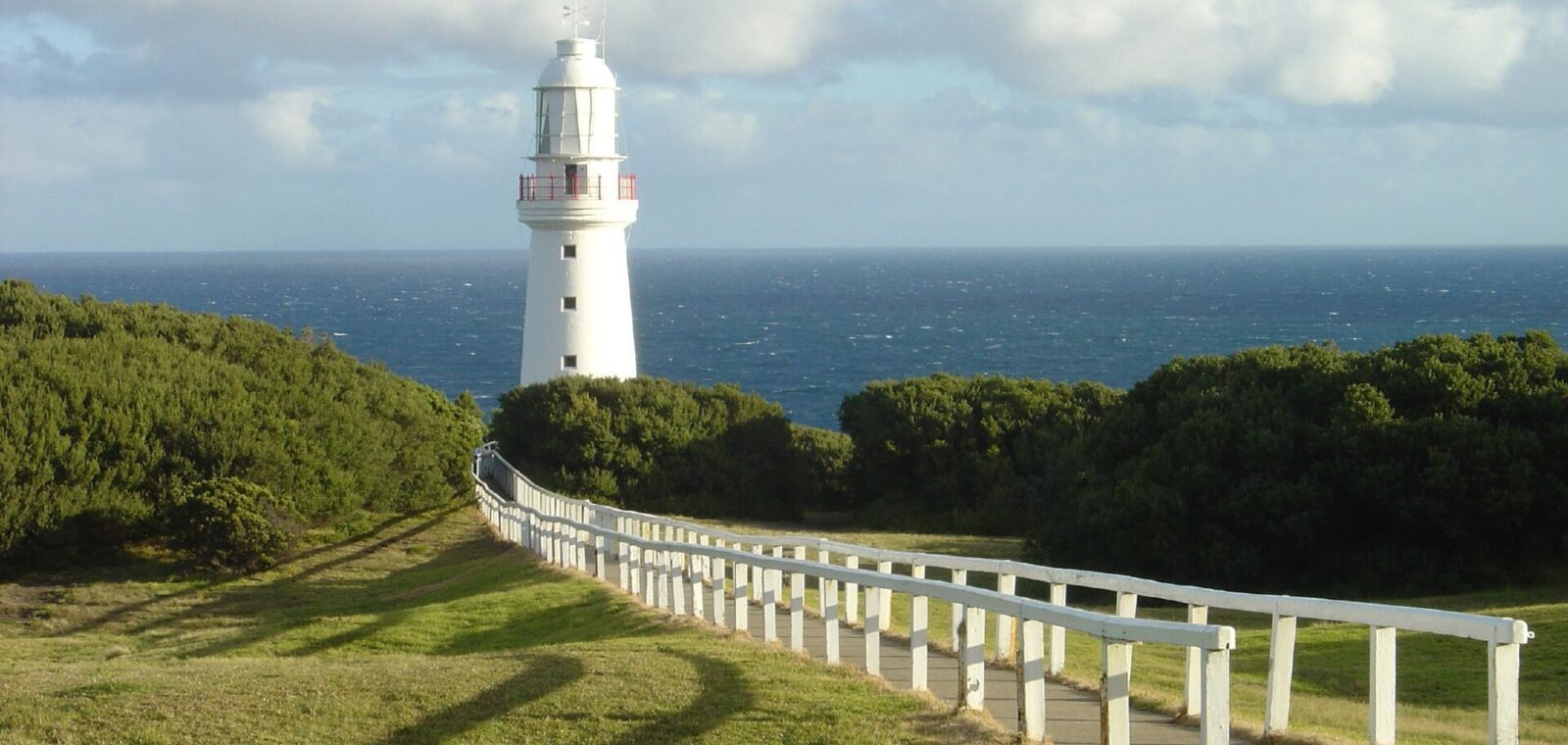
A lighthouse on the edge of Bass Strait, koalas in the manna gums, and a coast most Great Ocean Road drivers never see.
This article contains advertising. Our booking links are routed through a partner that adds commission tracking automatically, so if you book through one we earn a commission from the provider, at no extra cost to you. It never affects what we recommend. Affiliate disclosure
Many drivers on the Great Ocean Road never see the southern tip of the Otways. West of Apollo Bay the highway turns inland and climbs into the forest, and the cape itself sits off to the left, at the end of a long side road through manna gums and coastal heath. Take that turn and you get a white stone lighthouse on a cliff above Bass Strait, a station full of the old keepers’ buildings, and, in the trees along the way, a good chance of seeing wild koalas. Cape Otway is a detour, but it’s one of the few on this coast that gives you history, wildlife and wild ocean in a single stop.
This guide covers the Cape Otway Lightstation (including the conservation works that have closed the tower), where to look for koalas and how to watch them responsibly, the beaches, campgrounds and Great Ocean Walk sections on the cape, where to stay, and whether the detour is worth it on your trip. Prices and opening details were checked in October 2026 against the Lightstation’s, Wildlife Wonders’ and the Great Ocean Road Coast and Parks Authority’s own pages; confirm before you go. For the wider forest, waterfalls and the Otway Fly, see our guide to Great Otway National Park.
Cape Otway at a Glance
| What | Details |
|---|---|
| Where | The southern tip of the Otway Ranges, off the Great Ocean Road west of Apollo Bay, at the end of Lighthouse Road |
| Main attraction | Cape Otway Lightstation, with a lighthouse built in 1848 |
| Lighthouse tower | Climbs not available during heritage conservation works that began in late September 2026 |
| Lightstation entry (reduced during works) | Adult A$11, concession A$10, child (5–16) A$5, family A$28; under-5s free; tickets on arrival |
| Lightstation hours | Friday to Tuesday, 9:30am–4:30pm, last entry 4pm, per the operator’s contact page; phone ahead |
| Wildlife | Wild koalas in the manna gums along the cape’s roads and campgrounds |
| Camping | Blanket Bay, Parker Hill and Aire River campgrounds, all bookable |
| Managed by | Great Ocean Road Coast and Parks Authority (GORCAPA) |
| Country | Gadubanud lands, part of Eastern Maar Country |
Cape Otway Lightstation
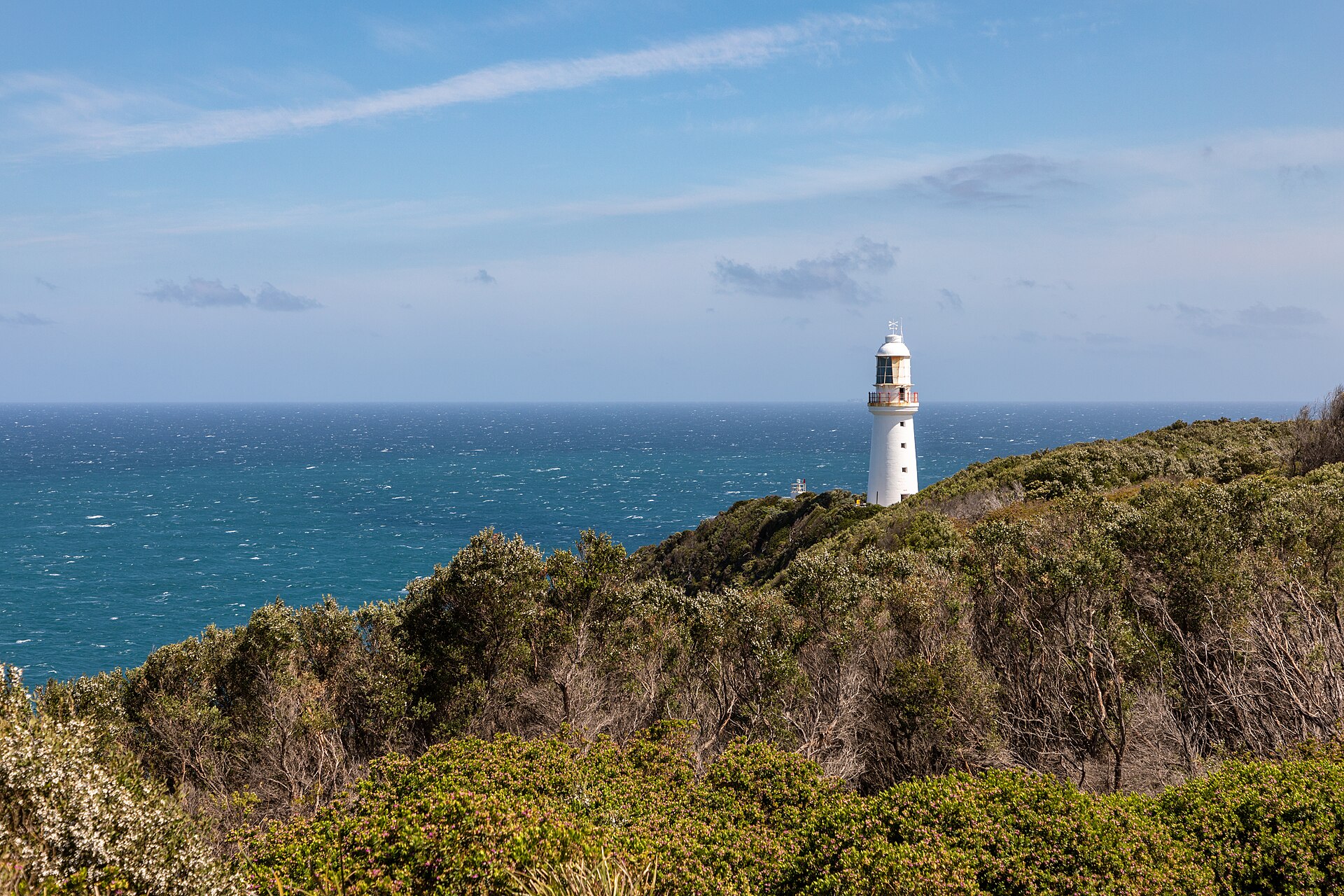
The Lightstation describes its lighthouse as the oldest surviving lighthouse on mainland Australia. It was built in 1848, after a run of shipwrecks on this stretch of coast, to guide ships through the narrow gap between the cape and King Island, and it stands on cliffs that the operator puts at 90 metres above Bass Strait. Around it is a whole working station: the keepers’ quarters and workshop from the 1850s, a telegraph station from 1859, a Second World War radar bunker, whale-watching interpretation, the Lightkeepers Café and a gift shop. History talks are included with entry.
The tower closure and conservation works
This is the most important thing to know before you go. The lighthouse tower is not open for climbs while heritage conservation works are carried out. Stage 1, covering the lighthouse roof, catwalk, balcony and balustrade, started on site in late September 2026 and is expected to take about 12 to 16 weeks. Stage 2, on the Lightkeepers’ Cottages, the Telegraph Station, the Old Workshop, the signal flagpole and the WWII radar bunker, is expected to begin early in 2027. The Lightstation also warns that views of the lighthouse itself will be obscured from late September 2026 into January 2027, so don’t plan the visit around a clean photo of the tower until the scaffolding comes down. Check lightstation.com for the latest before you set off.
The precinct stays open in the meantime, and entry has been cut to reflect the reduced access.
Tickets and prices
| Ticket | Reduced price during works | Full price |
|---|---|---|
| Adult | A$11 | A$22 |
| Concession | A$10 | A$20 |
| Child (5–16) | A$5 | A$9 |
| Family (2 adults + up to 3 children) | A$28 | A$56 |
| Under 5 | Free | Free |
Tickets are bought on arrival only; there’s no online booking for day entry.
Opening hours
The Lightstation’s contact page lists opening hours of Friday to Tuesday, 9:30am to 4:30pm, with last entry at 4pm, and says it’s closed on Christmas Day. That means the precinct is not open on Wednesdays and Thursdays on those hours. Because the works may change things at short notice, ring the Lightstation on +61 3 5237 9240 before you drive down, particularly if you’re coming midweek.
What to see in the precinct
- The lighthouse. Even with the tower closed, the setting on the clifftop is the highlight: the view along the coast, the wind off the Southern Ocean and the sense of how exposed the keepers were.
- The keepers’ quarters and workshop. The 1850s buildings tell the story of life at an isolated light station, with families living here for years at a time.
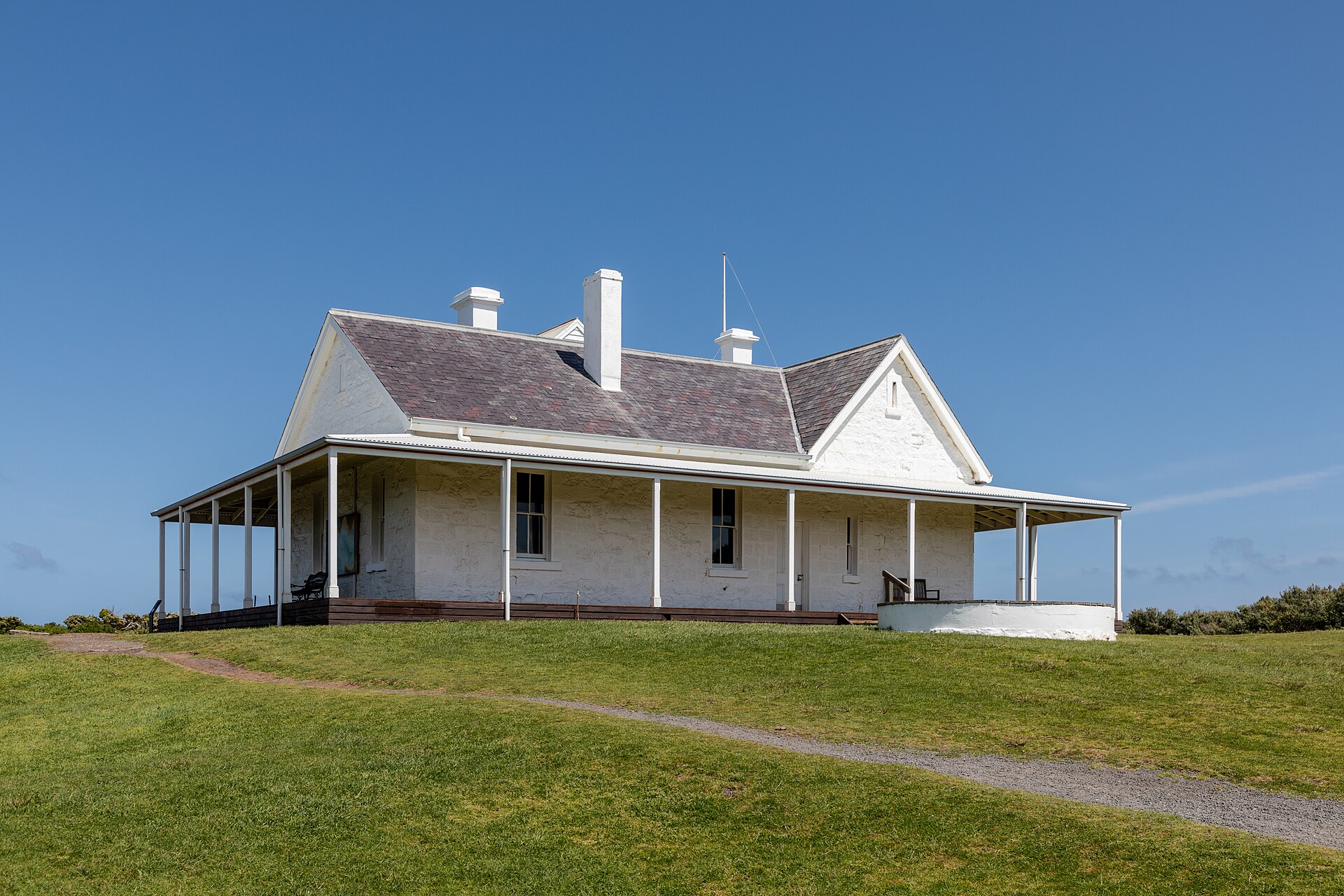
- The Telegraph Station. Built in 1859, it’s a reminder that Cape Otway was a communications post as well as a light.
- The WWII radar bunker. A small concrete relic of the war years on the headland.
- Whale interpretation. The displays explain the whales that pass this coast and what to look for out to sea.
- The Lightkeepers Café. Useful, because there’s not much else out here.
Allow an hour to an hour and a half for the precinct at a relaxed pace, more if you catch a history talk.
Wild Koalas at Cape Otway
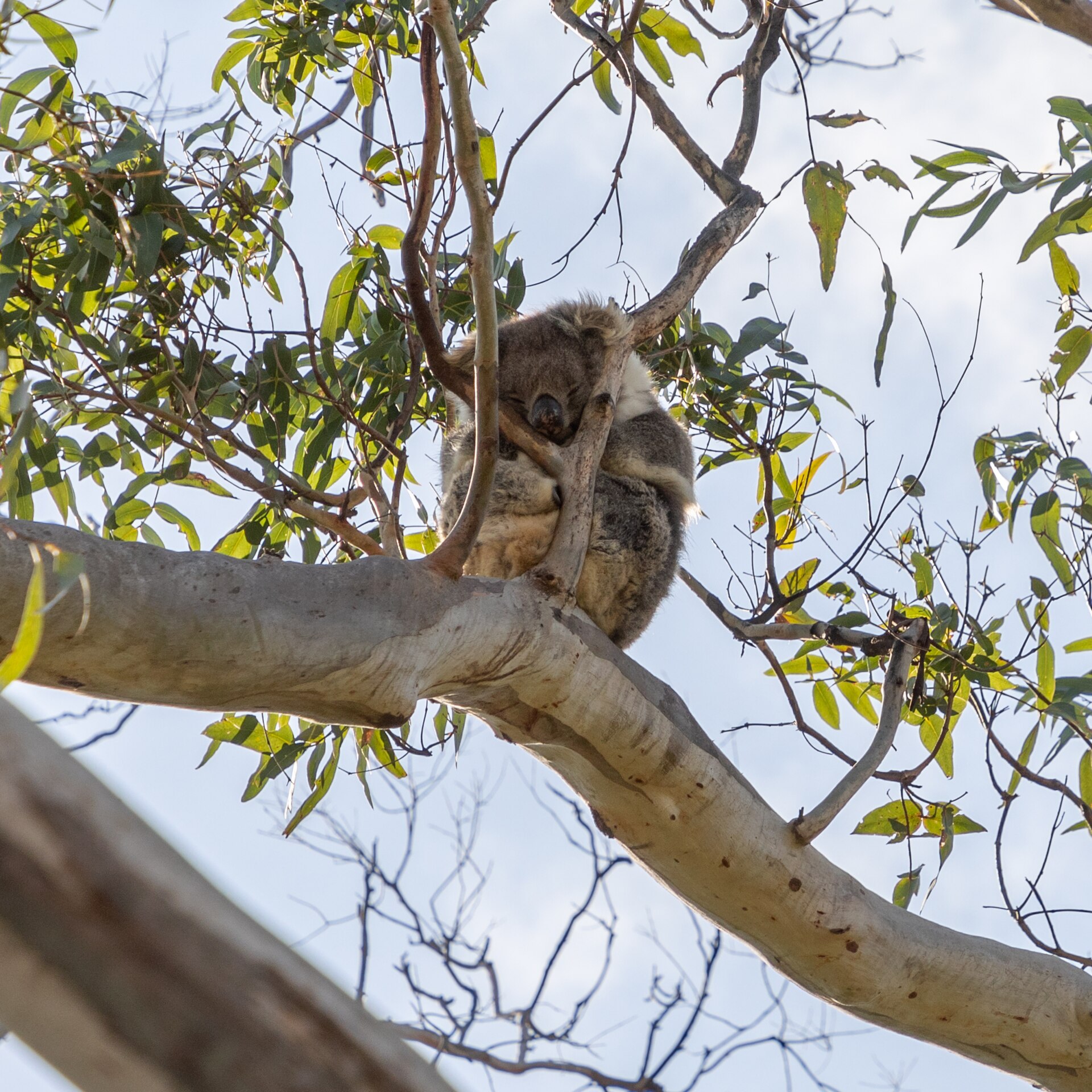
For many visitors, the koalas are the real reason to make the turn. Look up into the manna gums along the cape’s roads and around the campgrounds, and you may spot a wild koala asleep in the fork of a tree. GORCAPA’s page for Blanket Bay Campground notes that koalas are regularly seen there.
How to spot them
- Look up, not across. Koalas spend most of the day asleep high in the trees, wedged into a fork. Look for a grey, rounded shape that doesn’t move.
- Watch where other people have stopped, but don’t add to a traffic jam. Pull right off the road in a safe spot, or park and walk back.
- Go early or late. Koalas are more active around dawn and dusk, when you might see one move or feed.
- Bring binoculars or a zoom lens. You’ll get a much better look without going near the tree.
Watching them responsibly
These are wild animals, and the cape’s roads are narrow and busy in peak season. Never stop in the middle of the road, keep well back from the base of the tree, keep your voice down, and never try to touch, feed or attract a koala. If you see one on the ground or one that looks injured, don’t approach it; contact a wildlife rescue service.
The cape’s koala story
The koalas here are a conservation story with a hard chapter. Koalas were reintroduced to Cape Otway in the early 1980s and, with plenty of manna gum to eat, their numbers grew quickly. By the 2010s they were over-browsing the trees and, with many trees dead and animals starving, the state government intervened with a program that included euthanasing animals in poor condition and relocating others to other parts of the Otways. The bare, grey trunks you’ll still see in places along the cape are a legacy of that period. It’s a good reminder that a koala in every tree is not always a healthy sign.
Wildlife Wonders, near Apollo Bay
If you want a guided experience, Wildlife Wonders, at 475 Great Ocean Road just outside Apollo Bay, runs guided walks through a conservation sanctuary behind a predator-proof fence. There are no enclosures, so sightings aren’t guaranteed, but koalas are among the animals you might see. The Walk with Wildlife tour lasts 75 minutes over 1.4 km and costs A$59 for adults and A$24 for children; the Dusk Discovery tour lasts 90 minutes and costs A$95 for adults and A$75 for children. Tours are guided only and booking is recommended. Wildlife Wonders says all its profits go to the Conservation Ecology Centre, the conservation organisation that works across the Otways. It pairs well with a morning at the cape, and our Apollo Bay guide covers the town itself.
Further east, the area around Kennett River, between Lorne and Apollo Bay, is another well-known place to look for koalas in the roadside trees. Our Great Otway National Park guide covers other wildlife spots in the ranges, including glow worms and platypus.
Beaches, Walks and Camping on the Cape
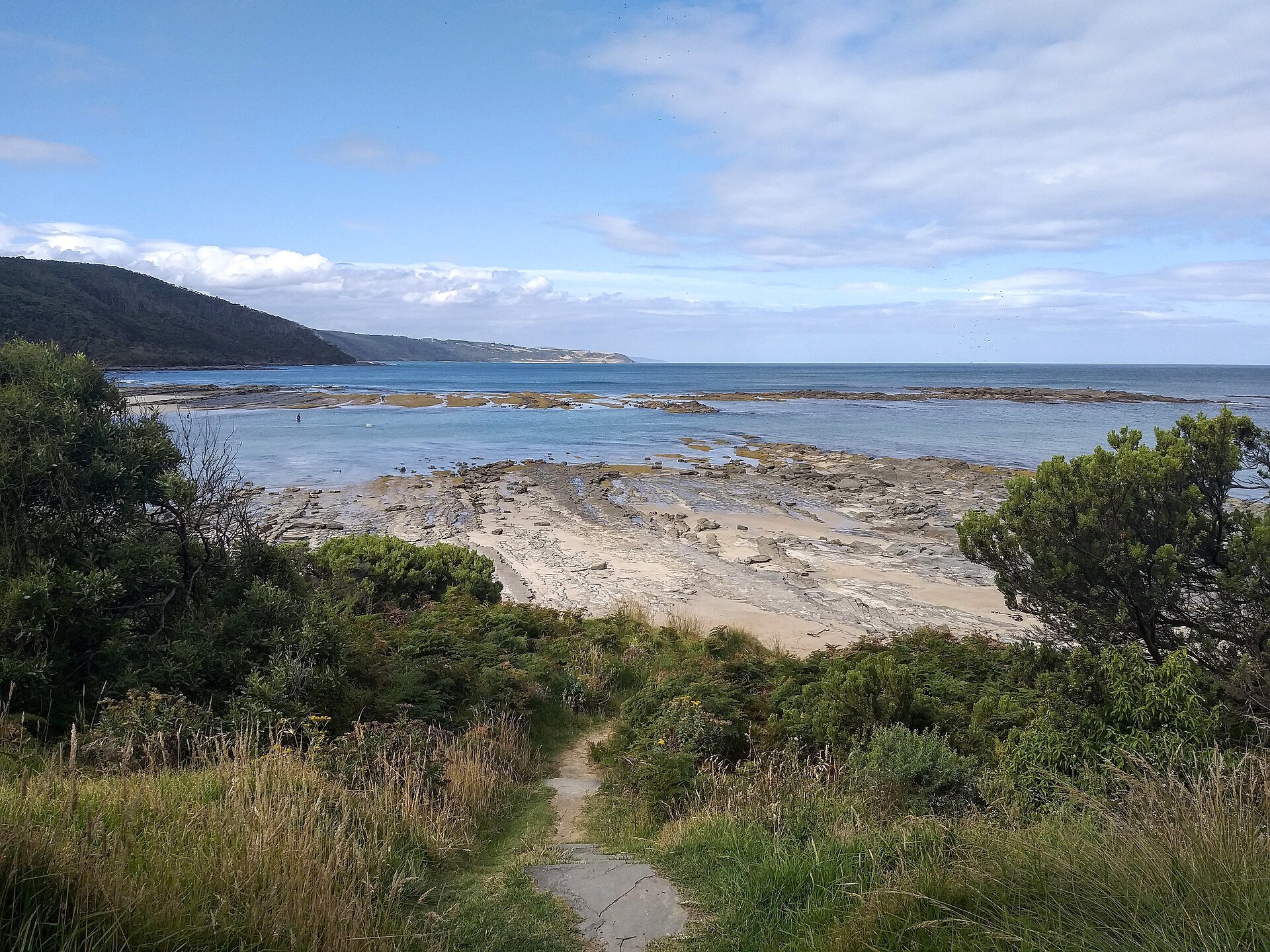
Beyond the lighthouse, the cape is wild, quiet coast: rock platforms, sheltered coves, river mouths and long beaches that many Great Ocean Road visitors never see. GORCAPA now manages the main coastal sites here, including Blanket Bay, Johanna Beach and the Great Ocean Walk, while Parks Victoria manages the hinterland. After the storm and flooding that hit the Otways in January 2026, check GORCAPA’s and Parks Victoria’s current conditions pages before you head to any particular beach or track.
Blanket Bay
Blanket Bay is the cape’s best-known campground: a sheltered bay with rock shelves, calm water on a good day and forest right down to the sand. The campground has 22 unpowered sites for up to six people each, suitable for tents, camper trailers and campervans but not caravans, with non-flush toilets. Bookings are essential, and over the summer holidays there’s a seven-night minimum stay from 19 December 2026 to 23 January 2027, and a three-night minimum from 23 to 26 January 2027. GORCAPA puts it at about three hours’ drive from Melbourne, turning onto Lighthouse Road off the Great Ocean Road. The Katabanook Walk starts nearby.
Other campgrounds
GORCAPA lists several other drive-in campgrounds in this part of the Otways, including Parker Hill, Aire River East and Aire River West, and Johanna Beach further west. All of them are booked through GORCAPA. Aire River, where the river meets the sea west of the cape, is a good base for canoeing and walking; Johanna Beach is an exposed surf beach with a big-sky feel and is not a swimming beach for the inexperienced.
The Great Ocean Walk around the cape
The Great Ocean Walk runs for more than 100 km from Apollo Bay to the Twelve Apostles, walked east to west, and some of its best sections pass right over the cape. GORCAPA gives these distances for the stretches around Cape Otway:
| Section | Distance (approx.) |
|---|---|
| Blanket Bay to Cape Otway | 11 km |
| Cape Otway to Aire River | 10 km |
| Aire River to Johanna Beach | 14 km |
The Blanket Bay to Cape Otway section makes a satisfying day walk if you can arrange a car shuffle, passing through coastal forest and along cliff tops before the lighthouse appears ahead. Hike-in campsites along the walk, including at Cape Otway, Aire River and Johanna Beach, must be booked and take a maximum of three guests per site. Our best hikes near Melbourne guide has more walks in the region.
Where to Stay at Cape Otway
Staying on the cape means you get it to yourself after the day-trippers leave, with the best chance of koalas at dusk and dawn.
- At the Lightstation. You can stay inside the precinct itself, in the Lightkeeper’s Cottage (built in 1857 and sleeping up to six, with a separate B&B section sleeping four), the Lighthouse Lodge or the Lightstation Studio. Precinct entry is included with a booking, and there’s free wi-fi for guests, though no TV reception and Telstra mobile reception only at various points around the site. Availability changes while the conservation works run, so check the Lightstation’s website for dates before you plan around it.
- Camping. Blanket Bay, Parker Hill and Aire River are the main options, all bookable through GORCAPA.
- Nearby. There are other small properties along Lighthouse Road and in the surrounding hills; check directly with any that interest you for current availability. For more choice, base yourself in Apollo Bay and drive out for the day.
Our Great Ocean Road accommodation guide compares the towns along the route.
Getting to Cape Otway
Cape Otway is best reached by car. From Apollo Bay, follow the Great Ocean Road west as it climbs through the forest, then turn off onto Lighthouse Road and follow it to the end. The road is narrow and winding in places, and koala-watchers stop along it, so drive slowly and expect to brake. GORCAPA puts Blanket Bay at about three hours’ drive from Melbourne.
Public transport is limited here, so a car or an organised tour is the practical choice. Some organised Great Ocean Road tours include a stop on the cape road for koalas; check the itinerary when you book. Our Great Ocean Road tours compared guide sets out the main options.
There’s very little on the cape in the way of shops or services, so buy food and fill the tank in Apollo Bay before you head out.
Is Cape Otway Worth the Detour?
On a Great Ocean Road trip with a night in Apollo Bay or Port Campbell, yes. The cape fits between the Otway rainforest and the Shipwreck Coast, and the koalas alone make the turn worthwhile for most visitors. It works best as a half-day: koalas on the way in, the Lightstation in the middle of the day, and Blanket Bay or a short walk on the way out.
The honest caveats for late 2026 and early 2027 are the conservation works. With the tower closed and the lighthouse wrapped up for repairs until about January 2027, the Lightstation is a lesser experience than usual, which is why entry has been halved. It’s still worth it for the setting, the buildings and the history if you’re interested in those, but if all you wanted was a climb up the tower, wait until the works are finished. And on a one-day Melbourne-to-Twelve-Apostles trip, the cape is a stretch: you’re already looking at a very long day, and the extra time on Lighthouse Road is better spent on a night in the region. Our Great Ocean Road itinerary shows how to fit it into a two- or three-day trip.
Frequently Asked Questions
Can you climb the Cape Otway lighthouse?
No, not while the conservation works run. Tower climbs are not available during heritage conservation works that started in late September 2026, and the precinct is open at reduced entry prices in the meantime. Check lightstation.com for the latest on when the tower reopens.
How much does it cost to visit Cape Otway Lightstation?
During the works, entry is A$11 for adults, A$10 concession, A$5 for children aged 5 to 16 and A$28 for a family of two adults and up to three children; under-5s are free. Full prices are A$22, A$20, A$9 and A$56. Tickets are bought on arrival.
Is Cape Otway Lightstation open every day?
The operator’s contact page lists opening hours of Friday to Tuesday, 9:30am to 4:30pm, with last entry at 4pm, and it’s closed on Christmas Day. Phone ahead on +61 3 5237 9240 to confirm, especially midweek.
Where can you see koalas at Cape Otway?
In the manna gums along the cape’s roads and around the campgrounds, including Blanket Bay, where GORCAPA says koalas are regularly seen. Look high in the forks of the trees, pull right off the road to stop, and keep your distance.
How long should I spend at Cape Otway?
Half a day is about right: time for koala spotting on the way in, an hour or so at the Lightstation and a short walk or a visit to Blanket Bay.
Can I camp at Cape Otway?
Yes. Blanket Bay, Parker Hill and Aire River are the main drive-in campgrounds, all booked through GORCAPA. Blanket Bay has minimum stays over the summer holidays, so book early.
Related Melbourne Guides
- Great Ocean Road: The Complete Travel Guide
- Great Otway National Park
- Apollo Bay Guide
- Twelve Apostles Guide
- Great Ocean Road Itinerary
Photo Credits
Featured image — the path to Cape Otway lighthouse: Cape Otway by csett86 (Christoph Settgast, Germany), CC BY-SA 2.0, via Wikimedia Commons.
Cape Otway lighthouse above the heath: Cape Otway (AU), Cape Otway Lighthouse — 2019 — 1186 by Dietmar Rabich, CC BY-SA 4.0, via Wikimedia Commons.
The Telegraph Station: Cape Otway (AU), Cape Otway Lighthouse, Telegraph Station — 2019 — 1179 by Dietmar Rabich, CC BY-SA 4.0, via Wikimedia Commons.
A koala on Lighthouse Road: Cape Otway (AU), Lighthouse Road, Koala — 2019 — 1254 by Dietmar Rabich, CC BY-SA 4.0, via Wikimedia Commons.
Blanket Bay: Blanket bay by Tonygrgurevic, CC BY-SA 4.0, via Wikimedia Commons.