Twelve Apostles Guide: Viewpoints, Parking & Best Time to Go
- Words
- Melbourne Tourism Guide
- Updated
- October 5, 2026
- Read
- 16 min
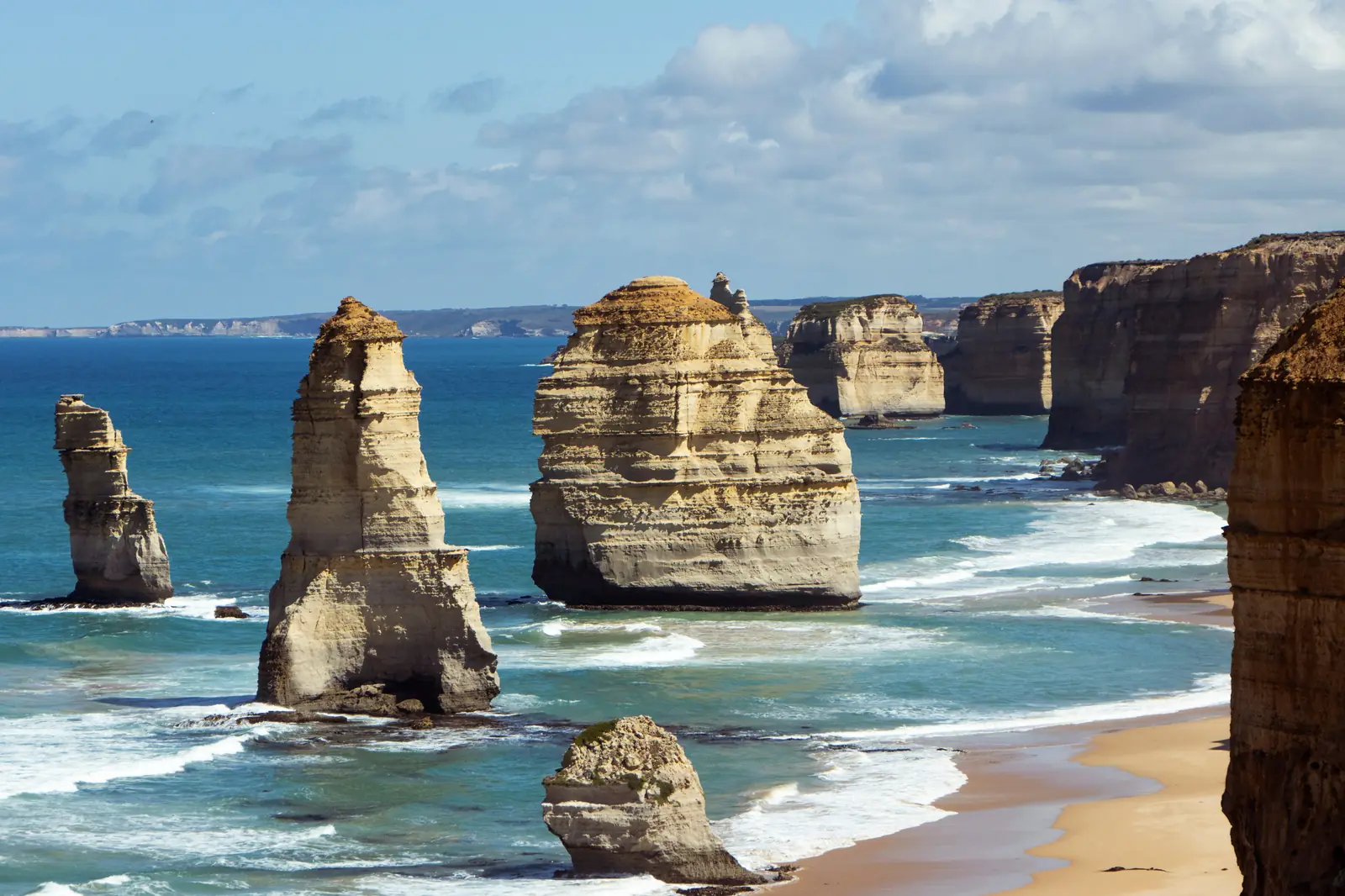
Seven or eight stacks, one new booking system, and why the last hour of daylight changes everything.
This article contains advertising. Our booking links are routed through a partner that adds commission tracking automatically, so if you book through one we earn a commission from the provider, at no extra cost to you. It never affects what we recommend. Affiliate disclosure
The first thing most people say when they walk out onto the boardwalk is that the stacks are bigger than they expected. The second is to start counting. You won’t get to twelve. The twelve apostles are a line of limestone pillars standing in the surf off the Shipwreck Coast, some of them 45 metres tall, and the sea has been knocking them down, one by one, for as long as anyone has been watching.
This guide is about the site itself: the viewpoints and which is best, how the new booking system works, when to go, how to get there, how to photograph it, and what’s worth doing within fifteen minutes of the car park. Prices and details were checked in September 2026, a month of real change at the site; confirm anything bookable before you travel. For the rest of the coast, see our complete Great Ocean Road guide.
Twelve Apostles at a Glance
| Question | Answer |
|---|---|
| Where are they? | Port Campbell National Park, about 7 km east of Port Campbell and 230 km from Melbourne by the fastest route |
| Drive from Melbourne | About 3 hours inland via Geelong and Colac; 4.5 hours or more along the coast |
| Do I need to book? | Yes, as the new Twelve Apostles Visitor Centre opens. Bookings go live in early October 2026 at twelveapostles.org.au |
| Cost | A fee applies with the new centre; the amount had not been published when we checked. Locals and Eastern Maar community members are exempt |
| How many are left? | Seven or eight are visible from the main lookouts, depending on how you count |
| Time needed | 45 minutes to an hour at the main boardwalks; add an hour for Gibson Steps and Loch Ard Gorge |
| Best time | The last hour before sunset, or sunrise |
| Worst time | 11:00–15:00, when the day tours from Melbourne arrive |
| Traditional Owners | Eastern Maar peoples |
What Are the Twelve Apostles?
The stacks are made of Port Campbell Limestone, laid down on an ancient sea floor between about 10 and 20 million years ago from the shells and skeletons of marine creatures. When sea levels dropped and the land rose, that soft rock became a line of cliffs facing the full force of the Southern Ocean. Waves carved caves into the cliffs, the caves became arches, the arches collapsed, and what’s left standing offshore are the stacks. Erosion at the base is estimated at around two centimetres a year, which sounds slow until you remember that one of them fell over in an afternoon.
That collapse happened in July 2005, when a stack of about 50 metres crumbled into the sea in front of visitors on the platform. It left a stump of rubble that you can still pick out at low tide. London Arch, 20 minutes west, lost its landward span in 1990 in the same way. The process is ongoing, which is part of the point: this is a landscape being rearranged in real time.
Why “Twelve”?
There were never twelve. The group was known as the Sow and Piglets for much of the 20th century — the Sow being Mutton Bird Island near Loch Ard Gorge, and the Piglets the smaller stacks. The more marketable name arrived mid-century as tourism grew, and it stuck. From the main boardwalk you can see seven or eight, depending on where you stand and whether you count a stump. Nobody is quite sure if a twelfth was ever counted, and the local visitor staff have long given up arguing about it.
Country
The Shipwreck Coast is Eastern Maar Country. Eastern Maar people have lived along this coast for many thousands of years, and the landscape is woven into their stories and law. Eastern Maar community members are exempt from the new visitor fee, a small acknowledgement that this is their Country before it is anyone’s attraction. The interpretive signs along the boardwalk are worth reading on the way out.
The New Booking System
This is the most important thing to know before you visit in late 2026 or 2027. The Great Ocean Road Coast and Parks Authority is opening a new Twelve Apostles Visitor Centre as part of a $126 million redevelopment of the precinct, with hundreds of parking spaces, exhibitions, retail and hospitality spaces, and a rooftop lookout over the Shipwreck Coast.
With it comes a booking system. According to the Authority, visitors will need to book in advance, and bookings go live in early October 2026 through the official site, twelveapostles.org.au, where you can also sign up for an alert. The stated aims are to reduce congestion, guarantee parking at peak times, improve safety and protect the landscape — the site receives around two million visitors a year, with daily numbers peaking around 16,000.
What we know and don’t know, as of September 2026:
- A fee applies, described by the Authority as consistent with other popular nature-based attractions. The amount had not been published when we checked.
- Locals and Eastern Maar community members are exempt.
- Gibson Steps and Loch Ard Gorge are not affected — public access to both is unchanged and no booking is needed.
- Timed entry: expect to choose a time slot. If you want sunset, book early, especially in summer.
- Tour groups will generally be booked by the operator; check with yours.
Our advice: book as soon as your date is fixed, choose a late-afternoon slot, and keep a note of your booking on your phone before you lose signal in the Otways. The fee was controversial when it was announced in March 2026, and details may shift, so check the official site the week before you travel.
The Viewpoints
The main boardwalk and platforms
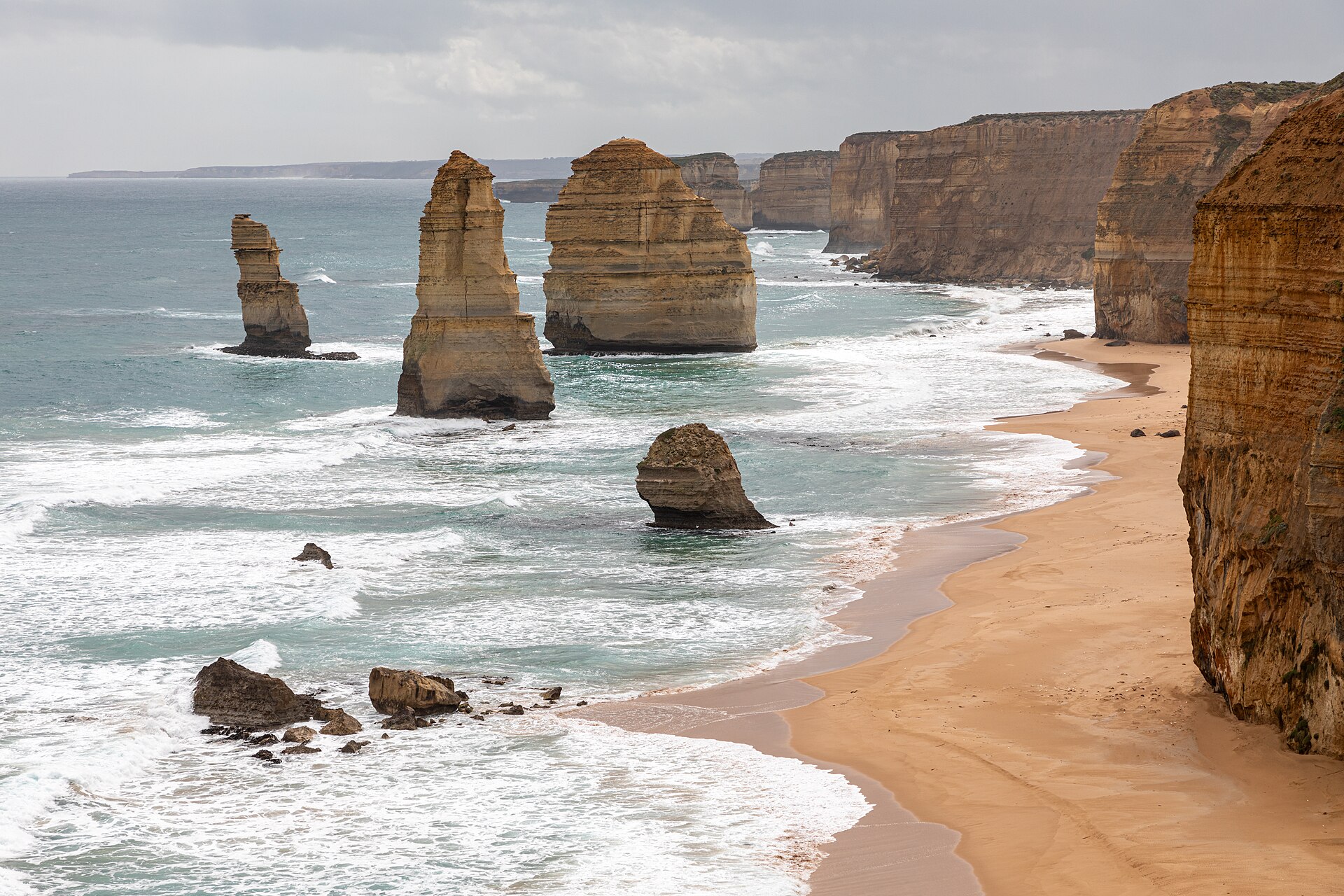
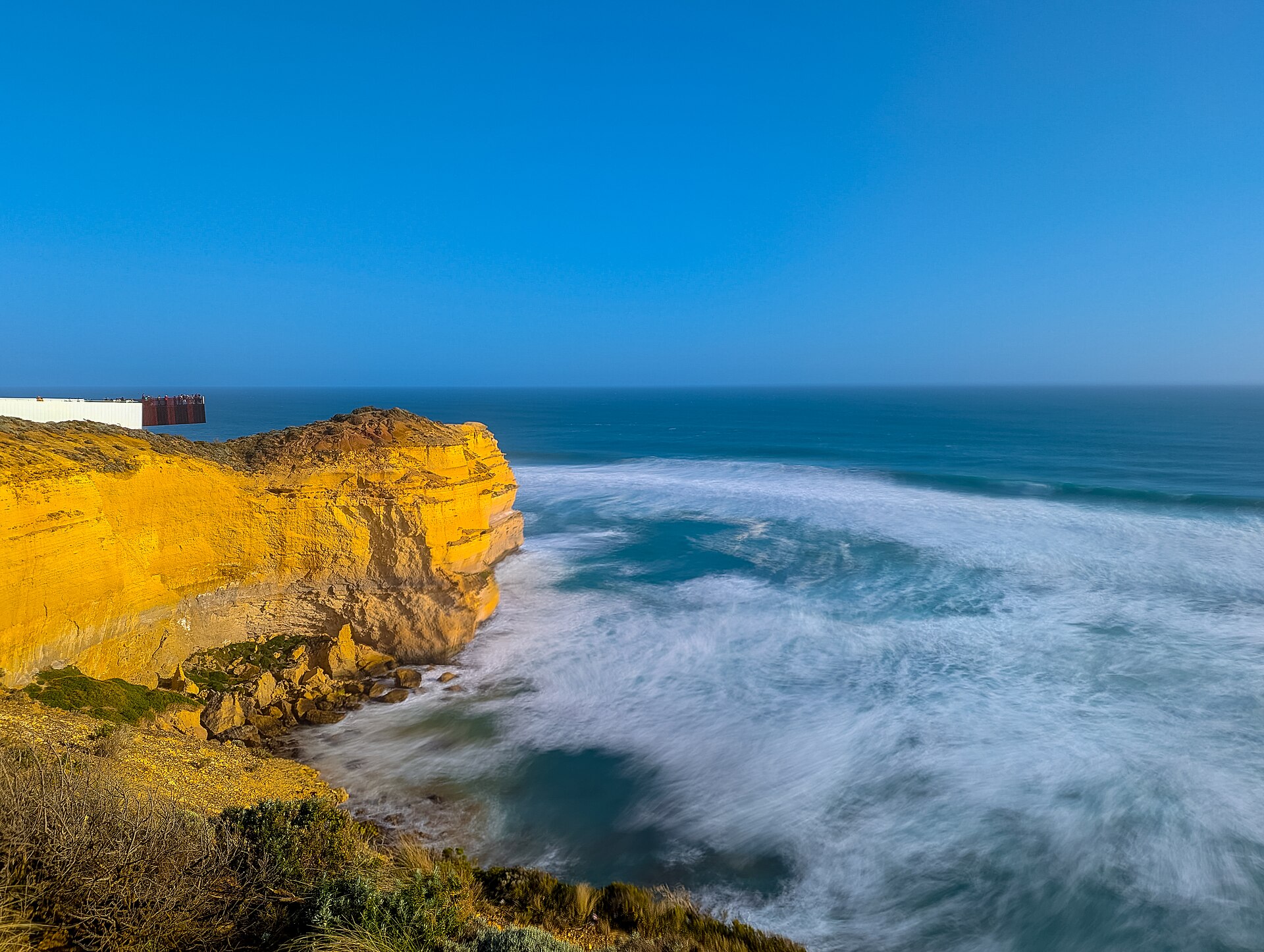
From the visitor facility on the inland side of the Great Ocean Road, a pedestrian tunnel runs under the highway to a network of boardwalks and viewing platforms on the clifftop. The main platforms look west along the line of stacks and are the source of nearly every famous photo. The paths are sealed or boardwalked, mostly flat and wheelchair accessible, and a relaxed loop of all the lookouts takes 20 to 30 minutes, though most people linger longer.
There are two distinct views. The western platforms show the main group of stacks receding along the coast — the postcard view. The eastern lookouts face back toward Gibson Beach and the two stacks known as Gog and Magog. The layout will change as the new precinct opens, but the clifftop views themselves are the same.
Gibson Steps
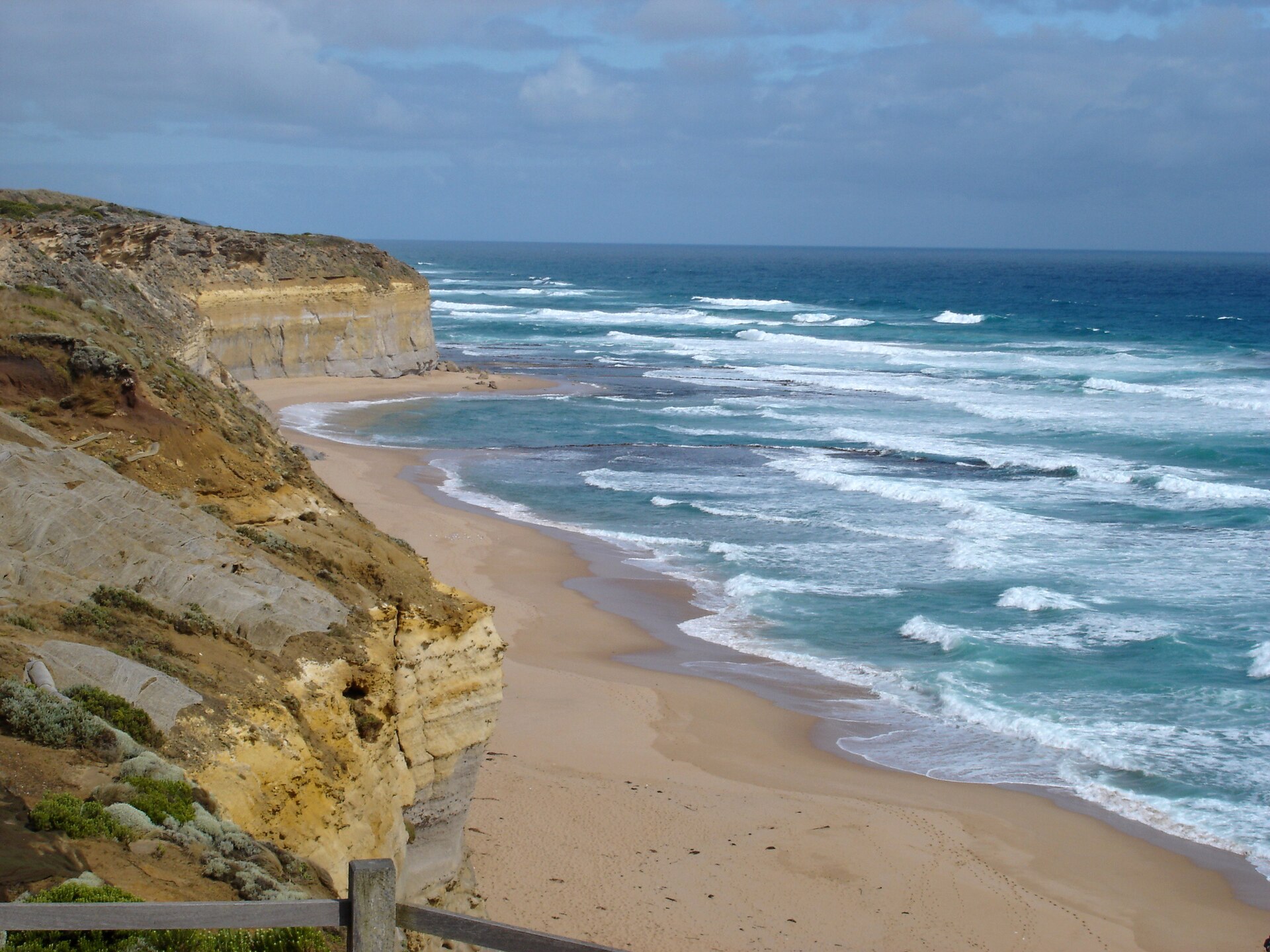
About a kilometre east of the main car park (you can walk there on a clifftop path or drive to its own small car park), Gibson Steps is a staircase of 86 steps cut into the cliff, leading down to Gibson Beach. From the sand you look up at Gog and Magog from sea level, and the scale is completely different from the platform above. It’s our favourite way to see the Apostles.
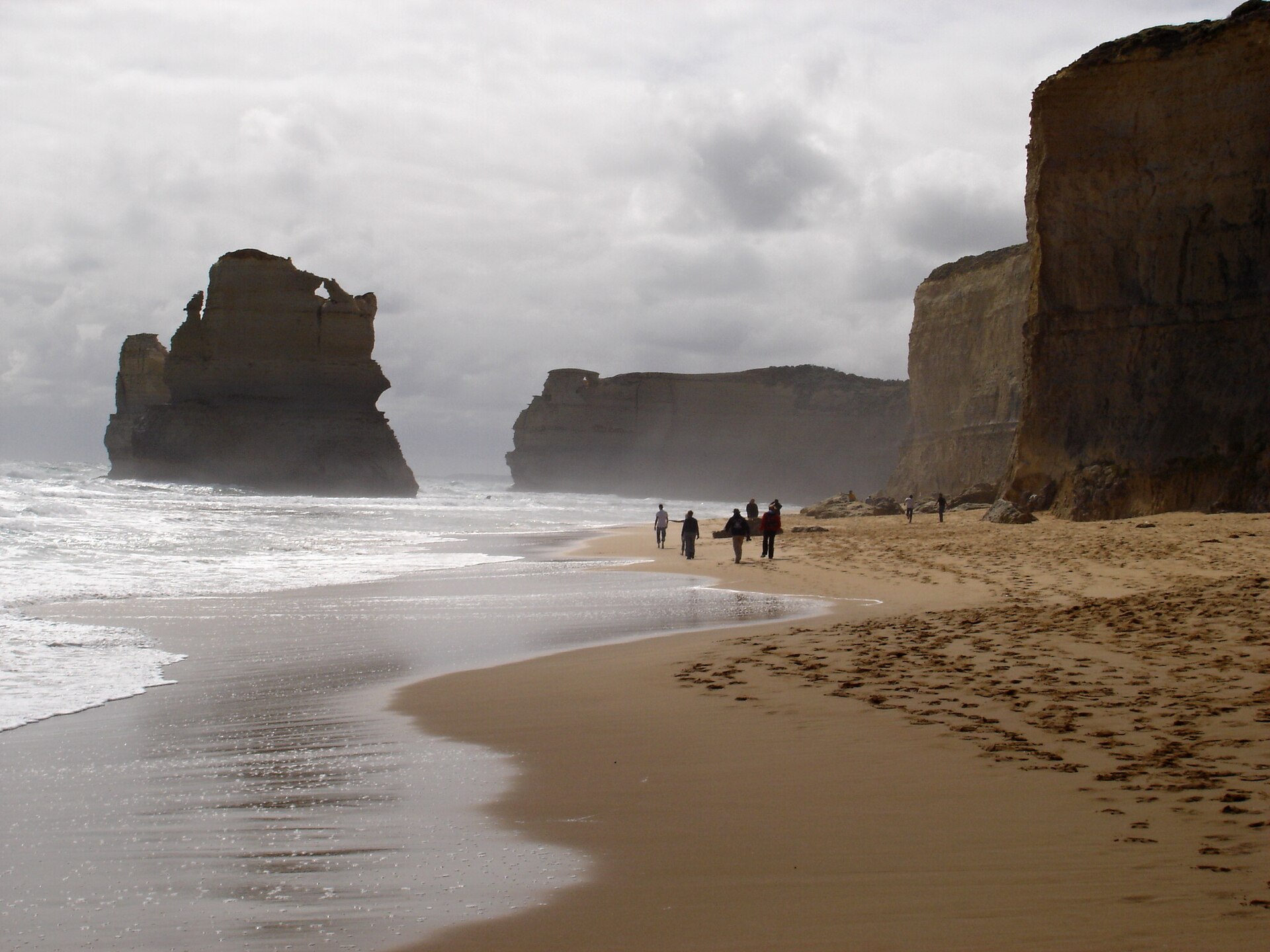
A few cautions. The steps were closed for a long period from August 2025 after ground movement, and they close in heavy seas; check the current status before you go. At high tide and in big swells the beach can disappear entirely, and rogue waves have caught people out. Stay well back from the water, don’t walk around headlands, and never swim here. The steps are steep, uneven and not suitable for prams or wheelchairs.
Gibson Steps is not part of the new booking system, so it’s a good option if you arrive without a booking.
From the air
Helicopter operators beside the Twelve Apostles run scenic flights that range from a quick loop over the stacks to longer flights taking in Loch Ard Gorge, London Arch and the Bay of Islands. Resellers were advertising 15-minute flights from around A$165 per person when we checked, though operators set their own prices and these change seasonally. Is it worth it? If you can afford it, a short flight is the one way to understand how the stacks, the cliffs and the gorges fit together. If you’re choosing between a flight and an extra night on the coast, take the night.
From the water
There’s no regular public boat trip to the Apostles. The Southern Ocean here is among the roughest coastline in Australia, and Port Campbell’s small harbour is used by fishing and dive boats rather than sightseeing cruises. If you see anything offering “boat tours of the Apostles”, check it carefully.
When to Visit
Time of day
| Time | Crowds | Light | Verdict |
|---|---|---|---|
| Sunrise to 10:00 | Very quiet | Soft light behind you on the eastern stacks; the main group is back-lit | Excellent for peace, good for photos |
| 10:00–11:00 | Building | Flat | Fine |
| 11:00–15:00 | Peak — tour coaches | Harsh overhead light | Avoid if you can |
| 15:00 to an hour before sunset | Easing off | Warming up | Good |
| Last hour before sunset | Moderate; busy in summer | Golden light on the stacks | Best of the day |
| Dusk | Thinning | Blue hour | Magical, and penguins may come ashore |
Sunset at Port Campbell ranges from about 17:20 in June to just before 21:00 in late December. Plan backwards from it, and book a time slot that lets you arrive an hour before.
Season
- Summer (December–February) — long evenings make a sunset visit easy on a day trip, but it’s the busiest time of year, especially over school holidays. Book your visit early.
- Autumn (March–May) — often the calmest and clearest weather, with fewer crowds after Easter. Our favourite season here.
- Winter (June–August) — dramatic seas, cold wind, short days and the fewest visitors. Great for storm watching; not for a day trip.
- Spring (September–November) — changeable, windy and green. Shearwaters return to nearby Mutton Bird Island from late September.
Little penguins at dusk
A colony of little penguins lives in burrows at the base of the cliffs, and on many evenings they come ashore on the beach below the main platforms after dark. From the clifftop they appear as tiny moving dots, so bring binoculars and don’t expect the close-up experience of Phillip Island. It’s a lovely bonus rather than a reason to visit. If penguins are the priority, Phillip Island’s Penguin Parade is the better trip.
How to Get to the Twelve Apostles
By car from Melbourne
There are two routes, and the choice matters more than people think.
- Inland (fastest): M1 to Geelong, then the Princes Highway through Colac, and south via Timboon or Simpson to Princetown. About 230 km and 3 hours.
- Coastal (scenic): Along the Great Ocean Road through Torquay, Lorne, Apollo Bay and the Otways. About 275 km, 4.5 hours without stops, and in practice most of a day.
The sensible combination is coastal out and inland back. If you’re new to driving in Australia, our guide to driving in Melbourne as a tourist covers the essentials.
From nearby towns
| From | Distance | Drive |
|---|---|---|
| Princetown | ~7 km | 7 minutes |
| Port Campbell | ~12 km | 10 minutes |
| Apollo Bay | ~88 km | 1 h 20 min |
| Warrnambool | ~75 km | 1 hour |
| Lorne | ~135 km | 2 h 15 min |
By public transport
Take the V/Line train from Southern Cross to Geelong, then the V/Line coach to Apollo Bay (daily). From Apollo Bay, the coach to Warrnambool stops at the Twelve Apostles — but only on Mondays, Wednesdays and Fridays, and only briefly. Alternatively, take the train to Warrnambool and the coach east. It works, but it’s slow, and you won’t be there for sunset. Check how the new booking system applies to coach passengers before you travel. Our public transport guide explains V/Line tickets.
On a tour
Most day tours from Melbourne include the Twelve Apostles, usually around the middle of the day, along with Loch Ard Gorge. Some operators run the route in reverse to reach the Apostles earlier, and multi-day tours often include a sunset visit. If a tour is your plan, ask whether the Apostles booking and fee are included in the price.
By walking the Great Ocean Walk
The roughly 100 km Great Ocean Walk from Apollo Bay finishes at the Twelve Apostles, usually on day eight. Arriving on foot along the clifftops, with the stacks slowly appearing ahead, is by far the most memorable way to get here.
Facilities and Accessibility
- Toilets, information and a kiosk are at the visitor facility; expanded retail, food and exhibitions come with the new centre.
- Main boardwalks are flat and wheelchair and pram accessible.
- Gibson Steps is not accessible: 86 steep steps and soft sand.
- Food: beyond the kiosk, the nearest cafés and restaurants are in Port Campbell, 10 minutes away.
- Fuel: Port Campbell or Princetown. There’s nothing on the Otway section to the east.
- Mobile coverage: generally available at the site but patchy on the approach through the Otways.
- Drones: recreational drone flying is restricted in Victorian national parks and around the helicopter flight paths here; check Parks Victoria’s rules before bringing one.
Photography Tips
- Sunset from the main platforms is the classic shot, with the sun dropping behind the stacks to the west. In summer it sets further south-west; in winter further north-west, over the land.
- Sunrise lights the eastern faces of the stacks and is far quieter.
- A telephoto lens compresses the line of stacks and isolates individual pillars. A wide lens works best from Gibson Beach.
- Long exposures smooth the surf around the stacks at dusk; bring a small tripod and something to brace it against the wind.
- Stay on the paths. The clifftops are unstable and fenced for good reason, and the fines for going over barriers are real.
- Protect your gear from salt spray, especially on a windy day at Gibson Beach.
What’s Nearby: Within 15 Minutes
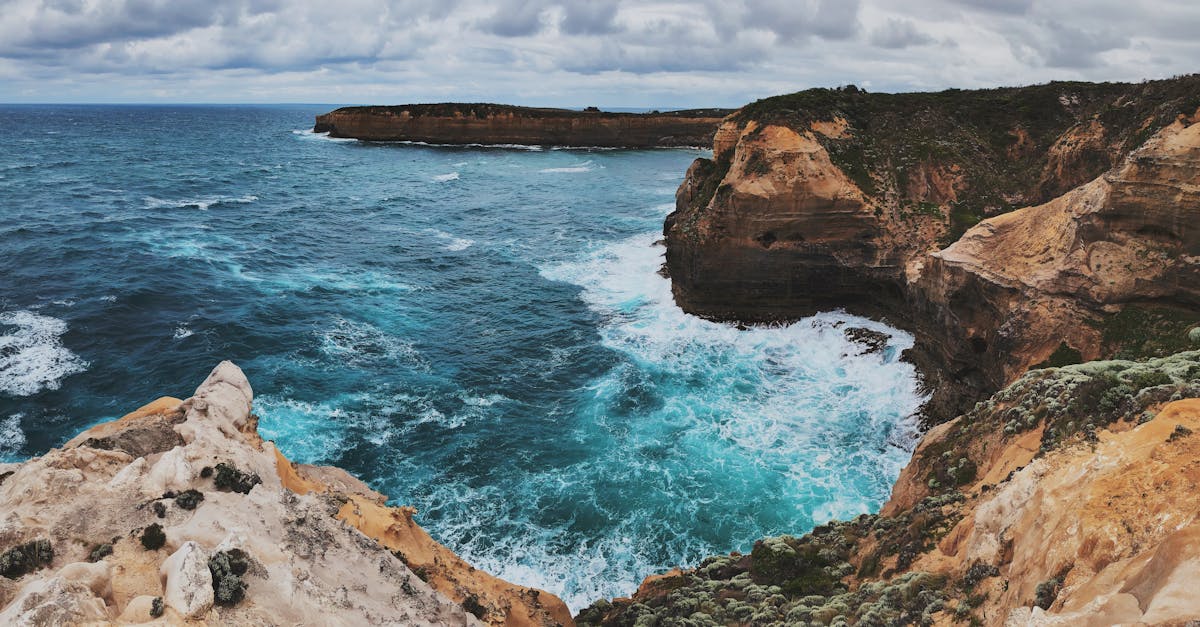
The Twelve Apostles are the headline of the Shipwreck Coast, but the stops around them are just as good, and none are part of the booking system:
- Loch Ard Gorge (5 minutes west) — a sheltered gorge named after the 1878 wreck of the Loch Ard, with walking tracks to the beach, a cemetery and lookouts over the Razorback and Island Archway. Allow an hour.
- Port Campbell (10 minutes) — a small town with a beach, cafés, a pub and the nearest accommodation.
- The Arch and London Arch (15 minutes west) — a natural arch and the famous “London Bridge” that lost its span in 1990.
- The Grotto (20 minutes west) — a sinkhole and rock pool you reach by steps.
- Bay of Martyrs and Bay of Islands (25–30 minutes west) — quieter, wilder and underrated.
- Princetown and the Gellibrand River (7 minutes east) — a peaceful estuary and wetlands.
For how these fit into a two- or three-day trip, including the best time to reach each one, see our Great Ocean Road itinerary.
Is It Worth It?
Yes — with conditions. The Twelve Apostles are genuinely one of the great coastal sights in Australia, and photographs don’t quite prepare you for the scale. But the experience depends heavily on when you go and how you get there.
It’s absolutely worth it if you arrive in the late afternoon, stay for sunset, walk down Gibson Steps and give Loch Ard Gorge an hour. It’s less worth it as a 45-minute midday stop on a 12-hour day tour, fighting for a spot on the railing before a three-hour drive home. And it’s not worth the drive from Melbourne on a day of low cloud and horizontal rain, when you’ll see grey shapes in grey water.
With the new fee and booking system, it also pays to plan. Book ahead, pick your time slot carefully, and make the Apostles the centrepiece of an overnight stay in Port Campbell rather than a tick-box on a long day. If you only have one day from Melbourne, our Great Ocean Road day trip guide shows how to make the most of it.
The Twelve Apostles Marine National Park
What you see from the platform is only half the landscape. The water below the stacks is protected as the Twelve Apostles Marine National Park, established in 2002 and covering about 7,500 hectares of sea between Princetown and Port Campbell. Beneath the surface, the same limestone that forms the stacks has been carved into underwater arches, canyons and caves, covered in sponges, kelp and soft corals, and home to seals, weedy sea dragons and huge schools of fish.
Most visitors will never see it — the swell here makes diving a serious undertaking, organised through operators in Port Campbell when conditions allow. But it helps explain why the whole coast is managed so carefully, and why fishing and collecting are banned inside the park. Next door, the small Arches Marine Sanctuary off Port Campbell protects another cluster of submerged arches.
A Short History of the Shipwreck Coast
The stretch of coast between Cape Otway and Port Fairy earned its name the hard way. For ships arriving from Britain in the 19th century, the approach to Bass Strait meant threading the narrow gap between Cape Otway and King Island — the “eye of the needle” — often after weeks without a reliable position fix, in fog, gales and heavy seas. Well over a hundred vessels were wrecked along this coast.
The most famous is the Loch Ard, which struck Mutton Bird Island in June 1878 just a few kilometres west of the Twelve Apostles. Only two of the 54 people aboard survived, both teenagers, and the gorge where they came ashore now bears the ship’s name. Lighthouses at Cape Otway, Port Fairy and Warrnambool were built to reduce the toll, and Flagstaff Hill Maritime Village in Warrnambool tells the stories of the ships that didn’t make it. Knowing that history changes how the stacks look on a wild winter afternoon.
Where to Stay Nearby
To see the Twelve Apostles at their best — at sunset and again at sunrise — stay close. Port Campbell, ten minutes away, is the obvious base: a small town with motels, holiday apartments, a caravan park, cafés and a pub, all within walking distance of its sheltered beach. It books out early in summer and on long weekends. Princetown, seven minutes east, has a handful of cottages and farm stays on the Gellibrand River. Timboon, 20 minutes inland, has more farmstays and is known for its cheese, whisky and ice cream. Warrnambool, an hour west, has the widest range of accommodation at the best prices, and Apollo Bay, 80 minutes east, is the usual first-night stop for anyone driving from Melbourne along the coast.
Safety
- Stay behind barriers and on marked paths; the limestone cliff edges collapse without warning.
- Don’t swim at Gibson Beach or any beach along this stretch — rips, cold water and unpredictable waves are deadly.
- Check tides and swell before walking on Gibson Beach, and keep an eye on the water.
- Drive carefully after dark on the approach roads, where kangaroos and wallabies are common.
- Bring warm, windproof layers, even in summer.
Twelve Apostles FAQ
How many of the Twelve Apostles are left?
Seven or eight are visible from the main viewing platforms, depending on where you stand and how you count. There were never twelve, and one stack collapsed in 2005.
Do you need to book to see the Twelve Apostles?
Yes, as the new Twelve Apostles Visitor Centre opens in late 2026. Bookings go live in early October 2026 through twelveapostles.org.au. Gibson Steps and Loch Ard Gorge don’t require a booking.
How much does it cost to visit the Twelve Apostles?
A fee applies with the new visitor centre, but the amount had not been published when we checked in September 2026. Locals and Eastern Maar community members are exempt. Check the official site for the current price.
What is the best time to visit the Twelve Apostles?
The last hour before sunset, when the light is golden and the day tours have left. Sunrise is the quietest time. Avoid 11:00 to 15:00 if possible.
How long should I spend at the Twelve Apostles?
Around 45 minutes to an hour at the main boardwalks, plus 30 minutes to an hour at Gibson Steps and an hour at Loch Ard Gorge.
How far are the Twelve Apostles from Melbourne?
About 230 km, or roughly three hours by the inland route via Colac. Along the Great Ocean Road it’s about 275 km and at least 4.5 hours of driving.
Can you walk down to the Twelve Apostles?
Not to the main group, but Gibson Steps lets you walk down to the beach beside two of the stacks, Gog and Magog, when the steps are open and the tide allows.
Why are they called the Twelve Apostles?
The name was chosen mid-20th century to attract tourists; the stacks were previously known as the Sow and Piglets. There were never twelve stacks visible.
Are the Twelve Apostles wheelchair accessible?
Yes, the main boardwalks and viewing platforms are accessible. Gibson Steps is not.
Related Melbourne Guides
- Great Ocean Road: The Complete Travel Guide
- Great Ocean Road Itinerary: 1, 2, 3 & 5 Days
- Great Ocean Road Day Trip from Melbourne
- Best Day Trips from Melbourne
- Phillip Island Penguin Parade
Photo Credits
Stacks at Gibson Beach: Gibson Steps – panoramio (1) by Pavel Špindler, CC BY 3.0, via Wikimedia Commons.
Gibson Beach from the clifftop: Gibson Steps – panoramio by Pavel Špindler, CC BY 3.0, via Wikimedia Commons.
Limestone cliffs in late light: PXL 20241002 064304134.MP Twelve Apostles at Sunset Victoria, Australia Great Ocean Road Trip 02 by Sourabh.biswas003, CC BY-SA 4.0, via Wikimedia Commons.