Apollo Bay Guide: Beaches, Food & Where to Stay
- Words
- Melbourne Tourism Guide
- Updated
- September 16, 2026
- Read
- 15 min
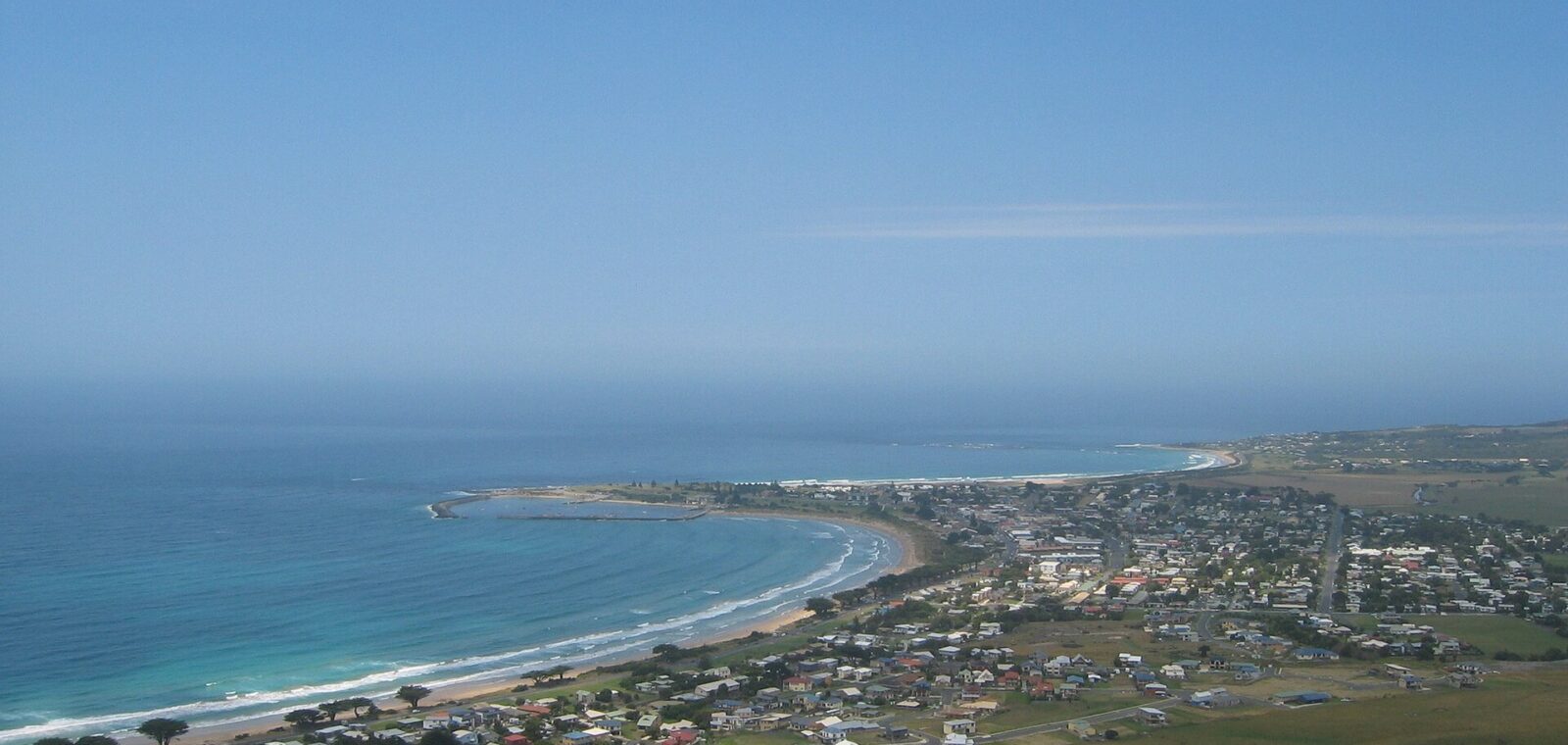
Less polished than Lorne, better placed than anywhere — the town to wake up in on a Great Ocean Road trip.
This article contains advertising. Our booking links are routed through a partner that adds commission tracking automatically, so if you book through one we earn a commission from the provider, at no extra cost to you. It never affects what we recommend. Affiliate disclosure
Apollo Bay announces itself slowly. After an hour of tight bends between Lorne and Skenes Creek, the hills pull back, the road straightens out along a wide crescent of sand, and a small town appears at the far end with a harbour wall, a row of Norfolk Island pines and green paddocks climbing up behind. Most people are ready for a coffee by then. Many end up staying the night, and plenty come back for a week.
Apollo Bay is the practical heart of the Great Ocean Road — the halfway point between Melbourne and the Twelve Apostles, the gateway to the Otways and the start of the Great Ocean Walk. This guide covers what there is to do in town and nearby, the beaches, where to eat and stay, how to get there, and how long to give it. Prices and hours were checked in September 2026; treat them as the right order of magnitude and confirm before you go. For the wider road, see our complete Great Ocean Road guide.
Apollo Bay at a Glance
| Question | Answer |
|---|---|
| Where is it? | On the Great Ocean Road, about 45 km past Lorne and roughly 190–200 km from Melbourne |
| Drive from Melbourne | About 3 hours via the coast; a little less via the inland route through Colac or Forrest |
| Public transport | V/Line train to Geelong, then the daily V/Line coach |
| Best known for | Its beach and harbour, Mariners Lookout, fur seals at Marengo, and as the gateway to the Otways |
| How long to stay | One night on a road trip; two or three as a base for the Otways |
| Visitor centre | Great Ocean Road Visitor Information Centre on the foreshore, open daily 09:00–17:00 |
| Traditional Owners | Eastern Maar peoples |
What Apollo Bay Is Like
Compared with Lorne, Apollo Bay is less polished and more of a working town. There’s a fishing fleet in the harbour, a main street with a supermarket, a bakery, a pub and a steady stream of cafés, and a population of a couple of thousand that swells many times over in January. The setting is the real draw: a long, gently curving beach, the Otway Ranges rising steeply behind town, and a coastline that turns wilder and emptier the moment you drive west.
It’s a town that rewards staying put. Day-trippers see the main street and the beach at lunchtime. People who stay the night walk up to the lookout at dusk, watch the boats come in, and wake up to mist lifting off the hills. That’s when Apollo Bay makes sense.
Things to Do in Apollo Bay
Walk up to Mariners Lookout
The single best thing to do in Apollo Bay costs nothing and takes about half an hour. Drive a couple of kilometres north of town to the car park on Mariners Lookout Road, then climb the short, steep grassy track to the top. The view takes in the whole sweep of the bay, the harbour, the town and the hills rolling down towards Cape Otway. Go late in the afternoon when the light warms up, or first thing in the morning when there’s mist in the valleys. Wear shoes with grip; the track can be slippery after rain.
Spend time on the beach
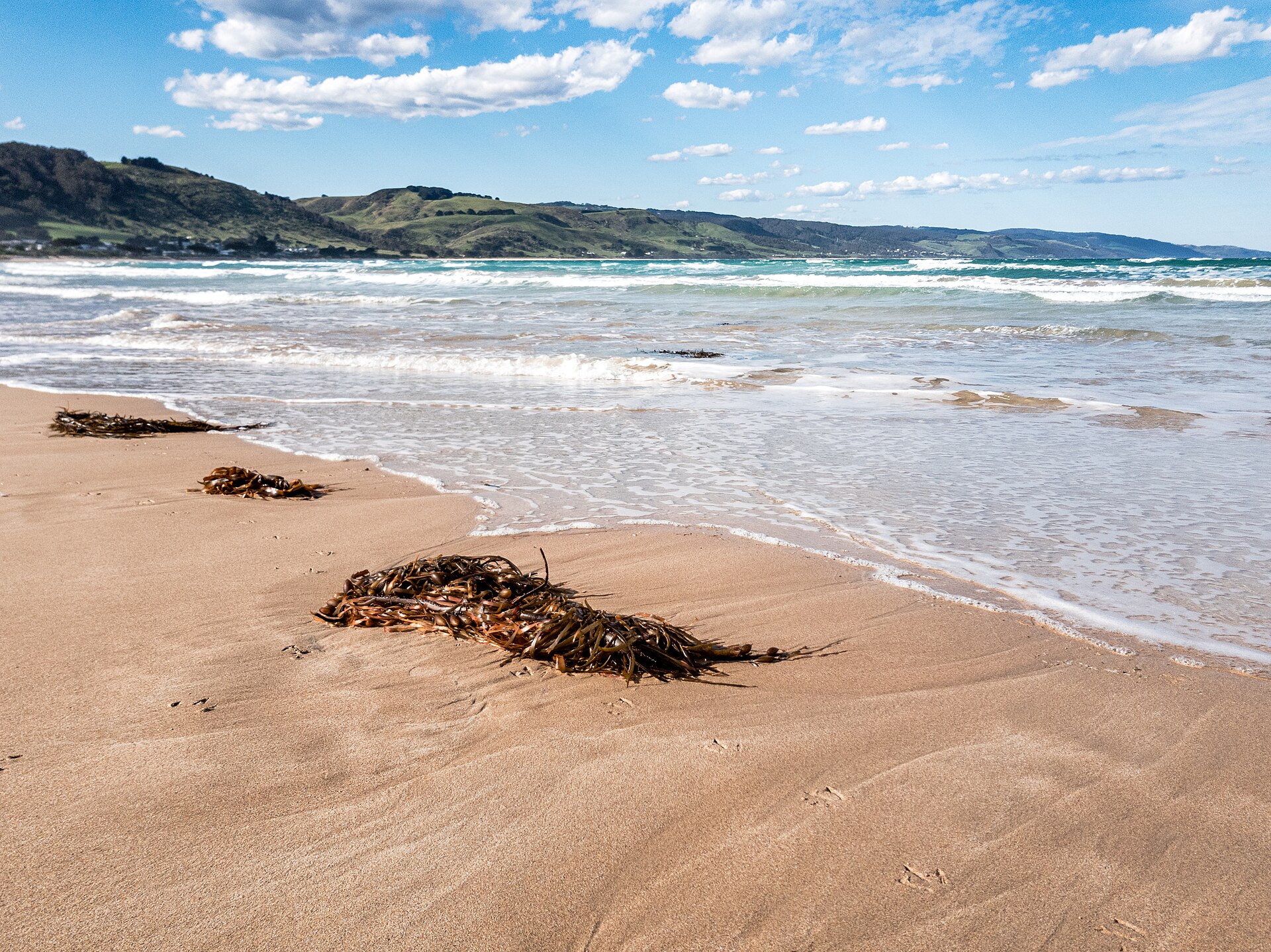
Apollo Bay’s main beach runs for several kilometres from the harbour towards Skenes Creek and is one of the more sheltered swimming beaches on this stretch of coast, though “sheltered” is relative on the Southern Ocean. The beach is patrolled by the local surf life saving club over the summer season; swim between the red and yellow flags. Outside patrol times and in bigger swells, rips form along the beach, so stick to the shallows if you’re unsure. The foreshore reserve behind the beach has picnic tables, barbecues, playgrounds and plenty of grass for an afternoon doing very little.
Paddle out to the seals at Marengo
Just south of town at Marengo, a colony of Australian fur seals lives on the reef inside the Marengo Reefs Marine Sanctuary. Apollo Bay Surf & Kayak runs guided sit-on-top kayak tours out to the reef, lasting about an hour and a half, with wetsuits, helmets and life jackets provided; the tour was listed at around A$99 per person when we checked. The seals often swim around the kayaks. It’s the most memorable paid activity in town and suits reasonably fit beginners, though it depends on sea conditions, so book with some flexibility. The same operator runs surf lessons and hires boards and kayaks.
If you’d rather stay dry, walk the short coastal track from Marengo towards the reef at low tide and look for seals hauled out on the rocks. Keep your distance — they’re wild animals and can move surprisingly quickly.
Wander the harbour
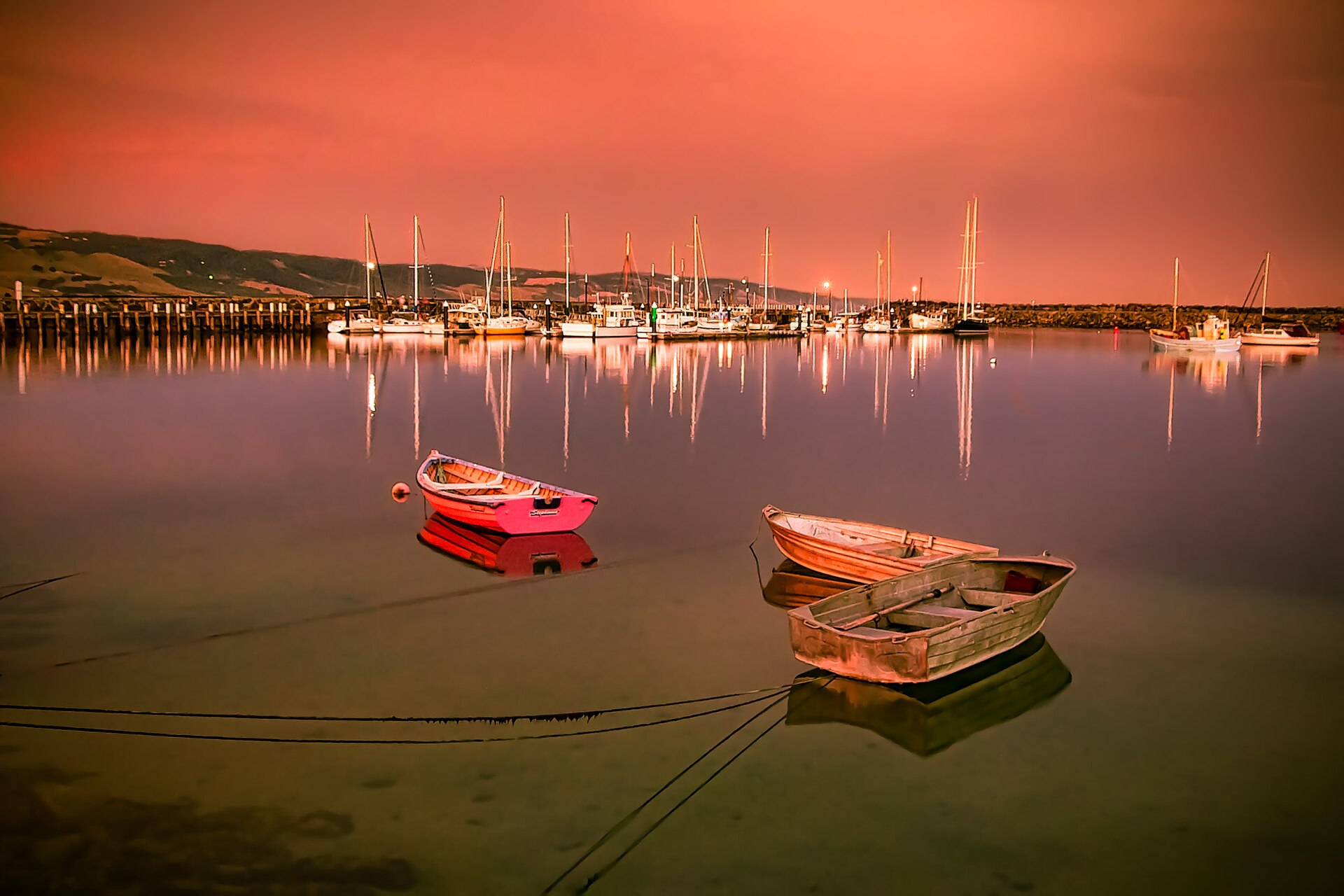
The harbour at the southern end of town shelters fishing boats, crayfish boats and yachts behind a long breakwater. It’s a lovely spot for an evening walk, and in the right season you can buy fresh seafood nearby. Walk out along the breakwater for a view back to the beach and the hills.
Browse the Saturday market
The Apollo Bay Community Market runs every Saturday from 08:30 to 13:00 on the foreshore. Everything is grown or made within 40 km of the bay, and you’ll find fresh produce, honey, baked goods, locally roasted coffee, ceramics, jewellery and art. It’s small, friendly and a good excuse to linger on a Saturday morning before driving on.
Start (or sample) the Great Ocean Walk
The Great Ocean Walk begins in Apollo Bay and runs about 100 km west to the Twelve Apostles. You don’t have to walk all eight days to enjoy it. The first section, from Apollo Bay through Marengo and along the coast towards Shelly Beach, makes a pleasant half-day walk with ocean views, and local shuttle services can drop you further along the trail so you can walk back. Pick up maps at the visitor centre.
Horse riding and golf
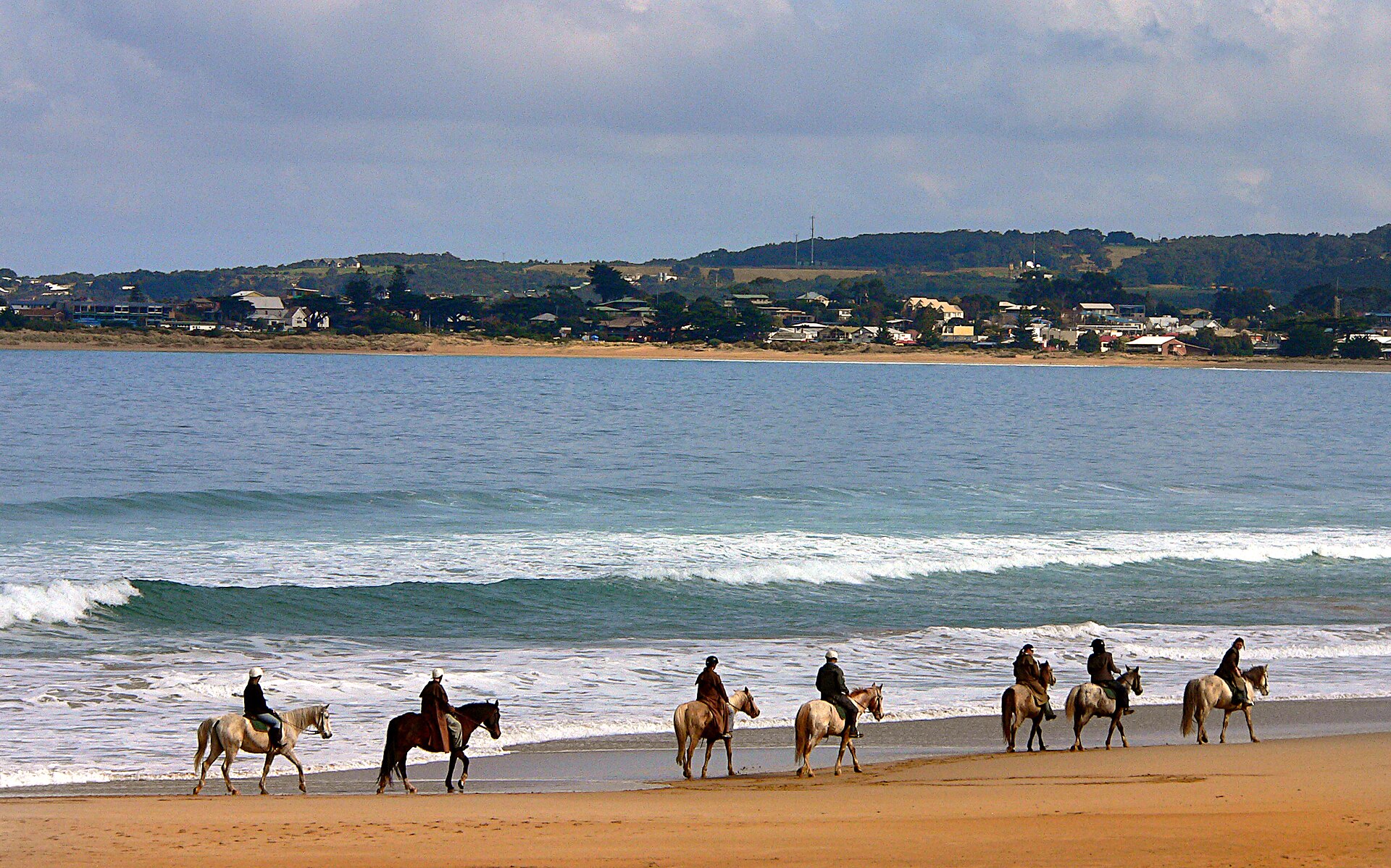
Horse riding operators in the hills around Apollo Bay run beach and farm rides, and the sight of a line of horses walking along the sand is a regular one in town. The Apollo Bay Golf Club course sits beside the beach and has some of the prettiest holes on the coast.
Visit the Great Ocean Road Visitor Information Centre
On the foreshore in the middle of town, the visitor centre is open daily from 09:00 to 17:00. It sells V/Line tickets, books attractions and accommodation, stocks walking maps for the Otways and the Great Ocean Walk, and has a shop of locally made products. It’s also the best place to check whether roads, walking tracks or waterfalls are open before you head into the forest.
Day Trips from Apollo Bay
Apollo Bay is the best base on the whole road for exploring the Otways, and several of the Great Ocean Road’s highlights are within an hour.
| Destination | Distance | Drive | Why go |
|---|---|---|---|
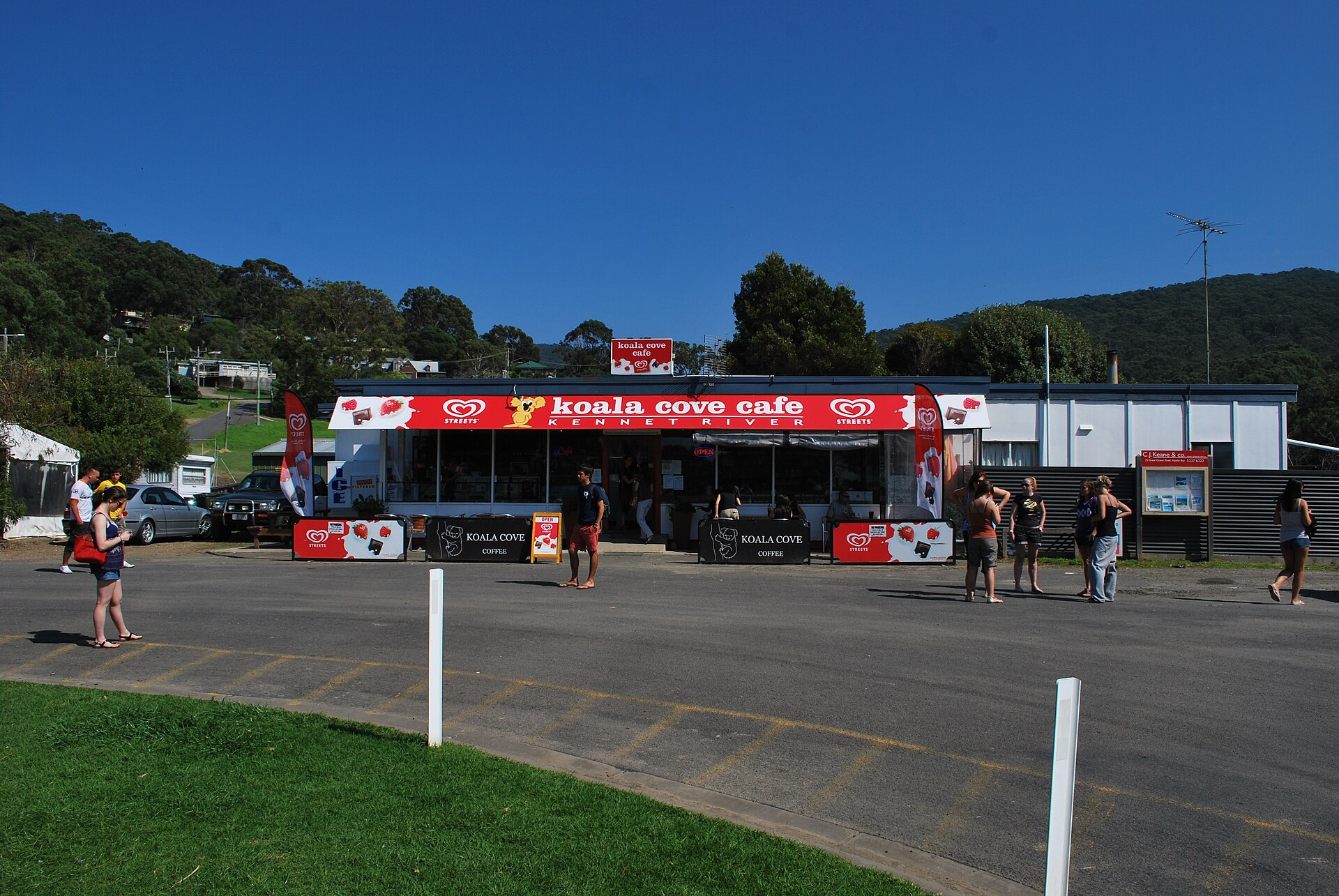
| Kennett River | ~22 km | 25 min | Wild koalas on Grey River Road |
| Maits Rest Rainforest Walk | ~17 km | 20 min | 800 m boardwalk through myrtle beech and tree ferns |
| Cape Otway Lightstation | ~32 km | 35 min | Heritage precinct and koalas on Lighthouse Road (tower closed for restoration) |
| Hopetoun Falls and the Aire River redwoods | ~50 km | 50 min | Waterfall and a grove of Californian redwoods |
| Otway Fly Treetop Adventures | ~55 km | 50 min | Treetop walk and zipline |
| Lorne and Erskine Falls | ~45 km | 55 min | The prettiest town on the road and its best waterfall |
| Twelve Apostles | ~88 km | 1 h 20 min | The headline sight; booking required |
Cape Otway
Thirty-five minutes west, Cape Otway is the most popular half-day trip from Apollo Bay. The drive down Lighthouse Road passes through manna gums where wild koalas are common, and the lightstation at the end is the oldest surviving lighthouse on mainland Australia. The tower itself is closed for heritage restoration, so entry to the wider precinct was discounted to A$11 for adults when we checked, with the site open daily from 09:00 to 17:00.
The Otway waterfalls
Hopetoun Falls, Beauchamp Falls and Triplet Falls are all within an hour, deep in the Otway Ranges, and are at their best in winter and spring after rain. One thing to know: Marriners Falls, the closest waterfall to Apollo Bay, has been closed indefinitely by Parks Victoria, so don’t plan around it. Check the status of any track at the visitor centre before you go. Our Great Ocean Road itinerary shows how to fit the Otways into a day.
Wild Dog Road and the hinterland drives
For a scenic loop without crowds, take one of the back roads that climb from the coast into the hills behind Apollo Bay, such as Wild Dog Road, which winds up through farmland with sweeping views back over the ocean before dropping down again near Skenes Creek. The roads are narrow, steep and winding, with livestock and logging trucks to watch for, so take it slowly.
Where to Eat in Apollo Bay
Apollo Bay’s food scene is relaxed rather than refined, and that’s part of its charm. The main street, Great Ocean Road, has most of what you need within a few hundred metres.
- Fish and chips on the foreshore — the classic Apollo Bay meal. Buy from one of the takeaways on the main street and eat on the grass opposite. Watch out for gulls.
- Cafés — several along the main street do good coffee and breakfast, and they get busy between 09:00 and 11:00 in summer.
- Bakery — the traditional Australian road-trip stop: pies, sausage rolls and vanilla slices.
- Pub — hearty counter meals, a beer garden and occasional live music.
- Restaurants — a small number of dinner restaurants focus on local seafood and Otway produce. Book in summer.
- Supermarket — the last large supermarket before Port Campbell. Stock up here if you’re heading into the Otways or planning picnics.
Outside the summer holidays, many places close early, some shut one or two days a week, and a few close for part of winter. If you’re arriving after 19:00 on a weeknight between May and September, check opening hours in advance.
Where to Stay in Apollo Bay
Apollo Bay has the best range of mid-priced accommodation on the eastern half of the Great Ocean Road, and it’s the most sensible overnight stop for a two- or three-day trip.
- Beachfront motels along the Great Ocean Road through town — simple, convenient and within walking distance of everything.
- Apartments and holiday units — good for families and longer stays.
- B&Bs and cottages in the hills — quieter, with views over the bay.
- Holiday parks — cabins and campsites near the beach.
- YHA Apollo Bay Eco — an eco-certified hostel with a rooftop deck, two kitchens, a wood heater, and a mix of shared rooms, doubles and family rooms.
- Great Ocean Ecolodge — 35 minutes away at Cape Otway, with five rooms and wildlife on the doorstep.
Book early for late December and January, when the town fills up. Our full guide to Great Ocean Road accommodation compares Apollo Bay with the other towns along the road.
Getting to Apollo Bay
By car
From Melbourne, the coastal route along the Great Ocean Road via Geelong, Torquay and Lorne is about 190–200 km and takes around three hours without stops — though almost nobody drives it without stops. A slightly quicker alternative is to go inland via Geelong and Colac, or via Birregurra and Forrest, and come down through the Otways. The coastal route is the reason to come, so take it at least one way. If you’re not used to driving on the left, read our guide to driving in Melbourne as a tourist.
By public transport
Take the V/Line train from Southern Cross Station to Geelong, then the V/Line coach, which runs daily along the coast through Torquay, Anglesea, Aireys Inlet and Lorne to Apollo Bay. Continuing west from Apollo Bay to the Twelve Apostles and Warrnambool is possible only on Mondays, Wednesdays and Fridays. A new timetable started in late August 2026, so check the current V/Line timetable before you plan. Our Melbourne public transport guide explains how V/Line tickets work.
On a tour
Almost every Great Ocean Road day tour from Melbourne stops in Apollo Bay for lunch, usually for about 45 minutes. See our comparison of Great Ocean Road tours for the options.
When to Visit Apollo Bay
- Summer (December–February) — warm days, patrolled beaches, busy town, booked-out accommodation. The most fun and the most expensive.
- Autumn (March–May) — often calm and settled, fewer crowds after Easter, and good walking weather.
- Winter (June–August) — quiet, cold and wet, with dramatic seas and waterfalls in full flow. Best prices. Some businesses reduce hours.
- Spring (September–November) — green hills, changeable weather, and wildflowers along the coastal walks.
For the wider picture, see our guide to the best time to visit Melbourne.
A Little History
Long before the town, this was Eastern Maar Country, and the bay, rivers and forests of the Otways provided food and shelter for thousands of years. European whalers and sealers worked the coast in the early 19th century, and the bay is generally said to take its name from the schooner Apollo, which sheltered here in the early 1840s.
Timber brought the first permanent settlement. Sawmills cut the tall forests of the Otway Ranges and ships loaded timber at a jetty in the bay, because for decades the only practical way in or out was by sea. That isolation ended in 1932, when the Lorne to Apollo Bay section of the Great Ocean Road was finally completed by returned soldiers, and the town began its slow change from a timber and fishing settlement into a holiday destination. The fishing fleet in the harbour is a reminder that the working town never quite disappeared.
A Rainy Day in Apollo Bay
It rains a lot in the Otways, and Apollo Bay gets its share. Rather than write the day off, lean into it. The waterfalls of the Otway Ranges are at their very best after heavy rain, and a walk through the dripping rainforest at Maits Rest, with the tree ferns glowing green, is arguably better in the wet than on a sunny afternoon. Pack a rain jacket and waterproof shoes. Back in town, the visitor centre has local books, maps and products, the cafés on the main street are made for long lunches, and the pub has a fire. Stormy weather also brings spectacular seas; watch the waves breaking over the harbour wall from a safe distance, then warm up with a coffee. For more ideas, our guide to rainy day things to do in Melbourne covers the city end of a wet trip.
Is Apollo Bay Worth Visiting?
Yes, and it’s worth staying in rather than just passing through. The honest trade-off: Apollo Bay isn’t as pretty as Lorne or as charming as Port Fairy, and its main street is functional rather than beautiful. But it has the better location, the better value, and a genuinely local character, and the view from Mariners Lookout is among the best on the whole road. If you’re doing the Great Ocean Road over two or three days, Apollo Bay is where you should wake up at least once.
What we’d skip: spending your one afternoon here shopping on the main street. Go up to the lookout, walk the beach, paddle out to the seals, and save the shopping for a rainy morning.
A Suggested 24 Hours in Apollo Bay
- 15:00 — Arrive via the coast from Lorne, stopping at Kennett River for koalas on the way.
- 16:00 — Check in, then a walk along the beach and out to the harbour.
- 17:30 — Drive up to Mariners Lookout for the late-afternoon view.
- 19:00 — Fish and chips on the foreshore, or dinner at the pub.
- 08:00 next day — Breakfast at a café on the main street; Saturday market if it’s the weekend.
- 09:30 — Seal kayak tour at Marengo, or an early walk on the first section of the Great Ocean Walk.
- 11:30 — Fill the tank and supplies at the supermarket, then head west to Maits Rest and Cape Otway.
Apollo Bay FAQ
How far is Apollo Bay from Melbourne?
About 190–200 km, or roughly three hours by car along the Great Ocean Road without stops.
What is Apollo Bay known for?
Its long beach and fishing harbour, the view from Mariners Lookout, the fur seal colony at Marengo, and its position as the gateway to the Great Otway National Park and the start of the Great Ocean Walk.
Is Apollo Bay or Lorne better?
Lorne is prettier, with better cafés and a more upmarket feel. Apollo Bay is better value and better located for the Otways and the Twelve Apostles. For a two-day trip, Apollo Bay is the more practical overnight stop.
Can you swim at Apollo Bay?
Yes. The main beach is patrolled in the summer season; swim between the flags and take care in bigger swells, when rips can form.
Are there seals at Apollo Bay?
Yes, a colony of Australian fur seals lives on the reef at Marengo, just south of town. You can see them on a guided kayak tour or sometimes from the shore at low tide.
How long should I spend in Apollo Bay?
At least one night on a Great Ocean Road trip. Two or three nights if you want to explore the Otways, Cape Otway and the waterfalls from a single base.
Can you get to Apollo Bay by public transport?
Yes. Take the V/Line train from Southern Cross to Geelong, then the daily V/Line coach to Apollo Bay.
Heading east instead? Lorne, 55 minutes along the coast, is the prettier and pricier neighbour, with better cafés and the view from Teddy’s Lookout. See our Lorne guide for what to do there and how the two towns compare.
Apollo Bay is the best base for the ranges behind it. For a full waterfall loop, the redwoods, the Otway Fly and camping options, see our guide to Great Otway National Park.
Related Melbourne Guides
- Great Ocean Road: The Complete Travel Guide
- Where to Stay on the Great Ocean Road
- Great Ocean Road Itinerary: 1, 2, 3 & 5 Days
- Twelve Apostles Guide
- Great Ocean Road Tours from Melbourne, Compared
- Best Beaches in Melbourne
Photo Credits
Apollo Bay from Mariners Lookout: Apollo Bay, Victoria by Hshook, CC BY 4.0, via Wikimedia Commons.
Apollo Bay harbour at dusk: Apollo Bay Boat Harbour (59409762) by Paul Carmona, CC BY-SA 3.0, via Wikimedia Commons.
Apollo Bay beach: Apollo Bay (AU), Beach — 2019 — 170325 by Dietmar Rabich, CC BY-SA 4.0, via Wikimedia Commons.