Melbourne Tram Network Guide: Routes, Maps & Tourist Tips
- Words
- Melbourne Tourism Guide
- Updated
- October 25, 2026
- Read
- 10 min
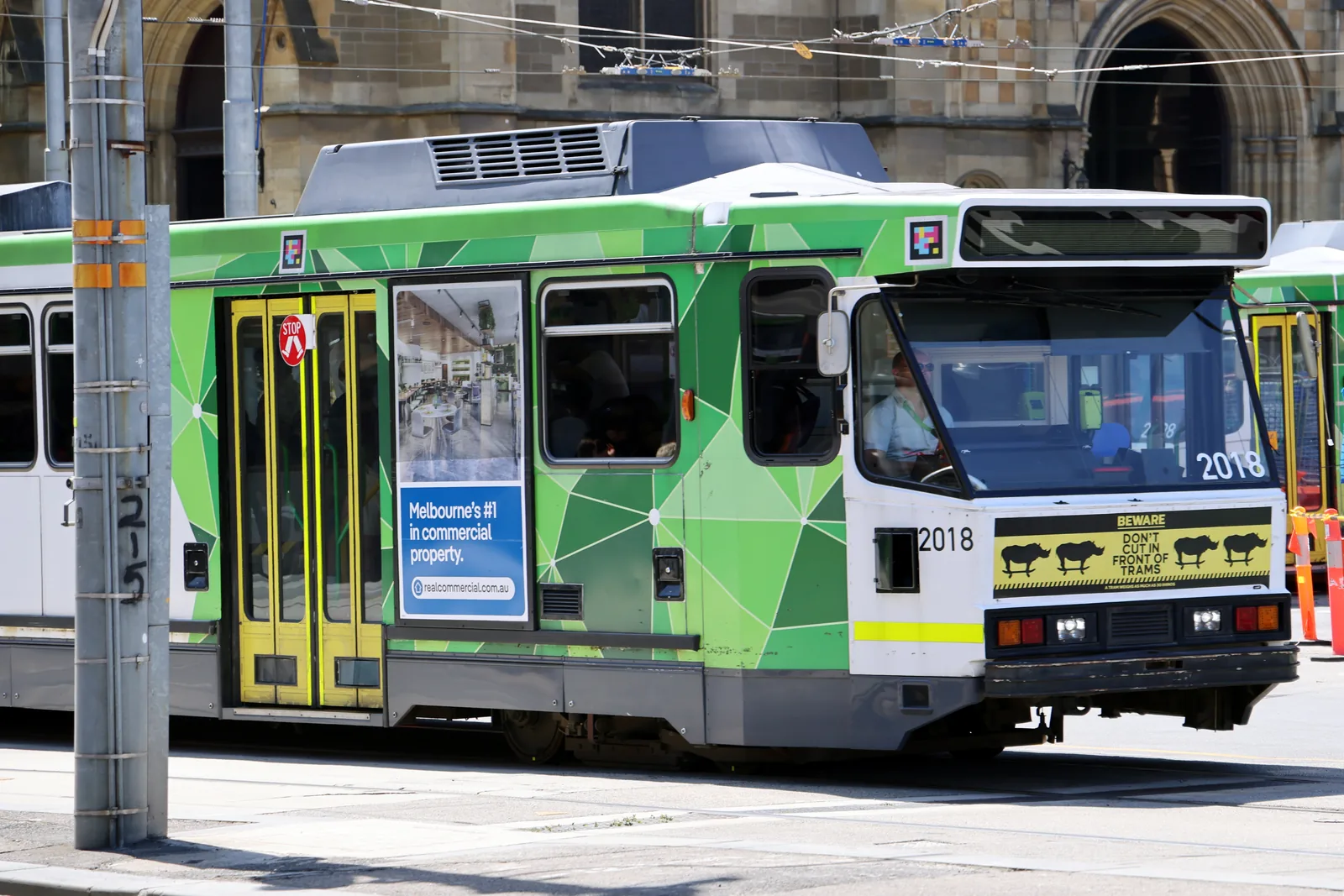
How to use Melbourne's trams as a tourist — the Free Tram Zone, the free City Circle, the best routes for sightseeing, Myki, night trams and etiquette.
This article contains advertising. Our booking links are routed through a partner that adds commission tracking automatically, so if you book through one we earn a commission from the provider, at no extra cost to you. It never affects what we recommend. Affiliate disclosure
The rattle of a green-and-yellow tram is the sound of Melbourne, and once you’ve cracked how the network works, it becomes the single best way to get around the city. Melbourne has the largest tram network in the world — 250 kilometres of track, two dozen routes and well over a thousand stops — and for visitors it’s a joy: frequent, scenic, and free within the city centre. This guide explains exactly how to use the trams as a tourist: the Free Tram Zone, the heritage City Circle, the best routes for sightseeing, and the little etiquette rules that mark you out as a local rather than a lost visitor. It’s an essential part of our Melbourne public transport guide.
The world’s largest tram network
Melbourne’s trams aren’t just transport, they’re an icon. The network spans around 250km of double track, runs some two dozen routes and serves more than 1,600 stops across the inner city and suburbs, with hundreds of trams rolling through the streets on any given day. It’s the largest urban tram system on the planet, a survivor of the era when most cities tore their trams up, and it gives Melbourne much of its character. For a tourist, that means you can reach the beach, the markets, the gardens and most of the inner suburbs on a tram — often more pleasantly than by any other means.
How trams work for tourists
The basics are simple once you know them. You need a Myki card (or Mobile Myki) to travel, which you tap on a reader as you board — and tap off again is not required on trams (only on trains). The big exception, and a gift to visitors, is the Free Tram Zone in the city centre: travel entirely within it and you pay nothing and don’t even need to tap. Beyond the zone, you tap on with your Myki and the correct fare is deducted, with daily fares capped so you can’t overspend. Our full guide to using the Myki card walks through buying and topping up.
The Free Tram Zone
The Free Tram Zone is the single most useful thing for a visitor to understand. It covers the CBD and Docklands — roughly bounded by Spring, Flinders, Spencer and La Trobe streets, plus the Docklands and Queen Victoria Market areas — and all tram travel within it is completely free, no tapping required. That means you can hop on and off to cover the city centre at no cost, which is brilliant for sightseeing. Just be aware of the boundaries: if you cross out of the zone, you must tap on with a Myki. Our dedicated Free Tram Zone guide has the map and the details.
The City Circle tram (route 35)
For a free, no-effort introduction to the city, hop on the City Circle tram (route 35). Run with beautifully restored burgundy heritage W-class trams, it loops the edges of the CBD — past Parliament House, the Old Treasury Building, the Docklands waterfront and more — completely free, with trams roughly every 12 minutes and a full loop taking about an hour. It’s part sightseeing tour, part transport, and a lovely way to get your bearings on arrival. Hop on and off as you please; it runs in both directions around the city grid.
The best tram routes for visitors
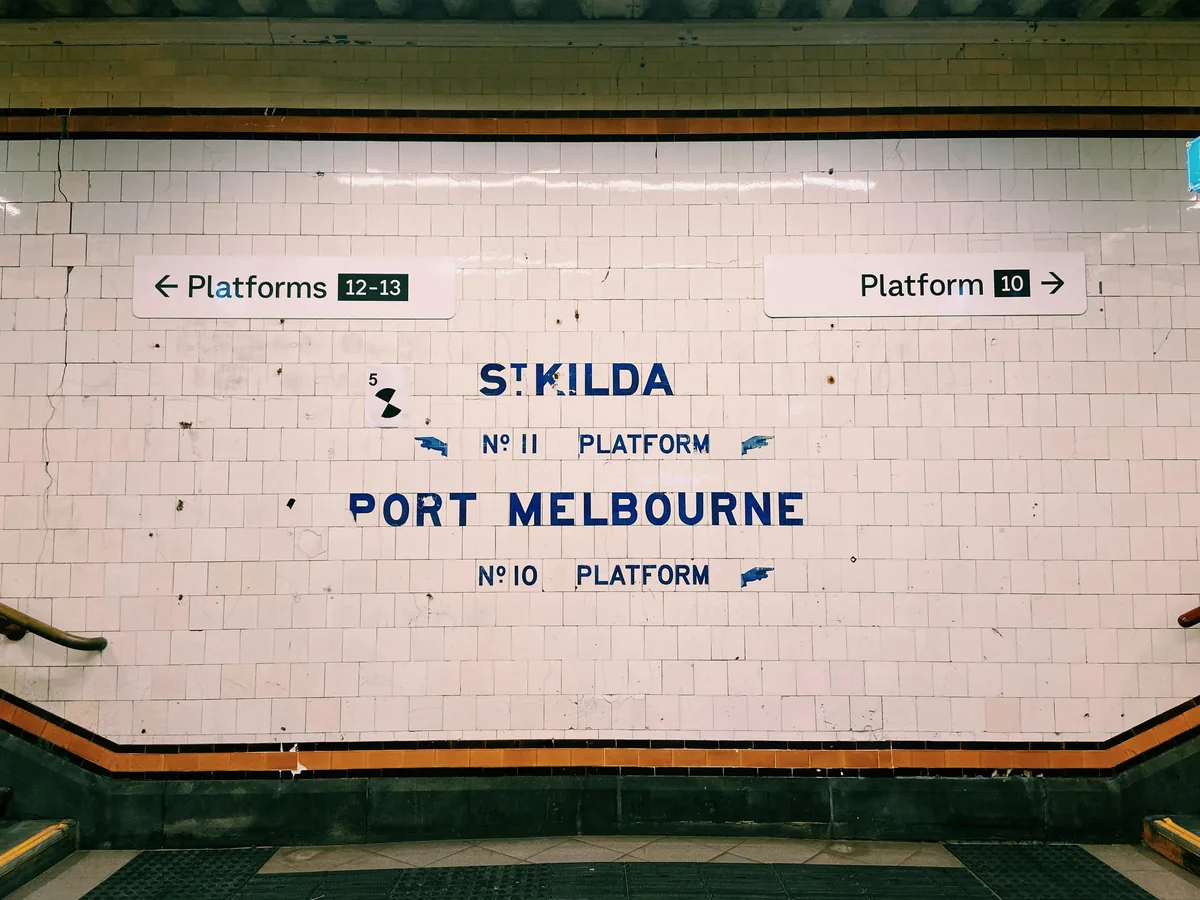
A few routes are particularly useful (and scenic) for tourists. Route 96 is the superstar — it runs from East Brunswick through the city and down to St Kilda Beach, so it takes you straight to the seaside. Route 109 links the city with Richmond‘s Victoria Street (Little Saigon) and runs out to Port Melbourne. Route 86 heads up Smith Street through hip Collingwood and Fitzroy. Route 6 runs down St Kilda Road past the NGV, the gardens and the Shrine. Between them, these routes connect most of the places a visitor wants to go.
How to catch a tram
It’s straightforward. Wait at a tram stop (many are raised “superstops” with level access; others are simple roadside stops where you board from the kerb — take care crossing to a road-level stop). When your tram approaches, it’ll display its route number and destination; there’s no need to hail it, just be visible at the stop. Board through any door, tap your Myki on a reader if you’re travelling outside the Free Tram Zone, and press the button or pull the cord to request your stop. Doors open automatically at stops. The TramTracker app (and Google Maps) tells you exactly when the next tram is due — invaluable when you’re new to the network.
Night trams and frequency
Trams run frequently through the day — often every few minutes on the busy central routes — and into the evening. On Friday and Saturday nights, the Night Network keeps routes 86 and 96 running through the early hours, so you can get home after a big night out. Frequencies drop in the late evening and early morning, so check the timetable or app for off-peak travel. During weekday peak hours the central routes can get crowded, so for a relaxed sightseeing ride, travel mid-morning or early afternoon.
Tram etiquette
A few unwritten rules help you blend in. Let passengers off before you board. Move down inside the tram to make room rather than crowding the doors. Offer your seat to those who need it. Have your Myki ready to tap on quickly. And crucially for everyone’s safety, when a tram stops to let passengers off at a road-level stop, cars must stop too — but always check before stepping onto the road. Follow these and you’ll travel like a local.
Accessibility
Accessibility is improving across the network. Modern low-floor trams offer level boarding, and the raised “superstops” allow step-free access for wheelchairs, prams and those with mobility needs — though older high-floor trams and roadside stops still exist, so it’s worth checking which routes and stops are accessible if that’s a priority. The PTV website and app flag accessible services and stops. Prams are welcome on trams, and there’s usually space for them in the central section.
Tips for using the trams
Download TramTracker (and Google Maps) for live arrival times. Use the Free Tram Zone for free city-centre travel — no Myki tap needed. Get a Myki for anything beyond the zone, and remember the daily fare is capped. Mind the gap and the traffic at road-level stops. Avoid peak hour for relaxed sightseeing. And ride route 96 to St Kilda at least once — it’s a scenic trip in itself. For the wider system, see our public transport guide and the apps in our useful apps guide.
A bit of tram history
Melbourne’s love affair with trams goes back to the 1880s, and unlike most cities — which ripped out their tram networks in the mid-20th century in favour of cars and buses — Melbourne kept and grew its system. That decision looks visionary today: the trams are now both a practical backbone of city transport and a beloved heritage icon. The historic W-class trams, with their wooden interiors and clattering charm, still run on the City Circle and the famous Colonial Tramcar Restaurant, while sleek modern low-floor trams handle the main routes. Riding one connects you to more than 140 years of Melbourne life — few cities offer transport with this much character.
Tram zones and fares explained
Melbourne’s public transport is divided into fare zones, but for most visitors it’s simpler than it sounds. The daily fare is capped, meaning once you’ve tapped on enough to hit the cap, you ride free for the rest of the day across trams, trains and buses. And the central Free Tram Zone costs nothing at all. So you really only need to think about fares when travelling well out into the outer suburbs — for typical sightseeing, a topped-up Myki and the daily cap have you covered. Our Myki guide explains the details.
Trams to key attractions
Here’s a quick reference for reaching the big sights by tram. St Kilda Beach & Luna Park: route 96 (or 16 down St Kilda Road). NGV, Arts Centre & the Shrine: routes 3, 5, 6, 16, 64, 67, 72 down St Kilda Road. Queen Victoria Market: route 19, 57, 58 or 59. Fitzroy & Collingwood: route 86 along Smith Street, route 11 along Brunswick Street or route 96 along Nicholson Street. Richmond’s Victoria Street: route 109 or 12. Docklands: route 11, 48, 70 or the free City Circle. The MCG and sports precinct: route 70 or 75, or walk from the city. Plug your destination into Google Maps or TramTracker and it’ll pick the right route and stop for you.
Safety around trams
Trams share the road with cars in much of Melbourne, so a little care keeps you safe. At road-level stops, you board from the kerb or step onto the road — always check for traffic, as cars are legally required to stop for a stationary tram with its doors open but you should never assume they will. Use the raised “superstops” where available, which are safer and step-free. As a pedestrian, watch for trams when crossing tracks (they’re quieter than you expect), and never try to beat one. If you’re driving, our driving guide explains the give-way rules and the famous hook turn.
Common visitor mistakes
A few easy errors trip up first-timers. Forgetting you don’t tap off trams — only trains require tapping off (though within the Free Tram Zone you don’t tap at all). Not realising the Free Tram Zone exists and unnecessarily tapping on for short city hops. Tapping on when you’ve crossed out of the zone too late — if your journey leaves the zone, tap on as you board. Standing too close to the doors and blocking others. And not signalling your stop — press the button or pull the cord in advance. Get these right and the trams become second nature within a day.
Tram or walk?
One thing visitors quickly learn: in the dense city centre, trams can actually be slower than walking for short hops, as they stop frequently and crawl through traffic. For distances of a few blocks within the CBD, you’ll often get there faster on foot — and Melbourne’s compact, grid-based centre is wonderfully walkable. Save the trams for longer trips: out to St Kilda, up to Fitzroy, down St Kilda Road to the gardens. A good rule of thumb is to walk within the heart of the CBD and tram for anything beyond comfortable walking distance. That said, when your feet are tired, the Free Tram Zone means a city-centre tram ride costs nothing, so hop on guilt-free.
The Colonial Tramcar Restaurant
For something memorable, Melbourne even has a dining tram. The Colonial Tramcar Restaurant is a restored heritage tram converted into a moving restaurant that trundles through the city and St Kilda Road while you enjoy a multi-course meal — a quirky, only-in-Melbourne experience that’s popular for special occasions. It’s a far cry from the everyday commute, but it captures the city’s affection for its trams perfectly. Book ahead if it appeals; it’s a fun way to combine dinner with a gentle, scenic tour of the city by night.
Frequently asked questions
Are Melbourne trams free?
Trams are free within the city-centre Free Tram Zone (covering the CBD and Docklands), where you don’t even need to tap. The heritage City Circle tram (route 35) is also free. Beyond the zone, you need a Myki and the fare is deducted when you tap on.
Do you tap on and off Melbourne trams?
You tap on with your Myki when boarding a tram outside the Free Tram Zone, but you do not need to tap off trams (tapping off only applies to trains). Within the Free Tram Zone, no tapping is required at all.
What is the best tram route for tourists in Melbourne?
Route 96 is a useful and scenic one — it runs from East Brunswick through the city to St Kilda Beach. The free City Circle tram (route 35) is the best for a sightseeing loop of the CBD.
How do I know which tram to catch?
Each tram displays its route number and destination on the front. Use the TramTracker app or Google Maps to plan your route and see live arrival times, then board at the stop — no need to hail it.
The bottom line
Melbourne’s trams are one of the great pleasures of visiting the city — iconic, frequent, scenic and free in the centre. Grab a Myki for trips beyond the Free Tram Zone, download TramTracker, ride the City Circle to get your bearings and route 96 to the beach, and you’ll have the run of the city. Few cities make getting around so enjoyable; here, the journey really is part of the fun. Once you’ve ridden a few routes, you’ll wonder why every city doesn’t keep its trams — and you’ll find yourself planning your days around them.