Sport in Melbourne: Stadiums, Tickets & How to See a Game
- Words
- Melbourne Tourism Guide
- Updated
- October 25, 2026
- Read
- 23 min
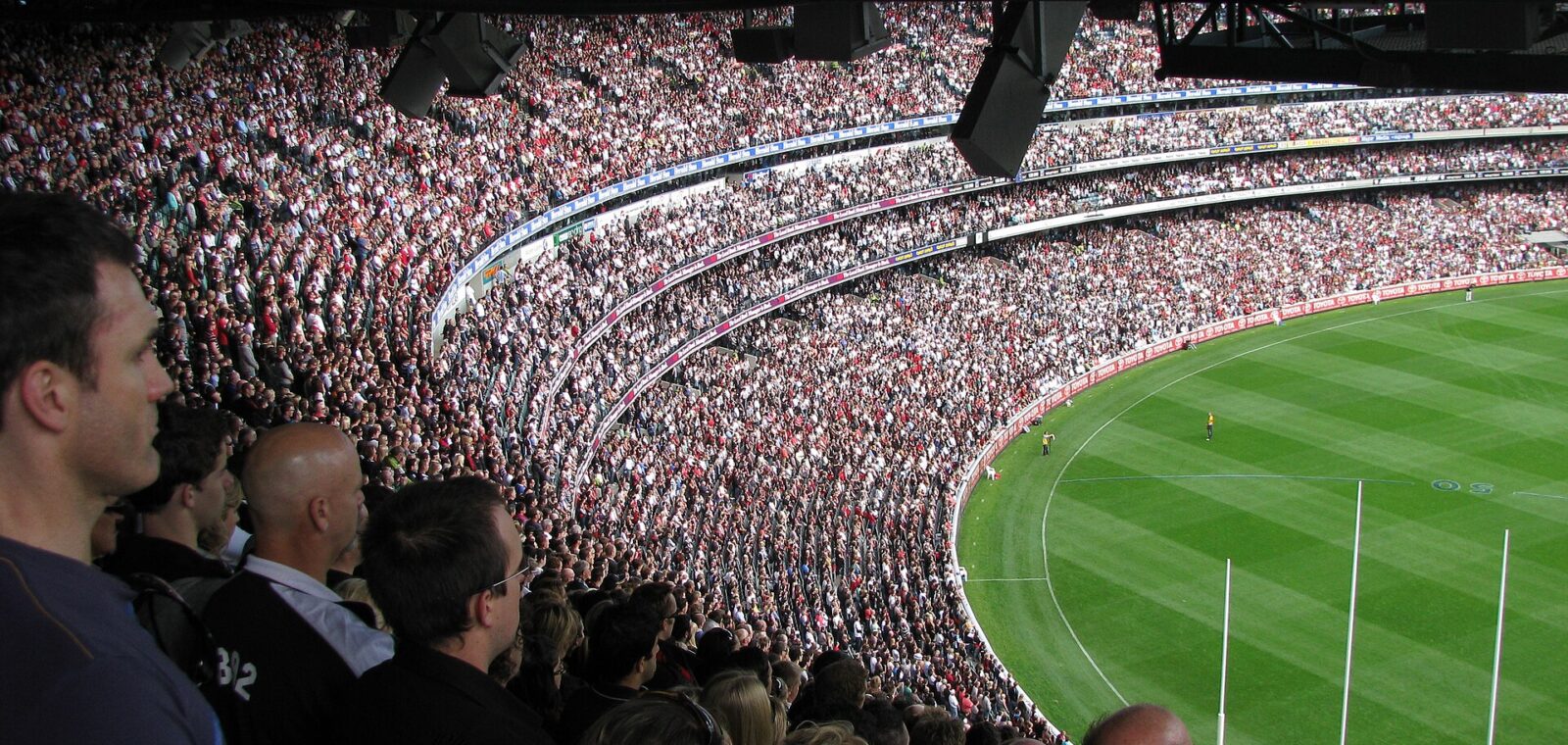
Football in winter, cricket and tennis in summer, and a big event in every month between — here's how to get a seat.
This article contains advertising. Our booking links are routed through a partner that adds commission tracking automatically, so if you book through one we earn a commission from the provider, at no extra cost to you. It never affects what we recommend. Affiliate disclosure
Ask a Melburnian for directions on a Saturday in July and there’s a fair chance they’ll tell you which way the crowd is walking. Sport isn’t a side attraction here. It sets the rhythm of the week, it decides what people talk about at work on Monday, and it fills a stadium on the edge of the city centre with tens of thousands of people for an ordinary-looking round of football. Sport in Melbourne is one of the most rewarding things a visitor can plug into, and one of the most confusing if you’ve grown up with different codes, different seasons and different ways of buying a ticket.
This guide is the starting point. It covers what’s on through the year, how Australian rules football and the other codes work for a newcomer, the main stadiums and how to reach them, where to buy tickets, the MCG tour, and how to watch a game in a pub if you can’t get in. Dates and details were checked in October 2026 against the leagues’, clubs’ and venues’ own sites; ticket prices change by match and by demand, so check them when you book.
Sport in Melbourne at a Glance
| Sport | When | Where | Who to watch |
|---|---|---|---|
| Australian rules football (AFL) | March to early October (2027 season) | MCG, Marvel Stadium | Nine of the AFL’s 18 clubs are Melbourne-based |
| AFL Women’s (AFLW) | Late winter to late spring; 2026 Grand Final Friday 27 November | Various grounds | Victorian AFLW clubs |
| Cricket | November to March | MCG | Australia; Melbourne Stars and Melbourne Renegades in the BBL |
| Tennis | Australian Open, 11–31 January 2027 | Melbourne Park | The world’s best |
| Formula 1 | Australian Grand Prix, 2–4 April 2027 | Albert Park | The F1 grid |
| Horse racing | Year-round; Spring Racing Carnival in October and November | Flemington, Caulfield, Moonee Valley | Cox Plate, Melbourne Cup |
| Rugby league (NRL) | Autumn to spring | AAMI Park | Melbourne Storm |
| Football (A-League) | October to May | AAMI Park | Melbourne Victory, Melbourne City |
| Basketball (NBL) | September to March | John Cain Arena and other venues | Melbourne United, South East Melbourne Phoenix |
| Motorcycle racing | Australian MotoGP, 23–25 October 2026 | Phillip Island | The MotoGP grid |
Melbourne’s Sporting Year, Season by Season
The single most useful thing to understand about sport in Melbourne is that the calendar flips with the seasons. Football owns the winter, cricket and tennis own the summer, and the shoulder months bring the big one-off events: the Grand Prix in autumn, the Spring Racing Carnival and MotoGP in spring. Whenever you visit, something worth seeing is on.
Summer (December to February)
Summer is cricket season, and the MCG is its cathedral. The 2026–27 international summer brings three big dates to the ground: a men’s T20 international between Australia and England on Saturday 21 November 2026, the Boxing Day Test against New Zealand from 26 to 30 December 2026, and a 150th Anniversary Test against England from 11 to 15 March 2027, played as a day-night match. The Big Bash League fills the gaps with shorter, louder evening games, and this season both Melbourne teams play their main home matches at the MCG.
Then, for most of January, the city turns into a tennis town. The Australian Open runs from 11 to 31 January 2027 at Melbourne Park, a short walk from the CBD. Add the A-League football and NBL basketball seasons, both running through summer, and you could fill most days of a January trip with live sport without leaving the inner city.
Autumn (March to May)
Autumn is when Melbourne’s attention swings back to football. The 2027 AFL season starts with Round 1 between Wednesday 17 or Thursday 18 March and Sunday 21 March, and the home-and-away season runs to the end of August. Check afl.com.au for the Melbourne games once the fixture is out. The NRL season is also under way, with the Melbourne Storm at AAMI Park.
Motorsport fans get a later date in 2027. The Formula 1 Australian Grand Prix is on 2–4 April 2027 as round three of the championship, after Bahrain and Saudi Arabia, so it is no longer the season opener. And the international cricket season isn’t quite over: the 150th Anniversary Test runs into mid-March.
Winter (June to August)
Winter is football, full stop. The AFL home-and-away season runs to the end of August in 2027; check the fixture for match days and start times at the MCG and Marvel Stadium. It’s the best time of year to experience the city’s football culture at full volume: scarves on the trams, pies at half-time, and a crowd that knows every umpiring decision is wrong. Marvel Stadium’s roof makes it the dry option on a wet winter night.
Spring (September to November)
Spring starts with finals football and ends at the racetrack. The finals series builds to the AFL Grand Final, which in 2027 is on Saturday 2 October at the MCG; in 2026 it was played in late September, when Brisbane beat Fremantle to complete a three-peat. Tickets to a Grand Final are very hard to come by, but the city’s whole week around it is worth being part of. Our AFL Grand Final guide explains how it works.
October and November belong to the Spring Racing Carnival. In 2026 the Cox Plate is run at Flemington on Saturday 24 October, the first time it has been held away from Moonee Valley, which is being redeveloped. The Melbourne Cup Carnival follows at Flemington: Derby Day on Saturday 31 October, Melbourne Cup Day on Tuesday 3 November, Oaks Day on Thursday 5 November and Champions Stakes Day on Saturday 7 November. Across the bay at Phillip Island, the Australian MotoGP runs 23–25 October 2026. The AFLW Grand Final follows on Friday 27 November 2026.
Australian Rules Football: A Visitor’s Primer
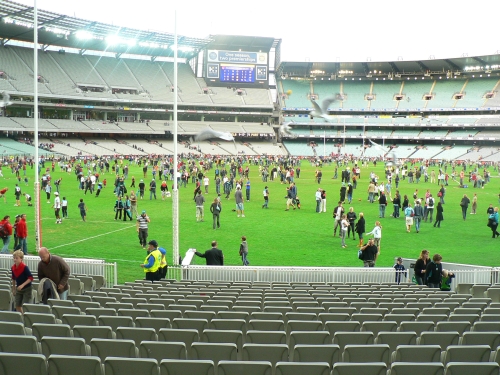
If you only see one game in Melbourne, make it Australian rules football. It’s the city’s own game: it was codified here in the nineteenth century, nine of the AFL’s eighteen clubs are based in Melbourne, and nowhere else in the world does it fill stadiums the way it does here. You don’t need to understand it to enjoy it, but ten minutes of background makes the afternoon far more fun.
How the game works
Two teams of eighteen players on the field try to kick the ball between the opponent’s posts on a large oval. There are four posts at each end. Kick the ball between the two tall middle posts for a goal, worth six points; between a tall post and a shorter outer post, or off a defender, for a behind, worth one point. Scores are written as goals, behinds and total, so “12.10 (82)” means twelve goals and ten behinds for 82 points.
Players can kick or handball the ball (punching it off one hand), but not throw it. Catch a kicked ball cleanly after it has travelled a set distance and you have a mark, which earns a free kick; the leaping, pack-climbing “speccy” marks are the highlight reels. Run with the ball and you have to bounce it or touch it on the ground at regular intervals. Tackle a player holding the ball and, if he or she hasn’t disposed of it properly, the umpire pays “holding the ball”, which is the call the crowd will be screaming for. The game is played in four quarters with breaks in between, so allow most of an afternoon or evening.
The Melbourne clubs
The nine clubs based in Melbourne are Carlton, Collingwood, Essendon, Hawthorn, Melbourne, North Melbourne, Richmond, St Kilda and the Western Bulldogs. Most were founded as suburban clubs and still carry the identity of their old neighbourhoods, though they now play most of their home games at the MCG or Marvel Stadium rather than at suburban grounds. Geelong, an hour down the highway, plays most of its home games at its own ground in Geelong. Clubs from the other states visit Melbourne regularly.
For a visitor, the best games are the ones between two big Melbourne clubs at the MCG. Collingwood, Carlton, Essendon and Richmond in particular draw huge crowds, and a Friday night or Saturday afternoon match between two of them has an atmosphere that’s hard to match anywhere in world sport. Traditional fixtures such as the Anzac Day match are booked out well in advance.
Picking a game and getting a ticket
The fixture for the 2027 season is due on afl.com.au in the middle of November 2026, and match tickets are sold through the links on the AFL’s and the clubs’ own websites. For most home-and-away games you can buy general admission or a reserved seat online a few days before, and for many games you can still get in on the day. The big blockbusters, finals and anything involving Collingwood at the MCG need more planning. Buy from the official links only: a ticket bought from a stranger outside the ground or on an unofficial resale site may not scan.
Where to sit? At the MCG, the upper levels give the best view of the shape of the game; the lower levels put you close to the noise. At Marvel Stadium, almost every seat is close to the action. If you don’t support anyone, pick a team for the day. Melburnians will respect a visitor who chooses a side and sticks with it far more than one who claims to be neutral.
Match-day etiquette
- Wear colours if you like, but there’s no segregation. Rival fans sit side by side, and the banter is part of the fun.
- Eat a pie. It’s tradition, even if the stadium food has moved on a long way.
- Don’t stand up in front of people during play. Wait for a break in play to get back to your seat.
- Bring a jacket to a winter night game. The MCG is open to the sky and can be bitterly cold after dark.
Cricket at the MCG
Summer cricket at the MCG comes in two very different flavours. Test cricket is the five-day form, played in daytime sessions with breaks for lunch and tea. It’s slow, absorbing and social: people come for a session or two, move between the stands, catch up with friends and drift in and out of the action. The Boxing Day Test is a major event in Melbourne’s cricket year, and Day 1 on 26 December is one of the great dates on the city’s calendar. For the 2026 edition, against New Zealand, our verdict is simple: go on Day 1 for the occasion, or Day 2 or 3 for an easier day with a crowd that’s more about the cricket.
The Big Bash League is the opposite: three-hour T20 games at night, with fireworks, music and plenty of families. The Melbourne Stars play at the MCG, and for BBL|16 the Melbourne Renegades have moved their main home from Marvel Stadium to the MCG as well, after fifteen seasons in Docklands. That makes the Melbourne Derby between the two an MCG event; the club says more than 68,000 came to last season’s derby. A BBL game is the easiest way into cricket for a first-timer, and kids love it.
Tickets for internationals are sold by Cricket Australia through cricket.com.au, which uses Ticketek. BBL tickets go through the same system. For the Boxing Day Test, Day 1 sells strongly, so buy early if that’s the day you want. Check the 2026–27 match list on cricket.com.au and mcg.org.au before you plan around a BBL game.
Tennis: The Australian Open
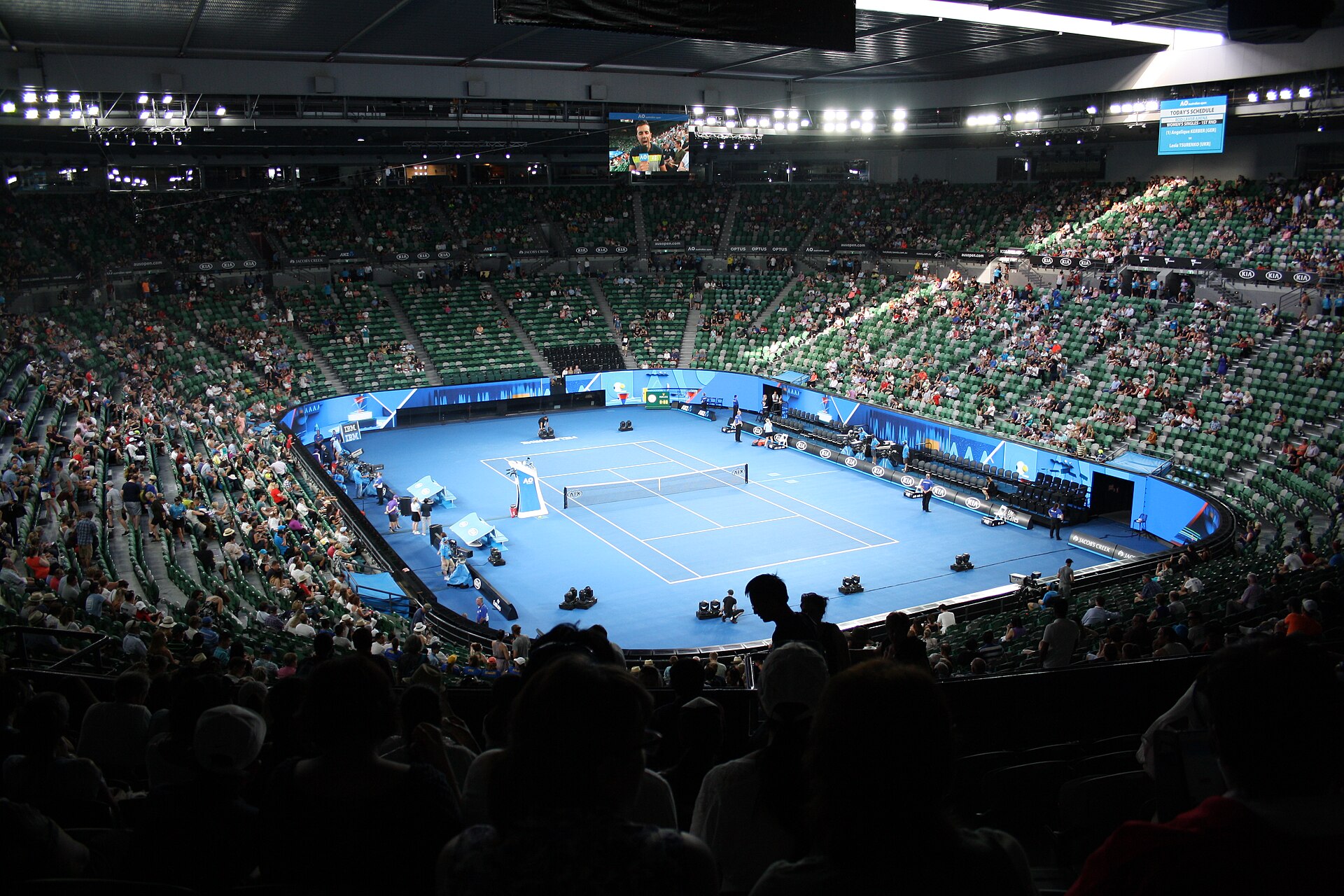
The Australian Open is the only Grand Slam tournament in the Southern Hemisphere. In 2027 it runs from 11 to 31 January at Melbourne Park, on the edge of the CBD between the city and the MCG. The main courts are Rod Laver Arena, Margaret Court Arena and John Cain Arena, all with roofs that can close for rain or heat.
You don’t need an arena ticket to enjoy it. A ground pass gets you onto the outside courts, where in the first week you can get close to leading players, plus the big screens, food and live music around the precinct. Arena tickets for the day or night sessions on the main courts give you a guaranteed seat for the headline matches. Tickets are sold through the official site, ausopen.com. Our full Australian Open guide covers sessions, ground passes and how to plan the day.
Motorsport: Formula 1 and MotoGP
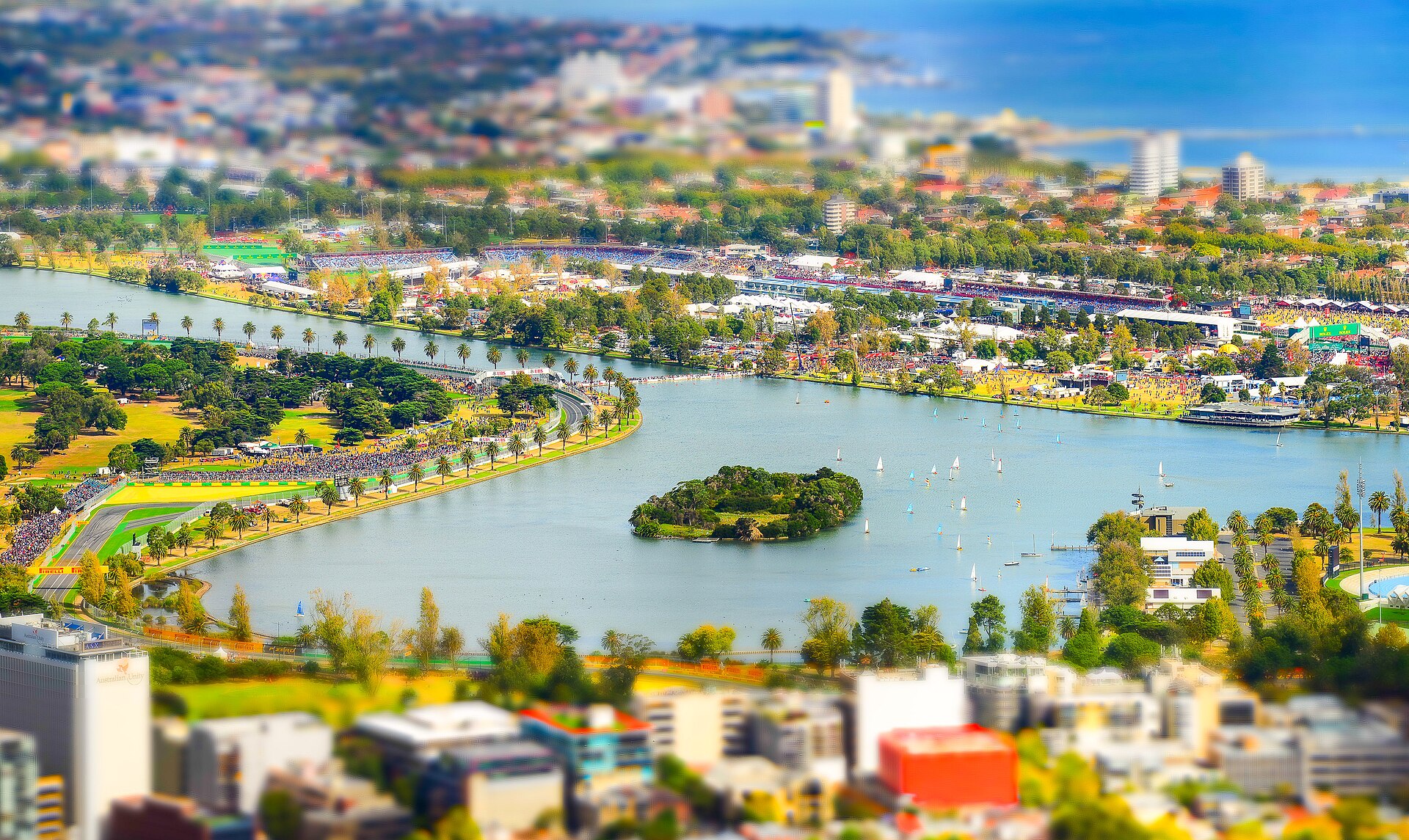
The Formula 1 Australian Grand Prix is held on a street circuit around Albert Park Lake, about three kilometres south of the CBD. For 2027 the date is 2–4 April. It’s a four-day festival in practice, with support races, displays and entertainment around the park, and the city is full of motorsport fans that week. General admission lets you walk the circuit and pick your spots; grandstand seats give you a fixed view and a screen. Tickets are sold through the official Australian Grand Prix website, grandprix.com.au. Our Australian Grand Prix guide has the detail, and the Albert Park guide covers the park the rest of the year.
The Australian Motorcycle Grand Prix runs on the clifftop Phillip Island circuit, from 23 to 25 October 2026. It’s a spectacular place to watch racing, with the Bass Strait behind the track, but it’s exposed: pack for wind, rain and sun on the same day. Many fans make a weekend of it and combine it with the island’s other attractions, including the penguin parade.
Horse Racing
Melbourne races all year, but spring is the peak. Flemington, beside the Maribyrnong River north-west of the city, is the home of the Melbourne Cup and the Victoria Racing Club. Caulfield, in the south-east, hosts the Caulfield Cup and its own spring carnival. Moonee Valley, the traditional home of the Cox Plate, is being redeveloped, which is why the 2026 Cox Plate moves to Flemington.
A day at the races is as much a social occasion as a sporting one. General admission is reasonably priced on most race days, there’s a dress code on the big days, and you can bet with the on-course tote or bookmakers. The Melbourne Cup Carnival in early November is the main event; our Melbourne Cup guide explains the race and the four carnival days, and our guide to Melbourne in November covers tickets, trains and the Cup Day holiday. Outside the carnival, an ordinary Saturday meeting at Flemington or Caulfield is far quieter and much cheaper, and still a good day out.
Football, Rugby League, Basketball and Netball
Football (soccer): Melbourne Victory and Melbourne City
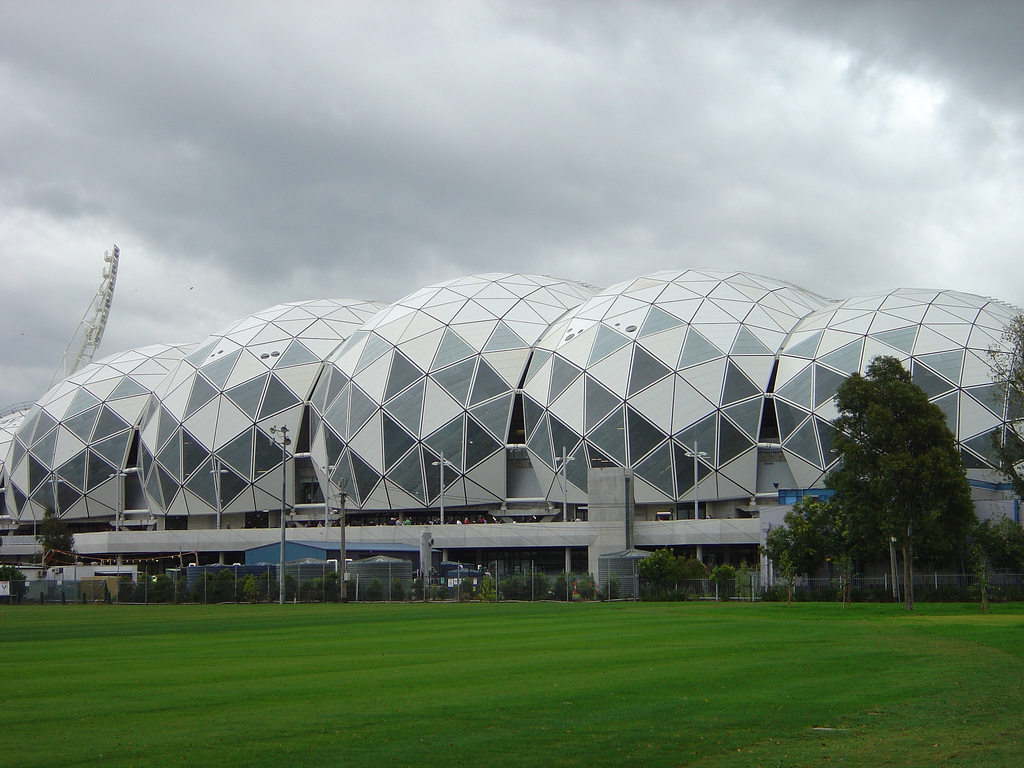
Melbourne has two A-League Men clubs, Melbourne Victory and Melbourne City, and both play at AAMI Park on Olympic Boulevard, in the sports precinct between the city and the MCG. The 2026–27 season kicked off on Friday 16 October. Melbourne City’s home opener is against Sydney FC on Saturday 31 October 2026, and its Christmas Derby against Victory is at AAMI Park on Saturday 19 December. City also play Auckland FC at home on 27 December, timed to kick off shortly after stumps on the second day of the Boxing Day Test — a rare chance to see two codes in one day a few hundred metres apart. Both clubs also have teams in the A-League Women; Victory’s women host Newcastle Jets at AAMI Park on Sunday 1 November 2026.
Derbies between the two clubs are the games to see, with active supporter groups behind each goal. Ordinary league games are easy to get into and good value for families.
Rugby league: Melbourne Storm
The Melbourne Storm are Victoria’s only professional rugby league team and have played their home games at AAMI Park since 2010. In a city that lives for Australian rules, the Storm have built a loyal following and a long record of success, and a home game makes a good change of pace if you’re visiting during the NRL season.
Basketball: Melbourne United and South East Melbourne Phoenix
The NBL season runs through the Australian summer. Melbourne United play their home games at John Cain Arena in Melbourne Park; their NBL27 schedule includes a Melbourne Cup Eve home game against the New Zealand Breakers on Monday 2 November 2026. South East Melbourne Phoenix also play in the NBL; check the club’s own site for its home venues this season. Indoor, loud and family-friendly, an NBL game is a good option on a hot summer evening.
Netball and rugby union
Netball is one of the most-played sports in Australia, and the Melbourne Vixens and the Melbourne Mavericks are Melbourne’s Super Netball teams; check the clubs’ websites for home venues and fixtures. Melbourne no longer has a Super Rugby team: the Melbourne Rebels were dropped from the competition in 2024, so rugby union fans will need to watch the Wallabies when a Test comes to town.
The Stadiums
Melbourne Cricket Ground (MCG)
The MCG sits in Yarra Park on the eastern edge of the CBD. The AFL describes it as Australia’s largest sports venue, with a capacity of over 100,000, and it hosts the AFL Grand Final, the Boxing Day Test and the Big Bash’s Melbourne Derby. Even half-full, the scale of the place is startling. It’s run by the Melbourne Cricket Club, which also runs tours of the ground and the Australian Sports Museum inside Gate 3 (more on that below). Our Richmond guide covers the neighbourhood on the other side of Yarra Park, with its pubs and Vietnamese restaurants, if you want a meal before or after a game.
Marvel Stadium
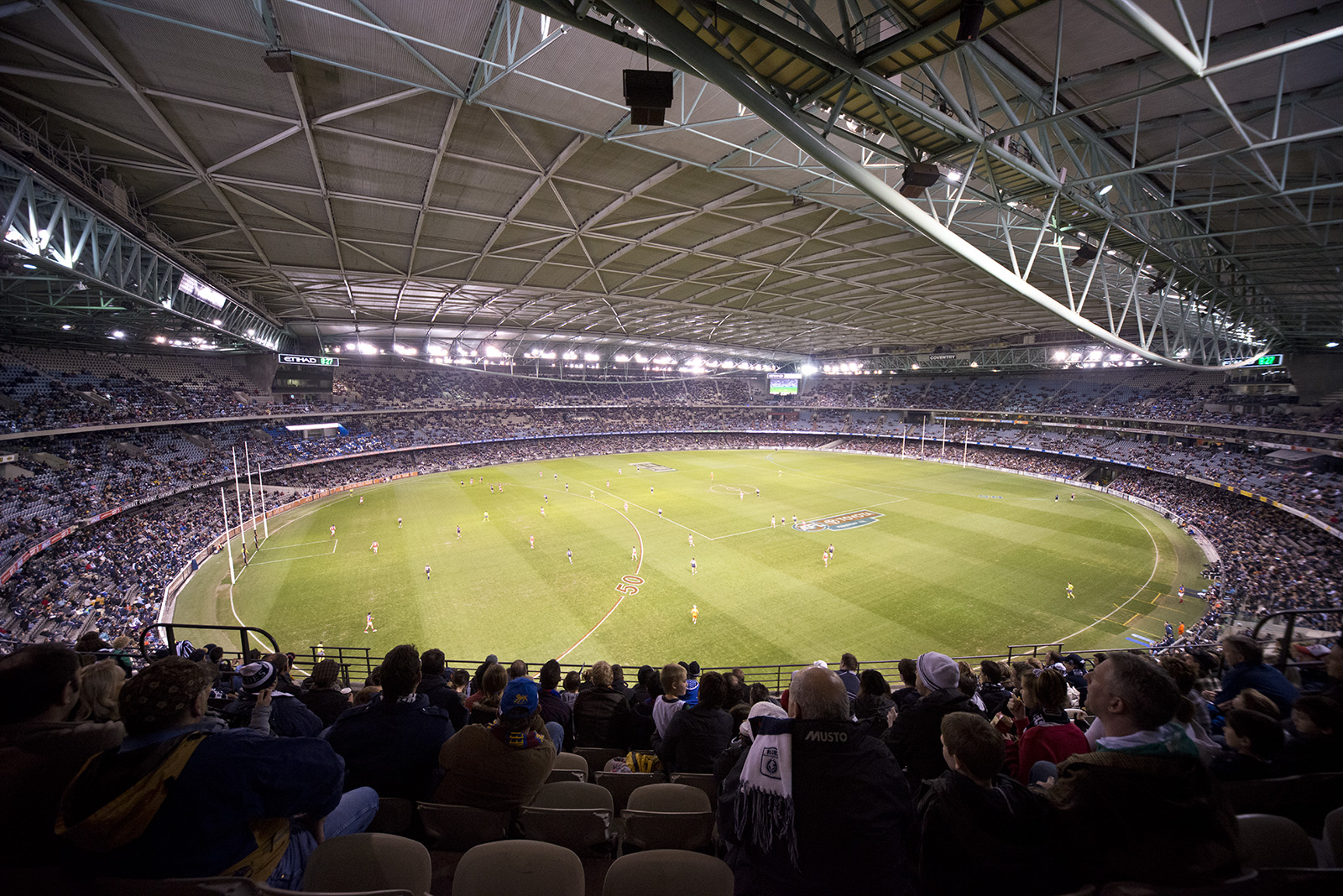
Marvel Stadium is at 740 Bourke Street in Docklands, on the western edge of the city, right next to Southern Cross Station. Its retractable roof is its selling point; the stadium itself calls it the only one of its kind in the Southern Hemisphere used for any football code. That makes it the most comfortable ground in Melbourne on a cold or wet night. It hosts AFL games through the winter. Our Docklands guide covers the area around it.
AAMI Park
AAMI Park, officially Melbourne Rectangular Stadium, is the city’s purpose-built stadium for football and rugby league. It’s the home of Melbourne Victory, Melbourne City and the Melbourne Storm, and its roof of white geodesic domes makes it easy to spot from the trains. It’s a rectangular ground, so every seat is close to the pitch.
Melbourne Park
Next to AAMI Park, Melbourne Park is home to the Australian Open and to three major arenas: Rod Laver Arena, Margaret Court Arena and John Cain Arena. Outside January, John Cain Arena is Melbourne United’s home court, and the arenas also host concerts and other events.
Flemington, Caulfield and Albert Park
Flemington Racecourse, the home of the Melbourne Cup, is north-west of the city with its own railway station. Caulfield Racecourse is in the south-eastern suburbs. Albert Park, south of the CBD, turns into the Grand Prix circuit once a year and is a public park with a lake, sports grounds and walking paths the rest of the time.
Buying Tickets
The rule for every sport in Melbourne is the same: start at the official site and follow its links. Ticketing in Australia is split between a few agencies, and which one you need depends on the event and the venue:
- AFL: through afl.com.au and the clubs’ own sites, which link to the right seller for each match.
- Cricket: through cricket.com.au, which sells via Ticketek.
- Australian Open: through ausopen.com.
- Formula 1: through grandprix.com.au.
- Horse racing: through the racing clubs, such as the VRC for Flemington.
- Melbourne Park and AAMI Park events: the venues say tickets are provided by AXS or Ticketek, depending on the event.
A few practical points. Most tickets are now digital, so download your tickets to your phone before you leave the hotel rather than relying on stadium mobile data. Buy early for the big occasions (the Boxing Day Test’s first day, a Grand Final week blockbuster, the AFL’s Anzac Day match, the men’s finals at the Australian Open) and relax for the rest, many of which can still be bought on the day. And avoid unofficial resale sites: inflated prices are the least of the risks, because a ticket that doesn’t scan leaves you outside.
Getting to the Games
Melbourne’s stadiums are unusually close to the city centre, and on big days public transport is far easier than driving. You’ll need to tap on with Myki; our Melbourne public transport guide covers fares and how to pay.
To the MCG
- Train to Jolimont: Jolimont station (sometimes called MCG station) is about 350 metres, or five minutes’ walk, through Yarra Park to Gate 2. From the city, take a Hurstbridge or Mernda line train.
- Train to Richmond: Richmond station is about 850 metres from the ground. Lilydale, Belgrave, Alamein, Glen Waverley, Frankston and Sandringham line trains stop there, and so do Werribee, Laverton and Williamstown line trains from the west.
- Tram: routes 75 and 48 run to Stop 11 (Jolimont Station/MCG), about 300 metres from Gate 2. Route 70 detours via Melbourne Park, with Stop 7B for Gates 1–3 and Stop 7C for Gates 4–7.
- Walk: from Flinders Street Station it’s about 1.6 km, or 20 minutes, along the river and across the William Barak footbridge.
On a fine day, the walk is the best option: it’s flat, pleasant and faster than queuing for a tram after the final siren.
To Marvel Stadium
Marvel Stadium is next door to Southern Cross Station, linked by the Bourke Street footbridge. Trams 30, 35, 70, 75 and 86 stop at the stadium. If you’re coming on a line that runs through the new Metro Tunnel, you’ll need to change trains to reach Southern Cross.
To Melbourne Park and AAMI Park
Melbourne Park is a 10-minute walk from the CBD via Birrarung Marr or Tanderrum Bridge, and tram 70 serves Rod Laver Arena, John Cain Arena and AAMI Park. During the Australian Open, extra trams run and the walk from Federation Square is part of the experience.
The MCG Tour and the Australian Sports Museum
If your trip doesn’t coincide with a big game, the MCG tour is the next best thing. Tours last about 75 minutes, leave from Gate 3 between 10am and 3pm, and need to be booked ahead; on event days the schedule is limited, so check mcg.org.au before you go. The tour takes you behind the scenes of the ground, including the Melbourne Cricket Club’s members’ areas and its library, founded in 1873, and out to the edge of the arena.
The Australian Sports Museum, inside Gate 3, covers more than 95 sports, with interactive galleries for visitors of all ages, kids included. It’s the obvious add-on to a tour, and an annual pass covering the museum and MCG tours is sold if you’re in town long enough to come back. Check the MCG’s tours and museum page for current prices and opening hours before you go. Our Melbourne landmarks guide puts the ground in context with the city’s other big sights.
Watching Sport in a Pub
You don’t need a ticket to share the experience. On a big night, almost every pub in the city with a screen will have the football or the cricket on, and for events like the Melbourne Cup, the AFL Grand Final or an Australian Open final, the pubs and beer gardens are full by the start. The atmosphere in a busy pub can be as good as the ground, and you get a seat, a proper meal and a quick tram home.
A few tips: arrive well before the start of a big game, because the best spots go early; be ready to pick a side; and if you want the sound turned up, look for a pub that advertises the game. Our guide to the best pubs in Melbourne is a good place to start.
Planning a Trip Around a Big Event
The big fixtures move the whole city, not just the stadium. When the Australian Open, the Grand Prix, the Boxing Day Test or Cup week is on, hotels fill, restaurants near the venues are booked out and the trains are busy at the start and end of each day. If your dates are fixed by an event, book your accommodation first and the event second; a ticket is no use if you end up staying an hour out of town. A hotel on a tram or train line into Flinders Street or Southern Cross makes every venue in this guide easy.
If your dates are flexible, a few windows let you see more than one thing in a single trip:
- Late October into early November 2026. The Cox Plate (24 October), the MotoGP at Phillip Island (23–25 October) and the Melbourne Cup Carnival (31 October to 7 November) all fall between 23 October and 7 November.
- Late December 2026. The Boxing Day Test runs 26–30 December, Melbourne City play Auckland FC at AAMI Park on 27 December after the second day’s play, and the BBL is in full swing.
- January 2027. The Australian Open runs 11–31 January. Check the BBL, A-League and NBL fixtures to see whether you can add a cricket, football or basketball night to a day of tennis.
- Late March and early April 2027. The AFL season is a few weeks old when the Grand Prix arrives on 2–4 April, and the 150th Anniversary Test finishes in mid-March.
Winter is the quiet season for the big one-off events, and that has its own appeal: AFL every weekend, hotels at their least busy and a city that’s easy to get around. A long weekend in July built around two football games, a pie at half-time and a pub afterwards is as Melbourne as it gets.
Sport with kids
Melbourne’s sport is very family-friendly. BBL games are built for kids, with plenty of noise, and start times vary (MCG matches in 2026–27 start at 4pm, 6.05pm or 7.15pm); A-League and NBL games are cheaper and shorter than a day at the cricket; and the Australian Sports Museum at the MCG is an easy win on a rainy day. At the football, look out for the days when fans are allowed onto the ground after the final siren for a kick-to-kick; check the event page for the match you’re going to. Our guide to Melbourne with kids has more ideas.
Our Honest Verdicts
- If you only have one chance to see a game, make it an AFL match at the MCG between two Melbourne clubs. Nothing else here has the same sense of place.
- If you’re visiting in summer, a BBL night at the MCG is the best value and the easiest introduction to cricket; the Boxing Day Test is the bigger occasion but asks more of a non-fan.
- If you’re short of time during the Australian Open, a ground pass for a first-week day is far better value than an arena ticket for a single match.
- The Grand Prix is a great festival for motorsport fans and an expensive, crowded way for everyone else to watch cars go past for a few seconds at a time.
- Skip the Melbourne Cup itself if crowds and dress codes don’t appeal; watching in a pub is half the fun at a fraction of the cost.
Frequently Asked Questions
What is the most popular sport in Melbourne?
Australian rules football. Nine of the AFL’s eighteen clubs are based in Melbourne, and the season runs from March to the Grand Final in late September or early October.
When is the AFL season in Melbourne?
The 2027 season starts with Round 1 between 17 and 21 March 2027, the home-and-away rounds finish at the end of August, and the Grand Final is on Saturday 2 October 2027 at the MCG.
Can tourists get tickets to AFL games?
Yes. Tickets for most home-and-away matches are sold to the public through the AFL’s and clubs’ official sites, and for many games you can buy close to the day. Blockbusters, finals and the Grand Final are much harder, and Grand Final tickets go mainly to club and stadium members.
How do I get to the MCG?
Take a train to Jolimont or Richmond station, trams 48 or 75 to the Jolimont Station/MCG stop, or tram 70 via Melbourne Park. From Flinders Street Station it’s about a 20-minute walk along the river.
When is the Boxing Day Test in 2026?
The Boxing Day Test between Australia and New Zealand is at the MCG from 26 to 30 December 2026. Tickets are sold through cricket.com.au.
When is the Australian Open in 2027?
The Australian Open runs from 11 to 31 January 2027 at Melbourne Park.
Is the MCG tour worth doing?
If you have any interest in sport, yes. It takes about 75 minutes, goes behind the scenes of one of the world’s great stadiums and pairs well with the Australian Sports Museum inside the same gate. Book ahead and check the schedule if there’s an event on.
For a highlight of the cricket summer, read our full guide to the Boxing Day Test: the 2026 dates and start times, how tickets and the Members’ Reserve work, what you can bring, and how to make a week of it.
Related Melbourne Guides
- AFL Grand Final in Melbourne
- Australian Open Guide
- Formula 1 Australian Grand Prix
- Melbourne Cup Guide
- Melbourne Events and Festivals Calendar
- Things to Do in Melbourne
Photo Credits
Featured image — the MCG during the 2010 Anzac Day match: Anzac Day Match 2010, Collingwood-Essendon by Gavin Anderson, CC BY-SA 2.0, via Wikimedia Commons.
The Docklands stadium under its roof: Etihad Stadium (7773144106) by Steve Collis from Melbourne, Australia, CC BY 2.0, via Wikimedia Commons.
AAMI Park: AAMI Park, Melbourne by AsianFC from Australia, CC BY 2.0, via Wikimedia Commons.
Rod Laver Arena: 2017-01 Rod Laver Arena roof by Pulv, CC BY-SA 3.0, via Wikimedia Commons.
Albert Park during the Grand Prix: 2014 Melbourne Grand Prix (From Eureka Skydeck) by Chris Phutully, CC BY 2.0, via Wikimedia Commons.
Kick-to-kick on the MCG: Kick-to-kick by Rulesfan, Public domain, via Wikimedia Commons.