Last updated: April 2026. Melbourne is widely considered Australia’s fashion and retail capital — a city with more independent boutiques per capita than any other in the country and home to the Southern Hemisphere’s largest shopping centre. This guide to the best shopping in Melbourne covers the CBD strips, designer malls, historic markets, indie laneways, outlet centres, and vintage stores — plus hours, tips, and how tourists can claim back GST at the airport.
Melbourne is Australia’s fashion and retail capital.
Where should you shop? That depends on what you’re after: mainstream fashion (Bourke Street Mall, Melbourne Central), designer and luxury (Emporium, Collins Street, Chadstone), emerging independent (Fitzroy, Collingwood, Flinders Lane), vintage and thrift (Brunswick, Fitzroy), outlets (DFO South Wharf, DFO Essendon), or fresh produce and souvenirs (Queen Victoria Market). This article walks through each — with exact locations, standout stores, and the kinds of things you’ll find that you can’t get anywhere else in Australia.
Bourke Street Mall is Melbourne’s busiest retail strip.
A pedestrianised city block between Elizabeth and Swanston Streets, Bourke Street Mall is the closest thing Melbourne has to a traditional department-store high street. The two anchor tenants are Myer (Australia’s largest department store; 9 floors, cosmetics, fashion, homewares) and David Jones (premium department store with a dedicated women’s wear building and a separate menswear building). Both run substantial sales in late January (post-Christmas), around June (end of financial year), and in November (Black Friday).
Also on the mall: H&M, Uniqlo, Sephora, Zara, and a number of Australian fast-fashion labels (Cotton On, Sportsgirl, Glassons). If you want one shop-stop with a bit of everything, Bourke Street Mall is where you start. Hours are typically 9:30am–7pm (late-night Thursday/Friday to 9pm, Sunday 10am–7pm).
Emporium Melbourne — premium CBD mall
Emporium links to Myer and David Jones underground.
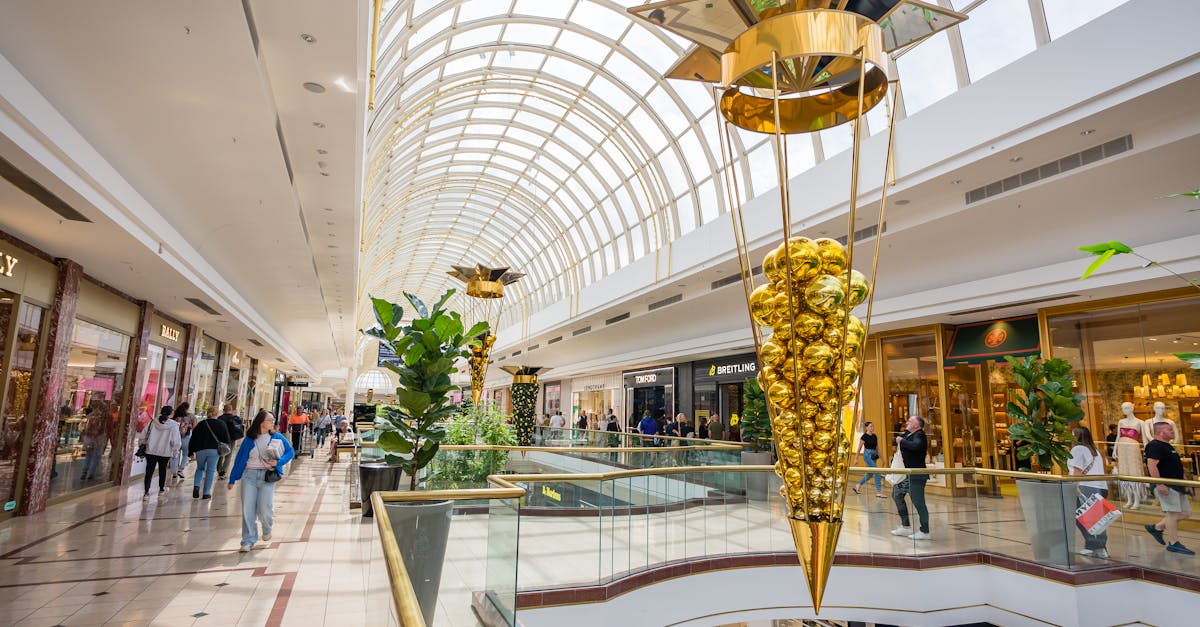
Emporium sits above Myer and is connected to Melbourne Central, David Jones, and QV by underground walkways — you can spend an entire rainy day shopping without stepping outside. It’s Melbourne’s most design-led CBD mall, with tenants including Tiffany & Co., Sandro, Maje, The Kooples, Calvin Klein, COS, and a strong contingent of Australian designers like Scanlan Theodore, Aje, Sass & Bide, and Camilla & Marc. The food court at level 3 is better than average, with Chin Chin takeaway and Hakata Gensuke ramen.
Melbourne Central — youth and streetwear
Melbourne Central surrounds the historic Shot Tower.
Built around the preserved 1890 Coop’s Shot Tower under a massive glass cone, Melbourne Central leans younger and more streetwear-focused than Emporium. Look for Daiso (Japanese dollar store), Typo, Lego, LUSH, Kikki.K, Culture Kings (streetwear), and a large Muji. The building also houses a train station on the City Loop, so it’s ground zero for student and tourist foot traffic.
Chapel Street — the fashion strip
Chapel Street is the city’s fashion strip.
Chapel Street runs 4 kilometres through South Yarra, Prahran, and Windsor. The South Yarra end (near Toorak Road) is the most concentrated for fashion — think Scanlan Theodore flagship, Aje, Viktoria & Woods, Bassike, and a Chanel concession inside David Jones South Yarra. Further south toward Windsor, the street transitions into homewares, vintage, and café culture. The Jam Factory on Chapel Street is a mid-range mall with a cinema, and Prahran Market (just off Chapel) is one of Melbourne’s best fresh food markets.
Catch tram 78 down Chapel Street for easy hop-on, hop-off shopping. The Chapel Street Precinct is the closest most visitors will come to seeing where Melburnians actually shop.
Chadstone — Australia’s biggest mall
Chadstone hosts over 500 retailers.
Chadstone — “The Fashion Capital” — is the Southern Hemisphere’s largest shopping centre, with 550+ stores across 210,000 m² in Melbourne’s southeast, about 20 km from the CBD. The luxury precinct at the eastern end hosts Gucci, Louis Vuitton, Prada, Dior, Chanel, Burberry, Tiffany, Moncler, and Balenciaga — often with full ranges that other Australian stores don’t stock. Beyond luxury, Chadstone has every mid-market Australian chain plus H&M, Uniqlo, Sephora, Apple, Lego, and a LEGOLAND Discovery Centre.
Getting there: frequent shuttle buses from Federation Square (about 30 minutes, around $8–10 return via the Chadstone Shuttle); alternatively, train to East Malvern then bus 630 or 900. An Uber from the CBD is typically $25–35. Budget half a day minimum if you want to walk the whole centre.
Queen Victoria Market — the oldest and best
The Queen Victoria Market has run since 1878.
Open Tuesday, Thursday, Friday, Saturday and Sunday (closed Monday and Wednesday), Queen Vic is a historic 7-hectare open-air market with fresh produce, meat, seafood, deli goods, clothing, souvenirs, and art. The String Bean Alley and Deli Hall sections are where you’ll find most souvenirs — wool products, Indigenous art, leather goods, Aussie-themed t-shirts, and gourmet food gifts (Tasmanian leatherwood honey, native pepperberry, Bundaberg rum caramels).
The Summer Night Market (Wednesdays Nov–Mar) and Winter Night Market (Wednesdays June–Aug) transform the space into a food-focused evening market with live music and bars — arguably more fun than the daytime version. Entry is free. Carry cash; some stalls don’t take cards.
Laneway shopping in the CBD
Melbourne’s laneways hide dozens of independent retailers.
Melbourne’s laneways are what make the city distinctive. The key shopping laneways:
Flinders Lane — designer boutiques like Christine and a rolling cast of Australian jewellers, plus the Nicholas Building (see below).
Degraves Street — café-heavy but has a strong handful of fashion and accessories stalls, including Degraves Subway Space art vendors.
Centre Place — quirky independents; graffiti backdrop.
Little Collins Street & side arcades — men’s tailoring (Oscar Hunt, P. Johnson) and cult coffee.
The Nicholas Building (Flinders Lane) — a six-storey 1926 heritage building now home to 40+ independent artists, milliners, textile artists, and designers. The most concentrated block of “only in Melbourne” studios in the city.
Cathedral Arcade — home to Alice Euphemia and other indie designer labels.
Royal Arcade — 1870s heritage arcade with chocolatiers (Koko Black), vintage jewellers, and Australian-made accessories.
Block Arcade — elegant 1892 shopping arcade; home to Haigh’s Chocolates and the Hopetoun Tea Rooms.
Collins Street “Paris End” — luxury
The top (eastern) end of Collins Street is known as the “Paris End” for its tree-lined boulevard and high-end flagships. Louis Vuitton, Chanel, Cartier, Bulgari, Bottega Veneta, Hermès, and Christian Dior all anchor individual townhouses or corners between Swanston and Spring Streets. If you’re looking for single-brand flagships rather than department-store boutiques, Collins Street is where they are.
Fitzroy, Collingwood & Brunswick — the indie scene
Inner-north Melbourne is where independent, emerging, and alternative shopping lives.
Brunswick Street, Fitzroy — vintage stores, Australian streetwear, LP record shops, and Fitzroy’s famous Third Drawer Down design store.
Gertrude Street, Fitzroy — higher-end independent Australian designers (Alpha60, Bul, Kuwaii) plus refined homewares.
Smith Street, Collingwood — vintage, op-shops, tattoo studios, and increasingly refined eateries.
Sydney Road, Brunswick — Middle Eastern groceries, cheap vintage, student fashion, and the famous Savers thrift department store.
High Street, Armadale — antiques and high-end homewares (the more bourgeois cousin of Smith Street).
Vintage and thrift
Fitzroy and Collingwood are Melbourne’s vintage hubs.
Melbourne has one of the best vintage scenes outside Tokyo. Start with Hunter Gatherer Vintage (multiple locations, big mid-century selection), Shag (Chapel Street), Dejour Jeans (Smith Street; curated denim), Retrostar (Flinders Lane; multi-level warehouse), and Vintage Garage (Brunswick). For true thrift, the chain Savers (Brunswick and Footscray) is a Melburnian institution — donated goods at garage-sale prices, and a real gamble-for-gems experience. Lost and Found Market in Collingwood is a warehouse of antique stalls worth half an afternoon.
DFO — direct factory outlets
DFO outlets sit at South Wharf and Essendon.
For brand-name bargains, Melbourne has two DFO centres:
DFO South Wharf — 180 outlet stores, 10 min walk or free tram from CBD (Route 96 to Exhibition Centre). Nike, Adidas, Polo Ralph Lauren, Calvin Klein, Tommy Hilfiger, Hugo Boss outlet, Coach, Kate Spade, and Australian labels at 30–70% off.
DFO Essendon — 110 stores, larger lifestyle mix (homewares, sports, fashion), 20 min drive from CBD or train to Essendon then bus.
Outlet pricing is legitimately discounted but remember Australia is not a cheap retail market — a Hugo Boss shirt at outlet still runs ~A$150. For mid-market brands (Cotton On, Kathmandu, Rip Curl, Bonds) the savings are substantial.
Best souvenirs from Melbourne
Local wines and Aussie-made gifts are top souvenirs.
Yarra Valley wine — available from specialist stores like Blackhearts & Sparrows or direct from cellar doors on a day trip.
Haigh’s Chocolates — Adelaide-founded but institutional in Melbourne; the Block Arcade store is a must-visit.
Koko Black chocolate — Melbourne-born, Belgian-style; Royal Arcade flagship.
Aboriginal art — buy only from ethical galleries like Koorie Heritage Trust (Fed Square) or Tali Gallery to ensure artists are fairly paid.
R.M. Williams boots — iconic Australian leather boots (Emporium flagship).
Akubra hats — quintessential Australian bush hats (Strand Hatters, RM Williams, or City Hatters at Flinders Street).
Australian beauty and skincare — Aesop (born in Melbourne; flagship on Gertrude Street), Grown Alchemist, Sukin.
Tim Tams and Vegemite — chocolate biscuits and yeast spread; supermarket staples that every Melburnian will recommend.
Melbourne Coffee — take home beans from Market Lane, Seven Seeds, Proud Mary, or ST. ALi — Melbourne is the world’s specialty-coffee city.
AFL team merchandise — local football club gear is a great conversation-starter souvenir (try the MCG gift shop).
GST refund for tourists
Tourists can claim GST back on goods over A$300.
Australia’s Tourist Refund Scheme (TRS) lets international visitors claim back the 10% GST (and Wine Equalisation Tax) on goods purchased in Australia within 60 days of departure — provided the total on a single receipt from one ABN is A$300 or more. You must take the goods with you as carry-on or wear them out, present the goods, original tax invoice, boarding pass, and passport at the TRS counter at Melbourne Airport (after security, in the departure concourse). Refund is credited to a credit card, Australian bank account, or paid via cheque.
Pro tip: the TRS app (available on iOS and Android) lets you pre-register your claim, shortening the airport queue significantly. Arrive at least 90 minutes before departure if you plan to claim — TRS queues can be long during peak season.
Shopping hours in Melbourne
General retail hours:
Monday–Wednesday: 9:30am–6pm (CBD and malls)
Thursday: 9:30am–9pm (late-night trading)
Friday: 9:30am–7pm (some CBD stores to 9pm)
Saturday: 9:30am–5pm
Sunday: 10am–6pm (most shops; QVM closed; some indie stores closed)
Boxing Day (26 Dec) is the biggest sale day — queues start before dawn at Myer, David Jones, and Chadstone luxury stores. End-of-financial-year (late June) and Black Friday (late November) are the other major sales periods.
Pro tips for shopping in Melbourne
Keep receipts together if you’re planning a TRS claim. You need original tax invoices.
Free trams in the CBD Free Tram Zone connect most major shopping precincts (Bourke St Mall, Queen Vic Market, Chinatown) at no cost.
Bring a reusable bag — single-use plastic bags are banned across Victoria.
Sunday is quieter in indie precincts; many Fitzroy and Collingwood boutiques open Sunday 11am–5pm and close Monday.
Check outlet outlet tags — some DFO items are “outlet-only” product lines (not ex-full-retail stock). Compare quality carefully for premium labels.
Australian sizing runs close to UK sizing (not US). Try things on.
For the best shopping in Melbourne on rainy days, use the underground links between Emporium, Myer, David Jones, and Melbourne Central — you can cover kilometres without coming outside.
FAQ: best shopping in Melbourne
What’s the best shopping area in Melbourne for tourists?
For one-area shopping, the CBD block bounded by Bourke, Lonsdale, Swanston, and Elizabeth Streets has the densest concentration — Bourke Street Mall, Emporium, Melbourne Central, Myer, David Jones, and the laneway arcades all sit within a 5-minute walk. For a fashion-focused day out, Chapel Street South Yarra is Melbourne’s equivalent of a walking fashion district.
Is Melbourne or Sydney better for shopping?
Melbourne is widely regarded as Australia’s fashion capital — more independent designers, a denser laneway retail scene, and Australia’s biggest mall at Chadstone. Sydney has a bigger luxury concentration at the Queen Victoria Building and Westfield Sydney, plus bigger flagship stores on Castlereagh Street. For luxury brands with full range, both cities are comparable; for breadth of independent retail, Melbourne wins.
Is shopping in Melbourne cheap?
Relative to the US or UK, no — Australian retail carries a premium due to import costs, wages, and GST. Designer labels are often 10–30% more expensive than their source country. The exception is Australian-made goods (RM Williams, Aesop, Akubra, local designers) which are competitive, and outlet centres like DFO where brand discounts bring prices closer to parity.
What’s the best day for shopping in Melbourne?
Thursday is late-night trading (most stores to 9pm), so it’s the best combination of “open late” with full weekday staffing and less weekend crowding. Saturday is busiest. For markets, Saturday morning at Queen Victoria Market is the peak atmosphere.
Can I claim GST back on shopping in Melbourne?
Yes, via the Tourist Refund Scheme (TRS) at the airport departure terminal — the 10% GST is refundable on any single receipt of A$300+ from one business, as long as you take the goods with you within 60 days of purchase. Use the TRS mobile app to speed up the queue.
Is Chadstone worth the trip from the CBD?
For luxury shoppers, yes — Chadstone has the biggest luxury store footprints in Australia, rivalling or exceeding Sydney. For mid-market shopping, the CBD or Emporium covers similar ground without the half-day commitment. Budget 3–4 hours round trip including travel.
Final thoughts on the best shopping in Melbourne
For visitors planning the best shopping in Melbourne into a tight itinerary, a sensible day splits into: morning at Queen Victoria Market for souvenirs and coffee, midday at Emporium/Bourke Street Mall for mainstream and premium, and afternoon exploring the laneway arcades and Fitzroy/Collingwood for independent finds. Tack on a DFO visit for outlets, or a Chadstone day if luxury is the priority. Keep your receipts, wear comfortable shoes — Melbourne is a walking city — and leave room in your suitcase.
Last updated: April 2026. Melbourne is Australia’s event capital. Across the calendar year the city hosts two Grand Slam-level sports events, two international festivals of comedy, film and food, the world’s richest horse-racing carnival, and a rolling calendar of cultural festivals that outpunches any other city on the continent. If you’re timing a visit around big happenings, this guide to Melbourne events and festivals lays out the full year at a glance, with dates, ticket tips, and when to book accommodation.
Melbourne hosts more major events per year than any Australian city.
Visit Victoria reports more than 100 major events annually, drawing over 25 million attendances combined. Some — the Australian Open, the F1 Grand Prix, Melbourne Cup, AFL Grand Final — double hotel rates and sell out entire neighbourhoods. Others, like the free Moomba Festival in March, are simply great cultural moments to be in town for. Use this calendar both as “what’s worth travelling for” and as “what to avoid if you’re price-sensitive.”
Melbourne events and festivals at a glance (2026)
Month
Flagship event
Why it matters
January
Australian Open
Tennis Grand Slam, 800k+ visitors
February
Midsumma Festival
LGBTIQ+ arts and culture
March
Formula 1 GP + Food & Wine Festival + Moomba
Packed month — triple premium
April
Melbourne International Comedy Festival
3rd largest comedy festival in the world
May
AFL season peak, Knowledge Week
Cultural calendar slows; good for visiting
June
Melbourne International Jazz Festival
Winter cultural anchor
July
Rising Festival + Open House
Winter warmth via arts
August
MIFF (Melbourne International Film Festival)
Major arts festival
September
AFL Grand Final + Melbourne Fringe
Peak sport + arts combo
October
Royal Melbourne Show, Spring Racing begins
Family + races
November
Melbourne Cup Carnival
World’s richest handicap
December
Boxing Day Test + NYE
Cricket + fireworks finale
January — Australian Open tennis
The Australian Open is Melbourne’s biggest summer event.
The Australian Open is the year’s first Grand Slam and arguably Melbourne’s biggest single tourism draw. Held at Melbourne Park from mid-January into the first week of February, it attracts over 800,000 attendances across three weeks. 2026 dates: qualifying from Monday 12 January; main draw Monday 19 January to Sunday 1 February.
Tickets
Ground passes ($35–$75) give access to outer courts where you can watch top-20 players at close range.
Rod Laver Arena tickets range $85 (upper) to $475+ (finals).
Night sessions are a signature Australian Open experience — book weeks ahead.
Heineken Live Stage and Grand Slam Oval give free atmosphere for ground-pass holders.
Book hotels 4-6 months in advance for finals week. CBD and Richmond are closest; Yarra Park walks directly to Melbourne Park.
February — Midsumma Festival
Midsumma is Melbourne’s three-week LGBTIQ+ arts, culture and community festival. The highlight is Midsumma Pride March down Fitzroy Street, St Kilda, on a Sunday in early February. Events run across more than 100 venues, from cabaret at Theatre Works to queer film at ACMI.
March — the triple-whammy month
March is Melbourne’s busiest month for events. Three major festivals overlap with perfect early-autumn weather, meaning hotel rates peak and every restaurant is full.
Formula 1 Australian Grand Prix
The Albert Park GP opens the F1 season.
Albert Park’s street circuit has historically opened the F1 season. 2026 GP weekend is mid-to-late March — check formula1.com.au for confirmed dates. Four-day General Admission passes start at $299; grandstand tickets from $419. It’s worth paying for a grandstand at Turn 1 or the pit straight for the best atmosphere.
Melbourne Food and Wine Festival
The festival draws 250,000+ visitors each March.
The Melbourne Food and Wine Festival runs for roughly 10 days in March. Signature events: the World’s Longest Lunch, Wine Trails in regional Victoria, chef collaborations at top restaurants, and free masterclasses. Over 250,000 people attend.
Moomba Festival
Moomba is held each March Labour Day weekend.
Moomba is Australia’s largest free community festival, held over the Labour Day long weekend in early March. Fireworks over the Yarra, the Birdman Rally (homemade flying machines launched off a pier), the Moomba Parade, carnival rides, and water-skiing contests. Held in Alexandra Gardens and along the Yarra.
April — Melbourne International Comedy Festival
MICF is the third-largest comedy festival in the world.
MICF runs for nearly four weeks, from late March through April. It is the third-largest comedy festival in the world (behind Edinburgh Fringe and Just for Laughs Montreal), with 600+ shows across 100+ venues. Headliners range from Hannah Gadsby to international touring acts.
Tips: tickets are $15–$45 per show; buy a “Flat Out Pack” for 4 shows at a discount. The Gala (televised opening) and Great Debate at the Town Hall are classics. Many shows are at the Melbourne Town Hall, Trades Hall, and at ACMI.
May — AFL season rolling peak
By May, the AFL season is in full swing. Matches at the MCG (capacity 100,000) and Marvel Stadium (capacity 56,000) run most weekends with multiple matches daily. The ANZAC Day clash between Essendon and Collingwood at the MCG, held on 25 April, is Melbourne’s biggest regular-season AFL fixture and often sells out 80,000+. Tickets from $35 for general admission.
June — Melbourne International Jazz Festival
Melbourne is Australia’s live-music capital.
Melbourne International Jazz Festival is a 10-day showcase held in early June at venues including Hamer Hall, the Melbourne Recital Centre, and Bird’s Basement. International headliners plus Australian jazz greats. Ticket prices $45–$150 depending on venue.
July — Rising Festival and Open House
Rising is Melbourne’s winter arts festival, replacing the former White Night Melbourne. Think large-scale installations, immersive art, international performance, music shows, and weird-and-wonderful late-night activations across the CBD. A great reason to visit Melbourne in winter.
Open House Melbourne (late July) opens 200+ architecturally significant buildings to the public, free of charge. Perfect for design-minded visitors.
August — Melbourne International Film Festival
MIFF is one of the Southern Hemisphere’s biggest film festivals.
MIFF runs 17 days in August across venues including ACMI, The Forum, the Capitol Theatre, and suburban cinemas. It’s one of the largest and oldest film festivals in the Southern Hemisphere, screening 250+ films including Australian and international premieres. MIFF Play streaming extends access nationally.
September — AFL Grand Final and Melbourne Fringe
The AFL Grand Final fills the 100,000-seat MCG.
AFL Grand Final
The AFL Grand Final is held at the MCG on the last Saturday of September, drawing 100,000 fans and a TV audience in the millions. It’s Melbourne’s single biggest sporting day — even if you can’t get a ticket, the city’s atmosphere is extraordinary, with the Grand Final Parade on the Friday morning down Swanston Street. The Grand Final Eve is a public holiday in Victoria.
Grand Final tickets are extremely hard to come by — they’re mostly allocated to AFL members. Secondary market tickets start around $500 and quickly run into the thousands.
Melbourne Fringe Festival
Melbourne Fringe takes over venues each September.
Melbourne Fringe Festival runs across three weeks in September, showcasing independent artists across theatre, comedy, dance, circus, music and visual arts. 450+ events, most under $30. Great for adventurous audiences willing to take chances on unknown performers.
October — Royal Melbourne Show
The Royal Melbourne Show is Victoria’s largest agricultural show, held over 11 days in late September / early October at the Melbourne Showgrounds. Think carnival rides, livestock competitions, wood chopping, the famous showbags (bags of themed branded treats), rodeos, and fireworks. Family-friendly, atmospheric, and a quintessentially Melbourne experience.
Spring Racing Carnival also starts in October with Caulfield Cup and Cox Plate leading into the bigger Melbourne Cup Carnival in November.
November — Melbourne Cup Carnival
Melbourne Cup is held on the first Tuesday in November.
“The race that stops the nation” is run on the first Tuesday in November at Flemington Racecourse. The 2026 Melbourne Cup is Tuesday 3 November. The broader Melbourne Cup Carnival spans four days:
Derby Day (Saturday 31 October 2026) — traditional black-and-white dress code.
Melbourne Cup Day (Tuesday 3 November) — the main event and public holiday in metropolitan Melbourne.
Oaks Day (Thursday 5 November) — “Ladies Day”.
Stakes Day (Saturday 7 November) — family-focused.
General Admission from $58; Members’ Stands from $250. Book Flemington trains well ahead (Flinders Street to Flemington Racecourse via a dedicated race-day service). Dress codes are enforced — Derby Day is formal black/white, Cup Day morning suits and tailored daywear, with fascinators or hats essential in the Members’ enclosures.
December — Boxing Day Test and New Year’s Eve
Boxing Day Test cricket
The MCG Boxing Day Test is one of cricket’s great institutions — Australia plays a touring international side starting 26 December, with up to 100,000 fans across the five days. Day 1 tickets from $50 general admission; grandstand from $125. Attend even one day — the atmosphere is iconic.
New Year’s Eve
Melbourne NYE fireworks launch over the Yarra and CBD.
Melbourne’s NYE is free to attend along the Yarra and Southbank. Family fireworks at 9:30 pm; full midnight show launched from CBD skyscraper rooftops. Prime viewing: Birrarung Marr, Alexandra Gardens, Southbank Promenade, Princes Bridge. Public transport runs all night.
Hotel pricing and event timing
These are the weeks to expect significantly higher accommodation rates — and booking 2–4 months ahead:
Period
Event
Premium
Mid-Jan to early Feb
Australian Open
+40-80%
Mid-to-late March
F1 Grand Prix + Comedy
+30-60%
Grand Final weekend (Sept)
AFL Grand Final
+50-100%
Melbourne Cup week (Nov)
Spring Racing Carnival
+40-80%
26 Dec – 1 Jan
Boxing Day Test + NYE
+30-60%
Conversely, June and early July offer the best hotel deals as most events are smaller. See our full breakdown in best time to visit Melbourne.
Booking tickets — practical tips
Official websites first. Most major Melbourne events sell directly through their official websites. Secondary markets (StubHub, Viagogo) are legal but often much more expensive and carry risk.
Ticketmaster handles AO, F1, and most AFL ticketing.
Ticketek handles AFL Grand Final, some cricket, and some theatre.
flemington.com.au for all Melbourne Cup Carnival tickets.
Pre-sales: AFL members get Grand Final priority; AO subscribers get early access; MICF mailing list gets advance bookings. Sign up 6+ months ahead if you’re event-chasing.
Late-release tickets for sold-out events often appear in the final 48 hours — worth checking official resale.
Smaller but still worthwhile events
White Night Ballarat / Geelong — travels between regional cities.
Melbourne Fashion Week (March) — runway shows plus open studios.
Night Noodle Markets (October) at Birrarung Marr — 40+ hawker stalls under the stars.
St Kilda Festival (February) — free beachside music festival.
Tropfest Melbourne — short-film event.
Good Food Month (November) — city-wide restaurant specials.
FAQs: Melbourne events and festivals
What’s the biggest event in Melbourne?
By attendance, the Australian Open is Melbourne’s largest single event, drawing 800,000+ visitors across three weeks. By cultural stature, the AFL Grand Final and Melbourne Cup are the city’s most emblematic single days.
When is the Melbourne Cup 2026?
Tuesday 3 November 2026, with the broader Spring Racing Carnival running from late October through to 7 November. Melbourne Cup Day is a public holiday in metropolitan Melbourne.
When should I book accommodation for major events?
Book accommodation 4-6 months ahead for the Australian Open finals week, AFL Grand Final weekend, and Melbourne Cup week. For other events 2-3 months is usually sufficient.
Are any Melbourne events free?
Yes — Moomba in March is Australia’s largest free community festival. NYE fireworks are free. St Kilda Festival is free. Open House Melbourne is free. Many Rising installations are free. Portions of MICF (like free outdoor shows) are free.
What month has the most Melbourne events?
March is the single busiest month, with the F1 Grand Prix, Melbourne Food and Wine Festival, and Moomba overlapping. Expect peak hotel pricing but a phenomenal atmosphere.
Is the Melbourne Cup worth attending as a tourist?
Yes — it’s a distinctively Australian experience and the atmosphere at Flemington is electric. Book Grand Admission tickets early and pre-arrange a dress-code-appropriate outfit. Derby Day (Saturday before Cup Day) is often a richer racing experience with slightly smaller crowds.
How do I get AFL Grand Final tickets as a tourist?
The AFL Grand Final is notoriously difficult. Club members get priority; general-public tickets are limited. The secondary market (StubHub) is viable but expensive. The Grand Final Parade (Friday before) is free and gives a real sense of the occasion.
Can I go to the F1 Grand Prix without a car?
Yes — Albert Park is a 20-minute walk from the CBD or a short tram ride (route 96 or 12). Trams run more frequently on GP days. No-car-needed.
Planning your Melbourne events and festivals visit
Melbourne events and festivals are spread densely enough that virtually any trip will overlap with at least one notable happening. If you’re actively planning around a specific event, build in an extra day on either side to absorb ticket pickup, queuing, and the post-event city buzz. Book accommodation early, choose a central location, and follow the official event websites for the latest on dates and ticket drops.
Last updated: April 2026. Melbourne is one of the few global cities where a day trip can give you ancient rainforests, penguin parades, world-class wine regions, heritage steam trains, surf coasts, or gold-rush ghost towns — and you’ll be back in your hotel in time for dinner. This guide to the best day trips from Melbourne covers every major option, ranked by what you get for your time, with precise driving times, tour comparisons, and the exact public transport options for travellers without a car.
The Great Ocean Road is the iconic day trip from Melbourne.
Most visitors to Melbourne give the city itself three or four days and then build in at least one day trip. This is smart. Victoria is Australia’s most scenically varied state, and the regions surrounding Melbourne — from the surf coast of the Great Ocean Road to the cool-climate wine country of the Yarra Valley — are all reachable within a two-hour drive. Some can even be done by train.
This guide ranks the best day trips from Melbourne by overall experience, with honest notes on which ones are worth it, which work with public transport, and which are better as overnight trips if you have time.
Quick comparison: best day trips from Melbourne
Destination
Drive from CBD
Public transport
Best for
Great Ocean Road
2 hrs to start, long day
Coach tour only
Iconic scenery, surf coast
Yarra Valley
1 hr
Tour / train+bus
Wine, food, scenery
Phillip Island
1.5 hrs
Coach tour
Penguins, wildlife, beaches
Mornington Peninsula
1 hr
Train + bus
Beaches, hot springs, wineries
Dandenong Ranges
45 min
Train (Belgrave line)
Rainforest, Puffing Billy
Sovereign Hill (Ballarat)
1.5 hrs
V/Line train
Gold rush history
Grampians
3 hrs (push)
Tour or overnight
Hiking, waterfalls, views
Wilsons Promontory
2.5 hrs
Tour only
Wilderness, beaches, hiking
Healesville Sanctuary
1 hr
Train + bus
Australian wildlife
Bendigo
1.5 hrs
V/Line train (2 hrs)
Gold heritage, art
Williamstown
25 min
Train / ferry
Historic seaside
Geelong & Bellarine
1 hr
V/Line train
Coastal food and wine
1. Great Ocean Road — the legendary drive
The Great Ocean Road is Australia’s most famous drive.
If you only do one of the best day trips from Melbourne, make it this. The Great Ocean Road winds 240 kilometres along the Shipwreck Coast, passing surf towns, rainforests, and ultimately the Twelve Apostles — a cluster of limestone stacks rising from the Southern Ocean that have become Australia’s most photographed coastline.
What you see
Bells Beach — legendary surf break that hosts the annual Rip Curl Pro.
Torquay — surf capital, home of Rip Curl and Quiksilver.
Anglesea — Swan Lake kangaroos and the Great Ocean Road Chocolaterie.
Lorne — holiday town with great cafés and Erskine Falls.
Apollo Bay — midway stop, lunch spot, access to Otway rainforest.
The Twelve Apostles are the headline stop on any day trip.
How to do it
Self-drive: Leave Melbourne by 7 am, arrive Twelve Apostles by 1 pm, home by 9 pm. Rent a car from Southern Cross. Expect 12–13 hours total. Petrol from $50–$80.
Day tour: Around $150–$190 per adult, 13 hours, pickup from CBD hotels. Operators: Go West, Bunyip, Gray Line, Autopia. Small-group tours ($220+) add more stops and shorter coach time per stop.
Helicopter shortcut: Some day tours include a 15-minute chopper flight over the Apostles (add ~$165).
Pro tip: Arrive at the Twelve Apostles by 11 am or after 4 pm for softer light and thinner crowds. Loch Ard Gorge is as spectacular as the Apostles but less crowded. If you can swing it, overnight in Apollo Bay and drive back at your own pace — this remains our top recommendation across all day trips from Melbourne.
2. Yarra Valley — wine, food, scenery
The Yarra Valley is one of Australia’s premier wine regions.
Just 60 km north-east of Melbourne, the Yarra Valley is Australia’s most accessible premium wine region. Over 150 wineries specialise in cool-climate Pinot Noir, Chardonnay, and sparkling wine. Add farm-to-table restaurants, cheese producers, chocolateries and a dozen distilleries, and you’ve got a full day.
Oakridge Wines — award-winning Chardonnay; the restaurant is one of Victoria’s best.
De Bortoli — lunch with views; famous for Noble One dessert wine.
Yering Station — historic (oldest in the valley), with a top restaurant.
TarraWarra Estate — wine plus a contemporary art museum on-site.
Rochford Wines — concerts in summer, broad appeal.
Non-wine highlights
Yarra Valley Chocolaterie & Ice Creamery (free entry, tastings).
Yarra Valley Dairy — artisan cheese producer.
Healesville (township) — cafés, boutiques, the Yarra Valley gateway.
Hot air balloon at sunrise — one of the most spectacular activities in Victoria ($380-$450).
How to do it
Day tour: $145–$220 per person, includes 4–5 wineries, lunch, and door-to-door CBD pickup. Essential if you want to drink.
Self-drive + designated driver: If one of your group can stay sober, this gives flexibility. Rental car ~$75/day plus petrol.
Train + local tour: V/Line to Lilydale, then join a local minibus tour from there (Taste Tours, Yarra Valley Wine Tasting Tours).
3. Phillip Island — Penguin Parade
The Penguin Parade draws millions of visitors annually.
Phillip Island sits 140 km south-east of Melbourne and is home to one of the world’s great wildlife spectacles: the nightly Penguin Parade. At sunset, little penguins (the world’s smallest penguin species) waddle up the beach from the ocean to their burrows, in full view of tiered viewing platforms.
What to do on Phillip Island
Penguin Parade — book tickets in advance at penguins.org.au. Times vary by season (around 5 pm in winter, 8:30 pm in summer).
The Nobbies Centre — clifftop boardwalk, Antarctic Journey exhibit, fur seal colony viewpoint.
Koala Conservation Reserve — elevated boardwalks through koala habitat.
Cape Woolamai — surf beach and 2-hour clifftop walk.
Phillip Island Circuit — the MotoGP track; visitor centre and track tours.
How to do it
A day tour ($150–$190) is the most popular way, with CBD hotel pickup, stops at wildlife parks or chocolate factory on the way, and the Penguin Parade viewing before driving back (arrive CBD ~11 pm). Self-driving gives flexibility but means late-night driving on dark country roads.
4. Mornington Peninsula — hot springs and wine
Mornington Peninsula blends beaches, wineries and hot springs.
The Mornington Peninsula sits just an hour south of Melbourne. It’s a favourite for Melburnians and a top contender for the best day trip for travellers who want wellness, beaches, and cool-climate wine in one hit.
Top things to do on the Mornington Peninsula
Peninsula Hot Springs — geothermal pools, hilltop pool with views. Book ahead.
Cape Schanck Lighthouse — dramatic coastal walks.
Pinnacle (Bushrangers Bay) — one of Victoria’s best coastal hikes.
Red Hill wine region — Pinot Noir, Chardonnay, and Shiraz country.
Sorrento — charming heritage beach town with ferries to Queenscliff.
Brighton Bathing Boxes — the famous colourful beach huts (technically in Bayside, on the way).
How to do it
Self-drive or book a wine/hot-springs focused tour ($200–$270). Public transport: train to Frankston then a bus onwards works but drags the day.
5. Dandenong Ranges and Puffing Billy
The Dandenong Ranges rise just 45 minutes east of the CBD.
The Dandenong Ranges are the closest mountain-and-rainforest experience to Melbourne. Just 45 minutes east of the CBD, these low hills are cloaked in Mountain Ash forest and tree ferns, and threaded with walking tracks, tiny Tudor-themed villages, and the famous Puffing Billy Railway.
Puffing Billy is Australia’s oldest preserved steam railway.
Must-do activities
Puffing Billy Railway — board at Belgrave, ride through forest to Menzies Creek or Lakeside. Classic open-carriage experience with kids sitting on the window ledges (legally allowed).
1000 Steps (Kokoda Memorial Walk) — strenuous 3 km forest climb, popular with fitness-minded locals.
Sherbrooke Forest — boardwalks, lyrebirds, and ferny gullies.
Olinda, Sassafras and Mount Dandenong villages — Devonshire tea, tiny bookshops, gardens.
SkyHigh Mount Dandenong — lookout with panoramic Melbourne views.
How to do it
Train to Belgrave (Belgrave line, Zone 2, about 1 hour from Flinders Street), then walk 5 minutes to Puffing Billy station. Day tours often combine Puffing Billy + Healesville Sanctuary + Yarra Valley for around $195.
6. Healesville Sanctuary — Aussie wildlife
Healesville Sanctuary houses only native Australian wildlife.
If you want to see Australian native wildlife close-up — kangaroos, koalas, wombats, platypuses, Tasmanian devils, emus, cassowaries, cockatoos — Healesville Sanctuary does it far better than any city zoo. It’s a 65-hectare bushland sanctuary with only native species, opened in 1934 and run by Zoos Victoria.
Highlights
Spirits of the Sky flight display — daily birds of prey flying free over the amphitheatre.
Tales from Platypus Creek — Australia’s only reliable platypus viewing.
Koala Encounter — close enough to photograph (don’t touch).
Australian Wildlife Health Centre — watch real vets treating injured wildlife through glass windows.
Day tours combine Healesville Sanctuary with the Yarra Valley and Puffing Billy for a full Dandenongs–wine–wildlife trifecta ($195–$250).
7. Sovereign Hill and Ballarat — gold rush day out
Sovereign Hill recreates 1850s gold rush Victoria.
Sovereign Hill is a full-scale recreation of 1850s Ballarat during Victoria’s gold rush. Staff in period costume run actual blacksmithies, cable-rolling mills, confectioneries, and stagecoach services. You can pan for real gold in the creek, descend into a gold mine, and watch the daily “Red Coats vs Diggers” pantomime that commemorates the Eureka Stockade.
How to do it
V/Line train: Southern Cross to Ballarat, 80 minutes, then a shuttle bus to Sovereign Hill.
Self-drive: 90 minutes via the Western Freeway.
Day tour: around $180 including entry and return coach.
While in Ballarat, the Art Gallery of Ballarat is one of Australia’s finest regional galleries and houses the original Eureka Flag. Ballarat is a strong stand-alone day trip even without Sovereign Hill.
8. Grampians National Park — a push but worth it
The Grampians National Park is three hours from Melbourne.
The Grampians are three hours north-west of Melbourne, meaning a day trip is a long one (14+ hours). The payoff: dramatic sandstone cliffs, waterfalls, eucalyptus forest, kangaroos grazing at dawn, and some of Victoria’s best Aboriginal rock art.
What to see
The Pinnacle Lookout — moderate 2-hour return hike, worth it.
MacKenzie Falls — largest waterfall in western Victoria.
Halls Gap township — the gateway village; kangaroos graze in the caravan park.
Brambuk Cultural Centre — Indigenous interpretive centre.
Reeds Lookout and Balconies — shorter walk with panoramic views.
Our honest advice: the Grampians deserve at least an overnight. Consider it as an overnight rather than a day trip if you can spare two days.
9. Wilsons Promontory — the wilderness day
Wilsons Prom is Victoria’s most famous national park.
Wilsons Promontory National Park — “the Prom” to locals — sits 2.5 hours south-east of Melbourne at the southernmost tip of mainland Australia. Think granite peaks, white-sand beaches, eucalypt forests, and abundant wildlife. It’s a 14-hour day if you go and come back, but among the best day trips from Melbourne for nature-lovers.
What to see and do
Squeaky Beach — the famous squeaky-quartz-sand beach.
Mount Oberon summit walk — 7 km return for panoramic peninsula views.
Tidal River — main visitor hub, has a café and wildlife in abundance.
Whisky Bay and Picnic Bay — remote white-sand coves.
Only a handful of small-group tours run day trips to the Prom ($220–$280). Self-driving gives maximum flexibility but is a long day.
10. Bendigo — gold heritage and art
Bendigo sits 150 km north of Melbourne and is easily reached by V/Line train in under two hours from Southern Cross. This Victorian-era boomtown is one of Australia’s best-preserved 19th-century urban spaces — hotels, arcades, banks and a tram network still operate.
Bendigo highlights
Bendigo Art Gallery — one of Australia’s best regional galleries, famous for blockbuster touring exhibitions.
Central Deborah Gold Mine — descend 61 metres underground in hard hats and lamps.
Vintage Talking Tram — heritage tram with audio commentary.
Golden Dragon Museum — Chinese heritage in the goldfields, including the world’s longest imperial dragon.
Rosalind Park & Lookout Tower — 360° views of the city.
11. Williamstown — historic seaside half-day
Closest of the best day trips from Melbourne: Williamstown is just 25 minutes by train from Flinders Street (or a scenic ferry across the bay). The historic port town has 19th-century sandstone buildings, a seaside promenade with views back at the CBD skyline, the HMAS Castlemaine warship museum, Gem Pier, and some of Melbourne’s best fish-and-chip shops.
It’s a perfect half-day if you’re tired of the CBD but don’t want a big driving day. The Williamstown Ferry from Southbank is the most scenic way there (~45 minutes, $25 return).
12. Geelong and the Bellarine Peninsula
Geelong is Victoria’s second-largest city and sits an hour from the CBD on the V/Line train or a 45-minute self-drive. The Geelong Waterfront has been redeveloped into one of Australia’s best regional promenades, featuring the famous painted bollards, the Geelong Art Gallery, and a historic Ferris wheel.
Continue 30 minutes further to the Bellarine Peninsula — boutique wineries (Jack Rabbit, Scotchmans Hill, Oakdene), Queenscliff’s heritage streets, and the 40-minute sea ferry from Queenscliff to Sorrento (a great way to combine with a Mornington loop day trip).
13. Hanging Rock and Macedon Ranges
Forty minutes north of Melbourne, Hanging Rock is a 6.25-million-year-old volcanic formation made famous by Joan Lindsay’s novel and the Peter Weir film “Picnic at Hanging Rock”. There’s a 45-minute walking trail to the summit with views across the Macedon Ranges, plus a horse-racing picnic course at the base.
The surrounding Macedon Ranges region has boutique wineries (Curly Flat, Hanging Rock Winery), historic towns (Daylesford, Kyneton), and Trentham Falls. Daylesford itself is a wellness hub — mineral springs, day spas, and the famous Lake House restaurant.
14. Point Nepean and the back beaches
At the far tip of the Mornington Peninsula, Point Nepean National Park preserves the 19th-century Fort Nepean and the windswept beaches where Prime Minister Harold Holt disappeared swimming in 1967. Walks range from easy coastal strolls to longer loops through heathland. Combine with Sorrento for lunch.
15. Warburton and the Upper Yarra
An underrated day trip: the Upper Yarra region around Warburton is a quiet alternative to the Dandenongs, with the Yarra River running through forest towns. Don Valley, Yarra Junction, and Warburton itself make a scenic drive, and the La La Falls walk at Warburton is a family-friendly 4 km loop through forest to a pretty cascade.
Comparing the tour operators
For anyone choosing the best day trips from Melbourne without a car, the tour company you pick matters almost as much as the destination. Our comparison:
Operator
Style
Coach size
Price band
Go West Tours
Backpacker-friendly, lively
Small (20)
Mid ($160-$190)
Gray Line
Classic big-bus
Large (50+)
Mid ($145-$175)
Bunyip Tours
Adventure-focused
Small-medium (25)
Mid ($150-$190)
Autopia Tours
Premium, flexible
Small (18)
Mid-high ($180-$230)
APT
Premium coach
Medium (30-40)
High ($220+)
Wildlife Coast Cruises
Phillip Island specialist
Medium
Mid
Generally we recommend small-group operators over big coaches for scenery-heavy days like the Great Ocean Road — fewer people means more time at each stop. Big coaches are fine for attraction-focused days like Phillip Island.
FAQs: best day trips from Melbourne
What’s the single best day trip from Melbourne?
The Great Ocean Road. Nothing else offers the combination of coastline, rainforest, wildlife, and the iconic Twelve Apostles in a single day. It’s long (12+ hours) but worth every minute.
Can you do the Great Ocean Road without a car?
Yes — dozens of day tours leave Melbourne daily. The Great Ocean Road is by far the most coach-toured day trip in Australia. Prices range $140–$250 depending on coach size and inclusions.
Is Phillip Island worth the trip for the penguins?
Yes — the Penguin Parade is a genuinely magical wildlife experience. Book the “Penguins Plus” viewing or “Underground Viewing” for smaller crowds. If you’re only mildly interested in penguins, prioritise the Great Ocean Road instead.
How far in advance should I book a day tour?
For the Great Ocean Road and Phillip Island, book at least 3-5 days ahead in shoulder season and 10-14 days ahead in summer and school holidays. Smaller-group tours sell out fastest.
Which day trip is best with kids?
Healesville Sanctuary + Puffing Billy is our strongest family-friendly combo. Phillip Island with penguins is a close second.
Which day trip needs the least driving?
Williamstown (25 minutes) or the Dandenong Ranges (45 minutes). Both are easily done on public transport too.
Best day trip for wine lovers?
Yarra Valley is the standard. The Mornington Peninsula’s Red Hill sub-region is a close rival for Pinot-lovers, and the Bellarine Peninsula near Geelong is increasingly competitive.
Can I combine two day trips?
Yarra Valley + Dandenong Ranges + Healesville Sanctuary is a common three-in-one combo offered by several operators. Two-region combos outside this geography are rare because driving times pile up.
Final recommendation
If you’ve got one day, go Great Ocean Road. Two days? Add Phillip Island or the Yarra Valley. Three days? Mornington Peninsula for the third. The Grampians and Wilsons Promontory are outstanding but really reward an overnight — save them for a return trip.
Whatever you pick, build in at least one of the best day trips from Melbourne — Victoria’s regional scenery is a huge part of what makes the state great. And before you go, bookmark our Melbourne public transport guide and our where to stay in Melbourne guide.
Last updated: April 2026. A well-planned trip to Melbourne falls apart without a grip on how to get around. This Melbourne public transport guide walks first-time visitors through every option — trams, trains, buses, Myki, SkyBus, ride-share, bikes, parking — in plain language, with 2026 fares and exactly how to use each system from the moment you land.
Melbourne’s tram network is the largest in the world.
This Melbourne public transport guide exists because the system is powerful but the rules are quirky. Melbourne is an unusually easy city to navigate once you’ve got the basics. The network is run by Public Transport Victoria (PTV) and covers trams, trains and buses under a single fare system using the Myki smart card. The CBD has a Free Tram Zone that lets you ride trams through the central grid at zero cost. Outside the centre, a two-hour touch-on gives you unlimited travel across all modes for around $5.50.
If you only read one section of this Melbourne public transport guide, make it the Myki section below. It is the single most important practical tip for a Melbourne visitor. Let’s start with the quick-answer rundown and drill in from there.
Melbourne public transport guide at a glance
Operator: Public Transport Victoria (PTV), trading as Metro Trains, Yarra Trams, and various bus operators.
Payment: Myki smart card (reloadable). No single-use paper tickets exist.
Standard zone 1+2 daily cap: $11.00 (full fare, 2026). Weekend daily cap $7.20.
Free Tram Zone: CBD grid and Docklands — no touch-on needed.
Tram network size: 250+ km route length, over 475 trams — the largest tram network in the world.
Train network: 16 lines, 218 stations, all radiate from the CBD Loop.
Airport transfer: SkyBus ($25), Uber ($55–$80), taxi ($65–$95). Rail link under construction.
Myki: the card you absolutely need
Myki is the card you need for trams, trains and buses.
Myki is a plastic smart card you tap on and off. Outside the Free Tram Zone, you must have one — paper tickets don’t exist, and fines for travelling without a valid Myki run around $280. The card itself costs $6 for an adult (the “Myki card fee”) and is non-refundable. You then load it with credit (“Myki money”), which is deducted per touch-on based on your journey.
Where to buy a Myki card
7-Eleven convenience stores across the city.
Myki machines at every train station.
The PTV Hub at Southern Cross Station (staffed, ideal for tourists with questions).
The PTV Hub at Melbourne Airport (Tullamarine) Terminal 2.
Yarra Trams kiosks at major stops (e.g. Federation Square).
In 2026, contactless payments with a credit or debit card are being rolled out on metropolitan trams and trains alongside Myki. At the time of writing, Myki is still the most reliable option for visitors — your overseas card may or may not work on every gate. Buy a Myki for certainty.
How to use Myki, step by step
Step 1: Buy the card. Load $20–$30 for a 2-3 day stay.
Step 2: Tap the card on a Myki reader as you board a tram or bus, or as you enter a train station’s gates. Wait for the green tick.
Step 3: When exiting a train, tap off at the gates or readers. On a tram or bus outside the CBD, you should also tap off for accurate fare calculation.
Step 4: Daily cap means after two touch-ons in one calendar day, your travel is effectively free — the system won’t charge you past the cap.
Any positive balance is fine. You cannot go negative: if your balance runs out, you cannot touch on. Top up at any 7-Eleven, train station, or via the PTV app.
Myki fare zones and costs (2026)
Journey type
Full fare (AUD)
Concession
Zone 1+2 2-hour
$5.50
$2.75
Zone 1+2 daily cap
$11.00
$5.50
Zone 2 only 2-hour
$3.70
$1.85
Zone 2 only daily cap
$7.40
$3.70
Weekend daily cap (all zones)
$7.20
$3.60
Zone 1 covers central Melbourne and most of the inner and middle suburbs including all the tourist neighbourhoods (CBD, Fitzroy, South Yarra, St Kilda, Brunswick, Richmond, Carlton, Collingwood, Docklands, Southbank, and South Melbourne). You will rarely leave Zone 1 as a tourist.
Melbourne trams: the city’s signature ride
Trams are central to moving around Melbourne.
Melbourne has the largest operating tram network on the planet. No Melbourne public transport guide is complete without understanding trams, because they run everywhere you need. Yarra Trams runs 24 routes covering 250+ route-kilometres. Trams are the single most useful mode of transport for tourists because they connect the CBD to every inner neighbourhood you’ll want to visit.
Key tram routes for tourists
Route 96 (East Brunswick → St Kilda Beach) — the tourist super-route. Hits Queen Victoria Market, Bourke Street Mall, Southern Cross Station, Crown, and St Kilda Beach.
Route 86 (Bundoora → Waterfront City Docklands) — runs up Smith Street through Collingwood and Fitzroy.
Route 11 (West Preston → Victoria Harbour Docklands) — Brunswick Street, Fitzroy and Docklands.
Route 35 — the City Circle Tram — the free heritage tram that loops the CBD, stopping at major attractions. Runs roughly 10 am–6 pm daily.
Route 109 (Box Hill → Port Melbourne) — useful for Collins Street and Port Melbourne beach.
Route 72 (Melbourne University → Camberwell) — heads through South Yarra and Chapel Street.
Route 19 (North Coburg → Flinders Street) — one of the key north-south axis trams serving Brunswick.
Trams run every 6–10 minutes during the day on main routes and every 10–20 minutes after 8 pm. The last tram on most routes is around midnight. On weekends Night Network trams run on routes 19, 67, 75, 86, 96 and 109 all night. You can live-track any tram via the PTV app or tramTRACKER.
Boarding a tram
Low-floor trams (the newer ones, about 60% of the fleet) have level boarding from raised “superstops”. Older W-class and Z-class trams have steps. Press the green button at any door or yellow strip inside to request a stop. Most trams announce upcoming stops both visually and audibly.
The Free Tram Zone
The Free Tram Zone covers the CBD and Docklands.
The Melbourne Free Tram Zone covers the CBD grid — bounded roughly by Spring Street, La Trobe Street, Spencer Street and Flinders Street — plus Docklands and the Queen Victoria Market. Any tram ride that begins and ends within this zone is free. No touch-on is required. Handy examples:
Federation Square ↔ Queen Victoria Market (route 19, 57, 59)
Flinders Street Station ↔ Docklands (route 11, 48, 86)
Spring Street ↔ Southern Cross Station (route 86, 96, 35 City Circle)
Warning: if your tram crosses outside the zone, you must have tapped on with Myki before boarding or you’re liable for a fine. The tram will announce “you are now leaving the Free Tram Zone — please ensure you have touched on.” Hop off if you haven’t, or touch on immediately.
Melbourne trains (Metro Trains)
Flinders Street is the city’s principal train station.
Metro Trains runs 16 suburban lines with 218 stations. All lines radiate from the City Loop under the CBD. The five City Loop stations — Flinders Street, Southern Cross, Parliament, Melbourne Central and Flagstaff — are all within the Free Tram Zone, so you can hop on any train without leaving the zone. Perfect for reaching Richmond, St Kilda (via Sandringham line + tram), South Yarra, Footscray, or day-trip destinations like Werribee and Williamstown.
Most useful train lines for tourists
Sandringham line — for Middle Park, Elsternwick, Brighton’s beach boxes, Sandringham.
Frankston line — for Mornington Peninsula day trips (change at Frankston).
Belgrave line — for Puffing Billy and the Dandenong Ranges (alight at Belgrave or Upper Ferntree Gully).
Craigieburn line — for Royal Park, Craigieburn (and the SkyBus stops on the way to the airport).
Werribee line — for Williamstown day trip (via North Melbourne).
Pakenham line — for Dandenong and eastern suburbs.
Mernda line — for Heidelberg, university campus visits.
Peak-hour trains run every 3–5 minutes; off-peak every 10–15 minutes. The last train from Flinders Street is generally around midnight weeknights; Night Network trains run all night Friday and Saturday.
Metro Trains run across 16 suburban lines.
Southern Cross Station — regional and interstate trains
Southern Cross is Melbourne’s regional and long-distance hub.
Southern Cross Station on Spencer Street is the hub for V/Line regional trains (Ballarat, Bendigo, Geelong, Warrnambool), the SkyBus airport shuttle, and interstate services to Sydney and Adelaide. If you’re taking a day trip to the Great Ocean Road, Yarra Valley, Ballarat or Bendigo, Southern Cross is your starting point.
V/Line trains use Myki within certain zones but move to paper-style reserved tickets for longer-distance services. Book V/Line tickets at the station booking office or online at vline.com.au.
Buses in Melbourne
Buses reach suburbs beyond the tram and train networks.
Buses are the least tourist-friendly mode simply because tourists rarely need them — trams and trains cover the places you’re going. Buses become useful only if you’re heading to specific outer destinations like Phillip Island (V/Line coach), the northern beaches, or certain museums and campuses not on a rail line.
Night Bus Network — after midnight on Friday and Saturday, buses replace some late-night services.
Myki works across all buses. Touch on when boarding; touch off when alighting for accurate zone-based charging.
Melbourne Airport (Tullamarine) to the city
SkyBus runs 24/7 between Tullamarine and Southern Cross.
The most-searched question in any Melbourne public transport guide is how to get from the airport to the city. Tullamarine Airport is 23 km north-west of the CBD. No direct rail link yet (one is under construction, with opening originally slated for this decade). Your 2026 options:
Option
Cost (one way, AUD)
Duration
Notes
SkyBus
$25
25–45 min
24/7, every 10 min peak. Southern Cross terminus.
Uber / Ola / DiDi
$55–$80
25–40 min
Variable surge. Best for 2+ passengers with bags.
Taxi (Silver Top, 13CABS)
$65–$95
25–40 min
Fixed airport surcharge applies.
Public bus + train (901/Craigieburn)
$5.50
75–90 min
Cheapest. Not recommended with lots of luggage.
Pre-booked private transfer
$80–$120
30 min
Fixed price, door-to-door.
SkyBus is what most travellers use. It leaves from directly outside each terminal, drops you at Southern Cross Station, and includes free hotel shuttles from Southern Cross to many CBD hotels on request. Buy tickets at the booths, on the bus, or online at skybus.com.au.
Avalon Airport, 55 km south-west, is served by Jetstar for some domestic flights. Avalon to the CBD is about 50 minutes by SkyBus Avalon at $26.
Taxis, Uber and rideshare
Uber, Ola and DiDi all operate across Melbourne.
Uber, Ola and DiDi all operate across Melbourne. Pricing is competitive — try all three apps before confirming a ride. Typical CBD-to-Fitzroy: $12–$20. CBD-to-St Kilda: $18–$30.
Traditional taxis are still common. Hail one on the street, find a rank, or book via 13CABS, Silver Top or the 13CABS app. Taxis cost marginally more than rideshare on average and use regulated meter fares.
Rideshare and taxi surcharges to be aware of:
Airport drop-off/pick-up fees: $3–$6.
Late night surcharges (taxi only): 20% after 10 pm.
Multiple-passenger fee (taxi): $1.70 extra if 4+ passengers.
Tolled roads to airport: CityLink toll built into fares.
Driving and car rental in Melbourne
CBD parking is expensive but well-signposted.
Don’t rent a car for the city itself — parking is expensive, traffic can be heavy, and trams pose unique navigation challenges (see hook turns below). Rent a car only for day trips (Great Ocean Road, Yarra Valley, Mornington Peninsula) or extended road trips.
Hook turns — Melbourne’s driving oddity
At about 30 intersections in the CBD, you must turn right from the left-hand lane — the infamous “hook turn”. Wait in the left lane at the intersection with your right indicator on. When the light facing the street you want to enter turns green, complete your turn. This keeps tram tracks clear. Miss the signage and you’ll get honked at (or worse).
Tolled roads
CityLink and EastLink are tolled motorways. If you drive a rental on these, you’ll either pay via Linkt (a few days after) or via the rental company’s toll handling system (usually a small admin fee). Don’t stress — it’s automatic, but do register with Linkt or check with your rental if you’ll be on these roads.
CBD parking
CBD parking is among Australia’s most expensive — expect $28–$50 for 2-4 hours. Wilson Parking and Care Park dominate. The cheapest commercial garages are around QV, Melbourne Central, and Crown. Early-bird deals book online (around $15-$25 if you arrive before 9 am and leave after 3:30 pm). Street parking is metered, enforced aggressively, and rarely exceeds two hours in the CBD.
Cycling in Melbourne
Melbourne has over 135km of dedicated bike paths.
Melbourne has 135+ kilometres of dedicated bike paths. The Capital City Trail, Yarra Trail and Bay Trail are scenic car-free routes that cover most of the inner city’s highlights. Cycling is one of the best ways to see the Royal Botanic Gardens, Docklands, Albert Park Lake, and the beaches from St Kilda to Brighton.
Where to hire a bike
Rentabike at Federation Square — widest range of road, hybrid and e-bikes. From $15/hour or $40/day.
Melbourne Bike Hire (St Kilda) — good for beachside rentals. Cruisers and hybrids.
Lime and Neuron e-scooters — the shared e-scooter scheme has been paused in parts of Melbourne periodically. Check current status in the respective apps.
Australia requires helmets by law. All reputable hire operators include a helmet in the rental price. Ride on the left. Bike lanes are marked in green paint and often protected by barriers in the CBD.
PTV app and other transport apps
Download these before your trip:
PTV (official) — journey planner, live departure times, service alerts, Myki top-up.
tramTRACKER — real-time tram arrival predictions, route maps. More responsive than the PTV app for tram-only queries.
Google Maps — integrates PTV data for door-to-door routing; excellent in Melbourne.
Uber / Ola / DiDi — rideshare.
Linkt — tolls if you’re driving.
SkyBus — for airport pickup and drop-off booking.
Accessibility
Melbourne is one of the better-adapted Australian cities. About 60% of the tram fleet is low-floor and accessible via superstops (raised platforms level with tram doors). All newer train stations are fully accessible with lifts, tactile paving and audible announcements. Older stations (particularly some inner-suburban ones) still have stairs only — check the PTV website for station accessibility before planning.
Travel Companion Cards are accepted — a carer can travel with a person holding a Companion Card at no extra fare. Mobility scooters and manual wheelchairs are welcome on trams, trains and buses.
Safety and etiquette
Give up priority seats for elderly, disabled, or pregnant passengers. Priority seats are marked near doors.
No eating, drinking or smoking on PTV services.
Melbourne trams and trains are generally safe at any hour, but use standard big-city awareness late at night, especially on outer suburban lines.
Plain-clothes Authorised Officers check Myki regularly. Fines are steep — don’t risk it.
On escalators, stand on the left, walk on the right.
On trains, let passengers off before boarding.
How to plan a typical tourist day using public transport
An example 1-day Melbourne visit using only public transport, staying in the CBD:
Morning: Walk (free) to Federation Square, then free City Circle Tram (route 35) to Docklands. No Myki tap needed.
Late morning: Tram route 96 from Bourke Street Mall to Queen Victoria Market (Free Tram Zone — free).
Afternoon: Tap on Myki on a tram route 96 southbound to St Kilda Beach. Single 2-hour fare ($5.50) covers return if within two hours.
Dinner: Tram back to the CBD. Daily cap applies — no further charge beyond your $11.
Total out-of-pocket: $11 Myki + $6 card fee (first day only) = $17. Compare that to $60-$90 in Ubers. This is why getting a Myki card on arrival is the single best thing you can do.
FAQs: Melbourne public transport guide
Do tourists need a Myki card in Melbourne?
Yes, unless you only ride trams inside the Free Tram Zone. The moment you leave the CBD or take a train or bus, a Myki is mandatory. Contactless card payments are being rolled out as a secondary option in 2026 but Myki remains the most reliable payment for visitors.
Is Melbourne public transport free?
Only within the Free Tram Zone — a defined rectangle covering the CBD, Docklands and Queen Victoria Market. All other trams, all trains and all buses require a Myki card with positive balance. The zone is a genuinely useful tourist benefit, but it doesn’t extend to trains or buses.
How much does Melbourne public transport cost for tourists?
A typical tourist day on Melbourne public transport runs $0–$11 depending on where you go. Within the Free Tram Zone it’s free. Anywhere else, one touch gives you two hours of unlimited travel ($5.50), and two touches cap you at $11.00 for the whole day (Zone 1+2).
How do I get from Melbourne Airport to the city?
SkyBus is the fastest and cheapest dedicated airport option at $25, running 24/7 to Southern Cross Station. Uber ranges from $55 to $80. A taxi is typically $65–$95. A new airport rail link is under construction. Public bus 901 plus train costs just $5.50 but takes 75–90 minutes.
What’s the difference between Flinders Street and Southern Cross Station?
Flinders Street handles metro trains only and is the eastern CBD rail hub. Southern Cross handles metro trains, regional V/Line trains, SkyBus, and interstate services. Both are in the Free Tram Zone, about 10 minutes’ walk apart.
Can I use Apple Pay or Google Pay on Melbourne public transport?
Contactless bank-card payments are being rolled out across 2026. Acceptance is partial and expanding. For certainty in 2026, stick with Myki — it works everywhere the network runs.
What’s the Free Tram Zone?
A designated area covering the Melbourne CBD, Docklands, and the Queen Victoria Market. Any tram journey that begins and ends entirely within the zone is free and requires no Myki touch-on. Leaving the zone triggers a fare.
Is Uber cheaper than taxis in Melbourne?
Usually yes — by about 10–20% for most inner-city routes. During surge pricing (weekend nights, event days), Uber can actually be more expensive. Check both before committing if you have time.
Do Melbourne trains run all night?
On Friday and Saturday nights, yes — the Night Network runs trains on all lines, roughly hourly. Monday-to-Thursday the last trains are around midnight and then service resumes around 5 am.
Can I take luggage on Melbourne trams and trains?
Yes — free of charge. Large suitcases are fine. Keep them clear of doorways and priority seats. The SkyBus has dedicated under-bus luggage storage for airport transfers.
The final word on Melbourne public transport
A Myki card + the PTV app + an understanding of the Free Tram Zone is all you really need to navigate Melbourne. Use trams for inner-city movement, trains for longer distances and day trips, and rideshare only for late nights or heavy-luggage trips. This Melbourne public transport guide covers everything a first-time visitor will face — but bookmark the PTV website (ptv.vic.gov.au) for the latest timetables and service alerts, and download the PTV app before you land.
Last updated: April 2026. Deciding where to stay in Melbourne is the single biggest choice that will shape your trip. Get it right and you’ll walk out your front door into laneway cafés, trams, and the city’s best restaurants. Get it wrong and you’ll spend an hour commuting each way to everything you came for.
Melbourne has accommodation for every budget and traveller type.
Melbourne is a sprawling city of about 5.2 million, but travellers only really need to consider a handful of inner-ring neighbourhoods. The CBD and Southbank put you within walking distance of most attractions. St Kilda gives you the beach. Fitzroy, Collingwood, and Carlton trade the skyline for a more local feel, great coffee, and lower prices. Families do best in South Yarra or Docklands. Backpackers get the cheapest beds in St Kilda and the CBD fringe.
This guide covers where to stay in Melbourne for every kind of traveller — including the exact neighbourhoods worth booking, how much you should expect to pay, and which hotels consistently rank at the top across TripAdvisor, Booking.com, and Expedia in 2026. Use the table of contents to jump to your section.
Quick answer: where to stay in Melbourne
The short answer to where to stay in Melbourne depends entirely on what you’re here to do. Skim this list and jump to the full section below.
First-time visitors: Melbourne CBD (around Flinders Street or Collins Street) — walk everywhere, catch the free City Circle Tram.
Couples and honeymooners: Southbank — skyline views, fine dining, and rooftop bars.
Families: South Yarra or Docklands — apartments with kitchens, parks, and easy tram access.
Beach lovers: St Kilda — sand, sunsets over Port Phillip Bay, Acland Street cake shops.
Foodies and creatives: Fitzroy or Collingwood — Melbourne’s best coffee, wine bars, and live music.
Backpackers: St Kilda or Elizabeth Street (CBD) — most of the city’s hostels cluster here.
Business travellers: Collins Street East — the financial district with premium hotels above boardrooms.
Airport stopovers: Tullamarine or Essendon — short-stay hotels near the runways for early flights.
Understanding Melbourne’s layout before you book
Before drilling into specific hotels, understand Melbourne’s geography. The central city sits in a grid bordered by the Yarra River to the south. Immediately south across the river is Southbank, then leafy South Yarra and Prahran. North of the CBD are the inner-north creative neighbourhoods: Carlton, Fitzroy, Collingwood, Brunswick. East is Richmond. West is the modern waterfront precinct of Docklands. St Kilda sits six kilometres south on the bay.
Trams connect all of these. Free tram travel is available inside the CBD “Free Tram Zone” — but the moment you cross into inner suburbs you’ll need a Myki card (tap on, tap off). This matters when deciding where to stay in Melbourne: staying in the Free Tram Zone means zero transport cost for most of your day.
Melbourne accommodation price guide (2026)
Before committing to where to stay in Melbourne, it helps to know what you’ll realistically pay. Prices below are median weeknight rates for a double room in shoulder season (autumn/spring). Peak summer (December–February) and major event weeks — Australian Open, Melbourne Cup, Formula 1, AFL Grand Final — add 40–100%.
Category
Typical price (AUD/night)
Best neighbourhoods
5-star luxury
$450–$900+
CBD (Collins St), Southbank
4-star upscale
$260–$450
CBD, Southbank, South Yarra
Boutique / design
$220–$400
Fitzroy, Collingwood, CBD laneways
3-star mid-range
$160–$260
CBD fringe, Carlton, St Kilda
Budget hotel
$110–$160
Spencer St, Carlton, St Kilda
Hostel dorm bed
$38–$65
CBD, St Kilda
Airbnb 1BR apartment
$150–$280
Docklands, South Yarra, Richmond
Serviced apartment (2BR)
$280–$480
Southbank, South Yarra, Docklands
Best neighbourhoods: where to stay in Melbourne in 2026
1. Melbourne CBD — the default choice
Staying in the CBD means walking to most attractions.
The CBD is where about 60% of first-time visitors stay, and for good reason. You’re within 10 minutes’ walk of Federation Square, Flinders Street Station, the laneway coffee scene, the Queen Victoria Market, and every major department store. The grid is compact (about 2km × 1km) and trams are free inside the Free Tram Zone.
Within the CBD, the eastern end (Spring Street, Exhibition Street, around Parliament Gardens) feels slightly quieter and classier, with heritage hotels like the Sofitel Melbourne on Collins and the Park Hyatt facing the cathedral. The western end (around Spencer Street and Southern Cross Station) is cheaper and more transit-focused. The middle (around Swanston, Elizabeth, and Bourke) is the most energetic — shopping, theatres, and laneway bars at your doorstep.
Best for: First-timers, short stays, travellers without a car. Watch out for: Some budget hotels on the western CBD fringe near Southern Cross can feel soulless. Book a room above the 10th floor if noise bothers you — trams run past most properties until midnight.
Recommended CBD hotels:
Luxury: Park Hyatt Melbourne, Grand Hyatt Melbourne, Sofitel Melbourne on Collins, The Westin Melbourne.
Upscale design: QT Melbourne (Russell Street), Next Hotel (Little Collins), The Hotel Windsor (heritage, opposite Parliament).
Mid-range: Vibe Hotel Melbourne, Novotel Melbourne on Collins, Adina Apartment Hotel Flinders Street.
Southbank hotels cluster along the Yarra with CBD access.
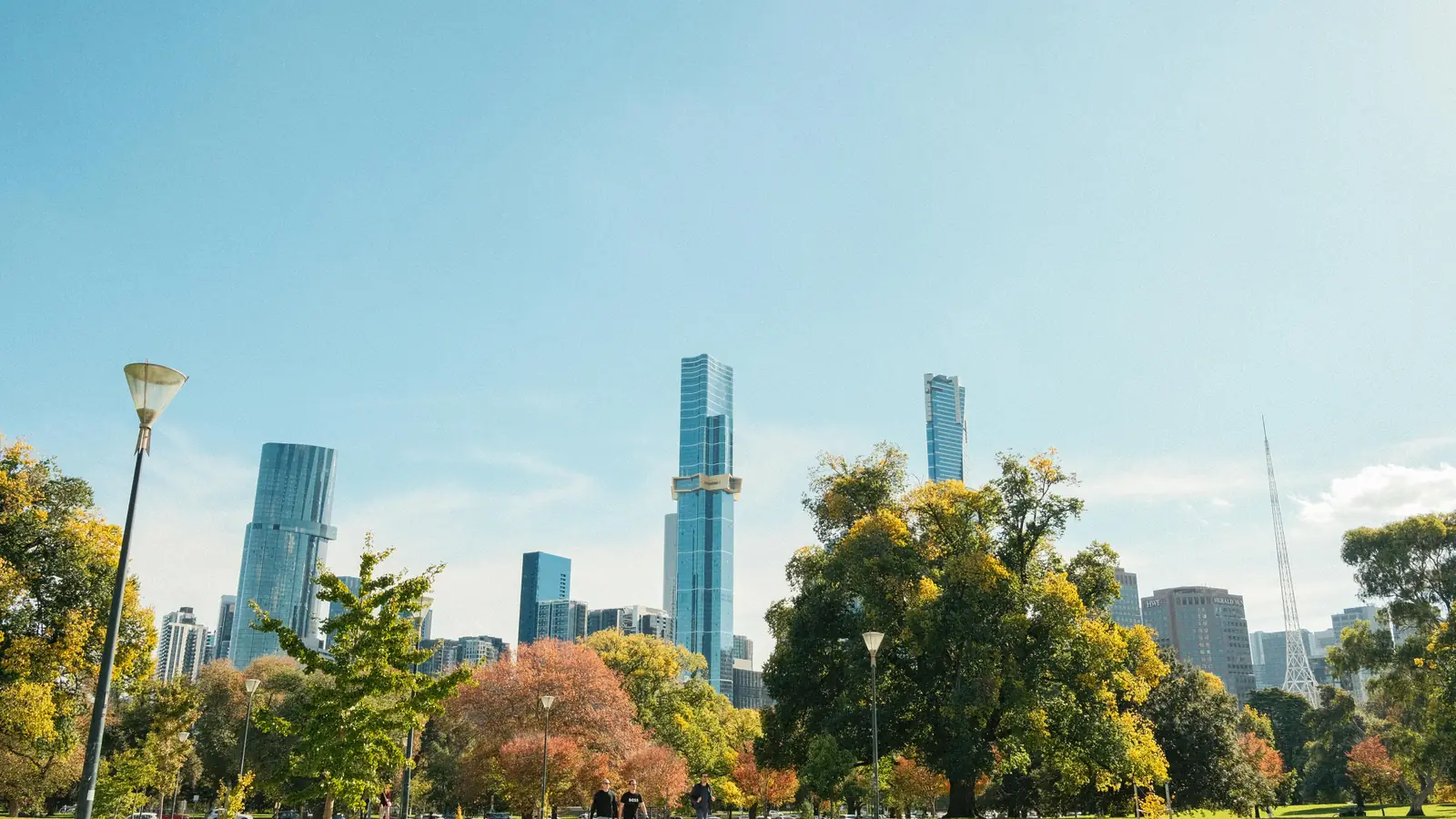
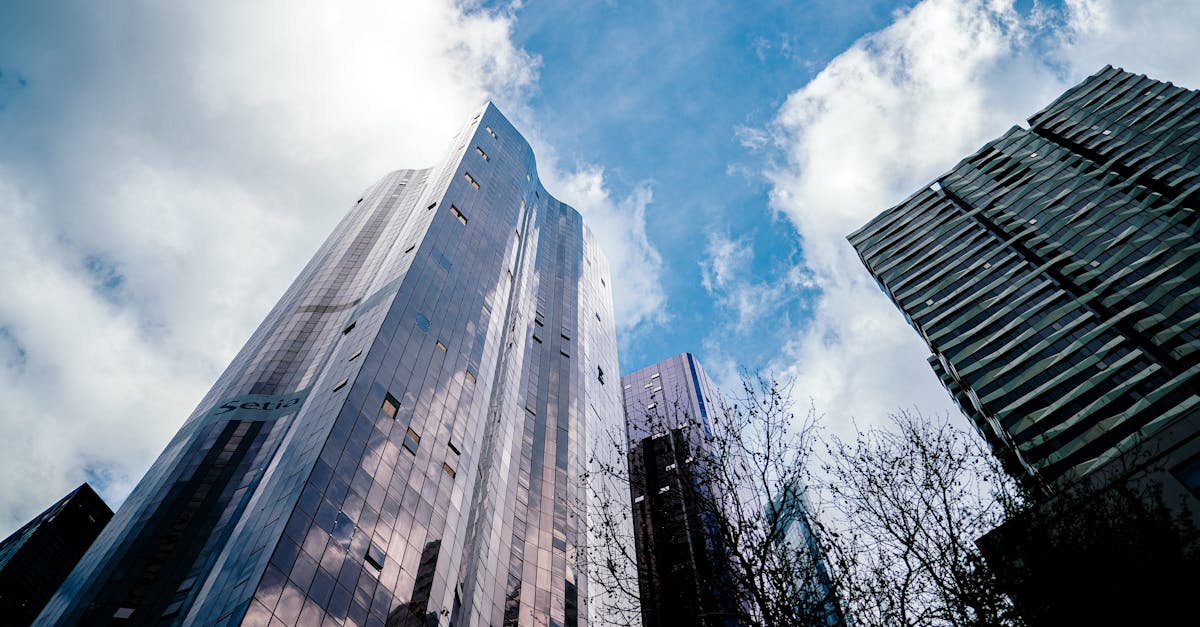
Walk across Princes Bridge from Flinders Street and you’re in Southbank. This is where the city’s tallest residential towers, Crown Casino complex, and most of the Yarra-facing fine dining live. It’s slightly quieter than the CBD at night, and rooms tend to face either the river or the skyline — both great.
Hotels with skyline views are a Southbank specialty.
Southbank is the most popular area for couples and honeymooners when figuring out where to stay in Melbourne. Many of the city’s Michelin-tier dining rooms, such as Vue de Monde, are in Southbank towers. You’re a 10-minute walk to Federation Square and a 15-minute walk to the Royal Botanic Gardens.
Best for: Couples, special occasions, fine dining enthusiasts, anyone who wants a skyline view. Watch out for: The immediate Crown precinct can feel like a shopping-mall casino zone. Book the river-facing side of buildings, not the Crown-facing side.
Recommended Southbank hotels: Crown Towers Melbourne, Crown Metropol, The Langham Melbourne (river views, old-school luxury), Pan Pacific Melbourne, Quay West Suites Melbourne, Oaks on Southbank (apartment-style, good for longer stays).
3. Fitzroy and Collingwood — coolest side of Melbourne
Melbourne’s boutique scene favours design over scale.
If you’ve done Melbourne before or your definition of a holiday involves artisanal coffee, indie bookshops, and an actual neighbourhood feel, stay in Fitzroy or Collingwood. These two adjoining suburbs — a 15-minute tram ride from Flinders Street — are the creative heart of the city. Brunswick Street (Fitzroy) and Smith Street (Collingwood) are packed with wine bars, vintage clothing, dumpling houses, and live music venues.
Accommodation skews toward boutique guesthouses, design-led apartments on Airbnb, and a growing crop of converted warehouse hotels. The Collingwood Arts Precinct opened in the early 2020s and the area has only gotten more polished since.
Best for: Repeat visitors, couples on a second Melbourne trip, foodies, creative types. Watch out for: Choice is thinner than the CBD. Book early, especially during festival season. Brunswick Street can get loud on Friday and Saturday nights.
Recommended Fitzroy/Collingwood stays: The Fitzroy Townhouse, Brady Hotels Jones Lane (technically CBD fringe but walkable to Fitzroy), The Eve Hotel, The Stamford Plaza Melbourne (Little Collins, short walk), plus numerous well-reviewed Airbnbs in converted warehouses along Gertrude and Smith Streets.
4. St Kilda — beach, bars, and backpackers
St Kilda is Melbourne’s famous beachside suburb, 6km south of the CBD and reached by the 96 tram in about 25 minutes. It’s got a crescent beach, Luna Park (heritage amusement park), Acland Street cake shops, and a lively backpacker scene. Sunsets over Port Phillip Bay are the city’s best.
Accommodation ranges from large beachfront hotels (Novotel St Kilda, Rydges St Kilda) to hostels (Base St Kilda, Habitat HQ) to boutique guesthouses on the quieter side streets. Airbnb is strong here too.
Best for: Backpackers, summer visitors, budget travellers who want atmosphere, anyone spending 5+ days in Melbourne. Watch out for: Fitzroy Street has a rougher late-night crowd than the rest of Melbourne. Avoid the very cheapest hotels there. The commute into the CBD adds 25 minutes each way.
Docklands sits immediately west of the CBD along the harbour. It’s newer than the rest of the city — most buildings post-2000 — and the harbour promenade, Marvel Stadium, and the Melbourne Star observation wheel are the main draws. It’s quiet after dark but spotless, safe, and great for families.
Apartment-style hotels dominate Docklands: Peppers Docklands, Quest, Adina, Travelodge. Many have pools, kitchens, and two-bedroom options — the best format for family travel.
Best for: Families, longer stays, travellers who want a modern apartment over a hotel room. Watch out for: Docklands can feel corporate and empty on Sundays. Restaurants close early mid-week.
6. South Yarra and Prahran — chic, leafy, upscale
Three kilometres southeast of the CBD, South Yarra and Prahran form Melbourne’s fashion-and-dining strip along Chapel Street. It’s leafy, safe, and lined with great restaurants, designer shops, and excellent cafés. The Como Centre and Jam Factory are both here. Trams and trains connect you to the CBD in 10–15 minutes.
Accommodation is split between chain hotels on St Kilda Road (The Como, Art Series Olsen, Hyatt Place Melbourne Essendon Fields — actually further afield), serviced apartments, and premium Airbnbs in period terraces. The Royal Botanic Gardens and Fawkner Park give you green space right on your doorstep.
Best for: Couples, shoppers, travellers who want a leafy residential feel with city access. Watch out for: More expensive than CBD fringe. Limited true hotel options compared to the CBD.
7. Carlton — Italian heritage and student energy
Carlton sits immediately north of the CBD and is most famous for Lygon Street — Melbourne’s Little Italy. Stay here and you’re walking distance to the Melbourne Museum, Royal Exhibition Building, Carlton Gardens, and the University of Melbourne. It’s cheaper than the CBD, walkable, and full of old-school Italian restaurants plus a newer wave of wine bars.
Best for: Mid-budget travellers who want a residential feel a short walk from the CBD. Watch out for: Student-heavy during semester. Some mid-budget hotels here are older and tired — check recent reviews.
8. Richmond — sports, Victoria Street, and value
Richmond is east of the CBD and best known for the MCG (Melbourne Cricket Ground), AAMI Park stadium, and Victoria Street’s Vietnamese food strip. It’s about 10 minutes to Flinders Street by train. Hotels here tend to be mid-range, with good value for the location. Great pick if you’re in town for a match or a concert at Rod Laver Arena.
9. Near Melbourne Airport (Tullamarine)
Airport hotels suit early flights and short layovers.
If you’ve got a 5am flight or a layover, don’t commute to the CBD — stay near Tullamarine Airport, 23km north-west of the city. PARKROYAL Melbourne Airport is connected to the terminal by covered walkway. Holiday Inn Melbourne Airport and Ibis Budget Melbourne Airport are also solid. Allow 30–40 minutes from the CBD by SkyBus or taxi.
Hotels by category: where to stay in Melbourne by type
Luxury hotels in Melbourne (5-star)
Melbourne’s 5-star hotels cluster in the CBD and Southbank.
Melbourne’s luxury hotel scene is genuinely world-class, and when choosing where to stay in Melbourne at the top end you have roughly a dozen elite properties to pick from, all in the CBD or Southbank.
Park Hyatt Melbourne — classical, cathedral-facing, garden-side rooms, indoor pool. Quietest of the 5-stars.
Grand Hyatt Melbourne — high floors on Collins Street, sharpest city-view rooms in the CBD.
The Langham Melbourne — old-world luxury on the Southbank promenade. Afternoon tea is a Melbourne institution.
Crown Towers Melbourne — biggest-scale luxury, with pools, spa, and direct access to Crown’s restaurants.
Sofitel Melbourne on Collins — classic French hospitality, rooms start on the 36th floor, the views are incredible.
W Melbourne — design-forward on Flinders Lane, for a more playful luxury feel.
The Westin Melbourne — opposite the State Library, contemporary, great pool.
QT Melbourne — design-heavy boutique, brilliant rooftop bar.
Mid-range hotels in Melbourne
The $180–$320 band is the sweet spot for most travellers. You get a clean, modern room in a well-located hotel without paying for marble bathrooms.
Vibe Hotel Melbourne — Flinders Lane, pool, well-priced.
Novotel Melbourne on Collins — reliable chain, central.
Jasper Hotel — opposite Queen Victoria Market, good breakfast.
Ovolo Laneways — boutique, design-led, great location.
Brady Hotels Central Melbourne — strong value, near Bourke Street Mall.
Zagame’s House (Carlton) — boutique stay in Carlton’s Italian quarter.
Adina Apartment Hotel Flinders Street — studio apartments, kitchenettes, great for 3+ nights.
Boutique and design hotels
Melbourne punches above its weight on boutique stays. Think: small hotels with a strong design identity, a curated bar downstairs, and 40–90 rooms. These are our picks for design-conscious travellers:
United Places Botanic Gardens — South Yarra, opposite the Royal Botanic Gardens, suites only, among the best-reviewed in Australia.
The Prince St Kilda — beach-side design hotel, moody rooms.
Lyf Collingwood — co-living / boutique hybrid, Smith Street energy.
Veriu Queen Victoria Market — modern, minimalist, great for solo travellers.
Hotel Lindrum — heritage Flinders Street building, Victorian bones, contemporary interiors.
Budget hotels in Melbourne
Budget hotels cluster along Spencer Street and in Carlton.
Budget doesn’t have to mean grim. Under $160/night, stick to these well-reviewed properties:
Travelodge Melbourne Southbank — great location, basic rooms, reliable.
Rendezvous Hotel Melbourne — heritage building, Flinders Street, often discounted.
ibis Styles East Melbourne — good value on the CBD fringe.
EasyStay Studios (St Kilda Road) — compact studios with kitchenettes.
Best hostels in Melbourne
Melbourne has over 30 hostels clustered near transport hubs.
Melbourne has over 30 hostels — most in the CBD or St Kilda. Beds run $38–$65 in a mixed dorm, with private doubles from $95.
Space Hotel — CBD, more hotel than hostel, rooftop, gym.
United Backpackers — opposite Flinders Street Station, unbeatable location.
Melbourne Central YHA — clean, quiet-ish, central.
Base St Kilda — bar, rooftop, beach five minutes away.
The Village Melbourne — Flinders Street, high review scores, dorms 4–6 beds.
Habitat HQ — St Kilda, known for a chill vibe and female-only dorms.
Family accommodation in Melbourne
Family-friendly hotels prioritise space and kitchenettes.
For families, serviced apartments beat hotel rooms every time. Kitchens, laundries, and two bedrooms transform a trip with kids.
Quest Docklands — two-bedroom apartments, on-site pool, harbour walks.
Peppers Docklands — upscale apartments, pool, close to the Melbourne Star.
Oaks on Southbank — walk to Eureka Skydeck and the Aquarium.
Meriton Suites Melbourne on Flinders — CBD location, pool, family rooms.
Mantra Southbank — good-value apartments by the Yarra.
Adina Apartment Hotel Flinders Street — central, kitchenettes.
Airbnb and apartment rentals
Airbnbs in Melbourne’s inner suburbs offer space and kitchens.
Melbourne is a strong Airbnb city, especially for stays of 4 nights or longer. Best neighbourhoods for Airbnb value: South Yarra, Richmond, Collingwood, Docklands. CBD listings are mostly in large towers (often ex-hotel rooms) — fine, but you miss out on neighbourhood feel.
Tips: Check for a Short-Stay permit number in the listing. Apartment buildings often prohibit short-stays — read recent reviews for “building hostility” flags. Victoria has a 7.5% short-stay levy in place for 2026, so expect that on the final total.
Pet-friendly hotels
Pet-friendly accommodation in Melbourne’s inner city is improving quickly. Try: QT Melbourne, Ovolo Laneways, The Langham Melbourne (with fees), and many Quest apartment-hotel properties (on request). Always confirm in advance — policies change and some require small pets only.
Hotels with pools
Pools and spa facilities are common in Melbourne’s top hotels.
Melbourne’s climate is mild, so most pools are indoor or heated. Best hotel pools: Crown Towers Melbourne (huge), Park Hyatt (indoor, luxurious), The Westin Melbourne (lap pool), Meriton Suites Flinders (high-floor heated pool), Pan Pacific Melbourne (indoor), and The Langham (indoor, serene).
How long should you stay in Melbourne?
2 nights: CBD or Southbank — focus on Federation Square, laneway coffee, one big museum, one rooftop bar.
3 nights: CBD plus St Kilda day trip, maybe one Great Ocean Road day tour.
4–5 nights: CBD or Fitzroy for most of the trip, plus a night in the Yarra Valley wine region or on the Mornington Peninsula.
Week or more: Split — 3 nights CBD, then 2 nights St Kilda, then an out-of-town overnight (Yarra Valley, Phillip Island, or Great Ocean Road).
Best time to book for best rates
Booking 6–10 weeks ahead tends to produce the best rates on 4-star and 5-star Melbourne hotels. Inside 3 weeks, prices start climbing on the major OTAs. During event weeks (Australian Open, Formula 1, AFL Grand Final, Melbourne Cup), book 3+ months ahead — rates can triple. Our detailed breakdown of seasonal pricing appears in our best time to visit Melbourne guide.
Use Booking.com and Expedia to shortlist — then check the hotel’s direct website. Direct rates on Melbourne hotels are often 8–12% cheaper once you join the hotel’s free loyalty program. Park Hyatt, Hyatt, Accor, Marriott and IHG all run this pattern.
Neighbourhood comparison at a glance
Neighbourhood
Vibe
Walk to CBD
Best for
Avg 4-star price
CBD
Buzzy, central
—
First-timers
$290
Southbank
Polished, skyline
10 min
Couples
$340
Fitzroy
Creative, hip
20 min
Repeat visitors
$240
St Kilda
Beachy, lively
Tram 25 min
Backpackers, summer
$210
Docklands
Modern, quiet
15 min
Families
$240
South Yarra
Leafy, upscale
Tram 10 min
Shoppers, couples
$280
Carlton
Italian, student
15 min
Mid-budget
$200
Richmond
Sporty, Vietnamese
Tram 15 min
Event visitors
$220
Melbourne areas to avoid for accommodation
Most of inner Melbourne is safe and welcoming. A few honest notes when considering where to stay in Melbourne:
Budget hotels in the far western CBD (around Spencer Street / Southern Cross) can be tired and noisy. The location is fine but screen reviews carefully.
The Elizabeth Street strip near the Queen Victoria Market can feel rough at night — specifically the block between Therry Street and Victoria Street.
Some Fitzroy Street (St Kilda) budget properties have lingering issues with late-night antisocial behaviour. Stick to hotels one or two blocks off the strip.
Footscray and Sunshine, while increasingly gentrified, are further from the main tourist circuit than most visitors realise. Fine if you know what you’re booking for.
Money-saving tips
Avoid Australian Open (mid-to-late January), Formula 1 weekend (late March), AFL Grand Final (late September), and Melbourne Cup week (first week of November) — these alone can double rates.
Sunday nights are the cheapest night of the week at most city hotels. Monday mornings are the cheapest check-out day.
Consider staying on the CBD fringe (Carlton, East Melbourne, Richmond) and walking in — same access for 25% less.
Apartment-hotels with free laundry save real money on trips over 4 nights.
Book restaurants before booking tours — Melbourne’s best dining rooms fill up further ahead than its activities.
FAQs: where to stay in Melbourne
What’s the best area to stay in Melbourne for first-time visitors?
The Melbourne CBD is the single best choice for first-timers. Ninety percent of the city’s headline attractions are within a 15-minute walk of Flinders Street Station, and free trams cover the central grid. You can always day-trip out to St Kilda or Fitzroy from there.
Is Southbank or the CBD better?
Southbank wins on views and dining; the CBD wins on walkability and variety. Southbank rooms are usually slightly more expensive at equivalent star ratings, but also newer on average. Both are well-positioned.
Is Melbourne CBD safe at night?
Yes, the Melbourne CBD is generally safe at night. It’s well-lit, has plenty of foot traffic until midnight on weekends, and the laneway dining scene means main thoroughfares stay busy. Normal big-city awareness applies.
Should I stay in the CBD or St Kilda?
Stay in the CBD if it’s your first Melbourne visit or you’re only here 2–3 nights. Stay in St Kilda if it’s summer, you’re on a budget, or you want the beachside atmosphere. Many travellers split: a few nights in each.
Where should backpackers stay in Melbourne?
Two clear zones: the CBD (Flinders/Elizabeth Streets) for location and the nightlife scene, or St Kilda for the beach and a summer hostel vibe. Space Hotel, United Backpackers, Base St Kilda and The Village Melbourne consistently rank highest.
Which neighbourhood is best for a family with young kids?
Docklands and South Yarra are both strong family picks. Docklands has modern two-bedroom apartment-hotels with pools, the waterfront, and the Melbourne Star. South Yarra has leafy parks, Chapel Street, and easy tram access into the CBD.
How much does a typical hotel cost in Melbourne?
A mid-range 4-star hotel in the CBD averages around $260–$320 AUD per night in shoulder season. Budget hotels from $110, hostels from $38. Expect 40–100% premium during major events.
Is Airbnb cheaper than hotels in Melbourne?
Not always. For 1–2 nights, hotels usually win on price and location. For stays of 4+ nights, Airbnb becomes cheaper per night — and much cheaper per person once you add a kitchen and laundry. Expect a 7.5% Victorian short-stay levy on top of the listing price.
How far is Melbourne Airport from the CBD?
Melbourne Airport (Tullamarine) is 23km north-west of the CBD, about 30–40 minutes by SkyBus or taxi depending on traffic. The new Melbourne Airport Rail Link is under construction with an expected opening later this decade.
The final recommendation
If we had to pick just one neighbourhood answer to “where to stay in Melbourne” — for a first-time visitor on a 3–4 night trip — it would be the Melbourne CBD, near Flinders Street Station or along Collins Street. Pick a 4-star hotel above the 15th floor, ideally one with a pool. You’ll walk to everything, catch free trams, and get the density of laneway cafés and rooftop bars that makes Melbourne, Melbourne.
Choosing the best restaurants in Melbourne means navigating what Good Food and The Age have, for 30+ years, ranked as Australia’s most serious dining city. Melbourne has more restaurants per capita than any comparable city in Asia-Pacific, an unmatched depth of migrant cuisines — Italian, Vietnamese, Greek, Lebanese, Chinese, Japanese, Ethiopian, Sri Lankan — and a distinctive local sensibility that favours produce-driven cooking, natural wine and small-plates informality over white-tablecloth formality. This 2026 guide breaks down where, what and how to eat across 150+ standout restaurants, cafés, bars and markets.
Unlike competitor lists (Broadsheet, Good Food, Time Out) that rank restaurants in a single long list, we’ve organised this guide by three lenses: price tier, cuisine, and neighbourhood. That way you can find the answer to “best restaurants in Melbourne under $50” as easily as “best Japanese restaurant in Fitzroy.” We’ve also included booking tips, dress code, and reasons not to bother with certain overhyped spots.
A note on methodology: every restaurant mentioned has been independently reviewed, awarded in the Good Food Guide hat system, or is a landmark in Melbourne’s living food culture. Tourist traps and reputation-only legacy venues are deliberately excluded. Prices reflect 2026 norms — Melbourne’s dining has moved firmly upmarket post-COVID, with mid-range mains now $38–$55 in most quality venues.
Melbourne’s restaurant scene rivals any global food city.
Melbourne’s food identity is built on four pillars: coffee, migrant cuisines, native produce, and wine-bar culture. Specialty coffee started with Italian migrants in the 1950s, was formalised by pioneers like Mark Dundon (Seven Seeds) and Matt Perger (St Ali) from the mid-2000s, and is now central to almost every café. Migrant restaurants fill in the middle tier — from 60-year-old Italian trattorias to family-run Vietnamese pho shops. At the top end, Modern Australian cuisine pulls from native ingredients (saltbush, finger lime, wattleseed, kangaroo) and executes with European technique. And everywhere, small, loud, informal wine bars with 10-seat kitchens have reshaped how people eat out.
Modern Australian cuisine defines Melbourne’s hatted restaurants.
The Good Food Guide awards “hats” — one, two or three — as Australia’s equivalent of Michelin stars. Three-hatted restaurants are the country’s absolute top tier; Melbourne consistently has 6–8 three-hatted venues, more than Sydney. Two-hatted restaurants (roughly 20–25 in Melbourne in any given year) are the sweet spot for most special-occasion visitors — world-class cooking without the three-hour degustation commitment.
The 10 most important restaurants in Melbourne right now
If you only ate at ten places during your visit, these would make the shortlist. Between them they cover the best restaurants in Melbourne across fine dining, mid-range, and informal wine-bar cooking:
Attica (Ripponlea) — Three hats. Ben Shewry’s flagship restaurant has been on the World’s 50 Best list for over a decade. Native Australian ingredients executed at the highest level. 10-course tasting $345pp, book 2–3 months ahead.
Cutler & Co. (Fitzroy) — Andrew McConnell’s landmark Gertrude Street restaurant. Modern Australian, three hats in the past. Sunday lunch is legendary.
Minamishima (Richmond) — Japanese omakase. 14-seat sushi counter, $280pp. Considered the best sushi in Australia.
Flower Drum (CBD) — Cantonese. Open since 1975 and still one of the best Chinese restaurants outside Asia. Famous Peking duck.
Supernormal (CBD) — Also McConnell. Modern Asian. Flinders Lane. No bookings after 6pm — line up or go early.
Gimlet at Cavendish House (CBD) — Andrew McConnell’s bistro. Open kitchen, French-ish, excellent for solo diners at the bar.
Cumulus Inc. (CBD) — Also McConnell (he dominates this list for a reason). Brunch institution. Lunch is better than breakfast for most diners.
Chin Chin (CBD) — Modern Thai. No bookings, always a line, always worth it. Great share plates for groups.
Embla (CBD) — Natural-wine-focused small plates on Russell Street. Among the best restaurants in Melbourne for solo dining.
Maha (CBD) — Shane Delia’s Middle Eastern flagship. Feast menus are the move for groups.
Best fine dining restaurants in Melbourne
Melbourne’s fine dining scene clusters in two zones: the CBD high-rises (Vue de Monde atop the Rialto, Lui Bar, 28) and the inner suburbs’ destination restaurants (Attica, Brae a regional drive but associated with Melbourne). Expect $200–$400 per person for degustation + wine matches. Bookings essential; most three-hats are booked 4–8 weeks out.
Attica (Ripponlea) — covered above. The flagship.
Vue de Monde (Rialto, CBD, level 55) — French technique + Australian produce + 360° views. $295pp degustation. Best dress code: smart.
Cutler & Co. (Fitzroy) — Modern Australian bistro-grand format.
Society (CBD, Manchester Unity Building) — Chef Martin Benn (ex-Sepia Sydney). Mediterranean-leaning fine dining in a glamorous Art Deco setting.
Lûmé (South Melbourne) — Modernist tasting menu with theatrical flourishes.
Amaru (Armadale) — Two-hatted small restaurant, $250pp degustation. Chef Clinton McIver is a rising name.
Brae (Birregurra, 90 min west) — Dan Hunter’s farm-to-table destination. Stay overnight. Probably Australia’s best “country” restaurant.
Brunetti Classico’s sister, Sunda (CBD) — Modern South-East Asian, two hats. Less formal but intensely creative.
Best mid-range restaurants ($60–$100 per person)
The sweet spot for most visitors looking for the best restaurants in Melbourne without committing to a degustation. A two-course-plus-wine dinner in this bracket should run $70–$110 depending on choices.
Tipo 00 (CBD) — Modern Italian pasta bar on Little Bourke. Pasta $28–$34, expect a 30-minute wait.
MoVida (CBD) — Frank Camorra’s Spanish tapas. Original on Hosier Lane is still the best.
Sunda (CBD) — Modern South-East Asian.
France-Soir (South Yarra) — Classic French bistro. Open since 1986. Steak frites, frogs legs, the full experience.
Longrain (CBD) — Modern Thai. Famous share plates.
Pastuso (CBD) — Peruvian in AC/DC Lane. Pisco sours and ceviche.
Mamasita (CBD) — Upscale Mexican. Corn queso fundido is an institution.
Entrecôte (South Yarra) — Single-dish French steak frites. $44. Wait on weekends.
Hawker Hall (Windsor) — Andrew McConnell’s casual Southeast Asian.
Embla (CBD) — Natural wine bar with serious food.
Lee Ho Fook (CBD) — Modern Chinese. Crispy eggplant is a must-order.
Scopri (North Fitzroy) — Family Italian, Sardinian accent. Locals-heavy.
Best cheap eats and casual picks ($10–$30)
Melbourne has never lost its migrant-built cheap-eat culture. The best places for a $15 lunch still come from Vietnamese, Italian, Middle Eastern, Chinese and Thai communities. These are among the best restaurants in Melbourne for budget travellers and locals in the know.
Nhu Lan Bakery (Richmond) — $8 banh mi. The GOAT of Melbourne banh mi.
Mamak (CBD) — Malaysian roti. Line up on Lonsdale Street.
HuTong Dumpling Bar (CBD) — Xiao long bao soup dumplings in Chinatown. $14 for 10.
Pho Bo Ga Mekong (Richmond, Victoria St) — $16 pho. Open since 1999.
Easey’s (Collingwood) — Burgers served from inside decommissioned train carriages on a rooftop.
Stalactites (CBD) — Souvlaki institution, open 24 hours in the CBD.
Lentil As Anything (Abbotsford, Footscray) — Pay as you feel vegetarian buffet at the Abbotsford Convent.
Bao 101 (Kensington / CBD) — Best Taiwanese bao in the city.
Old Town Hong Kong Cuisine (Chinatown) — Cantonese BBQ, char siu pork.
A1 Bakery (Brunswick, Sydney Road) — Lebanese pizzas and pide.
Falafel Kingdom (Coburg / North Melbourne) — Best falafel in the city, $12 wrap.
Best Italian restaurants
Italian cuisine has deep roots in Melbourne.
Italian is Melbourne’s deepest-rooted migrant cuisine — arrivals began in the 1890s and peaked in the 1950s. Lygon Street is the famous strip but the best Italian has long since diversified. Today’s key spots:
Tipo 00 (CBD) — Modern pasta bar. Tagliatelle ragù is a house classic.
Scopri (North Fitzroy) — Sardinian family restaurant. Outstanding wine list.
Old Town Hong Kong Cuisine (Chinatown) — Char siu and roast duck.
Shandong MaMa (Chinatown) — Dumplings, always a queue.
Vietnamese
Pho Bo Ga Mekong (Richmond) — Classic pho.
Thanh Phong (Richmond) — Grilled pork vermicelli.
Annam (CBD) — Upscale modern Vietnamese.
Uncle (St Kilda) — Vietnamese hawker-style.
Misschu (multiple) — Fast-casual Vietnamese chain that actually delivers.
Thai
Chin Chin (CBD) — Modern Thai share plates.
Longrain (CBD) — Modern Thai.
Soi 38 (CBD) — Thai street food in a car park (literally).
Cookie (CBD) — Loud rooftop Thai in Curtin House.
Korean
Gami Chicken & Beer (multiple) — KFC-style.
Hanok (CBD) — Modern Korean small plates.
Gogi Korean BBQ (CBD) — Tabletop grilling.
Best modern Australian restaurants
Modern Australian cuisine (sometimes “Mod Oz”) is where Melbourne’s top chefs express a distinctly local voice — native ingredients, seasonality, French/European technique.
Attica — Three hats.
Cutler & Co. — Two hats.
Gimlet at Cavendish House — CBD bistro.
Marion (Fitzroy) — McConnell’s Gertrude Street wine bar.
Cumulus Inc. — CBD brasserie.
Gazi (CBD) — George Calombaris-style modern Greek-Australian.
Embla — Wine bar format.
Entrée (CBD) — New on the scene, modern produce-driven.
Best Middle Eastern and Greek restaurants
Maha (CBD) — Shane Delia’s Middle Eastern flagship. Two hats.
Biggie Smalls (Fitzroy) — Mediterranean small plates.
Stalactites (CBD) — 24-hour Greek souvlaki.
Eastern Beach Cafe (Northcote) — Greek-Cypriot.
Gazi (CBD) — Modern Greek.
Hellenic Republic (Kew, Brunswick) — George Calombaris Greek taverna.
Shane Delia’s George Street (CBD) — Middle Eastern wine bar.
Babylon Cafe (Brunswick) — Lebanese mixed grills.
Best vegan and vegetarian restaurants
Smith & Daughters (Fitzroy) — Vegan Latin-Spanish, internationally acclaimed.
Smith & Deli (Fitzroy) — Sister sandwich shop.
Lentil As Anything (Abbotsford Convent, Footscray) — Pay-as-you-feel vegetarian.
Moroccan Soup Bar (Fitzroy North) — Legendary vegetarian. Cash only, no menu.
Transformer (Fitzroy) — Modern vegetarian on Rose Street.
Shakahari (Carlton) — Since 1972. Melbourne’s original vegetarian restaurant.
Attica’s lunch — Not strictly vegan but has the best veg-focused tasting menu option.
Best cafés and brunch spots
Melbourne is widely credited with inventing modern brunch culture.
Melbourne’s café scene is arguably its most distinctive food export. These are the standouts across brunch, all-day dining and specialty coffee:
Auction Rooms (North Melbourne) — Melbourne brunch classic since 2007.
Top Paddock (Richmond) — Famous ricotta hotcakes.
Higher Ground (CBD) — Cathedral-ceilinged former power station, $28 brunch dishes.
Kettle Black (South Melbourne) — Instagram brunch institution.
Proud Mary (Collingwood) — Specialty coffee roaster café.
Industry Beans (Fitzroy) — Coffee-focused brunch spot.
Hardware Societé (CBD) — French-style breakfasts, no bookings.
Cumulus Inc. (CBD) — Multi-room brasserie brunch.
Addict Food & Coffee (Fitzroy) — Brunch with brunch portions.
Brother Baba Budan (CBD) — Tiny coffee bar on Little Bourke.
Market Lane Coffee (multiple, inc. Queen Vic Market) — Specialty roaster.
Sir Charles (Seddon / Yarraville) — Western-suburbs brunch favourite.
Best coffee in Melbourne
Melbourne is widely regarded as a specialty coffee capital.
Top specialty roasters: Seven Seeds (Carlton), Market Lane (several locations), Proud Mary (Collingwood), St Ali (South Melbourne), Patricia (CBD), Brother Baba Budan (CBD), Small Batch, and Padre Coffee (Brunswick). For a local’s pour-over crawl, start at Market Lane Prahran, walk to Patricia in the CBD, and finish at Brother Baba Budan.
Best food markets in Melbourne
Queen Victoria Market is Melbourne’s largest fresh-food market.
Queen Victoria Market (CBD) — Since 1878. Deli hall, meat hall, fresh produce. Open Tue, Thu, Fri, Sat, Sun.
Prahran Market (South Yarra) — Smaller, more curated. Tue, Thu, Fri, Sat, Sun.
South Melbourne Market (South Melbourne) — Since 1867. Famous for dim sims and specialty food traders. Wed, Fri, Sat, Sun.
Footscray Market (Footscray) — Multicultural wet market, amazing Asian and African produce.
Carlton: D.O.C. Pizzeria, King & Godfree, Shakahari, Brunetti.
Brunswick: A1 Bakery, CIBI, Padre Coffee, Pope Joan.
Richmond: Minamishima, Pho Bo Ga Mekong, Top Paddock, Nhu Lan Bakery.
South Yarra / Prahran: France-Soir, Entrecôte, Kong BBQ, Prahran Market food hall.
St Kilda: Bar di Stasio, Stokehouse, Uncle, Claypots.
Southbank: Hana, Rockpool Bar & Grill, Tonka.
South Melbourne: St Ali, South Melbourne Market food stalls, Lûmé.
Best bars, wine bars and rooftop bars
Rooftop bars form a key part of Melbourne’s dining culture.
Cocktail bars
The Everleigh (Fitzroy) — Classic cocktail lounge, perennially on World’s 50 Best Bars.
Eau de Vie (CBD) — Hidden speakeasy on Malthouse Lane.
Black Pearl (Fitzroy) — Fitzroy institution for 20+ years.
Lui Bar (Rialto, CBD) — Level 55, impeccable cocktails with views.
Romeo Lane (CBD) — Tiny and perfect.
Wine bars
Wine bars have reshaped Melbourne’s dining culture.
Embla (CBD) — The natural wine gold standard.
Bar Liberty (Fitzroy) — Natural wine + snacks.
Marion (Fitzroy) — McConnell wine bar.
Bar di Stasio (St Kilda) — Elegant Italian-leaning.
Gerald’s Bar (North Carlton) — Neighbourhood classic.
Rooftop bars
Naked for Satan (Fitzroy) — Brunswick Street rooftop with bay views.
Siglo (CBD) — Spring Street rooftop overlooking Parliament.
Madame Brussels (CBD) — Astroturfed rooftop on Bourke Street.
Rooftop at QT (CBD) — Hotel rooftop with skyline views.
Lui Bar (CBD) — Level 55 at the Rialto.
Cafe culture is the backbone of Melbourne’s food scene.
Booking tips and dress code
Most fine-dining venues: book online 4–8 weeks out (Attica 2–3 months). Walk-ins rarely work.
Chin Chin, Supernormal, Cumulus Inc., HuTong: no bookings after 6pm. Either go early (5:30pm) or queue.
Tipo 00, MoVida, Tipo’s overflow Osteria Ilaria: bookings possible; walk-ins work off-peak.
Dress code: Melbourne is relaxed by global standards. “Smart casual” covers almost every top restaurant. Jackets not required. Clean trainers are fine except at Vue de Monde, where smart dress is requested.
Tipping: not expected. Australian hospitality wages are legally high. 5–10% for excellent service is appreciated but not obligatory.
Corkage: rare at top restaurants (most are BYO-free). At mid-range Italian restaurants on Lygon and Carlton, BYO is often still allowed for $8–$15 corkage.
Melbourne pastry kitchens rank among the world’s best.
Restaurants and strips to skip
Where not to eat matters as much as where to eat. A few honest notes:
Lygon Street’s main tourist strip — the restaurants with hosts pulling tourists in from the footpath are generic and overpriced. Walk one block further or eat on Faraday/Elgin Streets instead.
Crown complex food court — overpriced and generic. Crown’s signature restaurants (Nobu, Rockpool, Bistro Guillaume) are excellent; avoid the rest.
Harbourside/Docklands waterfront restaurants — mostly chain-owned and underwhelming. Great view, mediocre food.
Southbank’s Southgate food court — tourist-priced. Cross to the CBD for better value.
Chapel Street’s Thai/Chinese budget restaurants — nothing terrible but better Thai exists in the CBD.
Frequently asked questions
What is the most famous restaurant in Melbourne?
Attica in Ripponlea is internationally the most famous — on the World’s 50 Best Restaurants list for over a decade. Flower Drum in Chinatown is the most famous classical institution (since 1975).
What food is Melbourne known for?
Coffee (specialty roasters), brunch culture (smashed avo originated here), Vietnamese pho (from the refugee community), Italian pasta (century-old roots), and “Mod Oz” — Modern Australian cooking using native ingredients.
Where do locals eat in Melbourne?
Locals eat in Fitzroy (Cutler & Co, Smith & Daughters, Scopri, Bar Liberty), North Melbourne (Auction Rooms, Minh Tan), Richmond (Minamishima, Thanh Phong) and Carlton (D.O.C. Pizzeria, Shakahari). They rarely eat at the tourist strips on Lygon or Chapel unless it’s a specific favourite.
How much does dinner cost in Melbourne?
Cheap eats $15–$25 per person (Vietnamese, Thai, banh mi). Mid-range $70–$110 (two courses + wine). Fine dining $200–$400 per person (degustation + matched wines).
Do Melbourne restaurants close on Sundays or Mondays?
Many top restaurants close Sunday-Monday or Monday-Tuesday. Always check opening hours before planning. Supernormal, Chin Chin and most market brunch spots are open 7 days.
Is Melbourne more expensive than Sydney for dining?
Roughly equivalent at the high end, slightly cheaper at the mid-range. Melbourne has more variety of cheap-eats and ethnic cuisines than Sydney.
Are Melbourne restaurants BYO?
Some mid-range Italian and Asian restaurants still allow BYO with a corkage fee of $8–$15 per bottle. Fine dining and wine-focused places typically do not.
Where should I eat near the MCG before a game?
Swan Street in Richmond has the best pre-game pubs (Corner Hotel, The Mountain View). For sit-down dinners, walk into the CBD and eat on Flinders Lane.
What are the best restaurants in Melbourne for a first date?
Embla (wine bar energy, small plates, great for conversation), France-Soir (romantic French), Bar di Stasio (elegant Italian in St Kilda), Marion (Fitzroy wine bar), or Tonka (Indian-inspired with skyline views).
Final picks: 5 restaurants to prioritise in 2026
If you’re deciding among the best restaurants in Melbourne and only have five bookings to make, our 2026 recommendation: (1) Attica for a once-in-a-lifetime three-hat dinner if you can get a table; (2) Cutler & Co. for the best restaurants in Melbourne experience at a (slightly) more accessible level; (3) Embla for the small-plates wine-bar format that defines modern Melbourne; (4) Pho Bo Ga Mekong for a $16 pho that will stay with you; and (5) Auction Rooms or Cumulus Inc. for the brunch culture that made Melbourne famous. Between them you’ll have experienced the full range of what makes the best restaurants in Melbourne worth the trip.
This Melbourne neighbourhoods guide breaks the city down into the 12 inner suburbs that matter most to visitors — where to go, why each one is different, and how to link them into a smart walking or tram route. Melbourne is geographically sprawling but the tourist-friendly core is surprisingly compact: almost every neighbourhood worth visiting sits within a 6 km radius of the CBD and connects to the Free Tram Zone or a major train line.
What makes Melbourne unusual among global cities is how distinct each suburb feels in just a few blocks. Cross from Carlton to Fitzroy over the university grounds and the dress code changes. Take a tram six stops south of the CBD and the laneway cafés give way to palm trees and beach cabanas. Unlike cities where “neighbourhoods” blur together, Melbourne’s tribes are sharply defined — and that’s exactly what makes a well-planned multi-suburb day so rewarding.
This 2026 guide is organised geographically: we start in the CBD, work north to the indie-leaning inner north (Fitzroy, Collingwood, Carlton, Brunswick), then south to the upscale and food-heavy inner south (South Yarra, Richmond), then down to the bay (St Kilda, Williamstown) and finally to the modern waterfront (Southbank, Docklands). Each section covers what the suburb is known for, signature streets, standout experiences, where to eat, how to get there, and how long you need.
Melbourne’s 30+ distinct inner suburbs each have their own character.
Before diving into specific suburbs, it helps to picture Melbourne as a pinwheel. At the centre is the CBD — the grid of laneways, Victorian-era arcades and high-rises bounded by Flinders Street, Spencer Street, La Trobe Street and Spring Street. Running west-to-east through the CBD is the Yarra River, which splits the centre from Southbank and the arts precinct on its south bank. Every other neighbourhood radiates outward from here on the tram and train network.
North of the CBD lies the “inner north” — a belt of Victorian-era terrace-house suburbs that house Melbourne’s art scene, live music venues, independent fashion and most of its best bars. Names to know: Carlton, Fitzroy, Collingwood, Brunswick, Northcote and Thornbury. Five minutes on a tram from the CBD, yet aesthetically a different city.
South and south-east of the CBD is the “inner south” — slightly more upscale and polished. Richmond to the east is famous for Vietnamese food and the MCG (Melbourne Cricket Ground). South Yarra and Prahran are fashion and dining strips centred on Chapel Street. Continue south and you reach Port Phillip Bay, where beachside suburbs St Kilda, Elwood and Brighton mark the city’s summer playground.
West of the CBD you find Docklands (a modern harbourside precinct), Yarraville and Seddon (hipster pockets that rival Fitzroy), and further along, Williamstown — a historic seaside suburb that feels like Sydney’s balmain or Portsmouth. East lies Richmond’s working-class overflow into suburbs like Abbotsford (Convent art complex) and Kew (leafy mansions). For most tourists, the bulk of your time will be spent within a triangle formed by the CBD, Fitzroy and St Kilda.
Neighbourhood comparison table
The fastest way to orient yourself with any Melbourne neighbourhoods guide is a side-by-side comparison. The table below summarises character, signature experience, how to get there from the CBD and how long you should budget.
Neighbourhood
Character
Signature experience
From CBD
Time needed
CBD
Dense, urban, laneway cafés
Hidden laneway crawl + rooftop bar
You’re already there
1–2 days
Fitzroy
Bohemian, indie, creative
Brunswick Street browsing + rooftop drinks
Tram 11 / 5 min
Half day
Collingwood
Gritty-cool, breweries, bars
Smith Street bar hop + Stomping Ground brewery
Tram 86 / 10 min
Evening
Carlton
University / Italian heritage
Lygon Street pasta + Royal Exhibition Building
Tram 1/6 / 10 min
Half day
Brunswick
Multicultural, creative
Sydney Road food crawl
Tram 19 / 15 min
Half day
Richmond
Sports, Vietnamese, pubs
Victoria Street pho + MCG tour
Tram 48/109 / 10 min
Half day
South Yarra / Prahran
Fashion, upscale dining
Chapel Street shopping + Prahran Market
Train / 6 min
Half day
St Kilda
Bayside, beach, nostalgia
Beach, Luna Park, Acland Street cakes
Tram 96 / 20 min
Full day in summer
Williamstown
Historic, seaside village
Pier walk + Nelson Place strip
Ferry or train / 30 min
Half day
Southbank
Arts, riverfront, polished
NGV + Arts Centre + Yarra promenade
Walk across bridge
Half day
Docklands
Modern harbourside
Star observation wheel + waterfront dining
Tram 70 / 10 min
2–3 hours
Melbourne CBD — the central hub
Central Melbourne’s laneway cafés define its café culture.
Melbourne’s CBD (Central Business District, also called “the city”) is the first stop on any Melbourne neighbourhoods guide because it’s both the geographical centre and the entry point for nearly every tourist. The grid was laid out by Robert Hoddle in 1837 and measures roughly 1.6 km east-to-west and 1 km north-to-south — small enough to walk end-to-end in 20 minutes.
What makes the CBD special: the laneway network. In between the main streets (Collins, Bourke, Little Collins, Little Bourke, Flinders, Lonsdale), dozens of narrow service lanes have been converted into pedestrianised café-and-bar corridors. Degraves Street, Centre Place, Hosier Lane (the street art lane), Block Arcade, Royal Arcade, AC/DC Lane, Caledonian Lane, Hardware Lane — each has its own character. A laneway walk is mandatory for any first-time visit.
Must-do in the CBD: Flinders Street Station (the 1909 landmark), Federation Square (civic plaza + NGV Australia), Hosier Lane for street art, Queen Victoria Market on the northern edge, Carlton Gardens slightly further north, State Library of Victoria (don’t miss the Dome Reading Room), and a Melbourne Skydeck sunset at the Eureka Tower across the river.
Where to eat in the CBD: Supernormal (Flinders Lane, modern Asian), Cumulus Inc. (brunch institution), Lune Croissanterie in Fitzroy branch or the CBD flagship, Longrain, Gimlet at Cavendish House. For coffee, Market Lane (multiple locations), Patricia, Brother Baba Budan.
Getting around: the CBD sits entirely inside Melbourne’s Free Tram Zone — you don’t pay for trams within the grid plus Docklands and some of Southbank. This alone makes staying central excellent value.
Time needed: serious visitors spend at least 1.5 days in the CBD — one to hit the landmarks and one to explore laneways and bars.
Fitzroy — bohemian inner north
Brunswick Street is Fitzroy’s main artery.
Fitzroy is the essential inner-north stop on this Melbourne neighbourhoods guide. It was Melbourne’s first suburb (gazetted 1839), its poverty during the 20th century left the Victorian terraces untouched, and when gentrification hit in the 1990s the result was one of the best-preserved and most atmospheric inner suburbs in Australia. Today it’s the archetypal Melbourne neighbourhood for independent fashion, vintage shopping, tattoo parlours, live music, and strong flat whites.
Signature street: Brunswick Street, which runs about 2 km north-south through the heart of the suburb. The best stretch is between Johnston Street and Alexandra Parade. Don’t miss Gertrude Street — a shorter strip that crosses Brunswick at the southern end and contains the highest concentration of Fitzroy’s newer, design-forward bars and shops.
What to do: browse indie boutiques like Fool’s Paradise and Obus; flick through records at Polyester Records; eat a paprika-glazed cauliflower at Cutler & Co. (one of Melbourne’s best restaurants); drink at Naked for Satan (rooftop with bay views), The Standard (classic beer garden), or Black Pearl (one of the world’s top 50 bars by industry rankings).
How to get to Fitzroy from the CBD: the Tram 11 from Collins Street runs along Brunswick Street. Alternatively, Tram 86 or 96 runs along Smith Street, which is the Fitzroy-Collingwood border. Uber takes 7–10 minutes from the CBD.
Time needed: a half day minimum. Many visitors combine a Fitzroy afternoon with dinner and drinks in Collingwood next door.
Collingwood — craft beer and street art
Smith Street is Collingwood’s nightlife heart.
Collingwood sits directly east of Fitzroy, separated only by Smith Street (which functionally belongs to both suburbs). If Fitzroy is where 1990s bohemia went to settle down, Collingwood is where 2020s Melbourne creativity went looking for warehouse space. The suburb has the city’s densest cluster of craft breweries, its grittiest street art, and an abundance of converted-factory bars.
Signature streets: Smith Street (retail and bars), Johnston Street (for breweries), and Easey Street (of legendary graffiti-train rooftop fame — the Easey’s pizza place famously sits atop four disused train carriages).
Breweries to visit: Stomping Ground Brewing Co. (a full brew pub with a retractable roof), Moon Dog Craft Brewery, The Mountain Goat Brewery, and Stockade Brew Co. A self-guided Collingwood brewery walk is one of the best ways to spend a Saturday afternoon.
What else to do: the Abbotsford Convent (just east) is a former convent turned arts complex with galleries, a farmers market on Saturdays and the brilliant Lentil As Anything restaurant (pay-as-you-feel). Johnston Street on Friday nights is peak Melbourne bar culture.
Getting there: Tram 86 down Smith Street from the CBD (15 minutes). The Collingwood train station (Hurstbridge / Mernda lines) also serves the suburb’s eastern edge.
Carlton — little Italy and the university
Lygon Street is Carlton’s Italian dining strip.
Immediately north of the CBD, Carlton is anchored by the University of Melbourne and by Lygon Street, Australia’s unofficial “Little Italy”. Italian migration to Carlton peaked in the 1950s–60s, and while the demographic has since diversified, the Italian restaurants, gelato shops and espresso bars have survived on tourist and student demand.
What to do: walk Lygon Street from Queensberry Street up to Elgin Street — this is the densest Italian dining strip, with historic places like Brunetti (classic espresso bar), Totò (traditional) and newer favourites like D.O.C. Pizzeria and Tiamo. Visit the Royal Exhibition Building (UNESCO World Heritage Site, one of the last great 19th-century exhibition pavilions) and the Melbourne Museum (the largest in the southern hemisphere). Wander the Carlton Gardens surrounding both.
A local tip: skip the Lygon Street restaurants with the hosts trying to pull you in from the footpath — they’re fine but generic. The real Carlton Italian scene is on Faraday Street and the side-streets. King & Godfree is a century-old Italian grocer with a restaurant and wine bar upstairs that genuinely captures the neighbourhood’s character.
Getting there: Tram 1 or 6 along Swanston Street. The walk from Melbourne Central station takes 8–10 minutes.
Brunswick — multicultural and creative
Sydney Road Brunswick blends Middle Eastern, Italian and hipster bars.
Brunswick sits directly north of Carlton and is where post-war migration waves stamped the city most clearly. Italian, Greek, Lebanese, Turkish and Vietnamese communities layered one on top of another along Sydney Road — a 4 km-long commercial strip that is still one of Melbourne’s great food walks. In the 2010s, hipster gentrification brought craft breweries and specialty coffee to Lygon Street’s northern extension, but unlike Fitzroy, Brunswick never lost its working-class multicultural character.
Signature street: Sydney Road. Start at the tram 19 stop near Brunswick train station and walk north. In the first kilometre you’ll pass Lebanese pizza shops (Zaatar), Turkish pide houses, Italian delis, Indian sweets shops, and some of Melbourne’s best new cafés (Padre Coffee, Pope Joan). Lygon Street in Brunswick is quieter but has standouts like A1 Bakery, Brunswick Mess Hall and CIBI.
What to do: beyond eating, Brunswick is a vintage-shopping paradise (the Sydney Road end of Lygon Street in particular has several excellent op-shops), and live music venues like Howler host the best of Melbourne’s indie scene.
Getting there: Tram 19 along Royal Parade / Sydney Road. Train to Brunswick or Jewell on the Upfield line.
Richmond — Vietnamese food and the MCG
The MCG anchors Richmond’s western edge.
Richmond spans the area east of the CBD between the Yarra River and Punt Road. It’s a neighbourhood of three distinct identities stacked on top of one another: a Vietnamese food precinct along Victoria Street (unofficially “Little Saigon”), a working-class pub culture along Swan Street and Bridge Road, and one of Melbourne’s most intense sporting quarters built around the MCG, AAMI Park and Punt Road Oval.
Victoria Street is where Vietnamese refugees settled from the late 1970s. Today the strip between Hoddle Street and Church Street has 40+ Vietnamese restaurants, groceries and bakeries — some of the best pho in Australia. Reliable picks: Pho Bo Ga Mekong, Thanh Phong, Quan 88. A banh mi at Nhu Lan Bakery is $7 and arguably the best in the city.
The MCG hosts AFL (Australian Rules Football) from March to September and cricket from November to March — including Boxing Day Test every year. Whether or not you follow the sport, an AFL match at the MCG with a crowd of 90,000 is one of Melbourne’s great spectacles (for timing, see our Best Time to Visit Melbourne guide). The stadium also runs daily 75-minute tours.
Bridge Road was once Melbourne’s discount-fashion outlet strip but has quieted since COVID-19. Swan Street to the south is livelier and has Corner Hotel — a legendary live music venue with a famous rooftop. For upscale dining, Minamishima is one of the world’s great sushi restaurants and lives on a quiet Richmond side street.
Getting there: Tram 48 or 109 for Victoria Street; the Lilydale / Belgrave / Alamein train line stops at Richmond, East Richmond, West Richmond and Burnley.
South Yarra and Prahran — Chapel Street shopping
Chapel Street runs through South Yarra and Prahran.
Chapel Street is the spine connecting South Yarra, Prahran and Windsor — effectively one long retail strip 4 km south of the CBD. The northern end (South Yarra) is upscale luxury and flagship fashion. The middle section (Prahran) mixes independent boutiques with Prahran Market, one of Melbourne’s great fresh-food markets. The southern end (Windsor) is where the hipsters took over from the fashion crowd and is more cocktail-bar territory.
What to do in South Yarra: shop Chapel Street between Toorak Road and Commercial Road (this is where you’ll find most of the fashion houses); visit Como House (a colonial mansion open for tours); eat at France-Soir (a Melbourne institution for French bistro food since 1986).
Prahran Market is open Tuesdays, Thursdays, Fridays, Saturdays and Sundays — smaller and more curated than the sprawling Queen Victoria Market but with arguably better produce. Next door is Prahran Square, redeveloped in 2019 with excellent food vendors and events.
Windsor centres on the southern end of Chapel and Greville Street. The Gasometer Hotel and The Railway Club are anchor pubs. Bad Frankie is a great whisky bar; Hawker Hall is the always-busy Southeast-Asian hawker-style restaurant.
Getting there: train to South Yarra station on the Sandringham, Frankston, Pakenham or Cranbourne lines (6 minutes from Flinders Street). Trams 58 and 78 run along High Street and Chapel Street.
St Kilda — bayside, beach and Luna Park
St Kilda’s beach and Luna Park draw summer visitors.
St Kilda is where Melbourne goes to the beach. It’s 6 km south of the CBD along Port Phillip Bay and has been a pleasure suburb since the 1850s — when the wealthy built summer villas; then the 1920s — when the Palais Theatre and Luna Park amusement park opened; then the 1980s — when it was Melbourne’s grittier, more hedonistic equivalent of Sydney’s Kings Cross. Today it’s a tourist-friendly bayside neighbourhood with a polished esplanade, a working Acland Street cake strip, and still enough character to feel different from every other Melbourne suburb.
What to do: swim at St Kilda Beach (clean, calm, lifeguards in summer); walk St Kilda Pier at sunset to see the penguin colony that lives in the breakwater rocks (free — they emerge at dusk year-round, peak numbers Dec–Feb); ride Luna Park’s 1912 wooden rollercoaster; walk Acland Street for the Eastern European cake shops (Monarch Cakes, Europa, Acland Cake Shop); browse the Sunday Esplanade Market.
Where to eat: Stokehouse (fine dining on the beach), The Galleon Café (backpacker institution since 1988 for huge breakfasts), Claypots (seafood Spanish), Il Fornaio (breakfast/pastries), Lau’s Family Kitchen (Cantonese with bay views).
Getting there: Tram 96 from Bourke Street in the CBD runs straight to Acland Street (20–25 minutes). Light rail at peak times. Uber/taxi is $20–25 from CBD.
Time needed: half day in winter, full day November–March.
Williamstown — historic seaside escape
Williamstown feels like a weekend away without leaving Melbourne.
Williamstown is 10 km south-west of the CBD and is often overlooked in the standard Melbourne neighbourhoods guide — which is exactly why it makes a memorable half-day trip. Established as a port settlement in 1835 (predating Melbourne itself), Williamstown has a 19th-century streetscape, working yacht harbour, and sweeping views back across Port Phillip Bay to the CBD skyline.
What to do: walk Nelson Place (the waterfront strip lined with pubs and restaurants in heritage bluestone buildings); climb the Williamstown Time Ball Tower (Australia’s oldest); wander the Williamstown Botanic Gardens; visit the Seaworks Maritime Precinct and HMAS Castlemaine (a preserved WWII corvette); stop for fish and chips at the iconic Joe’s Fish Shack or Nautilus Fish n’ Chips on the pier.
How to get there — the scenic way: take the Westgate Punt / Williamstown ferry from Southbank (seasonal, 45 minutes, doubles as a sightseeing cruise with skyline views). Alternatively, the Williamstown train line from Flinders Street via North Melbourne (25 minutes).
Southbank — arts precinct and riverfront
Southbank hugs the Yarra’s south bank.
Southbank is the CBD’s southern extension across the Yarra — a modern riverfront precinct built up since the 1990s. It houses Melbourne’s two most important arts institutions (NGV International and Arts Centre Melbourne), the Eureka Tower and its observation deck (Melbourne Skydeck), the Crown Entertainment Complex (casino, hotels, restaurants) and a riverside promenade lined with restaurants.
What to do: the NGV International is Australia’s oldest and most-visited gallery (free entry to the permanent collection, typically $30 for touring exhibitions). The Arts Centre Melbourne hosts opera, ballet, musicals and classical concerts. Melbourne Skydeck offers the highest observation deck in the southern hemisphere. Walk the Yarra Promenade at sunset; Polly Woodside (a preserved 1885 tall ship) is moored nearby.
Where to eat: Hana by Shannon Bennett (Japanese at Crown), Rockpool Bar & Grill, Nobu, Tonka on the Yarra side. For a more casual meal, the Southgate complex has 30+ restaurants on three levels.
Getting there: walk across Princes Bridge or Queens Bridge from the CBD (5 minutes). Trams 1, 3, 5, 6, 16, 64, 67, 72 all cross from St Kilda Road.
Docklands — modern harbourside
Docklands is Melbourne’s newest harbourside precinct.
Docklands is Melbourne’s newest suburb — an entirely redeveloped former industrial harbour turned residential-and-waterfront district, rebuilt from 2000 onwards. Opinions are split: critics call it cold and overly corporate; fans love the wide waterfront promenades, Marvel Stadium (home of AFL’s western teams), the Melbourne Star observation wheel and a calmer, less-crowded alternative to Southbank.
What to do: ride the Melbourne Star for 360° views; walk Victoria Harbour and NewQuay; visit Marvel Stadium during an AFL match (winter season); browse The District Docklands outlet centre (DFO).
Where to eat: Woolshed Pub, Atlantic Group’s restaurants along the waterfront, and for a cheaper/quicker option the food-court level inside The District is reliable.
Getting there: Tram 70 or 86 from the CBD — both are inside the Free Tram Zone. Walking from Southern Cross Station takes 10 minutes.
Best neighbourhood for each type of visitor
A Melbourne neighbourhoods guide wouldn’t be complete without matching suburbs to traveller archetypes. Here’s the shortest version:
First-time visitor (2–3 days): base yourself in the CBD; take day trips to Fitzroy and St Kilda.
Foodie: Fitzroy, Carlton, Richmond and Brunswick. Queen Victoria Market in the CBD plus South Yarra’s Prahran Market.
Nightlife: CBD laneways after dark, Collingwood on Smith Street, Fitzroy on Gertrude Street.
Family with kids: St Kilda (beach + Luna Park), Docklands (observation wheel + waterfront), CBD (Eureka Skydeck + laneway scavenger hunt).
Arts/culture: Southbank (NGV + Arts Centre), CBD (NGV Australia at Federation Square), Fitzroy for independent galleries.
Shopping: CBD for luxury and major retail; South Yarra/Chapel Street for fashion; Fitzroy for indie/vintage; Brunswick for op shops.
Budget traveller: Fitzroy, Brunswick, Collingwood for cheap eats; Carlton for student bars.
LGBTQ+ traveller: Fitzroy’s Gertrude Street, Collingwood’s Smith Street and Prahran’s Commercial Road are all strong scenes.
Three suggested multi-neighbourhood walking routes
Route 1: Inner-north day (Fitzroy → Collingwood → Abbotsford)
Start at Gertrude Street (Fitzroy end) with coffee at Industry Beans. Walk north up Brunswick Street to Johnston Street — about 1.5 km of browsing. Turn right onto Johnston, cross Smith Street into Collingwood. Continue to Collingwood Yards (arts complex) and Stomping Ground Brewery. Finish at Abbotsford Convent (20 minutes further) for a late lunch and gallery stroll. Tram 86 back to the CBD.
Tram 96 to Acland Street. Breakfast at Il Fornaio. Walk the Esplanade past the Sea Baths and St Kilda Pier. Continue along the beach path south to Elwood Beach (3 km) for quieter swimming. Continue to Elwood Village for lunch. Tram back or Uber to Brighton Bathing Boxes (5 km further) for a late-afternoon photo stop.
Route 3: Central arts and architecture (CBD → Southbank → Docklands)
Start at Flinders Street Station. Walk across Princes Bridge to Federation Square; head to Southbank across the footbridge; visit NGV International; promenade along the Yarra to Crown. Continue west along the river to Docklands (20 minutes on foot). Ride the Melbourne Star; dinner at Victoria Harbour; Tram 70 back to the CBD.
Moving between neighbourhoods
Melbourne’s public transport network is excellent for moving between inner suburbs. The tram network in particular is the densest in the world and connects every suburb covered in this guide. The Free Tram Zone covers the CBD, Docklands and Queen Victoria Market area — useful for hops within the centre.
For any trip outside the Free Tram Zone, you’ll need a Myki card. These cost $6 from 7-Eleven stores, Metro stations and visitor centres; top up at least $20 for a multi-day visit. Tram, train and bus fares are zone-based — Zone 1 covers almost all inner neighbourhoods in this guide and caps at $11 per day. See our Melbourne public transport guide for details.
Rough tram times from Flinders Street:
Fitzroy (Brunswick Street): 8 minutes on tram 11
Collingwood (Smith Street): 10 minutes on tram 86
Carlton (Lygon Street): 10 minutes on tram 1/6
Brunswick (Sydney Road): 15 minutes on tram 19
Richmond (Victoria Street): 10 minutes on tram 109
South Yarra (Chapel Street): 15 minutes on tram 78
St Kilda (Acland Street): 22 minutes on tram 96
Southbank (Arts Centre): 4 minutes on tram 1/3/5/6/16
Docklands (Harbour Esplanade): 10 minutes on tram 70/86
Williamstown: 30 minutes by train
Where to stay in each neighbourhood
A quick at-a-glance summary — for a detailed breakdown see our dedicated where to stay in Melbourne guide.
CBD: best for first-time visitors wanting walkability and transport access. Expect $180–$400 for mid-range.
Southbank: waterfront hotels with skyline views, 10-minute walk to CBD. Crown Towers and Langham are here.
St Kilda: best if your trip is beach-focused or summer. Hotels along the Esplanade have bay views.
Fitzroy: boutique hotels and Airbnbs in Victorian terraces. Good for repeat visitors wanting character over convenience.
South Yarra: upscale stays near Chapel Street. The Como Melbourne is a landmark.
Carlton: mid-range hotels near the university. Good value, slightly out of the tourist core.
Docklands: modern hotels with waterfront views — often cheaper than CBD for comparable quality.
Frequently asked questions
What is the coolest neighbourhood in Melbourne?
For bohemian/indie culture, Fitzroy and Collingwood share the title. For polished cool with great food, Carlton North and Northcote. For beachside cool, St Kilda. Most visitors mean Fitzroy when they ask.
What is the best suburb for first-time visitors to Melbourne?
Stay in the CBD your first visit. Everything is a tram ride away, transport is free within the grid, and you’ll never feel lost. Revisit and stay in Fitzroy or St Kilda on a second trip.
Is Melbourne safe at night in these neighbourhoods?
Yes — all 12 neighbourhoods covered here are safe for tourists at night. Take the usual urban precautions around late-night drinkers on Smith/Brunswick/Chapel Streets and keep valuables close on late-night trams. Melbourne does not have dangerous tourist areas.
Which Melbourne neighbourhood has the best food?
Fitzroy has the highest concentration of acclaimed restaurants per square kilometre. Richmond’s Victoria Street has the best Vietnamese food. Sydney Road Brunswick is the best multicultural food walk. Lygon Street Carlton is the Italian heartland. Chapel Street South Yarra is upscale and fashionable.
How many days do I need to see Melbourne’s main neighbourhoods?
A minimum of 4 days: one for the CBD, one for the inner north (Fitzroy + Collingwood + Carlton), one for the bayside (St Kilda + either Brighton or Williamstown), and one for the inner south (South Yarra + Richmond). Five or six days lets you add Brunswick, Docklands and a second CBD day for laneway exploration.
Should I rent a car to get between Melbourne suburbs?
No. Parking is expensive, traffic is slow and the tram network covers everywhere you want to go. Rent a car only if you’re combining Melbourne with day trips like the Great Ocean Road, Yarra Valley or Phillip Island.
Which Melbourne neighbourhood is best for nightlife?
The CBD’s laneways (Meyers Place, Eau de Vie, Heartbreaker, The Everleigh) have Melbourne’s best cocktail bars. Fitzroy’s Gertrude Street and Collingwood’s Smith Street are best for a bar crawl. St Kilda has a more touristy pub scene. Chapel Street in Prahran/Windsor is the party strip for mid-20s crowd.
Are the Melbourne neighbourhoods walkable?
Within each suburb, absolutely — every neighbourhood in this guide is designed for walking a main strip (Brunswick Street, Sydney Road, Acland Street, etc.). Between neighbourhoods, use trams.
Final recommendation: the ideal Melbourne neighbourhoods itinerary
If you have just three days, this Melbourne neighbourhoods guide suggests: Day 1 in the CBD for the landmarks and laneways; Day 2 in Fitzroy and Collingwood for the best of inner-north culture; Day 3 in St Kilda plus either South Yarra (shopping) or Richmond (Vietnamese food and MCG). Add a fourth day for Brunswick and Carlton; a fifth for Williamstown; a sixth for Docklands and the Great Ocean Road. If you come in summer, prioritise St Kilda; in winter, lean harder into the CBD laneway scene and the inner-north bars. Above all, don’t try to do everything — Melbourne rewards visitors who pick two or three neighbourhoods and explore them slowly over everyone who tries to tick all 12 off in a weekend.
The best time to visit Melbourne is generally March to May (autumn) and September to November (spring), when daytime temperatures hover between 18°C and 25°C, the festival calendar runs flat out, and crowds are lighter than the December–February peak. Summer (December to February) delivers the warmest beach weather but also the highest prices and biggest school-holiday crowds; winter (June to August) is the cheapest time to visit Melbourne by a wide margin, with hotel rates dropping 30–50% and a surprisingly strong line-up of indoor culture, food and sport.
There is no single wrong month — Melbourne is a four-season city where locals repeat the line “four seasons in one day” as both a joke and a weather forecast. But if you are trying to match a trip to a specific goal — beaches, tennis, skiing-adjacent mountain escapes, low-season deals, roses in the Botanic Gardens — the month you pick matters a lot more than the season.
This 2026 guide breaks the year down month-by-month with official Bureau of Meteorology averages, a hand-built event calendar, school-holiday and public-holiday dates that drive prices, packing lists per season, and a verdict on the best time to visit Melbourne for every kind of traveller — first-timer, family, budget backpacker, foodie, sports fan and long-weekend couple.
Winter in Melbourne (June–August) is the cheapest time to visit, with hotel rates at their annual low.
Quick Verdict: Best Time to Visit Melbourne at a Glance
Short on time? Here is the tl;dr on when to book a Melbourne trip.
Best overall: Late February to early April, or October. Warm but not hot days, a big event line-up (F1, Comedy Festival, Food & Wine Festival, Spring Racing) and a softer hotel market than peak summer.
Best for beaches: Mid-December to late February. Water temperatures peak at 19–20°C, the sun sets after 8:30 p.m., and the St Kilda and Brighton foreshore are in full swing.
Best for sport: Late January (Australian Open — a reason the best time to visit Melbourne for tennis fans is late January) or mid-March (Formula 1 Grand Prix); AFL Grand Final is the last Saturday in September.
Cheapest time to visit Melbourne: May, June and August — hotel rates fall 30–50% from January peaks.
Best for families: Late March or late September (Victorian school holidays), when kid-friendly programming ramps up.
Worst for value: 26 December – 5 January (Christmas / NYE), mid-January (Aus Open), and the Tuesday of Melbourne Cup Week (first week of November).
Melbourne Climate & Seasons Overview
Melbourne sits at latitude 37.8°S, roughly the southern-hemisphere equivalent of Athens or San Francisco. The city has a temperate oceanic climate shaped by three air masses colliding over Port Phillip Bay: hot, dry interior winds from the north; cold Antarctic fronts sweeping up from the Southern Ocean; and moist, moderating sea air from the west. The result is famously unstable day-to-day weather and the tag line every local repeats — “four seasons in one day.”
Annual rainfall is a modest 515 mm spread over 135 rainy days — roughly one rainy day in three, distributed evenly across the year. There is no “wet season” or “dry season” as in tropical Australia, which is why the best time to visit Melbourne is decided less by rainfall than by temperature, daylight and the event calendar.
Melbourne’s seasons follow the Australian calendar:
Summer: 1 December – 28 February
Autumn: 1 March – 31 May
Winter: 1 June – 31 August
Spring: 1 September – 30 November
Melbourne famously sees “four seasons in one day” — pack a light waterproof no matter when you visit.
Melbourne Weather by Month (Full Table)
The table below uses 30-year averages from the Australian Bureau of Meteorology. High/low figures are daily mean maxima/minima; rainfall is total monthly precipitation; “sun hours” is average daily bright sunshine.
Month
High (°C)
Low (°C)
Rain (mm)
Rainy days
Sun (hrs/day)
January
27
14
39
8
8.8
February
27
14
41
8
8.3
March
24
13
38
8
7.3
April
21
10
42
10
6.1
May
17
8
34
12
4.6
June
14
6
42
13
4.0
July
13
6
33
14
4.4
August
15
6
39
15
5.4
September
17
7
46
14
6.2
October
20
9
49
13
7.3
November
23
11
60
11
7.5
December
25
12
53
10
8.5
Source: Bureau of Meteorology, 1991–2020 Melbourne Regional Office averages.
A few take-aways the table makes obvious. Rainfall is almost identical across months (32–60 mm), so “dry season” planning doesn’t work here. Sunshine hours halve between December (8.5/day) and June (4.0/day), which is the real reason winter feels so much shorter. And the hottest month (January/February, 27°C average highs) is only 14°C warmer than the coldest (July, 13°C) — a gentler annual swing than most Northern Hemisphere cities.
Month-by-Month Visitor Guide
The next twelve sections unpack each month: weather, marquee events, what’s open and what’s closed, typical prices, and who Melbourne suits best. If you already know which month you are booking, jump straight to it via the table of contents.
January in Melbourne
Weather: 27°C / 14°C. Australia’s equivalent of July. Expect 2–3 very hot days above 35°C — the long-term average is 8 days over 30°C in January. Ocean temps peak at 19–20°C.
Events: The Australian Open tennis Grand Slam runs for the final two weeks of January at Melbourne Park (ground-pass tickets from AU$49; night sessions sell out a year ahead). The city also hosts Midsumma Festival (the main LGBTQIA+ arts season, mid-January to early February) and the St Kilda Festival (the second Sunday of February, technically — but the build-up dominates late January).
Verdict: Peak-season pricing, peak-season crowds, peak summer heat. If you want tennis or beach weather, January is the answer — just book accommodation 3–6 months ahead. First two weeks of January coincide with Victorian school summer holidays, which keeps beachside suburbs busy. If you are not tennis-obsessed, consider March instead.
Kia Arena at Melbourne Park — the Australian Open runs in the last two weeks of January.
February in Melbourne
Weather: 27°C / 14°C. On the numbers, February edges out January as the warmest month — and because school is back, the CBD lunch trade is humming. Ocean temps are at their annual peak (19.5°C average).
Events: St Kilda Festival (second Sunday of February) is Australia’s largest free music festival — 400,000 people fill Acland Street and the foreshore. Midsumma wraps up the first weekend. Chinese New Year celebrations take over Chinatown in late January or early February depending on the lunar calendar.
Verdict: Arguably a better beach month than January because the school-holiday rush has ended (Victorian students return 28 January 2026). Hotel rates soften 10–15% from January peaks. Good pick for first-time visitors who want heat without the Aus Open queues.
March in Melbourne
Weather: 24°C / 13°C. Most locals’ pick for Melbourne’s best weather month. Warm afternoons, cool nights, low humidity, long evenings (sunset ~7:45 p.m. at the start of the month).
Events: A packed month. The Labour Day long weekend (second Monday) kicks off with the four-day Moomba Festival (fireworks, waterski comp on the Yarra, carnival rides, free). The Australian Grand Prix Formula 1 race takes over Albert Park mid-month. The Melbourne Food & Wine Festival runs all month across 200+ venues. The Melbourne International Comedy Festival — the world’s third-largest — opens in late March and runs into April.
Verdict: If someone asked us to name a single best time to visit Melbourne, it would be mid-to-late March. Great weather, four marquee festivals, school is back, hotel rates have dropped ~20% from summer peaks. The only downsides: Grand Prix weekend lifts prices in the Albert Park / St Kilda Road corridor, and the long weekend causes a spike of domestic tourism.
The Australian Grand Prix weekend (mid-March) is one of Melbourne’s busiest sports events.
April in Melbourne
Weather: 21°C / 10°C. Crisp, clear mornings; Queen Victoria Gardens and Fitzroy Gardens blaze with autumn colour from mid-month. Expect one layer of rain a week.
Events: The Comedy Festival peaks the first two weeks. Easter falls 3–6 April 2026 (with Victorian school holidays running 3–19 April). The Royal Melbourne Show-adjacent Easter Sunday Melbourne Food Truck Park at Birrarung Marr is free. Anzac Day (25 April) brings the dawn service at the Shrine of Remembrance and the traditional Carlton vs Collingwood blockbuster AFL match at the MCG (sold out every year).
Verdict: A shoulder-season gem. The Easter period lifts prices for four days, but the rest of the month is excellent value. Yarra Valley vineyards are mid-harvest. If you want Melbourne’s “golden week” — warm enough for shirt-sleeves at lunch, cold enough for red wine at dinner — aim for 10–24 April.
April and May are the best times to visit the Yarra Valley for grape harvest and vineyard colour.
May in Melbourne
Weather: 17°C / 8°C. Cold mornings, pleasant sunny afternoons, longer nights. The first real cold fronts arrive mid-month. Bring a jumper and a packable waterproof.
Events: The RISING Festival (late May into early June) is Melbourne’s flagship contemporary arts event — major commissions at ACMI, the Sidney Myer Music Bowl, and site-specific installations around Federation Square. The AFL regular season is in full swing (14 home-and-away matches per weekend at the MCG and Marvel Stadium).
Verdict: Officially the cheapest month to fly international long-haul into Melbourne — demand falls off a cliff after Easter. Hotel rates drop 40%+ from January, and quality restaurants are genuinely bookable at short notice. If your trip is built around food, football or indoor culture, May is an underrated pick.
June in Melbourne
Weather: 14°C / 6°C. Mid-winter. Expect grey skies 60% of days, sunrise ~7:35 a.m., sunset 5:10 p.m. Ski resorts at Mount Buller (3 hrs drive) open for the Queen’s Birthday long weekend.
Events: RISING Festival continues the first week. The Queen’s Birthday long weekend (Monday 8 June 2026) brings a massive AFL clash (Collingwood vs Melbourne) at the MCG — traditionally the second-most-attended game of the season. Melbourne International Jazz Festival runs the first week. The State Library Dome becomes a prime rainy-day destination.
Verdict: The cheapest time to visit Melbourne for a city-only trip. Deals on five-star CBD hotels routinely drop under AU$250/night. If you love museums, galleries, bookshops, hidden bars and long lunches, there is arguably no better month. The cold is manageable (Northern-Hemisphere visitors call it “a mild London winter”), and Melbourne’s winter food scene — braises, degustations, hot-pot — is a genuine draw.
July in Melbourne
Weather: 13°C / 6°C. The coldest month on the books, though the 20-year trend is toward milder winters. Rare but memorable: a dusting of snow on Mount Dandenong, clearly visible from the CBD, maybe once every two to three years.
Events:Open House Melbourne (last weekend of July) opens 200+ buildings not normally accessible to the public — free and hugely popular. School winter holidays run 27 June – 12 July 2026, driving family-friendly programming at the Melbourne Museum, Scienceworks and the Melbourne Zoo. The NAIDOC Week cultural programme (first week of July) celebrates Aboriginal and Torres Strait Islander heritage.
Verdict: The second-cheapest month after June. Good for architecture nerds (Open House), families (school holidays, indoor attractions), and skiers who want to base in the city and day-trip to the mountains.
August in Melbourne
Weather: 15°C / 6°C. Technically still winter, but the days lengthen noticeably. Early wattle (mimosa) blossoms appear in parks from mid-month.
Events: The Melbourne International Film Festival (MIFF) runs early to mid-August across 12 cinemas. Writers’ events tied to Melbourne’s UNESCO City of Literature status cluster in this month. The AFL finals series begins the last week of August — every Melbourne-based team has home games.
Verdict: Still low-season pricing. Better weather than July (noticeably sunnier afternoons). Cinephiles and football fans should look hard at August. The last week in particular — AFL finals kickoff, MIFF closing, sunshine returning — is a high-value sweet spot.
September in Melbourne
Weather: 17°C / 7°C. The month when weather turns on a dime. Can deliver a 25°C spring stunner one day and a 10°C hail burst the next.
Events: The AFL Grand Final on the last Saturday of September at the MCG is Australia’s biggest annual sporting event (100,000 capacity). The Friday before is a Victorian public holiday. The Melbourne Fringe Festival runs 17 September – 5 October 2026. Spring blossoms start in Fitzroy Gardens (cherry), Royal Botanic Gardens (wisteria) and along St Kilda Road.
Verdict: Book only if you can tolerate weather variability. Grand Final weekend causes a city-wide hotel spike — avoid or embrace. The last fortnight, tied to school holidays (19 September – 4 October 2026) and Fringe, is great for first-time family visits.
Cherry blossoms and magnolias bloom in September and October across Melbourne’s garden suburbs.
October in Melbourne
Weather: 20°C / 9°C. The first unambiguously pleasant month of spring. Sunny afternoons with long evenings. Pack layers — mornings still crisp, gum leaves rustling.
Events:Royal Melbourne Show (last week of September into early October — major family draw at the Melbourne Showgrounds). The Spring Racing Carnival warm-up meets at Caulfield and Moonee Valley fill mid to late October — Caulfield Cup Day is an excellent social-calendar spectacle at lower prices than the Melbourne Cup. Melbourne Marathon (Sunday 11 October 2026) finishes inside the MCG.
Verdict: The strongest spring month and a credible answer to “the best time to visit Melbourne” for anyone who wants mild weather, visible gardens, marquee events and still-soft hotel rates (up ~15% from winter lows, but 30% below January). October is our pick for second-choice month after March.
November in Melbourne
Weather: 23°C / 11°C. Proper warm days return; watch for the occasional 35°C pre-summer blast. Highest rainfall of the year (60 mm average) arrives in tropical-style thunderstorms.
Events: The Melbourne Cup Carnival — a standout reason the best time to visit Melbourne for many travellers is November at Flemington (Derby Day Saturday, Melbourne Cup Tuesday, Oaks Day Thursday, Stakes Day Saturday) is the city’s biggest social event — Melbourne Cup Day (first Tuesday of November, so 3 November 2026) is a Victorian public holiday. Expect hats, strict dress codes and champagne-soaked city streets. Melbourne Music Week, the Melbourne International Arts Festival and Christmas lights (late November) round out the calendar.
Verdict: Excellent for big social events and warming weather. Melbourne Cup week pricing is wild — book well ahead or avoid. Outside Cup Week, November is underrated.
The Melbourne Cup Carnival in early November is the centerpiece of the Spring Racing season.
December in Melbourne
Weather: 25°C / 12°C. Summer proper begins. Sunset at 8:40 p.m. in late December. Beaches warm up; expect 30°C+ on average twice in the month.
Events: The Christmas lights at Myer and the City of Melbourne Christmas Projections run all month. The Boxing Day Test cricket match at the MCG (traditionally 26 December, Australia vs a touring side) is a bucket-list Australian experience with 90,000+ attending each day. New Year’s Eve brings two big fireworks displays over the Yarra (9:30 p.m. family show, midnight main event).
Verdict: The first three weeks of December are good value (school still in). From 20 December, prices spike hard for Christmas / NYE / Boxing Day Test. If you want cricket — book in June.
Melbourne’s New Year’s Eve fireworks light up the Yarra River and CBD skyline on 31 December.
Summer (December–February): Peak Season Explained
Melbourne summer is fully packed, fully priced, and fully committed to late sunsets and beach days. It is also genuinely hot — not tropically hot, but dry-radiant-northerly hot. On days when the “northerly” blows in from the Mallee, a 40°C afternoon is possible. The city has excellent cool-down infrastructure (tram-network air-con, shaded laneways, the entire NGV) and a beach suburb belt that is no more than a 25-minute tram ride from the CBD.
The Brighton Bathing Boxes are a summer icon and the best time to visit Melbourne’s beaches is December to February.
What’s at its best: beaches, rooftop bars, outdoor concerts (Sidney Myer Music Bowl, Rod Laver Arena), cricket, tennis, twilight markets (Queen Vic Market Wednesday Twilight), and the 9 p.m. sunset.
Downsides: pricing (accommodation ~40% higher than winter), the 26 December – 6 January holiday spike, bushfire smoke on worst-case days (check the EPA air quality index), and a CBD that feels genuinely empty during the Christmas week as locals decamp to the coast.
Autumn (March–May): The Locals’ Favourite
If you ask ten Melburnians when the best time to visit Melbourne is, seven will say March. The answer isn’t about the weather alone — it is about the intersection of warm days, cool nights, empty beaches, four marquee festivals in one month, and accommodation rates that have started to soften after the January–February spike.
Queen Victoria Gardens turns gold in April — widely regarded as the best time to visit Melbourne for mild weather.
What’s at its best: Weather (low 20s by day, jumper-weather at night); sport (Melbourne Cricket Ground hosts the season-opening AFL round in mid-March; Rugby sevens world series at AAMI Park in April); food and wine (Yarra Valley harvest is March–May); comedy and F1 in March; Easter mini-break in April.
Downsides: Grand Prix weekend and the Easter/Anzac Day long weekends cause 3–5-day price spikes. Rain is a real possibility (38 mm in March, 42 mm in April). Daylight is already starting to shorten (6:30 p.m. sunset by late May).
Winter (June–August): The Cheapest Time to Visit
Winter is the low season in Melbourne in every meaningful sense: cheapest flights, cheapest hotels, shortest queues, most restaurant availability, lightest crowds at the big museums. Melbourne is genuinely good at winter. The city’s café scene is wired for cold weather (heaters on every rooftop, blankets on every bench), the arts calendar runs deep, and the food — Vietnamese pho on Victoria Street, Afghan mantu in Dandenong, Italian braises in Carlton — is at its best in the cold.
Temperature reality check: Melbourne winter is cold-ish, not Canadian-cold. July days average 13°C with nights at 6°C — roughly the same as Rome or Atlanta in January, or London in March. Snow in the city centre is extremely rare (the last notable dusting was 2005). But the combination of wind and humidity can make the air feel colder than the thermometer suggests, especially on the Yarra walks.
What’s at its best: Hotel value, indoor attractions (NGV International, Melbourne Museum, Immigration Museum, ACMI), degustation restaurants (book Attica or Vue de Monde for a 3-month-ahead winter slot instead of an 8-month-ahead summer slot), hidden bars, AFL matches, ski-mountain day trips.
Downsides: Daylight hours halved versus summer (sunset 5:10 p.m. in late June). Grey skies on a majority of days. Beach suburbs and the Great Ocean Road viewpoints are wind-scoured.
Spring (September–November): Racing Carnival & Blossoms
Spring in Melbourne is a “four-month rollercoaster,” as one local paper put it — snow at Mount Buller one weekend, 33°C at St Kilda the next. The season is dominated by the AFL Grand Final (late September), school holidays (mid-September to early October), the entire Spring Racing Carnival (mid-October to early November), and the Melbourne Cup public holiday (first Tuesday of November).
What’s at its best: Gardens (Royal Botanic Gardens’ rose collection peaks late October), sport (AFL finals, Caulfield Cup, Cox Plate, Melbourne Cup), theatre and opera seasons at Arts Centre Melbourne, and golf-trip weather at Mornington Peninsula’s sand-belt courses.
Downsides: Weather volatility is at its highest (September can swing 20°C in 24 hours). Melbourne Cup week specifically triggers the year’s tightest hotel market outside New Year.
Annual Events Calendar
Below is a month-by-month summary of Melbourne’s biggest annual events. Dates given are 2026 where confirmed; recurring events without 2026 dates follow their typical patterns.
Month
Event
Dates / pattern
January
Australian Open tennis
Last two weeks of January
January–February
Midsumma Festival
Mid-Jan to early-Feb
February
St Kilda Festival
Second Sunday of Feb
February
Chinese New Year
Late Jan / early Feb
March
Moomba Festival
Labour Day long weekend
March
F1 Australian Grand Prix
Mid-March
March
Melbourne Food & Wine Festival
All month
March–April
Comedy Festival
Late March to mid-April
April
Easter long weekend
3–6 April 2026
April
Anzac Day & AFL blockbuster
25 April (Carlton v Collingwood at MCG)
May–June
RISING Festival
Late May – early June
June
Melbourne Jazz Festival
First week
June
Queen’s Birthday AFL blockbuster
Monday 8 June 2026
July
Open House Melbourne
Last weekend
August
Melbourne International Film Festival
Early to mid-Aug
Sep
AFL Grand Final
Last Saturday of September
Sep–Oct
Melbourne Fringe Festival
17 Sep – 5 Oct 2026
October
Royal Melbourne Show
Late Sep – early Oct
October
Melbourne Marathon
Sunday 11 October 2026
Oct–Nov
Spring Racing Carnival
Caulfield Cup, Cox Plate, Melbourne Cup
November
Melbourne Cup
Tuesday 3 November 2026
December
Christmas lights projections
All month
December
Boxing Day Test cricket
26 December – 30 December
December
New Year’s Eve fireworks
31 December
The Moomba festival over the Labour Day long weekend kicks off Melbourne’s autumn events calendar.
Crowds, Prices & School Holidays
Knowing when Melbourne is expensive or crowded matters as much as knowing when it’s pleasant. Three calendars drive pricing: Victorian school holidays, Victorian public holidays, and the city’s anchor events (Australian Open, F1, AFL Grand Final, Melbourne Cup, Christmas/NYE).
Victorian school holidays 2026
Term 1 holidays (Autumn): Friday 3 April – Sunday 19 April 2026
Term 2 holidays (Winter): Saturday 27 June – Sunday 12 July 2026
Term 3 holidays (Spring): Saturday 19 September – Sunday 4 October 2026
Term 4 / summer holidays: Saturday 19 December 2026 – late January 2027
Hotels in beachside suburbs (St Kilda, Brighton, Elwood) and family-friendly holiday parks on the Mornington Peninsula and Phillip Island spike 30–60% during these windows. The CBD sees less of an effect — inbound family tourism tends to head to the coast.
Victorian public holidays 2026
New Year’s Day — Thursday 1 January
Australia Day — Monday 26 January
Labour Day — Monday 9 March
Good Friday — Friday 3 April; Saturday 4 April; Easter Sunday 5 April; Easter Monday 6 April
Anzac Day — Saturday 25 April
King’s Birthday — Monday 8 June
AFL Grand Final Friday — Friday 25 September (if scheduled as usual)
Melbourne Cup — Tuesday 3 November
Christmas Day — Friday 25 December
Boxing Day — Saturday 26 December
Accommodation price index (rough guide)
Rates below are rough relative indices for a mid-range CBD four-star, using January (peak) as 100.
January: 100 (peak)
February: 90
March: 80 (Grand Prix weekend spikes to 120)
April: 75 (Easter weekend spikes to 110)
May: 60 (cheapest)
June: 60
July: 65 (school holiday mid-month lifts a touch)
August: 70 (AFL finals)
September: 85 (Grand Final weekend 130+)
October: 80
November: 95 (Cup week 150+)
December: 90 (NYE/Boxing Day 160+)
Flinders Street Station lit up during the December Christmas lights festival.
Best Time to Visit Melbourne for Your Type of Trip
The single “best time to visit Melbourne” depends on what you want to do with your days. Here is a matrix that maps traveller profile to ideal month.
A smart-casual outfit for degustation restaurants and Spring Racing events (if visiting late autumn).
Winter (Jun–Aug) packing list
Warm winter coat (down or wool) — not “snow” cold, but windchill matters.
Beanie, gloves, scarf for evenings and morning walks along the Yarra.
Waterproof shoes — rainy days + cobblestones.
Layering base (merino t-shirts, long sleeves).
Small umbrella (a classic travel one — don’t bring the big one).
A smart outfit for indoor dinners — Melburnians still dress up in winter.
Spring (Sep–Nov) packing list
Every layer you own. Spring in Melbourne genuinely requires 5°C–30°C coverage.
A proper waterproof jacket (November rainfall is the annual peak).
Walking shoes for gardens in bloom.
Sunglasses and hat for Cup Week carnival days.
A formal outfit with a hat if you plan to attend the Melbourne Cup (dress code enforced in premium enclosures).
Dates to Avoid (and Why)
If your goal is to see Melbourne calmly and cheaply, avoid these six windows. Each sees either premium hotel pricing, standing-room crowds, reduced opening hours, or some combination of all three.
24 December – 3 January. Christmas + NYE + Boxing Day Test cricket. Hotel rates up 50–80%, most non-tourist businesses closed for the first three weekdays of January.
Mid-to-late January (Australian Open). Tennis pricing premium on accommodation within 3 km of Melbourne Park. If not attending, easy enough to avoid.
F1 Grand Prix weekend (mid-March). St Kilda / Albert Park / South Melbourne pricing spikes, traffic around the circuit ugly, some tram routes detoured.
Easter long weekend (3–6 April 2026). Domestic tourism spike, Good Friday a public holiday (many restaurants closed).
AFL Grand Final weekend (Friday 25 – Sunday 27 September 2026). Hotels in the MCG precinct fully booked 6+ months ahead.
Melbourne Cup week (2–8 November 2026). The year’s hottest corporate-hospitality market. Cup Day itself a public holiday with closures.
None of these windows are “bad” visits — they are some of the most fun weeks of the year. But you pay for the privilege, so decide with your eyes open.
Frequently Asked Questions
What is the absolute best time to visit Melbourne?
For a first-time visitor balancing weather, events and price, we recommend mid-to-late March. The weather is warm without being hot, four major festivals (Moomba, Food & Wine, Comedy, F1) overlap, and prices are a notable step down from January–February.
Is Melbourne worth visiting in winter?
Yes. Melbourne winter (June–August) is cold-ish but not punishing (think London in March, not Toronto in January). You get 30–50% cheaper hotels, near-empty museums and galleries, restaurant tables that are actually bookable, AFL football every weekend at the MCG, and a deep arts calendar (RISING, MIFF, Jazz Festival). If you love cities for their food, culture, and bars, winter is an underrated pick.
What is the cheapest time to visit Melbourne?
Late May through early July is the cheapest time to visit Melbourne for international long-haul flights and hotel rooms. May and June hotel rates are roughly 40% below the January peak. Avoid the King’s Birthday long weekend (8 June 2026) and Victorian school winter holidays (27 June – 12 July) for the absolute lows.
Which month has the best weather in Melbourne?
Statistically, March has the best combination of warmth, sunshine and low rainfall (24°C / 13°C, 38 mm rain, 7.3 sunshine hours). February is slightly warmer but more humid; October is comparable but with more weather volatility.
When should I visit Melbourne for the Great Ocean Road?
February to April offers the longest daylight, most stable weather, and fewest tour-bus crowds at the Twelve Apostles viewpoints. December and January work but can be hotter and busier with school holidays. Winter works if you don’t mind wind and rain at the coast; the cliffs look dramatic in a storm.
When can I see the Phillip Island penguins?
The Penguin Parade runs 365 nights a year, but penguin numbers peak in summer (December–February) because breeding adults feed chicks daily. December 30 – January 15 sees the highest per-night counts. Winter parades (June–August) are the quietest in crowd terms, which some prefer.
Are attractions open on public holidays?
Most major tourist sites (NGV, Melbourne Museum, Queen Vic Market, Botanic Gardens) remain open on public holidays except Christmas Day (25 December) and Good Friday (3 April 2026), when most venues close. Anzac Day (25 April) sees morning closures until noon. Restaurants routinely add a 10–15% public-holiday surcharge.
How far ahead should I book flights and hotels?
For Christmas / NYE / Australian Open / Melbourne Cup / AFL Grand Final: 6–9 months ahead. For F1 weekend and Easter: 3–4 months ahead. For shoulder-season months (April outside Easter, May, September outside GF, October): 6–8 weeks ahead is fine. Winter months: 3–4 weeks ahead for good deals.
Can I really experience four seasons in one day?
Yes — especially in September, October and November. A 25°C morning can become a 12°C hail-lashed afternoon and a 16°C rain-scrubbed evening. The phrase is literal, not rhetorical. Layers are the answer.
Final Recommendation
If you want the one-line answer: the best time to visit Melbourne is mid-to-late March for a first-time visit balancing weather, events, and hotel value. The second-best month is October. The cheapest are May and June. The most expensive week of the year is 27 December – 3 January. And whatever month you pick, pack a light jumper — because this is Melbourne, and the weather will have one more surprise for you before you leave.
The best things to do in Melbourne span world-class art galleries, laneway street art, rooftop bars, a three-hatted restaurant scene, Australian-rules football at the MCG, nightly penguin parades on Phillip Island, and 240 kilometres of surf-lashed coastline along the Great Ocean Road — all reachable from the compact, tram-laced CBD.
Melbourne is Australia’s cultural capital, a city that packs world-class art, sport, food, wildlife and wild coastlines into one of the most walkable metropolises in the Southern Hemisphere. With a compact grid laced by laneways, a river promenade dotted with galleries, a tram network that reaches every neighbourhood, and day-trip access to penguins, apostles, and wine country, the hardest part of any Melbourne trip is choosing what not to do.
This definitive 2026 guide to things to do in Melbourne breaks the city down into twelve clear categories — prices, opening hours and insider tips included — so you can build an itinerary that suits your interests, budget, weather, and travel dates, whether you’re here for 48 hours or a fortnight.
Melbourne’s skyline at dusk, reflected across the Yarra River. Photo by Costa Karabelas via Pexels.
How many days do you need in Melbourne? When planning things to do in Melbourne, three full days is the sweet spot to see the CBD’s major sights, one beachside suburb (St Kilda or Brighton), and one day trip. Four to five days lets you add a laneway food tour, the Great Ocean Road, and a night in the Yarra Valley.
What is Melbourne best known for? Coffee culture, laneway street art, Australian-rules football at the MCG, the Royal Botanic Gardens, the Twelve Apostles drive, the Melbourne Cup and Australian Open, and a restaurant scene that routinely ranks in global top-50 lists.
Is Melbourne expensive? It’s cheaper than Sydney and comparable to mid-range US and UK cities. A reasonable daily budget is AU$180–250 per person including mid-range accommodation, public transport, one sit-down meal, and one paid attraction. Many of Melbourne’s best experiences — laneways, street art, the Shrine of Remembrance, the Royal Botanic Gardens, the City Circle Tram, and the Queen Victoria Market — are free.
How do I get around? Buy a myki card (AU$6) from any 7-Eleven or train station, load it with credit, and tap on every tram, train, and bus. Trams within the CBD’s Free Tram Zone are completely free — just board without tapping. See Public Transport Victoria for routes and real-time timetables.
1. The Must-See Landmarks (Melbourne’s Top 10)
If you only have a day or two, anchor your itinerary around these ten icons — they are the essential things to do in Melbourne. They’re all within the CBD or a short tram ride, and most can be visited in combinations of two or three in a morning or afternoon.
Flinders Street Station — “meet me under the clocks” is Melbourne’s oldest rendezvous. Photo by Dr Jorge Reyna via Pexels.
Flinders Street Station & Federation Square
Melbourne’s beating heart. The Edwardian-baroque Flinders Street Station (opened 1909) handles more than 100,000 commuters a day and sits directly across from Federation Square — the modern civic plaza that hosts the Ian Potter Centre: NGV Australia, the Australian Centre for the Moving Image (ACMI), free outdoor screenings, and most major public celebrations. Start here for orientation. Entry to the square and ACMI’s permanent collection is free; temporary exhibitions typically run AU$15–25.
Royal Botanic Gardens Victoria
Thirty-eight hectares of lawns, lakes, rare specimens, and shady lunch spots a twenty-minute walk south of the CBD. Free to enter, open 7:30 a.m. to sunset every day. Don’t miss the Guilfoyle’s Volcano reservoir, the tropical glasshouse, and the Aboriginal Heritage Walk (AU$42, runs Thursday–Sunday at 11 a.m., bookable through the gardens’ website). The adjacent Shrine of Remembrance offers a free sunset city panorama from its balcony terrace.
Quiet wooden bridge in the Royal Botanic Gardens — free, open daily, fifteen minutes from the CBD. Photo by Cadman Rossignoli via Pexels.
Melbourne Skydeck (Eureka Tower)
The Southern Hemisphere’s highest public observation deck. Floor 88 of the Eureka Tower gives 360-degree views of the bay, the Dandenong Ranges, and the grid of the CBD. Standard entry AU$28, the glass-cantilevered “Edge” is an extra AU$16, open 12 p.m. to 10 p.m. Arrive twenty minutes before sunset for the best photos.
Queen Victoria Market
Open-air trading since 1878. Six hectares of produce, deli, meat, fish, coffee, and souvenir stalls just north of the CBD. Free entry, open Tuesday, Thursday, Friday, Saturday and Sunday — closed Monday and Wednesday. Friday evenings from November through March host the Summer Night Market (5 p.m.–10 p.m.) with global street food, bars, and live music. A dedicated Queen Victoria Market guide is coming soon with a food-hunt itinerary, current prices, and insider tips from long-time traders.
Queen Victoria Market — 145 years old and still the city’s beating pantry. Photo by Costa Karabelas via Pexels.
National Gallery of Victoria (NGV International)
Australia’s oldest and most visited art gallery. The St Kilda Road “International” building houses European masters, Asian art, contemporary photography, and the beloved Leonard French stained-glass ceiling in the Great Hall — lie on the floor and look up, everyone does. Entry is free for the permanent collection; ticketed exhibitions AU$25–35.
Melbourne Cricket Ground (MCG)
The largest stadium in the Southern Hemisphere (capacity 100,024) and the spiritual home of cricket and Australian-rules football. Even if you don’t attend a match, the behind-the-scenes tour (AU$30, runs daily 10 a.m.–3 p.m., no match days) is excellent. Combine with the Australian Sports Museum (AU$33 combined ticket) to see Bradman’s bat, Cathy Freeman’s 2000 Olympic uniform, and every Brownlow Medal ever awarded.
Match day at the ‘G — the largest stadium in the Southern Hemisphere. Photo by Harshil Suthar via Pexels.
State Library Victoria
Opened in 1856 and crowned by the spectacular octagonal La Trobe Reading Room — a domed space that looks like a cathedral of knowledge. Free to enter, free exhibitions change quarterly, and the Dome Galleries hold Ned Kelly’s actual armour. Open daily except public holidays, 10 a.m.–6 p.m. (till 9 p.m. Monday–Thursday). One of the city’s best rainy-day attractions.
Old Melbourne Gaol
Operating 1845–1929, this bluestone prison is where bushranger Ned Kelly was hanged in 1880. Self-guided day entry AU$35; the evening ghost tours (AU$42) and A Night in the Watch House immersive experience (AU$50) sell out during school holidays — book two weeks ahead.
Shrine of Remembrance
Melbourne’s sober and beautiful memorial to Victorians who served in conflict. Free entry, open daily 10 a.m.–5 p.m. Time your visit for 11 a.m. to witness the Ray of Light ceremony, when a beam through the Sanctuary oculus strikes the Stone of Remembrance on the word “Love.”
St Paul’s Cathedral & the City Circle Tram
Directly opposite Flinders Street Station, St Paul’s Anglican Cathedral (consecrated 1891) is one of the finest examples of ecclesiastical Gothic Revival in the world. Free entry. Step outside and hop on the City Circle Tram (route 35) — a free, burgundy-and-gold heritage tram that loops the CBD with an automated audio guide covering the major landmarks. The perfect twenty-minute orientation on arrival day.
St Paul’s Cathedral and the modern Melbourne CBD rising behind it. Photo by Bhullar Graphic via Pexels.
2. Laneways, Arcades & Street Art
Exploring the laneways is one of the most distinctive things to do in Melbourne. The CBD is built on a rigid nineteenth-century grid, but cut between every main street is a lattice of laneways that locals and the council have transformed into the city’s most distinctive experience. Some are dripping with street art; others are all-day espresso alleys; several are Parisian-style 1890s glass-roofed shopping arcades. You can spend an entire day exploring them, camera in hand, coffee in the other.
Constantly-changing street art in a Melbourne laneway — no visit is complete without a walk through Hosier, AC/DC, or Centre Place. Photo by Nate Biddle via Pexels.
Hosier Lane — the most famous street-art laneway, directly opposite Federation Square. Murals are repainted weekly so no two visits look the same.
AC/DC Lane — renamed in 2004 in honour of the Australian rock band. Rock-themed murals and a few intimate live venues.
Centre Place — Melbourne’s most cinematic café lane, featured in every tourism ad ever made about the city.
Degraves Street — al-fresco espresso bars on both sides; open from sunrise.
Union Lane — a long, graffiti-coated corridor off Bourke Street that rewards slow wandering.
Guildford Lane — part of the council’s “Green Your Laneway” program; hanging plants, Krimper café, and a boutique hotel.
Block Arcade (1892) — French Renaissance architecture, mosaic floor, and Haigh’s Chocolates. Doing the Block has been Melbourne slang for window-shopping for 130 years.
Royal Arcade (1870) — Australia’s oldest shopping arcade; watch the giants Gog and Magog strike the hour.
Cathedral Arcade — inside the Nicholas Building; vintage clothing, rare books, and the art-deco Majorca lift.
Inside one of the city’s grand nineteenth-century arcades — a classic Melbourne shopping experience. Photo by Tasso Mitsarakis via Pexels.
We’ve built two dedicated deep-dives on this topic: a guide to the best Melbourne laneways with a printable walking map, and a self-guided Melbourne street art tour covering the full Hosier → AC/DC → Union → Blender route. Both are optimised for two- to three-hour strolls with coffee stops built in.
3. Food, Coffee & Dining
Eating out is one of the signature things to do in Melbourne — the city is quietly one of the best eating cities in the world. Successive waves of Italian, Greek, Vietnamese, Lebanese, Ethiopian, Malaysian, Sri Lankan, and Sudanese migration layered over the most competitive specialty-coffee industry on the planet, giving you a food scene where AU$12 banh mi stands sit next to three-hatted tasting restaurants. Build at least one meal around each of the categories below.
Melbourne runs on coffee — the flat white was all but invented here. Photo by Elle Hughes via Pexels.
Specialty Coffee
Locals drink flat whites, magics (a stronger, shorter version), and cortados at roasters so consistent that bad coffee is genuinely hard to find. Start with Proud Mary (Collingwood), Patricia (CBD), Market Lane (Queen Victoria Market and six other locations), Seven Seeds (Carlton), and Axil (Hawthorn). Our best coffee in Melbourne guide ranks the full specialty roster with opening hours and brewing strengths.
Cafés & Brunch
Brunch is practically a civic religion. Expect smashed avocado (yes, really, it’s much better than the stereotype), corn fritters, shakshuka, pork-belly Benedicts, and Persian breakfasts. Top Paddock (Richmond), Hardware Société (CBD), Lune Croissanterie (Fitzroy — buy the two-hour-queue-worthy twice-baked cruffin), Kettle Black (South Melbourne), and Higher Ground (CBD) are institutions. Full rankings in our best cafés in Melbourne and best brunch in Melbourne pieces.
Fine Dining & Degustation
Attica (Ripponlea) is regularly named in the World’s 50 Best Restaurants; expect AU$320 per head plus paired wines and book three months ahead. Vue de Monde (Rialto, level 55) is an exceptional special-occasion choice. More approachable but hatted picks include Cutler & Co, Ides, Aru, and Minamishima (the city’s best sushi bar). See our fine dining restaurants in Melbourne comparison.
Multicultural Neighbourhood Eats
Little Italy / Lygon Street — hand-rolled pasta, traditional gelato, and the city’s first espresso machine (Pellegrini’s, 1954).
Chinatown (Little Bourke Street) — one of the oldest continuously-operating Chinatowns outside Asia. Yum cha at Shark Fin House, late-night hot pot, dumplings at HuTong.
Victoria Street, Richmond — the heart of Vietnamese Melbourne. Pho at Pho Dzung or Minh Tan, banh mi at Nhu Lan.
Sydney Road, Brunswick — Lebanese, Turkish, and Afghan communities. Don’t leave without a mixed plate at A1 Bakery.
Smith Street, Collingwood — craft breweries, natural-wine bars, and Ethiopian injera at Saba’s.
Rooftop Bars & Hidden Bars
The city’s obsession with hidden laneway bars spawned a template the rest of the world copied. For sunset views: Siglo (cigar bar overlooking Parliament), Naked in the Sky (Fitzroy), Bomba (CBD). For speakeasy theatre: Eau-de-Vie, Romeo Lane, Black Pearl, and Above Board.
4. Parks, Gardens & Outdoor Activities
Green-space things to do in Melbourne are surprisingly abundant: roughly one-fifth of the central city is parkland — an unusually high ratio for a capital. The “Green Ring” of gardens that surrounds the CBD is a legacy of the 1880s land boom when planners set aside huge public reserves. Today those same gardens are Melbourne’s living room.
Royal Botanic Gardens — covered above; come at dawn for the Melbourne skyline reflected in Ornamental Lake.
Fitzroy Gardens — Captain Cook’s Cottage (shipped brick-by-brick from Yorkshire), the Fairy Tree, and a miniature Tudor village. Free entry.
Carlton Gardens — UNESCO World Heritage Site; the 1880 Royal Exhibition Building hosts events and the Melbourne Museum sits beside it.
Treasury & Parliament Gardens — quiet lunchtime lawns used by city workers.
Flagstaff Gardens — the city’s oldest park, great westward sunset views.
Albert Park — 5-kilometre lake loop, the Melbourne Sports & Aquatic Centre, and the annual Formula 1 Grand Prix circuit.
Yarra River Capital City Trail — a 30-kilometre shared walking / cycling loop.
Rent a bike through Lime or walk the Yarra promenade from Federation Square east to the Boathouse (flat 4 km, 45 min) for one of the city’s prettiest strolls. Kayak rentals from Kayak Melbourne (AU$49 for 2 hr) turn the same river into an iconic Melbourne-skyline-from-the-water photograph.
5. Beaches & Bayside
Hitting the beach is one of the warm-weather things to do in Melbourne. Port Phillip Bay curves around the city’s south and west, creating a string of sandy beaches, each with its own personality and a tram or train direct from the CBD.
A busy summer day at St Kilda Beach — the classic Melbourne seaside escape. Photo by Daniel Dang via Pexels.
St Kilda Beach — the classic: palm-lined Esplanade, the 110-year-old Luna Park funfair (entry free, rides AU$15–20), the pink-cake windows of Acland Street, and the famous St Kilda Pier penguin colony (100+ little penguins return to roost in the breakwater every evening, one of the city’s best free wildlife encounters).
Brighton Beach — home to the much-photographed Brighton Bathing Boxes: 82 individually-painted Victorian-era huts in a rainbow line along the sand. 15-minute train from Flinders Street.
Elwood Beach — quieter than St Kilda, with a beachfront canal-side walking path.
Williamstown — historic naval suburb on the city’s western shore, reachable by a scenic hourly ferry from Southgate (AU$22 return) as well as train.
Mornington Peninsula (for a day trip) — the calm-side beaches of Mount Martha and Mornington, the wild-side surf beaches of Gunnamatta and Portsea, and the geothermal Peninsula Hot Springs (AU$45 weekday day entry).
6. Arts, Culture & Museums
For culture lovers, the best things to do in Melbourne are clustered in the Southbank Arts Precinct — this is unambiguously Australia’s arts capital. The Southbank Arts Precinct alone contains five major institutions within a five-minute walk.
NGV International & NGV Australia — covered above. Time a visit with one of the annual Melbourne Winter Masterpieces blockbusters (June–October).
Arts Centre Melbourne — the spire-topped performing-arts complex with Hamer Hall, the State Theatre, and a free Sunday Market on the forecourt.
ACMI — the Australian Centre for the Moving Image, on Federation Square. Free permanent exhibition on Australian screen history is one of the best museums of its kind in the world.
Melbourne Museum & IMAX — covered below (under Families). The Bunjilaka Aboriginal Cultural Centre inside is essential.
Immigration Museum — excellent examination of the migrant waves that shaped modern Australia. AU$15.
Jewish Museum of Australia (St Kilda), Chinese Museum (Chinatown), Hellenic Museum (CBD) — each a focused, beautifully curated smaller institution.
The Capitol Theatre — Walter Burley Griffin’s 1924 prismatic-ceiling cinema, restored and screening independent film.
Rising Festival (June) and Melbourne International Arts Festival (October) dominate the annual cultural calendar.
7. Sport & Major Events
Watching live sport is one of the most quintessential things to do in Melbourne. It is the only city in the world to host four of the globe’s biggest annual sporting events: the Australian Open, the Formula 1 Grand Prix, the Melbourne Cup, and the AFL Grand Final. Time your trip around one of them if you can.
Australian Open — late January, Melbourne Park. Ground-pass tickets from AU$49 let you wander 25 courts and watch top-100 players at arm’s length. Our full Aus-Open planning guide is coming.
Formula 1 Australian Grand Prix — March, Albert Park. General-admission Thursday tickets from AU$60.
AFL (Australian Football League) — the season runs March to September. Buy a ticket to any match at the MCG or Marvel Stadium for AU$30–60 and experience the most passionate crowd in Australian sport.
Melbourne Cup — first Tuesday of November, a public holiday in Victoria. The race that stops a nation, at Flemington Racecourse.
Rugby, Cricket, A-League Soccer — Boxing Day Test at the MCG (December 26) is a bucket-list experience for cricket fans.
Comedy Festival (April), Moomba (March), White Night / Rising (June), Food & Wine Festival (March).
8. Families & Kids
The best family things to do in Melbourne make it one of the most child-friendly cities in the Asia-Pacific, with excellent public transport, a very high density of parks and playgrounds, and world-class kids’ institutions.
Koalas are a highlight of every zoo and sanctuary in Victoria. Photo by Leif Bergerson via Pexels.
Melbourne Zoo (Parkville, 20 min from CBD) — Asian elephants, a superb walk-through gorilla forest, and kids under 16 are free on weekends, public holidays, and all school holidays.
SEA LIFE Melbourne Aquarium — on the Yarra; king penguins, crocodiles, sharks. AU$50 adult, AU$38 child; book online for 20% off.
Scienceworks (Spotswood) — hands-on science museum with a lightning room and a planetarium. AU$15 adult, kids free.
Melbourne Museum (Carlton) — features the Children’s Gallery, the Bunjilaka Aboriginal Cultural Centre, and Phar Lap (the legendary racehorse). AU$15 adult, kids free.
Luna Park (St Kilda) — enter through the giant smiling face; the 1912 scenic railway is the world’s oldest continuously-operating rollercoaster.
Puffing Billy (Belgrave, 1 hr from CBD) — ride a working century-old steam train through the Dandenong Ranges with your feet dangling out the windows. AU$60 adult return, kids half.
IMAX Melbourne — one of the world’s largest IMAX screens; perfect rainy-day option.
ArtPlay (Birrarung Marr) — free creative workshops for children run by the City of Melbourne.
For a full itinerary including hour-by-hour suggestions, rainy-day backups, and stroller-friendly routes, see our dedicated guide to things to do in Melbourne with kids.
9. Shopping
Shopping is underrated among things to do in Melbourne — retail here is more interesting than its glossier peers because the strongest scenes are hyperlocal boutiques clustered by neighbourhood rather than mega-malls. That said, the mega-malls are also excellent.
Bourke Street Mall — pedestrianised heart of CBD retail; David Jones and Myer flagship department stores.
Emporium Melbourne, Myer Centre, QV — three inter-connected CBD centres covering everything from Uniqlo to Tiffany.
Block & Royal Arcades — heritage Victorian arcades (covered above); the best place for old-Melbourne gifts and Haigh’s chocolates.
Brunswick Street, Fitzroy — vintage, independent fashion, bookshops, record stores.
Gertrude Street, Fitzroy — Australian designers and concept stores.
Chapel Street, South Yarra — mid-to-upper-range fashion and the Jam Factory.
High Street, Armadale — antiques, interiors, and designer womenswear.
Chadstone “The Fashion Capital” — the largest shopping centre in the Southern Hemisphere, 20 min by bus. Louis Vuitton, Gucci, Apple flagship.
DFO South Wharf — outlet shopping 10 minutes from the CBD for discounted Australian brands.
10. Day Trips from Melbourne
Some of the very best things to do in Melbourne aren’t in the city at all — Victoria’s best experiences sit within a two-hour drive of the CBD. If you have four days or more, devote at least one to each of the following.
The Twelve Apostles — the defining image of the Great Ocean Road. Photo by Paul Macallan via Pexels.
The Great Ocean Road & the Twelve Apostles
A 240-km coastal drive that most travellers describe as the highlight of their Australian trip. Highlights include Bells Beach (surfing), the Great Otway National Park rainforest, koalas in the wild at Kennett River, and the limestone stacks of the Twelve Apostles at Port Campbell. Achievable as a (long) self-drive day trip, but much better with one overnight in Apollo Bay or Port Campbell. Bus tours from the CBD run from AU$120.
Phillip Island & the Penguin Parade
Every evening at dusk, hundreds of little penguins (Eudyptula minor) waddle up the beach at Summerland to their burrows — the world’s most famous penguin parade. General-viewing tickets AU$33 adult / AU$17 child; the Underground Viewing experience (eye-level with the birds) is AU$85 and worth it. Combine with the Koala Conservation Reserve and the Nobbies Boardwalk. 1.5 hr drive or AU$165 bus tour.
A little penguin — the star of Phillip Island’s nightly Penguin Parade. Photo by Sam McCool via Pexels.
Yarra Valley Wine Country
Australia’s oldest cool-climate wine region, 1 hour northeast. Award-winning Pinot Noir and sparkling at Domaine Chandon, Yering Station, Oakridge, De Bortoli. Tack on the Healesville Sanctuary for a superb encounter with Australian wildlife. Minivan tours from AU$140.
Dandenong Ranges & Puffing Billy
Fern-gullies, mountain-ash forests, and pretty hamlets like Olinda and Sassafras, 1 hour east. Ride Puffing Billy steam train through the forest. In autumn, the Dandenong Ranges Botanic Garden is spectacular.
Mornington Peninsula
Beaches, boutique wineries (Montalto, Ten Minutes by Tractor, Pt. Leo Estate), the Peninsula Hot Springs, and Arthur’s Seat with its scenic chairlift. 1 hr 15 min drive.
Werribee Open Range Zoo
A safari-style zoo 35 minutes west of Melbourne. The AU$49 general ticket includes a free guided savannah bus tour past rhinos, giraffes, zebras, and lions.
11. Free & Budget-Friendly Things to Do
Plenty of the best things to do in Melbourne are completely free — this is one of the few world-class cities where you can spend a week as a tourist and barely pay for a single attraction. A few highlights:
The Royal Botanic Gardens, Fitzroy Gardens, and Carlton Gardens — all free.
NGV permanent collections — free.
Shrine of Remembrance — free (Ray of Light at 11 a.m.).
ACMI permanent exhibition — free.
State Library Victoria, La Trobe Reading Room, and Ned Kelly’s armour — free.
St Kilda Pier little penguins — free.
Hosier Lane, AC/DC Lane, Union Lane street art — free.
City Circle Tram (route 35) — free.
Free Tram Zone throughout the CBD — free.
Docklands Art Trail — free, a 2-km waterfront sculpture walk.
Late-night things to do in Melbourne earn the city its reputation as Australia’s best after-dark scene. Unlike Sydney, the CBD has no lock-out laws, so bars run until 3 a.m. and clubs to 7 a.m.
Laneway speakeasies — see the food section above.
Live music — Melbourne has more live music venues per capita than any other city on earth. The Corner Hotel (Richmond), The Tote (Collingwood), The Forum (CBD), Cherry Bar (now at ACMI), and Max Watts cover everything from rock to hip-hop.
Comedy — the Melbourne International Comedy Festival (April) is the third-largest in the world. Year-round, try The Comics Lounge and the Comedy Republic.
Jazz — Paris Cat and Bird’s Basement in the CBD.
Queer nightlife — Poof Doof at the Prince, Sircuit, and the Gertrude Street end of Fitzroy.
After-dark dining — Chinatown kitchens and Victoria Street Richmond are open till 2 a.m.
For planning an evening itinerary, our things to do in Melbourne at night page maps a three-stop crawl (food → show → late bar) by neighbourhood.
Suggested Itineraries
The Perfect One Day in Melbourne
9:00 a.m. — Coffee at Patricia or Market Lane, breakfast at Hardware Société. 10:30 a.m. — Walk the Hosier Lane / Centre Place / Degraves loop. 12:00 p.m. — Free hop on the City Circle Tram for a CBD loop. 1:00 p.m. — Lunch at Queen Victoria Market. 3:00 p.m. — NGV International free collection. 5:00 p.m. — Sunset from the Eureka Skydeck. 7:30 p.m. — Dinner in Chinatown or Lygon Street. 10:00 p.m. — Hidden bar on Meyers Place or Hardware Lane.
The Perfect Three Days in Melbourne
Day 1 — Central Melbourne icons: Federation Square, laneways, Queen Vic Market, NGV, Skydeck sunset (itinerary above). Day 2 — St Kilda & the Bay: Tram to St Kilda, Acland Street cakes, Luna Park, Brighton Bathing Boxes afternoon, St Kilda Pier penguin sunset. Day 3 — Day trip: Great Ocean Road (long) or Phillip Island Penguin Parade.
Weekend in Melbourne (Friday PM – Sunday)
Friday: Queen Vic Summer Night Market or a Hosier Lane bar-crawl. Saturday: AFL or cricket at the MCG, dinner in Fitzroy, live music at the Corner. Sunday: brunch at Lune Croissanterie, Royal Botanic Gardens and Shrine of Remembrance. Our things to do this weekend page updates every Friday with current one-off events.
Getting Around Melbourne
Melbourne’s tram network is the largest in the world — free inside the CBD’s Free Tram Zone. Photo by The Bhullar via Pexels.
Melbourne has the largest tram network in the world (250 km of track), a metro rail network that radiates to the suburbs, and a good bus network filling the gaps. Key things to know:
myki card — AU$6 for the plastic card from any 7-Eleven or station; top it up with credit. Daily cap: AU$10.60 (Zone 1+2). Tap on and off at stations, but only on trams and buses.
Free Tram Zone — any tram trip within the CBD grid (including Docklands and Queen Vic Market) is completely free. No myki needed. Just board.
From Melbourne Airport (MEL) — SkyBus to Southern Cross Station AU$24 one way, runs every 10 min, 24 hours. Trams do not go to the airport; the Melbourne Airport Rail Link is targeted for completion 2029.
Uber / taxis — ubiquitous. CBD to the airport is around AU$65–80 in the day.
Cycling — Lime and other e-bike schemes cover the CBD; dedicated bike lanes run along most major roads; helmets are legally required.
Walking — the CBD is only 2 km by 1 km. You can walk between almost any two major sights in under 25 minutes.
For full timetables and real-time updates, Victoria’s official transport authority site is ptv.vic.gov.au.
Melbourne Neighbourhoods at a Glance
The best things to do in Melbourne vary wildly by suburb — each neighbourhood has a distinct personality, and choosing which ones to explore is half the fun. The quick orientation below helps you match neighbourhoods to your interests — a deeper dive lives in our Melbourne neighbourhoods guide.
Fitzroy & Collingwood — Brunswick Street and Smith Street are ground-zero for bohemian Melbourne. Independent fashion, vinyl stores, natural-wine bars, craft breweries, and some of the best street art outside the CBD.
Carlton — Melbourne’s “Little Italy” along Lygon Street; Carlton Gardens, Melbourne Museum, and the University of Melbourne just beyond.
Richmond — Vietnamese food row on Victoria Street, the MCG at one end, and Bridge Road designer-outlet shopping.
South Yarra & Prahran — Chapel Street designer boutiques, late-night bars, the Jam Factory, and the Prahran Market.
St Kilda & Elwood — the seaside strip: beach, Luna Park, cake-shop Acland Street, and the Esplanade pier penguins.
Brunswick — a more affordable, multicultural Fitzroy; Sydney Road is a rolling food parade.
Southbank & Docklands — the Yarra’s south bank hosts the Arts Precinct, Crown, the Eureka Tower, and the waterfront promenade; Docklands adds Marvel Stadium, the Melbourne Star observation wheel, and rooftop bars.
Williamstown — a slower, nautical pocket on Port Phillip Bay with heritage hotels and a ferry back into the city.
When It Rains: Indoor Options
Wet-weather things to do in Melbourne matter because the city’s weather is gloriously unpredictable, so every trip needs a rainy-day Plan B. Fortunately, the city excels at indoor attractions: the State Library’s Dome Galleries, ACMI’s free permanent exhibition, the NGV’s Great Hall, Melbourne Museum, the Immigration Museum, and the heritage arcades are all perfect when the skies open. A dedicated list — with hour-by-hour wet-weather itineraries — lives in our 40 indoor things to do on a rainy day guide.
Romantic Melbourne for Couples
The most romantic things to do in Melbourne? Dinner at one of the hatted CBD degustation rooms, a sunrise hot-air-balloon flight over the Yarra Valley, sunset cocktails from a Docklands rooftop, and a riverside stroll along Southbank make Melbourne a surprisingly strong date-weekend city. Couples planning a trip should also look at our 30 romantic things to do in Melbourne round-up.
Unique Experiences & Hidden Gems
Once you’ve ticked the icons, the best things to do in Melbourne reward curiosity. A few favourites: the Buxton Contemporary private art museum (Southbank, free), the Fairfield Boathouse wooden-rowboat hire on the Yarra, Pellegrini’s Espresso Bar on Bourke Street (unchanged since 1954, Melbourne’s first espresso machine), the Night Cat in Fitzroy for Saturday-night salsa, and the ghost tour through the Williamstown Morgue. Our 40 unique things to do in Melbourne list curates more.
Most Photogenic Spots
Every traveller has a short list of photo-worthy things to do in Melbourne. The classics: Flinders Street Station from the Princes Bridge, the Hosier Lane mural wall, the Block Arcade mosaic floor, the skyline from St Kilda Pier at blue hour, the Brighton Bathing Boxes at sunrise, and the NGV’s water wall. A curated walking route with lighting notes is our 40 most Instagrammable places in Melbourne guide.
When to Visit
Timing affects which things to do in Melbourne are at their best — Melbourne is famously described as having “four seasons in one day.” December–February brings hot, long summer days (25–32°C) and the biggest sport and festival calendar. March is arguably the best month of the year: the Comedy Festival, F1 Grand Prix, perfect 20–26°C weather, and fewer crowds. June–August is cooler (6–14°C) and perfect for gallery-hopping, indoor food tours, and shoulder-season hotel prices. Our companion best time to visit Melbourne guide has full month-by-month tables.
Frequently Asked Questions
Is Melbourne safe for tourists?
Yes. Melbourne consistently ranks among the top ten safest large cities in the world. Standard urban caution applies late at night in some nightlife strips, but violent crime is rare.
Do you tip in Melbourne?
Tipping is not expected. Australian staff are paid a livable hourly wage. It’s common (but not required) to round up a taxi fare or leave 10% for exceptional table service.
What should I wear in Melbourne?
Layers, always. Even in summer, afternoon temperatures can drop 10°C when a sea-breeze hits. Melburnians are a stylish but smart-casual crowd — you’ll fit in in dark jeans, a shirt, and clean trainers.
Can I see kangaroos near Melbourne?
Yes, wild eastern grey kangaroos are easy to spot at dawn or dusk at Serendip Sanctuary (Lara, 1 hr west) or You Yangs Regional Park, both free. Koalas are typically seen at Kennett River on the Great Ocean Road, or at Healesville Sanctuary in the Yarra Valley.
Do I need a car to visit Melbourne?
Not for city-based sightseeing — the tram and train network is excellent. Rent a car only if you plan to do self-drive day trips to the Great Ocean Road, Mornington Peninsula, or Yarra Valley. All three are also accessible by organised tour or public transport with extra effort.
Are most Melbourne attractions open on public holidays?
Yes, with the exceptions of Christmas Day (almost everything closed), Good Friday (many closed), and ANZAC Day morning (closed until 1 p.m.). Most state-government-run institutions (NGV, Melbourne Museum, State Library) operate normal hours on other public holidays.
Final Planning Tips
For up-to-the-minute things to do in Melbourne, bookmark the official city-run What’s On Melbourne events calendar and Victoria’s state tourism hub Visit Victoria alongside this guide. Book the high-demand experiences — Attica, the Penguin Parade Underground Viewing, MCG tours during the finals — at least two weeks in advance. Pack an umbrella and a light jacket even in January. And embrace the laneway-led rhythm of the city: Melbourne rewards wandering far more than it rewards a tight schedule.
This is the pillar guide to things to do in Melbourne. We update prices and seasonal information quarterly. Have a tip or correction? Let us know.