Great Ocean Road: The Complete Travel Guide
- Words
- Melbourne Tourism Guide
- Updated
- September 16, 2026
- Read
- 28 min
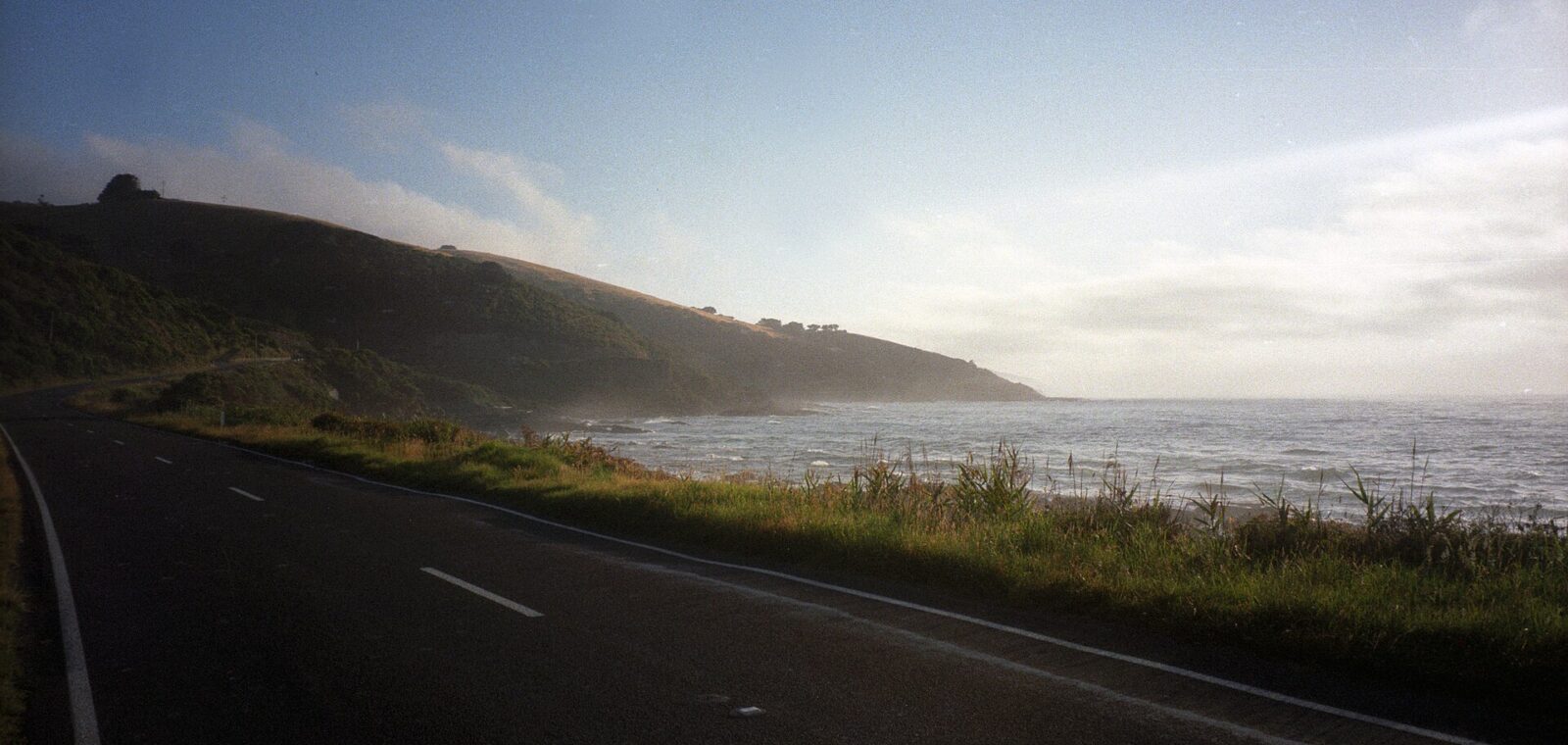
243 km of surf beaches, rainforest and limestone cliffs — and how to see it without spending the whole trip in the car.
This article contains advertising. Our booking links are routed through a partner that adds commission tracking automatically, so if you book through one we earn a commission from the provider, at no extra cost to you. It never affects what we recommend. Affiliate disclosure
Somewhere past Aireys Inlet the road drops down to the water, the eucalypts close in on the right, and the Southern Ocean opens out on the left with nothing between you and Antarctica. Most people pull over there without meaning to. The great ocean road does that for 243 km, from the surf shops of Torquay to the whale nursery at Warrnambool, and the trick to enjoying it is accepting that the famous rocks at the far end are only one part of the trip.
This guide covers the whole road over one to five days: what each stretch is actually like, how long to give it, where to sleep, how to do it without a car, when the crowds and the weather are kindest, and which of the well-known stops are worth the detour. Prices and operating details were checked in September 2026; treat them as the right order of magnitude and confirm anything bookable before you travel. If you only have a single day, our Great Ocean Road day trip guide is the tighter, more practical read.
The Great Ocean Road at a Glance
| Question | Short answer |
|---|---|
| Where does it run? | Torquay to Warrnambool (officially ending at Allansford just east of it), about 243 km |
| How far from Melbourne? | Torquay is roughly 100 km and a little over an hour from the CBD via the M1 and Geelong |
| Non-stop drive time end to end | About 4 to 4½ hours without stops — which nobody manages |
| Ideal length of trip | Three days. Two is fine. One is possible but mostly driving |
| Best bases | Lorne, Apollo Bay, Port Campbell; Warrnambool or Port Fairy at the western end |
| Best months | March–May and October–November for weather and crowds; June–September for whales |
| Headline sights | Twelve Apostles, Loch Ard Gorge, London Arch, Cape Otway, Erskine Falls, Split Point Lighthouse, Bells Beach |
| Traditional Owners | Wadawurrung country around Torquay and the Surf Coast; Eastern Maar country through the Otways and the Shipwreck Coast |
What It Costs: The Free Bits and the Paid Bits
The pleasant surprise about the Great Ocean Road is how little of it charges admission. The coastline, the lookouts, the beaches and nearly all the short walks are free. The costs sit in the car, the beds and a handful of paid attractions. Here is the honest breakdown.
| Item | Cost | Notes |
|---|---|---|
| Twelve Apostles viewing boardwalks | Booking required as the new centre opens | Bookings for the new Twelve Apostles Visitor Centre go live in early October 2026 at twelveapostles.org.au; fees had not been published when we checked, and locals and Eastern Maar community members are exempt |
| Loch Ard Gorge, London Arch, The Grotto, Bay of Islands | Free | Car parks and short paths, no tickets |
| Erskine Falls, Maits Rest, Teddy’s Lookout, Memorial Arch | Free | Parks Victoria and council-managed sites |
| Cape Otway Lightstation | A$11 adult, A$5 child, A$28 family | Reduced price while the lighthouse tower is closed for heritage restoration; the rest of the precinct is open daily 09:00–17:00 |
| Otway Fly Treetop Adventures | Paid entry; zipline extra | Book ahead in school holidays |
| Scenic helicopter flights at the Twelve Apostles | Premium | Short flights priced per person; the most expensive thing most visitors do on the road |
| Fuel for a Melbourne–Warrnambool–Melbourne loop | Roughly 50 litres | About 650 km in an average petrol hatchback — multiply by the pump price on the day, and fill up before the Otways |
| V/Line train and coach | Standard V/Line fares | Far cheaper than a tour, far slower than a car |
Where a price isn’t printed above, it’s because operators have been adjusting them through 2026 and we would rather send you to the source than quote a number that was right in July. The bigger variables are accommodation, which swings wildly between a wet Tuesday in June and the week after Christmas, and whether you hire a car or join a tour. For a wider view of trip budgets, our Melbourne trip cost breakdown puts the road in context with the rest of a Victorian holiday.
How Many Days Do You Need?
This is the question that decides whether the trip is a highlight or a long, faintly car-sick blur. The distance isn’t enormous, but the road is slow — narrow, winding, and full of reasons to stop.
| Trip length | What you actually see | Verdict |
|---|---|---|
| 1 day (return from Melbourne) | Surf Coast in passing, a quick lunch in Lorne or Apollo Bay, the Twelve Apostles and Loch Ard Gorge, then a three-hour drive home in the dark | Doable, but you will spend around eight to nine hours in the car. Fine if it’s your only chance |
| 2 days | Day one down to Apollo Bay with proper stops; day two through the Otways to the Apostles and home inland | The sensible minimum for self-drivers |
| 3 days | Apollo Bay night one, Port Campbell night two, Warrnambool and back on day three | The sweet spot. Enough time for a waterfall, a lighthouse and a sunset at the Apostles |
| 4–5 days | Add the Otway hinterland, Port Fairy, Tower Hill, a longer walk, or a lazy beach day in Lorne | Best for families, walkers and anyone who hates rushing |
Our honest recommendation for most first-time visitors with a car is three days, overnighting in Apollo Bay and Port Campbell. It puts you at the Twelve Apostles in the late afternoon, when the tour coaches have mostly turned for Melbourne and the limestone starts to glow. If you are fitting the road into a longer stay, it slots neatly into days four to six of our seven-day Melbourne itinerary.
The Road, Section by Section
It helps to think of the Great Ocean Road as four quite different landscapes stitched together. The mood changes every hour or so, and knowing what’s coming makes it easier to decide where to linger.
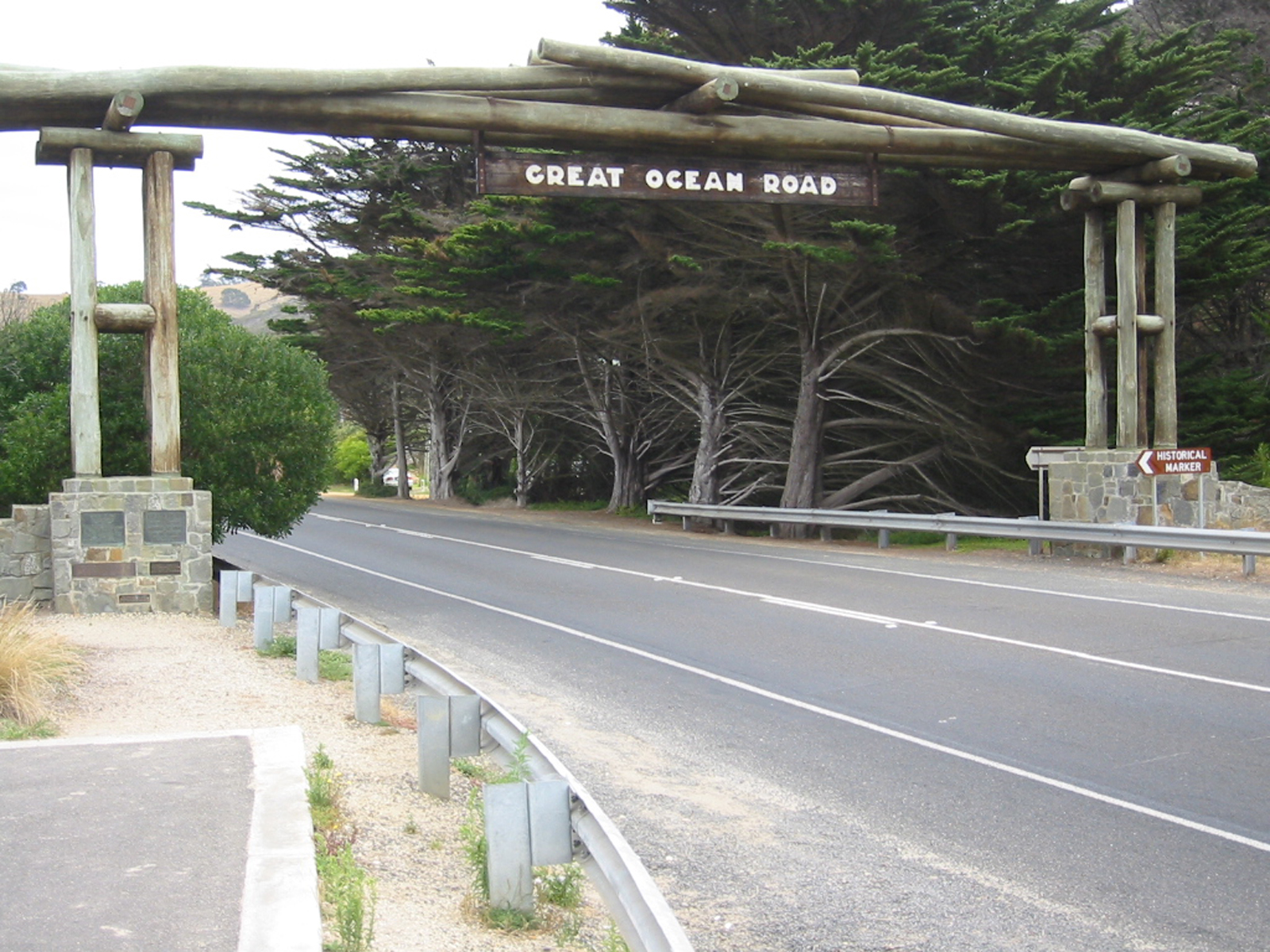
Torquay to Aireys Inlet: The Surf Coast
Torquay is where the road officially begins, and it feels more like a prosperous surf suburb than a gateway to wilderness. It’s the town that gave the world Rip Curl and Quiksilver, and the Australian National Surfing Museum inside Surf World is a better hour than it sounds, even if you’ve never stood on a board. The outlet shops along Surf Coast Highway are cheaper than anything in the city if you need a wetsuit or a warmer jacket for the coast.
A few kilometres on, a short side road leads to Bells Beach, home of the Rip Curl Pro every Easter and one of the most famous right-hand breaks on earth. Outside competition week it is simply a car park on a headland with a staircase down to the sand. Stand at the top on a big swell day and watch the lines roll in from the southwest; that’s the whole experience, and it’s a good one. Don’t swim here unless you are a confident surfer — the rips are serious and the beach is not patrolled out of season.
Anglesea is next, a family beach town with a river mouth, calm-ish water for kids, and a golf course famous for the mob of eastern grey kangaroos that graze on the fairways. Late afternoon is when they are most active. Keep a respectful distance and stay off the course itself unless you’re playing.
Then comes Aireys Inlet and the red-capped Split Point Lighthouse, built in 1891 and known locally as the White Queen. Anyone who grew up in Australia in the 1990s will recognise it from the children’s series Round the Twist. You can walk the clifftop paths around it for free; guided tours up the tower run on a seasonal schedule, so check before you plan around one.
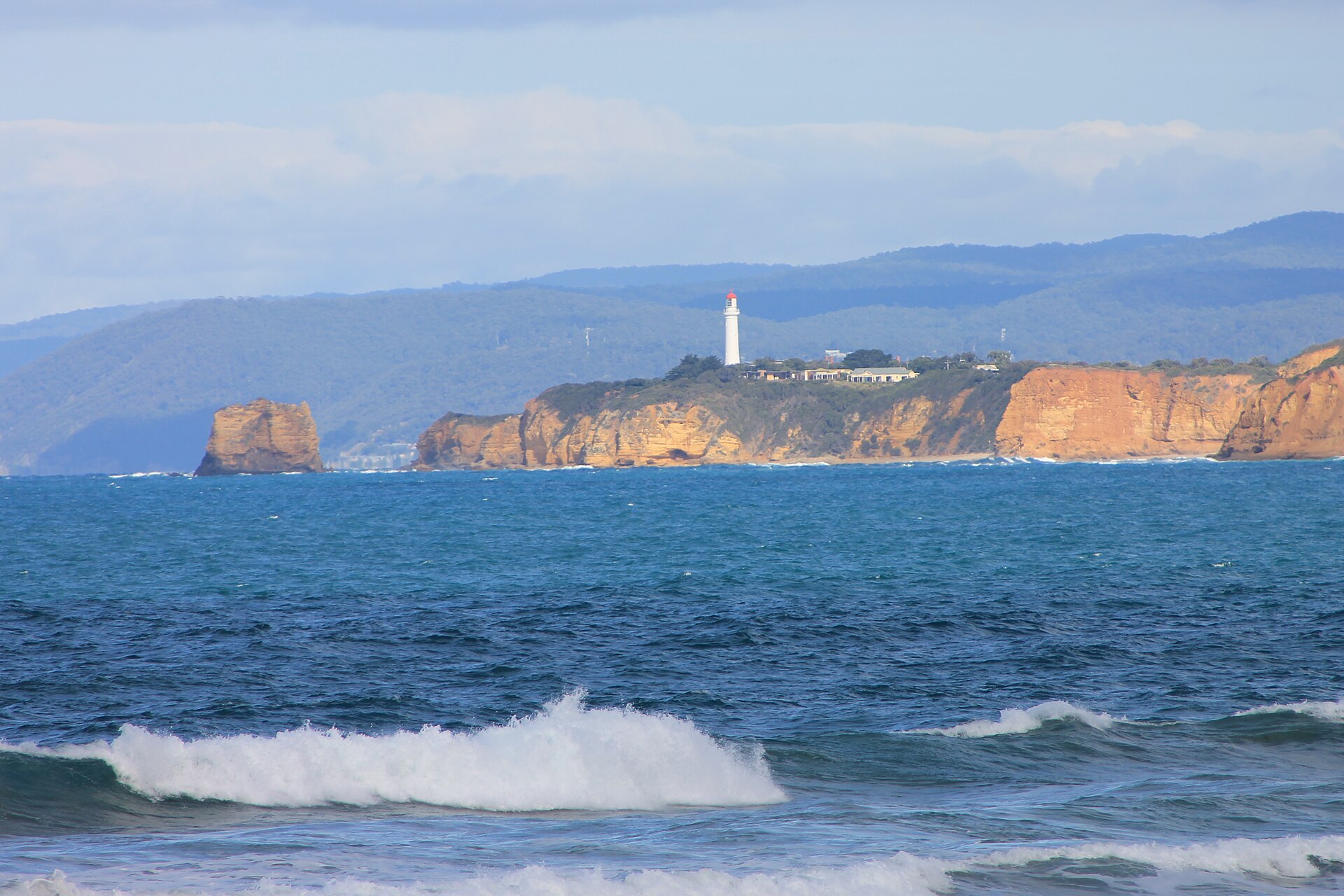
Memorial Arch to Lorne: The Road Proper
Just past Fairhaven you pass under the timber Great Ocean Road Memorial Arch at Eastern View. Pull into the small car park on the ocean side. Beside the arch is a bronze sculpture of two returned soldiers at work with pick and shovel, and a set of plaques that explain why this road exists at all (more on that below). It’s a five-minute stop and it changes how you see the next 200 km.
From here the road starts doing what it’s famous for: clinging to the base of steep, forested hills with the sea directly below. The 20 km run into Lorne is one of the prettiest sections of the whole route, and one of the most nerve-racking in heavy traffic. Use the turnouts to let faster locals past; nobody enjoys a queue of hire cars at 50 km/h.
Lorne is the best-looking town on the road — a curve of sand, a pier, a main street of cafés and surf shops, and forested hills rising straight behind. Ten minutes inland, Erskine Falls drops about 30 metres into a fern gully. Severe storms in January 2026 damaged the tracks here, so for now only the upper viewing platform, a two-minute walk from the car park, is open; the steps to the base and the river walk are closed until repairs are finished. Teddy’s Lookout, on the edge of town, gives the classic view of the road snaking around the headland at the mouth of the St George River. Lorne is also the most expensive town on the road for accommodation and dinner, which is the price of being the prettiest.
Lorne to Apollo Bay: Koalas and Cliffs
The 45 km between Lorne and Apollo Bay is the section that ends up in the car commercials. The road tucks into every bay and crosses every creek, with Cumberland River, Wye River, Kennett River and Skenes Creek strung along it like beads. Budget at least an hour even if you barely stop.
Wye River is a tiny settlement with a general store and a pub perched above the beach; it was badly burned in the Christmas Day bushfires of 2015 and has rebuilt quietly. Kennett River is the koala stop. Turn up Grey River Road beside the caravan park and walk slowly, looking up into the manna gums; on most days you’ll find several dozing in the forks within the first few hundred metres. King parrots and crimson rosellas will land on you if anyone nearby is feeding them. Please don’t — it makes the birds sick and aggressive, and there are signs asking you not to.
Apollo Bay is a working fishing harbour with a long beach, a sensible range of accommodation and the best-value dinners on the eastern half of the road. Drive up to Mariners Lookout just north of town for the view back along the bay, then eat fish and chips on the foreshore and watch the fishing boats come in. It’s the natural overnight stop on almost any itinerary of two days or more.
The Otways and Cape Otway
West of Apollo Bay the Great Ocean Road leaves the coast and climbs into the Great Otway National Park, and for the next hour or so the ocean mostly disappears. This surprises a lot of people. What replaces it is tall wet forest — mountain ash, myrtle beech and tree ferns — in one of the rainiest parts of Victoria.
Three stops earn their time here:
- Maits Rest, about 17 km past Apollo Bay: an 800 metre boardwalk loop through cool temperate rainforest that takes 20 to 30 minutes. If you only stop once in the Otways, stop here.
- Cape Otway Lightstation: a 12 km detour down Lighthouse Road to the oldest surviving lighthouse on mainland Australia, first lit in 1848. The site includes keepers’ cottages, a telegraph station and Aboriginal cultural displays; the tower itself is closed for heritage restoration, so entry is currently discounted to A$11 for adults. The drive down is often better than the destination — the manna gums along Lighthouse Road are one of the most reliable places in Victoria to see wild koalas.
- The Otway hinterland, via the Beech Forest and Lavers Hill roads: Hopetoun Falls, Beauchamp Falls, Triplet Falls, the Californian redwood grove on the Aire River and the Otway Fly treetop walk. None are on the main road, and together they make a half day in their own right.
Fuel is scarce between Apollo Bay and Port Campbell. Lavers Hill has a small station but don’t count on it being open late or on it having the cheapest prices. Fill the tank in Apollo Bay.
The Shipwreck Coast: Princetown to Peterborough
The road descends to the coast again near Princetown and suddenly you’re in a completely different country: flat, windswept heathland ending in sheer limestone cliffs, with the sea carving stacks, arches and gorges out of them. This is the stretch everyone drives three hours to see, and the landmarks come thick and fast.
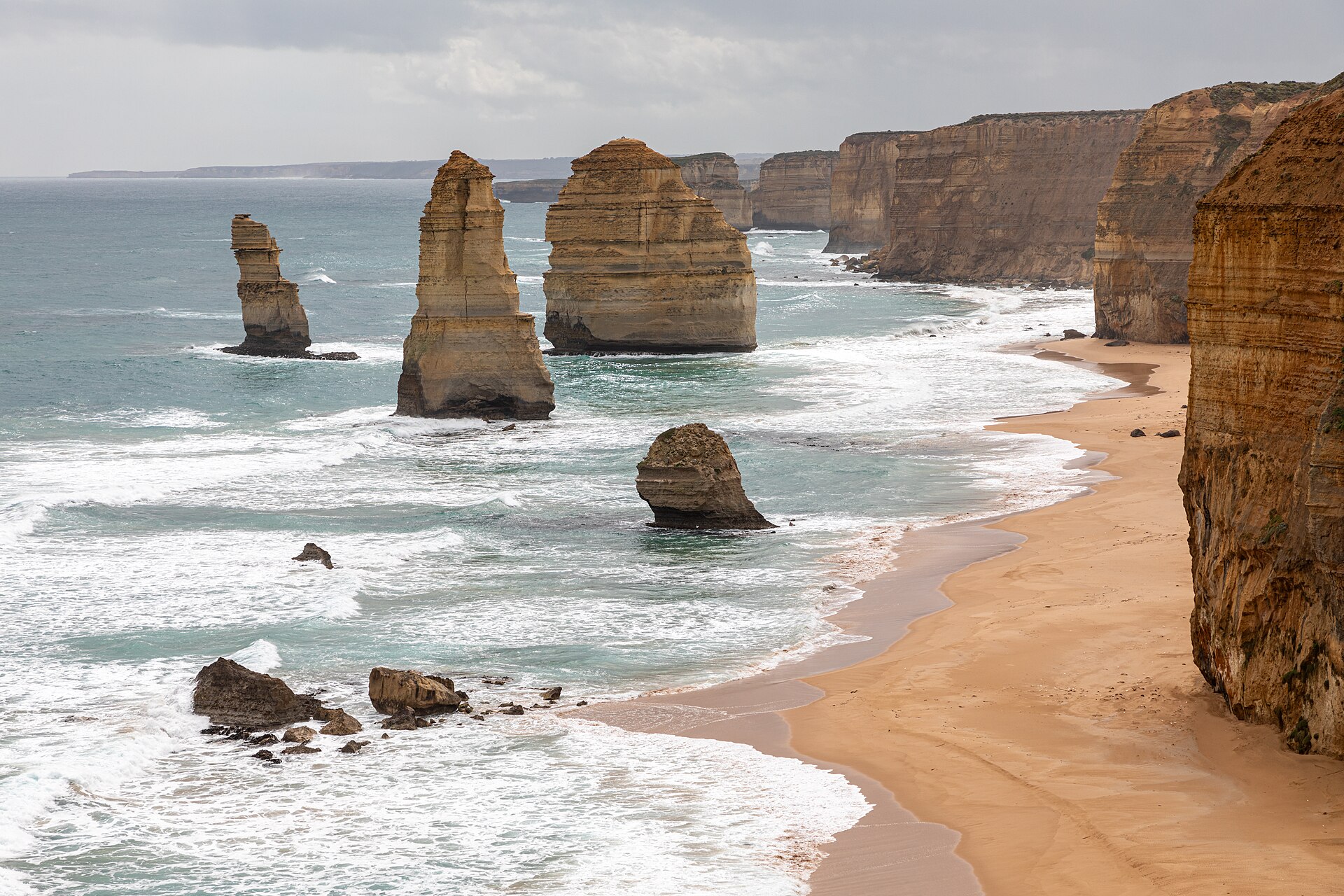
The Twelve Apostles are the headline. There have never been twelve — the stacks were known as the Sow and Piglets until a mid-20th-century rebranding — and the sea keeps reducing the count; one collapsed dramatically in 2005. From the main boardwalks you can see around seven or eight depending on where you stand. The site currently has a visitor facility on the inland side of the highway with a tunnel under the road to the viewing platforms. That is changing. A new $126 million Twelve Apostles Visitor Centre, with a rooftop lookout, hundreds of parking spaces and exhibitions, is opening in late 2026, and the Great Ocean Road Coast and Parks Authority says visitors will need to book in advance. Bookings go live in early October 2026 through the official site, twelveapostles.org.au. Fees had not been published when we checked; the Authority says they will be in line with other nature-based attractions, with locals and Eastern Maar community members exempt. Gibson Steps and Loch Ard Gorge are not part of the booking system. Book before you set out rather than hoping to turn up — this is the single most important planning change on the road in years.
Just east of the Apostles, Gibson Steps is a staircase cut into the cliff that lets you walk down onto the beach and see two of the stacks from sea level, which is far more impressive than it sounds. The steps were closed for a long stretch after ground movement in 2025, they also close in rough conditions, and at high tide the beach can disappear — so check the current status and read the signs at the top.
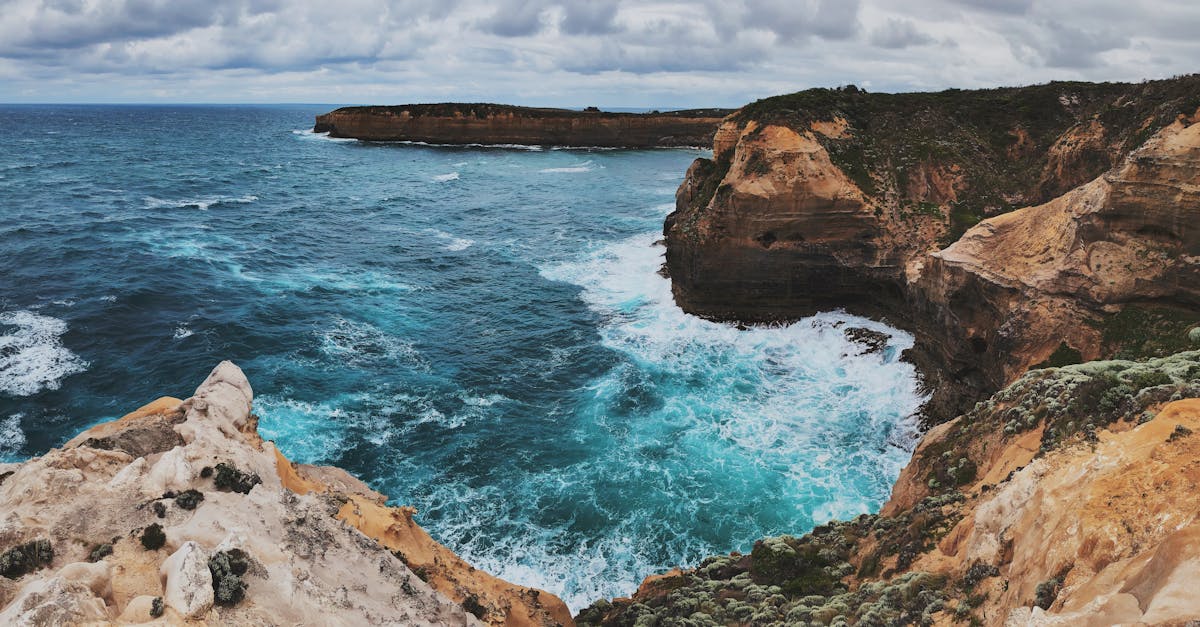
A few minutes west, Loch Ard Gorge is, in our view, the better stop of the two. The clipper Loch Ard struck Mutton Bird Island in June 1878 on the last night of a three-month voyage from England; of the 54 people aboard, only two teenagers survived — apprentice Tom Pearce, who was washed into the gorge and then swam back out to rescue passenger Eva Carmichael. The walking tracks here link the gorge, the cemetery, the Razorback and Island Archway, and you can walk down to the sand inside the gorge itself. Give it an hour.
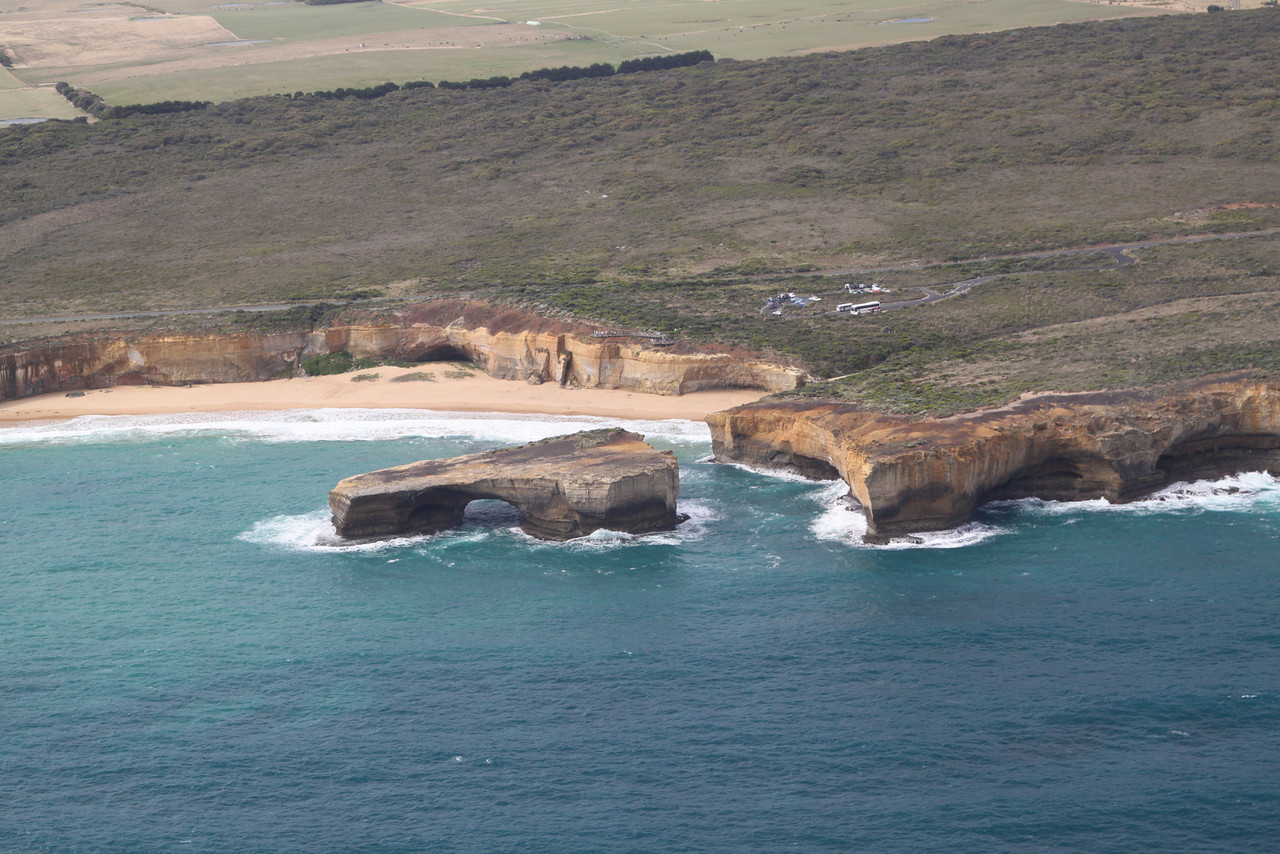
Beyond Port Campbell the landmarks continue: The Arch, London Arch (formerly London Bridge, until its landward span collapsed in January 1990 and left two startled tourists stranded on the far side until a helicopter lifted them off), The Grotto, a sinkhole you descend into by steps to look out through a hole in the rock at the sea, and finally the Bay of Martyrs and Bay of Islands near Peterborough, which are quieter, wilder and almost as dramatic as the Apostles.
Warrnambool and Port Fairy
The road ends in Warrnambool, a regional city of around 35,000 that most day-trippers never see. It’s worth the extra hour. Flagstaff Hill Maritime Village recreates a 19th-century port and tells the stories of the ships lost along this coast. Logans Beach has a whale-watching platform over the dunes where southern right whales come close to shore to calve, usually from June to September. Middle Island, off the city’s beach, is where Maremma sheepdogs guard a colony of little penguins from foxes — the story behind the film Oddball.
Fifteen minutes out of town, Tower Hill Wildlife Reserve sits inside the crater of an extinct volcano and is the best place on the whole trip to see emus, koalas and kangaroos in the wild on a single short walk. Another half-hour west, Port Fairy is a beautifully preserved 19th-century fishing village of bluestone cottages and a lighthouse on Griffiths Island. It’s officially beyond the Great Ocean Road, and it’s one of the nicest places to spend a final night.
Distances and Drive Times
These are approximate, for a car driving at a normal pace without stops. Add at least 50 per cent for any section you intend to enjoy.
| From → To | Distance | Driving time |
|---|---|---|
| Melbourne CBD → Torquay | ~100 km | 1 h 10 min–1 h 20 min |
| Torquay → Lorne | ~46 km | 50 min |
| Lorne → Apollo Bay | ~45 km | 55 min–1 h |
| Apollo Bay → Twelve Apostles (via Lavers Hill) | ~88 km | 1 h 20 min |
| Twelve Apostles → Port Campbell | ~12 km | 10 min |
| Port Campbell → Warrnambool | ~65 km | 50 min |
| Warrnambool → Melbourne (inland, Princes Highway) | ~265 km | 3 h |
| Twelve Apostles → Melbourne (inland via Colac) | ~230 km | 2 h 45 min–3 h |
That last line is the one that makes day trips tolerable: you do not have to drive back along the coast. The inland route through Timboon, Colac and Geelong is faster, straighter and far less tiring at night.
Why the Road Exists: A Short History
Long before it was a road, this coast was Country. The Wadawurrung people cared for the land around Torquay and Geelong, and the peoples now represented by the Eastern Maar — including the Gadubanud of the Otways — lived along the forests and cliffs further west for tens of thousands of years. Shell middens, stone tools and songlines survive along the coast, and Cape Otway Lightstation and the Twelve Apostles precinct both carry Eastern Maar interpretation worth reading.
Until the 20th century, the settler towns of this coast were reachable mainly by sea or by rough bush tracks. When the First World War ended, the Country Roads Board and local trustees saw a chance to solve two problems at once: give work to thousands of returned servicemen, and open up the coast. Construction began in 1919. About 3,000 returned soldiers built the road largely by hand, with picks, shovels, explosives and horse-drawn carts, living in camps along the route and dealing with landslides, storms and a coastline that did not want a road on it.
The section between Anglesea and Apollo Bay was complete by the early 1930s and the road was officially opened in 1932. It was dedicated to the soldiers who died in the war, which makes it, by length, the largest war memorial in the world. It was a toll road for its first few years; the tolls were removed when the debt was paid off and the road was handed to the state in 1936. Next time you’re stuck behind a caravan on the bends past Cumberland River, it’s worth remembering that the ledge you’re driving on was hacked out of the hillside by men who’d come home from Gallipoli and the Western Front.
Driving the Great Ocean Road: What to Know
Most visitors drive, and most driving problems on this road are predictable. If you’re new to Australian roads, read our guide to driving in Melbourne as a tourist first — it covers licences, hire cars and the rules that catch people out.
The practical rules
- Keep left. It sounds obvious. There are signs every few kilometres reminding international drivers, and they exist because people forget after a lookout stop.
- Speed limits vary between 50 km/h in towns, 80 km/h on much of the winding coastal section and 100 km/h on the open stretches. They are enforced, including by mobile cameras.
- Use the turnouts. If three or more cars are behind you, pull into the next marked pull-off and let them by. It’s courteous, and it’s also safer than being tailgated round a blind bend.
- Never stop on the road for a koala, a view or a photo. Drive to the next car park or turnout. Several of the worst accidents on this road involve people standing on the carriageway.
- Watch for wildlife at dawn and dusk, especially wallabies and kangaroos on the inland and Otway sections. Driving back to Melbourne in the dark is the single riskiest part of a day trip.
- Fuel up in Apollo Bay or Port Campbell. The Otway section has almost none.
Which direction?
Drive west along the coast and return inland. Going out on the coast means you get the Surf Coast and Lorne in the morning, the Otways in the middle of the day, and the Shipwreck Coast in the afternoon and at sunset, which is when it looks best. The inland return is quick. The reverse — racing inland to the Apostles first and coasting home — works for photographers chasing sunrise at the Apostles, but you will then drive the most demanding section in the late afternoon when you’re tired.
Road closures, fire and weather
Landslips after heavy rain occasionally close sections between Lorne and Apollo Bay, and roadworks with traffic lights are common. On days of high fire danger in summer, parks and walking tracks may close, and on a Catastrophic rating you should not be travelling through the Otways at all. Check VicTraffic for closures and the VicEmergency app for fire warnings on the morning you set out. The weather on this coast can change in minutes, even in January, so read our Melbourne packing list and bring a proper windproof layer whatever the forecast in the city says.
Doing the Great Ocean Road Without a Car
You have two realistic options: public transport or a tour.
V/Line train and coach
Take the V/Line train from Southern Cross to Geelong, then the V/Line coach (operated by McHarry’s) that runs every day through Torquay, Anglesea, Aireys Inlet and Lorne to Apollo Bay. The onward coach from Apollo Bay to Warrnambool — the one that stops at the Twelve Apostles, Loch Ard Gorge, London Arch and the Bay of Islands — runs only on Mondays, Wednesdays and Fridays, and stops only briefly at each site. From Warrnambool, V/Line trains run back to Southern Cross several times a day.
It’s cheap and it works, but it’s slow and it needs planning. A new coach timetable came into effect in late August 2026, so check the current V/Line timetable rather than relying on an older blog post, and book seats in summer. The approach suits travellers with at least three or four days who are happy to stay put in Lorne or Apollo Bay between coaches. Our Melbourne public transport guide explains V/Line tickets and how they differ from Myki.
Tours
Day tours from Melbourne are the most popular way to see the road, and they range from 50-seat coaches to small-group minibuses of a dozen people. Typical tours leave the city around 07:00–07:30 and get back after 19:30, with stops at Bells Beach or Torquay, the Memorial Arch, Kennett River for koalas, lunch in Apollo Bay, a short Otway rainforest walk, and an hour or so at the Twelve Apostles and Loch Ard Gorge. Some run the itinerary in reverse to beat the crowds, and there are two- and three-day tours with overnight stays that feel far less rushed.
A tour is the right call if you don’t drive, don’t want to drive on the left, or are travelling solo and want company. It’s the wrong call if you want sunset at the Apostles, hate being herded, or are travelling as three or four people who could split a hire car.
When to Go
There’s no bad month, but there are very different experiences depending on the season. Our best time to visit Melbourne guide covers the wider picture; here’s how it plays out on the coast.
| Season | Weather | Crowds | Best for |
|---|---|---|---|
| Summer (Dec–Feb) | Warmest and longest days, but can swing from 40 °C to 18 °C overnight; fire risk | Heaviest, especially late December to Australia Day; accommodation books out | Swimming, beach towns, late sunsets |
| Autumn (Mar–May) | Settled, mild, often the calmest weather of the year | Busy at Easter (Rip Curl Pro at Bells), otherwise moderate | Driving, walking, photography |
| Winter (Jun–Aug) | Cold, wet and wild; the Otways are soaked and the waterfalls at their best | Quietest and cheapest | Whales at Warrnambool, storm watching, cosy pub nights |
| Spring (Sep–Nov) | Changeable, windy, gradually warming | Moderate; busy on school holidays and long weekends | Wildflowers, the last of the whales, green hills |
Whatever the season, the time of day matters more. The Twelve Apostles are busiest between about 11:00 and 15:00, when the Melbourne tours arrive. Come at 08:00 or in the hour before sunset and you’ll share the boardwalk with a fraction of the crowd. If you’re visiting mid-winter, our Melbourne in winter guide has more on what to expect.
Where to Stay Along the Road
Each base suits a different kind of trip. In summer and on long weekends, book early — the whole coast has less accommodation than demand, and the good places go months ahead.
| Town | Why stay | Drawbacks | Best for |
|---|---|---|---|
| Torquay / Anglesea | Close to Melbourne, good beaches, lots of holiday rentals | Too close to the city to feel like you’ve broken the journey | Surfers, families with small kids |
| Lorne | Prettiest town, best cafés, Erskine Falls on the doorstep | Most expensive; very busy in summer | Couples, a first night of a slow trip |
| Apollo Bay | Midpoint, good range of motels and apartments, harbour and seafood | Can feel a bit functional | Almost everyone on a 2–3 day trip |
| Cape Otway / Otway hinterland | Forest lodges, eco-retreats, silence | Remote, few places to eat | Walkers and people who want to disappear |
| Port Campbell | Ten minutes from the Twelve Apostles for sunset and sunrise | Tiny; limited dining; books out fast | Photographers, anyone who wants the Apostles without crowds |
| Warrnambool / Port Fairy | Bigger range, better prices, whales in winter | Past the main sights, long drive back | Longer trips, a final night before returning inland |
If you would rather base yourself in the city and do the coast as a day or two away, our guide to where to stay in Melbourne covers the neighbourhoods with the easiest getaway to the M1 and Southern Cross.
Wildlife on the Great Ocean Road
The road is one of the most reliable places in Victoria to see Australian animals in the wild, without a fence or a ticket. A realistic list of what you’re likely to see, and where:
- Koalas — Kennett River (Grey River Road) and Lighthouse Road to Cape Otway are the best bets; Tower Hill near Warrnambool is excellent too. Look for a grey lump in the fork of a tree, and listen for the surprisingly loud grunting of males in spring.
- Eastern grey kangaroos — Anglesea golf course in the late afternoon, and paddocks throughout the Otway foothills around dusk.
- Emus — Tower Hill, where they wander across the tracks and car parks.
- Southern right whales — Logans Beach, Warrnambool, from roughly June to September; humpbacks pass further out in the same period.
- Little penguins — present around Middle Island in Warrnambool and London Arch, but not easily seen; if penguins are your priority, Phillip Island’s Penguin Parade is the better trip.
- Birds — king parrots and crimson rosellas at Kennett River, fairy-wrens along the Surf Coast Walk, shearwaters (mutton birds) returning to Mutton Bird Island at dusk from late spring.
Keep your distance, don’t feed anything, and never try to coax a koala down for a photo. They sleep up to 20 hours a day because their diet gives them very little energy, and disturbing them has a real cost.
Best Walks Along the Road
You don’t need to be a hiker to enjoy the Great Ocean Road on foot, but it rewards anyone who gets out of the car for longer than a lookout stop. From shortest to longest:
- Maits Rest Rainforest Walk — 800 m loop, 20–30 minutes, boardwalk through myrtle beech and tree ferns.
- Loch Ard Gorge tracks — a series of short linked paths to the gorge, cemetery and lookouts; 1 hour for the lot.
- Erskine Falls — a few minutes to the top platform; the track to the base has been closed since storms in January 2026, so check Parks Victoria before planning around it.
- Split Point Lighthouse and clifftop walk — easy, about an hour, with great views both ways along the coast.
- Surf Coast Walk — 44 km from Torquay to Aireys Inlet, easily split into short sections; the Bells Beach to Point Addis stretch is a favourite half day.
- Hopetoun Falls and the Aire River redwoods — short, steep walks deep in the Otways.
- Great Ocean Walk — roughly 100 km from Apollo Bay to the Twelve Apostles over about eight days, with hike-in campsites that must be booked through Parks Victoria. It’s one of Australia’s great coastal walks, and you can do single-day sections with a shuttle.
For more walks within reach of the city, including a few that make good warm-ups before a coastal trip, see our best hikes near Melbourne.
What’s Overrated, and What’s Underrated
Every famous road has its tourist traps and its quiet secrets. This is our honest verdict after many trips along it.
Not worth it (or not in the way you’d expect)
- A one-day return trip from Melbourne in winter. Sunset is around 17:15 in June. You’ll reach the Apostles in the early afternoon grey and drive home for three hours in the dark with wallabies on the road. Stay the night, or do a shorter Surf Coast trip instead.
- The Twelve Apostles at 13:00. It’s the same view, but through a crowd of hundreds and with harsh overhead light. Loch Ard Gorge at the same hour is a better use of your time.
- Trying to “do” the Otway waterfalls, the Otway Fly, Cape Otway and the Shipwreck Coast in one afternoon. Pick one inland highlight.
- Chasing Instagram spots on the road itself. A few famous photos were taken from points where stopping is dangerous. There is always a proper lookout within a kilometre.
Worth more time than people give it
- The Bay of Islands and Bay of Martyrs. Twenty minutes west of the Apostles, equally dramatic, a fraction of the visitors.
- Gibson Steps. Standing on the sand looking up at the stacks is a completely different experience from the platform.
- Tower Hill. The best wild-animal hour on the whole trip, and almost no one on a day tour sees it.
- Port Fairy. A final night here beats rushing home.
- The Memorial Arch plaques. Five minutes that give the drive its meaning.
Combining the Road With Other Trips
The Great Ocean Road links naturally with the rest of western Victoria. From Warrnambool or Port Fairy it’s about two and a half hours north to Halls Gap and the mountains of the Grampians, which makes a satisfying five-day loop: Melbourne, the coast, the Grampians, and back via Ballarat. If you’re choosing between big nature trips from Melbourne, Wilsons Promontory offers wilder beaches and better walking with far fewer people, while the Mornington Peninsula is a gentler, shorter coastal day with hot springs and wineries. Our roundup of the best day trips from Melbourne compares them all side by side.
Great Ocean Road FAQ
Can you do the Great Ocean Road in one day?
Yes, but it’s a long day. Expect eight to nine hours of driving for a return trip to the Twelve Apostles, with limited time at each stop. Returning inland via Colac cuts the drive back to about three hours. If you can, stay at least one night.
Where does the Great Ocean Road start and end?
It officially starts at Torquay, about 100 km southwest of Melbourne, and ends at Allansford just east of Warrnambool, a distance of about 243 km. Most people treat the Memorial Arch at Eastern View as the point where the scenic part begins.
Is the Great Ocean Road dangerous to drive?
It isn’t dangerous if you drive to the conditions. The risks are narrow bends, tired drivers, visitors forgetting to keep left, and wildlife at dusk. Drive during daylight, use turnouts to let traffic pass, and never stop on the carriageway.
Do you have to book or pay to see the Twelve Apostles?
Visitors need to book through the official Twelve Apostles site as the new visitor centre opens in late 2026, and a fee applies; bookings go live in early October 2026 and the price had not been published when we checked. Nearby Gibson Steps and Loch Ard Gorge remain free and don’t need a booking.
How many of the Twelve Apostles are left?
There were never twelve. Around seven or eight stacks are visible from the main viewing platforms, depending on where you stand and how you count; one collapsed in 2005 and erosion continues.
What’s the best town to stay in?
Apollo Bay for a practical midpoint; Lorne for charm; Port Campbell if you want the Twelve Apostles at sunset or sunrise without driving in the dark.
Can you see koalas on the Great Ocean Road?
Very likely. Kennett River and the road to Cape Otway Lightstation are the most reliable spots, and Tower Hill near Warrnambool is excellent. They’re wild, so there are no guarantees, but most visitors who look properly find at least one.
Is it worth driving the Great Ocean Road in winter?
Yes, if you stay overnight. The crowds disappear, the waterfalls are at their best, whales arrive at Warrnambool and the stormy seas are spectacular. The trade-offs are short days, cold rain and wind.
Can I get there by public transport?
Yes. Take the V/Line train to Geelong and the daily V/Line coach to Lorne and Apollo Bay. The coach between Apollo Bay and Warrnambool, which stops at the Twelve Apostles, runs only on Mondays, Wednesdays and Fridays.
Once you’ve decided how many days to give the road, the next job is timing. Our Great Ocean Road itinerary lays out one-, two-, three- and five-day plans hour by hour, with drive times for each leg, overnight stops, and schedules built to put you at the Twelve Apostles after the tour coaches have gone.
The Twelve Apostles get their own page because there’s now a lot to know before you arrive: the new booking system, the difference between the boardwalk and Gibson Beach, the light at each hour, and the little penguins that come ashore at dusk. Read our Twelve Apostles guide before you lock in a time.
If you’d rather someone else did the driving, the choice of tour matters more than most people expect. Our guide to Great Ocean Road tours from Melbourne compares budget, small-group, reverse, multi-day and helicopter options, with real itineraries and prices.
For named hotels, motels, eco-lodges and holiday parks in every town along the route, plus sample plans for couples, families and budget travellers, see our full guide to where to stay on the Great Ocean Road.
Apollo Bay deserves more than a lunch stop, and it’s the best base on the road for the Otways. Our Apollo Bay guide has the lookout, beach, harbour, seals and food, plus a suggested 24 hours in town.
Lorne is the town most people wish they’d given more time. Our Lorne guide covers Teddy’s Lookout, the beach and pier, the Pier to Pub swim, where to eat and stay, and exactly what’s open at Erskine Falls after the January 2026 storms.
The Surf Coast is worth more than a drive-by. Our Torquay and Bells Beach guide covers the famous break and the Rip Curl Pro, Torquay’s family beaches, surf lessons, the surf museum and the best short sections of the Surf Coast Walk.
The Otways deserve at least half a day of their own. Our Great Otway National Park guide covers Hopetoun and Triplet Falls, the Californian redwoods, glow worms at Melba Gully, camping, and which tracks are still closed after the January 2026 fires and floods.
Related Melbourne Guides
- Great Ocean Road Day Trip from Melbourne
- Best Day Trips from Melbourne
- The Grampians from Melbourne
- Phillip Island Penguin Parade
- Wilsons Promontory Day Trip
- Driving in Melbourne as a Tourist
- Melbourne Itinerary: 7 Days
- Best Time to Visit Melbourne
Photo Credits
Great Ocean Road hugging the coast: Great Ocean Road (4898415698) by LeeAnne Adams from Washington, DC, CC BY 2.0, via Wikimedia Commons.
Memorial Arch at Eastern View: Entrance Great Ocean Road by Cookaa, CC BY-SA 3.0, via Wikimedia Commons.
Split Point Lighthouse, Aireys Inlet: Aireys Inlet Lighthouse by Mertie, CC BY 2.0, via Wikimedia Commons.
London Arch from the air: London-Arch-Dec2010 by Camelboy, CC BY-SA 3.0, via Wikimedia Commons.